 | Acta Crystallographica Section E Acta Crystallographica Section E CRYSTALLOGRAPHIC COMMUNICATIONS |


 journal menu


organic compounds
| CRYSTALLOGRAPHIC COMMUNICATIONS |
 access
1H-Indole-3-carbaldehyde azine

aDepartment of Chemistry, University of Malaya, 50603 Kuala Lumpur, Malaysia
*Correspondence e-mail: [email protected]
The molecule of the title compound, C18H14N4, lies on a center of inversion such that there is one half-molecule in the asymmetric unit. The N—N single bond adopts a trans configuration and the indole fused-ring system is nearly coplanar with the –CH=N—N=CH– fragment [dihedral angle = 9.8 (2)°]. Adjacent molecules are linked by indole–azine N—H⋯N hydrogen bonds into a layer motif.
Related literature
For the synthesis, see: Alemany et al. (1970![[Alemany, A., Bernabe, M., Fernandez Alvarez, E., Lora-Tamayo, M. & Nieto Lopez, O. (1970). Anal. Quim. 66, 681-688.]](../../../../../../logos/arrows/e_arr.gif "Alemany, A., Bernabe, M., Fernandez Alvarez, E., Lora-Tamayo, M. & Nieto Lopez, O. (1970). Anal. Quim. 66, 681-688.") ); Swaminathan & Narasimhan (1964). For the crystal structures of some aromatic azines, for example, benzalazine, see: Burke-Laing & Laing (1976); Mom & de With (1978); Sinha, 1970). For other heterocyclic aldehyde azines, see: Lin et al. (2001a,b); Wu et al. (2006).
); Swaminathan & Narasimhan (1964). For the crystal structures of some aromatic azines, for example, benzalazine, see: Burke-Laing & Laing (1976); Mom & de With (1978); Sinha, 1970). For other heterocyclic aldehyde azines, see: Lin et al. (2001a,b); Wu et al. (2006).
![[Scheme 1]](fl2186scheme1.gif)
Experimental
Crystal data
|
Data collection
|
Refinement
|
| |||||||||||||||||
 .
. Data collection: APEX2 (Bruker, 2007); cell refinement: SAINT (Bruker, 2007); data reduction: SAINT; program(s) used to solve structure: SHELXS97 (Sheldrick, 2008); program(s) used to refine structure: SHELXL97 (Sheldrick, 2008); molecular graphics: X-SEED (Barbour, 2001); software used to prepare material for publication: publCIF (Westrip, 2008).
Supporting information
contains datablocks global, I. DOI: 10.1107/S1600536808003164/fl2186sup1.cif
Structure factors: contains datablock I. DOI: 10.1107/S1600536808003164/fl2186Isup2.hkl
The reaction of carbohydrazide (0.3 g, 3.3 mmol) and indole -3-carboxaldehyde (1 g, 6.6 mmol) in ethanol under reflux for 2 h gave the corresponding Schiff base. This compound (0.2 g, 0.6 mmol), zinc acetate (0.06 g,0.3 mmol) and several drops of triethylamine were dissolved in 10 ml e thanol. The contents were heated in a 25-ml, stainless-steel Paar bomb for for 2 d at 373 K. The bomb was cooled to room temperature over several hours. Well formed crystals were isolated from the cooled bomb.
Carbon-bound H-atoms were placed in calculated positions (C—H 0.93 Å) and were included in the in the riding model approximation, with U(H) set to 1.2U(C). The amino H-atom was located in a difference Fourier map, and was freely refined.
Data collection: APEX2 (Bruker, 2007); cell SAINT (Bruker, 2007); data reduction: SAINT (Bruker, 2007); program(s) used to solve structure: SHELXS97 (Sheldrick, 2008); program(s) used to refine structure: SHELXL97 (Sheldrick, 2008); molecular graphics: X-SEED (Barbour, 2001); software used to prepare material for publication: publCIF (Westrip, 2008).
![[Figure 1]](./fl2186fig1thm.gif) | Fig. 1. Displacement ellipsoid plot of (I) at the 50% probability level. H atoms are drawn as spheres of arbitrary radiius. |
![[Figure 2]](./fl2186fig2thm.gif) | Fig. 2. Layer structure of (I). |
| C18H14N4 | F(000) = 300 |
| Mr = 286.33 | Dx = 1.307 Mg m−3 |
| Monoclinic, P21/c | Mo Kα radiation, λ = 0.71073 Å |
| Hall symbol: -P 2ybc | Cell parameters from 1012 reflections |
| a = 5.0849 (2) Å | θ = 2.3–23.6° |
| b = 10.6708 (4) Å | µ = 0.08 mm−1 |
| c = 13.4435 (5) Å | T = 295 K |
| β = 94.366 (3)° | Irregular block, green–yellow |
| V = 727.33 (5) Å3 | 0.33 × 0.27 × 0.17 mm |
| Z = 2 |
| Bruker APEX2 diffractometer | 1085 reflections with I > 2σ(I) |
| Radiation source: fine-focus sealed tube | Rint = 0.038 |
| Graphite monochromator | θmax = 27.5°, θmin = 2.4° |
| ϕ and ω scans | h = −6→6 |
| 5388 measured reflections | k = −9→13 |
| 1659 independent reflections | l = −17→17 |
| Refinement on F2 | Secondary atom site location: difference Fourier map |
| Least-squares matrix: full | Hydrogen site location: inferred from neighbouring sites |
| R[F2 > 2σ(F2)] = 0.042 | H atoms treated by a mixture of independent and constrained refinement |
| wR(F2) = 0.121 | w = 1/[σ2(Fo2) + (0.0645P)2 + ] where P = (Fo2 + 2Fc2)/3 |
| S = 1.01 | (Δ/σ)max = 0.001 |
| 1659 reflections | Δρmax = 0.17 e Å−3 |
| 105 parameters | Δρmin = −0.16 e Å−3 |
| 0 restraints | Extinction correction: SHELXL97 (Sheldrick, 2008), Fc*=kFc[1+0.001xFc2λ3/sin(2θ)]-1/4 |
| Primary atom site location: structure-invariant direct methods | Extinction coefficient: 0.016 (6) |
| C18H14N4 | V = 727.33 (5) Å3 |
| Mr = 286.33 | Z = 2 |
| Monoclinic, P21/c | Mo Kα radiation |
| a = 5.0849 (2) Å | µ = 0.08 mm−1 |
| b = 10.6708 (4) Å | T = 295 K |
| c = 13.4435 (5) Å | 0.33 × 0.27 × 0.17 mm |
| β = 94.366 (3)° |
| Bruker APEX2 diffractometer | 1085 reflections with I > 2σ(I) |
| 5388 measured reflections | Rint = 0.038 |
| 1659 independent reflections |
| R[F2 > 2σ(F2)] = 0.042 | 0 restraints |
| wR(F2) = 0.121 | H atoms treated by a mixture of independent and constrained refinement |
| S = 1.01 | Δρmax = 0.17 e Å−3 |
| 1659 reflections | Δρmin = −0.16 e Å−3 |
| 105 parameters |
| x | y | z | Uiso*/Ueq | ||
| N1 | 0.4730 (3) | 0.8059 (1) | 0.1978 (1) | 0.0484 (4) | |
| N2 | 0.4464 (2) | 0.5165 (1) | 0.4519 (1) | 0.0422 (4) | |
| C1 | 0.2718 (3) | 0.7222 (1) | 0.1726 (1) | 0.0425 (4) | |
| C2 | 0.1064 (3) | 0.7130 (2) | 0.0860 (1) | 0.0538 (5) | |
| C3 | −0.0787 (3) | 0.6201 (2) | 0.0817 (1) | 0.0579 (5) | |
| C4 | −0.1034 (4) | 0.5384 (2) | 0.1612 (1) | 0.0546 (4) | |
| C5 | 0.0606 (3) | 0.5473 (1) | 0.2473 (1) | 0.0454 (4) | |
| C6 | 0.2548 (3) | 0.6396 (1) | 0.2540 (1) | 0.0388 (4) | |
| C7 | 0.4578 (3) | 0.6773 (1) | 0.3285 (1) | 0.0400 (4) | |
| C8 | 0.5819 (3) | 0.7783 (1) | 0.2901 (1) | 0.0466 (4) | |
| C9 | 0.5376 (3) | 0.6213 (1) | 0.4228 (1) | 0.0411 (4) | |
| H1 | 0.524 (3) | 0.865 (2) | 0.159 (1) | 0.062 (5)* | |
| H2 | 0.1210 | 0.7680 | 0.0330 | 0.065* | |
| H3 | −0.1911 | 0.6111 | 0.0243 | 0.070* | |
| H4 | −0.2329 | 0.4767 | 0.1561 | 0.065* | |
| H5 | 0.0419 | 0.4926 | 0.3002 | 0.054* | |
| H8 | 0.7215 | 0.8217 | 0.3228 | 0.056* | |
| H9 | 0.6619 | 0.6629 | 0.4650 | 0.049* |
| U11 | U22 | U33 | U12 | U13 | U23 | |
| N1 | 0.061 (1) | 0.041 (1) | 0.043 (1) | −0.002 (1) | 0.005 (1) | 0.012 (1) |
| N2 | 0.063 (1) | 0.036 (1) | 0.027 (1) | −0.001 (1) | −0.003 (1) | 0.001 (1) |
| C1 | 0.049 (1) | 0.039 (1) | 0.039 (1) | 0.006 (1) | 0.006 (1) | 0.005 (1) |
| C2 | 0.062 (1) | 0.058 (1) | 0.040 (1) | 0.007 (1) | −0.001 (1) | 0.014 (1) |
| C3 | 0.060 (1) | 0.065 (1) | 0.047 (1) | 0.005 (1) | −0.008 (1) | 0.003 (1) |
| C4 | 0.054 (1) | 0.050 (1) | 0.059 (1) | −0.003 (1) | −0.001 (1) | 0.000 (1) |
| C5 | 0.052 (1) | 0.040 (1) | 0.045 (1) | 0.003 (1) | 0.006 (1) | 0.004 (1) |
| C6 | 0.046 (1) | 0.035 (1) | 0.036 (1) | 0.007 (1) | 0.007 (1) | 0.003 (1) |
| C7 | 0.052 (1) | 0.034 (1) | 0.034 (1) | 0.004 (1) | 0.004 (1) | 0.001 (1) |
| C8 | 0.059 (1) | 0.040 (1) | 0.041 (1) | −0.002 (1) | 0.001 (1) | 0.003 (1) |
| C9 | 0.056 (1) | 0.036 (1) | 0.032 (1) | −0.003 (1) | −0.001 (1) | −0.003 (1) |
| N1—C8 | 1.351 (2) | C6—C7 | 1.440 (2) |
| N1—C1 | 1.381 (2) | C7—C8 | 1.370 (2) |
| N2—C9 | 1.283 (2) | C7—C9 | 1.432 (2) |
| N2—N2i | 1.409 (2) | N1—H1 | 0.87 (2) |
| C1—C2 | 1.387 (2) | C2—H2 | 0.9300 |
| C1—C6 | 1.412 (2) | C3—H3 | 0.9300 |
| C2—C3 | 1.365 (2) | C4—H4 | 0.9300 |
| C3—C4 | 1.393 (2) | C5—H5 | 0.9300 |
| C4—C5 | 1.377 (2) | C8—H8 | 0.9300 |
| C5—C6 | 1.393 (2) | C9—H9 | 0.9300 |
| C8—N1—C1 | 109.2 (1) | N2—C9—C7 | 123.4 (1) |
| C9—N2—N2i | 112.0 (1) | C8—N1—H1 | 126 (1) |
| N1—C1—C2 | 129.9 (1) | C1—N1—H1 | 125 (1) |
| N1—C1—C6 | 107.6 (1) | C3—C2—H2 | 121.4 |
| C2—C1—C6 | 122.5 (2) | C1—C2—H2 | 121.4 |
| C3—C2—C1 | 117.3 (2) | C2—C3—H3 | 119.2 |
| C2—C3—C4 | 121.7 (2) | C4—C3—H3 | 119.2 |
| C5—C4—C3 | 121.2 (2) | C5—C4—H4 | 119.4 |
| C4—C5—C6 | 118.9 (1) | C3—C4—H4 | 119.4 |
| C5—C6—C1 | 118.5 (1) | C4—C5—H5 | 120.5 |
| C5—C6—C7 | 135.2 (1) | C6—C5—H5 | 120.5 |
| C1—C6—C7 | 106.3 (1) | N1—C8—H8 | 124.8 |
| C8—C7—C9 | 123.7 (1) | C7—C8—H8 | 124.8 |
| C8—C7—C6 | 106.5 (1) | N2—C9—H9 | 118.3 |
| C9—C7—C6 | 129.7 (1) | C7—C9—H9 | 118.3 |
| N1—C8—C7 | 110.5 (1) | ||
| C8—N1—C1—C2 | −179.5 (2) | C2—C1—C6—C7 | 179.4 (1) |
| C8—N1—C1—C6 | 0.5 (2) | C5—C6—C7—C8 | −178.6 (2) |
| N1—C1—C2—C3 | −179.6 (2) | C1—C6—C7—C8 | 0.5 (2) |
| C6—C1—C2—C3 | 0.4 (2) | C5—C6—C7—C9 | 5.1 (3) |
| C1—C2—C3—C4 | 0.7 (3) | C1—C6—C7—C9 | −175.9 (2) |
| C2—C3—C4—C5 | −0.7 (3) | C1—N1—C8—C7 | −0.2 (2) |
| C3—C4—C5—C6 | −0.3 (2) | C9—C7—C8—N1 | 176.5 (1) |
| C4—C5—C6—C1 | 1.3 (2) | C6—C7—C8—N1 | −0.2 (2) |
| C4—C5—C6—C7 | −179.7 (2) | N2i—N2—C9—C7 | −178.9 (1) |
| N1—C1—C6—C5 | 178.6 (1) | C8—C7—C9—N2 | −169.5 (1) |
| C2—C1—C6—C5 | −1.4 (2) | C6—C7—C9—N2 | 6.3 (3) |
| N1—C1—C6—C7 | −0.6 (2) |
| Symmetry code: (i) −x+1, −y+1, −z+1. |
| D—H···A | D—H | H···A | D···A | D—H···A |
| N1—H1···N2ii | 0.87 (2) | 2.21 (2) | 3.065 (2) | 167 (2) |
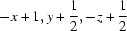
| Symmetry code: (ii) −x+1, y+1/2, −z+1/2. |
Experimental details
| Crystal data | |
| Chemical formula | C18H14N4 |
| Mr | 286.33 |
| Crystal system, space group | Monoclinic, P21/c |
| Temperature (K) | 295 |
| a, b, c (Å) | 5.0849 (2), 10.6708 (4), 13.4435 (5) |
| β (°) | 94.366 (3) |
| V (Å3) | 727.33 (5) |
| Z | 2 |
| Radiation type | Mo Kα |
| µ (mm−1) | 0.08 |
| Crystal size (mm) | 0.33 × 0.27 × 0.17 |
| Data collection | |
| Diffractometer | Bruker APEX2 diffractometer |
| Absorption correction | – |
| No. of measured, independent and observed [I > 2σ(I)] reflections | 5388, 1659, 1085 |
| Rint | 0.038 |
| (sin θ/λ)max (Å−1) | 0.650 |
| Refinement | |
| R[F2 > 2σ(F2)], wR(F2), S | 0.042, 0.121, 1.01 |
| No. of reflections | 1659 |
| No. of parameters | 105 |
| H-atom treatment | H atoms treated by a mixture of independent and constrained refinement |
| Δρmax, Δρmin (e Å−3) | 0.17, −0.16 |
Computer programs: APEX2 (Bruker, 2007), SAINT (Bruker, 2007), SHELXS97 (Sheldrick, 2008), SHELXL97 (Sheldrick, 2008), X-SEED (Barbour, 2001), publCIF (Westrip, 2008).
| D—H···A | D—H | H···A | D···A | D—H···A |
| N1—H1···N2i | 0.87 (2) | 2.21 (2) | 3.065 (2) | 167 (2) |
| Symmetry code: (i) −x+1, y+1/2, −z+1/2. |
Acknowledgements
We thank the Science Fund (12–02-03–2031) for supporting this study, and the University of Malaya for the purchase of the diffractometer.
References
 Alemany, A., Bernabe, M., Fernandez Alvarez, E., Lora-Tamayo, M. & Nieto Lopez, O. (1970). Anal. Quim. 66, 681–688. CAS Google Scholar
Barbour, L. J. (2001). J. Supramol. Chem. 1, 189–191. CrossRef CAS Google Scholar
Bruker (2007). APEX2 and SAINT. Bruker AXS Inc., Madison, Wisconsin, USA. Google Scholar
Burke-Laing, M. & Laing, M. (1976). Acta Cryst. B32, 3216–3224. CSD CrossRef CAS IUCr Journals Web of Science Google Scholar
Lin, C.-J., Hwang, W.-S. & Chiang, M. J. (2001a). J. Organomet. Chem. 640, 85–92. Web of Science CSD CrossRef CAS Google Scholar
Lin, C.-J., Hwang, W.-S. & Chiang, M. J. (2001b). Polyhedron, 20, 3257–3264. Google Scholar
Mom, V. & de With, G. (1978). Acta Cryst. B34, 2785–2789. CSD CrossRef CAS IUCr Journals Web of Science Google Scholar
Sheldrick, G. M. (2008). Acta Cryst. A64, 112–122. Web of Science CrossRef CAS IUCr Journals Google Scholar
Sinha, U. C. (1970). Acta Cryst. B26, 889–895. CSD CrossRef CAS IUCr Journals Web of Science Google Scholar
Swaminathan, S. & Narasimhan, K. (1964). Indian J. Chem. 2, 423–424. CAS Google Scholar
Westrip, S. P. (2008). publCIF. In preparation. Google Scholar
Wu, C.-Y., Chen, Y., Jing, S.-Y., Lee, C.-S., Dinda, J. & Hwang, W.-S. (2006). Polyhedron, 25, 3053–3065. Web of Science CSD CrossRef CAS Google Scholar
This is an open-access article distributed under the terms of the Creative Commons Attribution (CC-BY) Licence, which permits unrestricted use, distribution, and reproduction in any medium, provided the original authors and source are cited.
| CRYSTALLOGRAPHIC COMMUNICATIONS |


Azines are readily synthesized by condensing hydrazine with an aldehyde; the crystal structures of a large number of substituted benzaldehdye azines have been reported. The structure of the parent aromatic compound, benzalazine, has been known for a long time (Burke-Laing & Laing, 1976; Mom & de With, 1978; Sinha, 1970). There are few examples of heterocyclic azines, and their rarity can be attributed to the difficulty of synthesizing the starting aldehyde reactant. Among the few are, for example, unsubstituted and methyl-subsituted thiophene-2-aldehyde azine (Lin et al., 2001a, 2001b) and a pyrrole derivative has recently been reported (Wu et al., 2006).
3-Indole azine has been known for some time; it was first synthesized from indole-3-carboxaldehyde and hydrazine in order to examine its psychopharmacological activity (Alemany et al., 1970; Swaminathan Narasimhan, 1964). The title compound was the unexpected decomposition product of the Schiff base derived from the condensation of carbohydrazide and indole-3-carboxaldehyde. The molecule (Scheme I, Fig. 1) lies about a center-of-inversion such that there is half a molecule in the asymmetric unit. The N–N single-bond adopts a trans configuration and the indolyl fused-ring is nearly coplanar with the –CH=N–N=CH– fragment. Adjacent molecules are linked by an N–Hindole···Nazine hydrogen bonds into layer motif (Fig. 2).