

 menu


research papers
 | STRUCTURAL CHEMISTRY |
 access
Synthesis and crystal structures of lithium(I) and nickel(II) complexes derived from an N,O-bidentate Schiff base ligand

aSynthése Organométallique et Catalyse, UMR-CNRS 7177, Strasbourg University, 67008 Strasbourg, France
*Correspondence e-mail: [email protected]
A comparative single-crystal X-ray diffraction study of two complexes derived from the same N,O-bidentate Schiff base ligand revealed distinct coordination geometries and crystal-packing arrangements for LiI and NiII. In the lithium complex, chloridobis(N′-{4-[(dimethylamino)methyl]benzylidene}benzohydrazide)lithium(I), [LiCl(C17H19N3O)2] (2), the LiI centre adopted a five-coordinate environment defined by two N,O-chelating ligands and a chloride ion, with Li—O, Li—N and Li—Cl distances of 1.947 (3)/1.962 (3), 2.309 (4)/2.352 (4) and 2.399 (3) Å, respectively. The coordination geometry, with τ5 = 0.52, fell between the square-pyramidal and trigonal-bipyramidal limiting geometries. The coordinated chloride ion also participated in intermolecular N—H⋯Cl hydrogen bonding, thereby linking the complexes into one-dimensional chains. In the nickel complex, bis(N′-{4-[(dimethylamino)methyl]benzylidene}benzohydrazidato)nickel(II), [Ni(C17H18N3O)2] (3), the NiII centre lies on a crystallographic inversion centre and was coordinated by two symmetry-related N,O-chelating ligands in a slightly distorted square-planar geometry, with Ni—O and Ni—N distances of 1.8408 (11) and 1.8703 (13) Å, respectively. These structures demonstrated how the metal ion controlled both the coordination geometry and the supramolecular organization of the resulting complexes.
Keywords: crystal structure; Schiff base; nickel(II); lithium(I); benzohydrazide.
CCDC reference: 2583573
1. Introduction
Schiff base ligands are widely used in coordination chemistry owing to their structural flexibility and ability to provide different donor sets to metal centres. Their coordination behaviour can be strongly influenced by the nature and electronic requirements of the metal ion, which may lead to significant changes in both the primary coordination sphere and the resulting supramolecular organization (Singh et al., 2012 ; Alfonso-Herrera et al., 2022).
Nickel(II) complexes supported by Schiff base ligands exhibit a broad range of coordination geometries, including square-planar, tetrahedral and octahedral arrangements, depending on the donor set and ligand architecture (Aly et al., 2023). In contrast, lithium(I) generally exhibits less constrained coordination environments owing to its small ionic radius and hard Lewis acid character (Xue et al., 2025). A comparison of these two metal ions with the same ligand therefore provided an opportunity to examine how differences in metal-centre preferences affected both the local coordination geometry and the organization of the crystal structure.
Despite the extensive use of Schiff base ligands in coordination chemistry, direct structural comparisons involving the same ligand coordinated to LiI and NiII remain uncommon. Such comparisons are useful for assessing how metal-dependent coordination preferences influence not only the geometry around the metal centre but also the organization of the resulting complexes in the solid state. Herein, we describe the crystal structures of lithium(I) and nickel(II) complexes derived from a shared N′-{4-[(dimethylamino)methyl]benzylidene}benzohydrazide (1) ligand, namely, bis(N′-{4-[(dimethylamino)methyl]benzylidene}benzohydrazidato)nickel(II) (2) and chloridobis(N′-{4-[(dimethylamino)methyl]benzylidene}benzohydrazide)lithium(I) (3) (Fig. 1). In both compounds, the ligand functions as an N,O-bidentate donor. However, the two metal ions result in significantly different coordination environments.
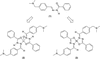 | Figure 1 The synthesis of complexes 2 and 3. |
2. Experimental
2.1. Synthesis and crystallization
2.1.1. Synthesis of N′-{4-[(dimethylamino)methyl]benzylidene}benzohydrazide (1)
Ligand 1 was synthesized by refluxing an ethanolic mixture (10 ml) of 4-[(dimethylamino)methyl]benzaldehyde (0.440 g, 2.7 mmol), benzohydrazide (0.367 g, 2.7 mmol) and a drop of acetic acid for 24 h. After cooling to room temperature, water was added to precipitate the desired product. The resulting white solid was collected by filtration, washed with cold ethanol and dried under vacuum (yield: 0.340 g, 45%). FT–IR: ν(C=N and C=O) 1645 cm−1; 1H NMR (CDCl3, 300 MHz, 25 °C): δ 9.33 (s, 1H, CH=N), 8.87 (s, 1H, NH), 7.87 (br s, 2H, arom CH), 7.74 (br s, 2H, arom CH), 7.57–7.45 (m, 3H, arom CH), 7.36 (d, 2H, arom CH, 3JHH = 8.1 Hz), 3.52 (s, 2H, NCH2), 2.29 (s, 6H, N(CH3)2) ppm; MS (ESI–TOF): m/z = 282.16 [M + H]+ (expected isotopic profiles).
2.1.2. Synthesis of the lithium(I) and nickel(II) complexes
In a Schlenk tube under an argon atmosphere, ligand 1 (0.170 g, 0.55 mmol) was dissolved in tetrahydrofuran (THF; 15 ml) and nBuLi (1.6 M in hexane, 0.3 ml, 0.55 mmol) was slowly added at −78 °C. After stirring for 1 h at −78 °C, the resulting mixture was allowed to warm to room temperature. [NiCl(Ph)(PPh3)2] (0.423 g, 0.55 mmol) was added and the resulting mixture was stirring for 24 h. The solvent was removed under reduced pressure and the resulting solid residue was dissolved in CH2Cl2 (15 ml). Addition of Et2O (30 ml) induced precipitation of a solid, which was removed by filtration. The filtrate was concentrated to approximately 1 ml and transferred to a narrow long Schlenk tube. Hexane (20 ml) was carefully layered over the solution to allow slow diffusion. Two types of single crystals suitable for X-ray diffraction analysis were obtained: colourless block-shaped crystals of lithium(I) complex 2 and orange block-shaped crystals of nickel(II) complex 3. The two types of crystals were manually separated on the basis of their distinct colours.
For lithium(I) complex 2, because of the instability in solution, conventional solution-phase spectroscopic characterization could not be performed. FT–IR: ν(C=N) 1647 and ν(C=O) 1608 cm−1.
For nickel(II) complex 3, FT–IR: ν(C=N—N=C) 1587 and ν(C—O) 1262 cm−1; 1H NMR (CDCl3, 500 MHz, 25 °C): δ 8.33 (d, 4H, arom CH, 3JHH = 7.0 Hz), 8.01 (dt, 4H, arom CH, 3JHH = 7.0 Hz, 4JHH = 1.7 Hz), 7.49–7.45 (m, 6H, arom CH), 7.43–7.39 (m, 4H, arom CH), 7.30 (s, 2H, CH=N), 3.50 (s, 4H, NCH2), 2.28 [s, 12H, N(CH3)2] ppm; MS (ESI–TOF): m/z = 619.23 [M + H]+ (expected isotopic profiles).
2.2. Refinement
Crystal data, data collection and structure details are summarized in Table 1. All H atoms were found in a Fourier difference map.
|

3. Results and discussion
The lithium(I) and nickel(II) complexes 2 and 3, respectively, derived from the same N,O-bidentate Schiff base ligand 1, displayed distinct coordination geometries and crystal-packing arrangements. The observed structural disparities are principally attributable to the divergent coordination predilections exhibited by the two metal centres.
3.1. Lithium(I) complex
The molecular structure of lithium(I) complex 2 is shown in Fig. 2. The LiI centre was coordinated by two N,O-chelating Schiff base ligands and one chloride ion, giving a five-coordinate environment. The Li—O distances were 1.947 (3) and 1.962 (3) Å, while the corresponding Li—N distances were 2.309 (4) and 2.352 (4) Å, which were comparable to those reported for related lithium complexes (Specklin et al., 2015). The chloride ligand completed the coordination sphere, with an Li—Cl distance of 2.399 (3) Å. Each ligand formed a five-membered chelate ring through the imine N and carbonyl O-donor atoms, with O—Li—N bite angles of 76.06 (12) and 76.61 (12)°, reflecting the geometrical constraints imposed by the chelate rings. The two ligands adopted closely similar conformations and displayed comparable bond lengths. The C=N [1.282 (2) and 1.289 (2) Å] and C=O bond lengths [1.233 (2) and 1.236 (2) Å] were consistent with delocalization within the hydrazone carbonyl fragment.
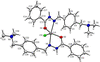 | Figure 2 The molecular structure of lithium(I) complex 2, with displacement ellipsoids drawn at the 50% probability level. |
The five-coordinate LiI environment deviated from the idealized square-pyramidal and trigonal-bipyramidal geometries. The Addison τ5 parameter (Addison et al., 1984), calculated from the two largest coordination angles [161.73 (17) and 130.61 (19)°], was 0.52. This value placed the coordination geometry approximately midway between the square-pyramidal (τ5 = 0) and trigonal-bipyramidal (τ5 = 1) limiting geometries. The deviation from either idealized geometry was largely imposed by the small O—Li—N bite angles of the two chelating ligands. The chloride ion was directly coordinated to LiI, rather than acting solely as a counter-anion, and therefore formed an integral part of the five-coordinate environment. Its structural role extended beyond the primary coordination sphere, as the coordinated chloride ion also acted as a hydrogen-bond acceptor in the intermolecular N—H⋯Cl interactions. The two aromatic rings of each ligand (C1–C6/C12–C17 and C18–C23/C29–C34) were nearly coplanar, with dihedral angles of 3.22 and 3.74°, respectively.
3.2. Nickel(II) complex
The molecular structure of the nickel(II) complex is shown in Fig. 3. The NiII centre lay on a crystallographic inversion centre and was coordinated by two symmetry-related N,O-chelating ligands. Consequently, the asymmetric unit contained one-half of the molecular complex. The coordination environment was essentially square planar, with Ni—O and Ni—N distances of 1.8408 (11) and 1.8703 (13) Å, respectively, which were comparable to those reported for related nickel complexes (Raj Kumar et al., 2015; Yang et al., 2020). The trans angles O1—Ni1—O1 and N2—Ni1—N2 were constrained to 180° by crystallographic inversion symmetry, while the cis angles of 83.61 (5) and 96.39 (5)° indicated only a modest deviation from ideal square-planar geometry. The aromatic ring bearing the dimethylamino substituent (C9–C14) was nearly coplanar with the five-membered metallacycle, with a dihedral angle 4.24°, whereas the second aromatic ring (C2–C7) was moderately inclined, with a dihedral angle of 13.30°.
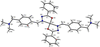 | Figure 3 The molecular structure of nickel(II) complex 3, with displacement ellipsoids drawn at the 50% probability level. |
In contrast to the lithium complex, no additional anion was coordinated to the nickel centre. Consequently, the coordination sphere comprised exclusively the two N,O-chelating ligands. The relatively short Ni—N and Ni—O distances, together with the well-defined square-planar arrangement, indicated that the ligand provided a compact coordination environment for NiII. The ligand acted exclusively as an N,O-bidentate donor in complex 3. Although an additional donor site was present within the hydrazide fragment, the second N atom remained non-coordinating.
3.3. Supramolecular features
The crystal packing of lithium complex 2 was characterized by intermolecular N—H⋯Cl hydrogen bonds, with a H⋯Cl distance of 2.23 Å, involving the coordinated chloride ion with the N—H group of a neighbouring complex. These interactions linked the discrete lithium(I) complexes into one-dimensional chains extending through the crystal. Thus, the chloride ion fulfilled a dual structural role: it completed the coordination sphere of LiI and acted as a hydrogen-bond acceptor linking neighbouring complexes. The N—H⋯Cl hydrogen bonds therefore played a key role in the supramolecular organization of complex 2, assembling the individual lithium(I) complexes into chains through these intermolecular contacts. Together with the weaker interactions involving the aromatic groups, this hydrogen-bonding motif contributed to the observed crystal-packing arrangement (Fig. 4).
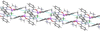 | Figure 4 The crystal packing of lithium(I) complex 2, showing the intermolecular N—H⋯Cl hydrogen-bonded chains. |
The crystal packing of nickel(II) complex 3 revealed an ordered arrangement of the molecules. A short intermolecular Ni⋯C contact of 3.2218 (18) Å was observed between the NiII centre and an aromatic C atom of a neighbouring molecule. Several short Csp2⋯Csp2 contacts, ranging from 3.143 (2) to 3.379 (2) Å, were also observed between adjacent molecules. Collectively, these contacts contributed to the molecular packing and the formation of the observed columnar architecture (Fig. 5).
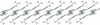 | Figure 5 The crystal packing of nickel(II) complex 3, showing the molecular columns. |
The comparison of the two crystal structures demonstrated the profound impact of the metal ion on the organization of the coordination compound. Despite the retention of the N,O-chelating mode in both complexes, LiI complex 2 accommodated an additional chloride donor, resulting in a more open five-coordinate environment, whereas NiII complex 3 formed a compact square-planar complex with two chelating ligands. This disparity in the primary coordination sphere was manifested in the crystal packing: hydrogen-bonded N—H⋯Cl chains were observed for the lithium derivative, while the nickel complex adopted a columnar arrangement supported by short intermolecular contacts. Consequently, the metal-dependent coordination preferences were directly translated into distinct supramolecular architectures.
4. Conclusion
The crystal structures of the lithium(I) and nickel(II) complexes (2 and 3, respectively) demonstrated the ability of the same N,O-donor Schiff base ligand 1 to accommodate two metal centres with markedly different coordination preferences. Coordination to LiI resulted in a five-coordinate environment that was distorted, with the chloride participating not only in metal coordination but also in the formation of intermolecular N—H⋯Cl hydrogen-bonded chains. In contrast, NiII formed a compact square-planar complex that assembled into columns through short intermolecular contacts. The structures presented demonstrate the capacity for the nature of the metal centre to regulate not only the primary coordination geometry but also the supramolecular organization of the resulting complex in the solid state.
Supporting information
CCDC reference: 2583573
contains datablocks 2, 3, global. DOI: https://doi.org/10.1107/S205322962601106X/dg3089sup1.cif
Structure factors: contains datablock 2. DOI: https://doi.org/10.1107/S205322962601106X/dg30892sup2.hkl
Structure factors: contains datablock 3. DOI: https://doi.org/10.1107/S205322962601106X/dg30893sup3.hkl
| [Ni(C17H18N3O)2] | Z = 1 |
| Mr = 619.40 | F(000) = 326 |
| Triclinic, P1 | Dx = 1.353 Mg m−3 |
| a = 6.3619 (6) Å | Mo Kα radiation, λ = 0.71073 Å |
| b = 10.7622 (13) Å | Cell parameters from 6890 reflections |
| c = 11.8481 (13) Å | θ = 2.9–27.9° |
| α = 78.649 (4)° | µ = 0.68 mm−1 |
| β = 78.080 (5)° | T = 120 K |
| γ = 75.676 (3)° | Block, orange |
| V = 759.91 (14) Å3 | 0.16 × 0.12 × 0.10 mm |
| Bruker PHOTON-III CPAD diffractometer | 3275 reflections with I > 2σ(I) |
| Radiation source: Mo-ImuS 3.0 microfocus tube | Rint = 0.070 |
| φ and ω shuterless scans | θmax = 27.9°, θmin = 2.9° |
| Absorption correction: multi-scan (SADABS; Bruker, 2021) | h = −7→8 |
| Tmin = 0.592, Tmax = 0.746 | k = −14→14 |
| 18991 measured reflections | l = −15→15 |
| 3631 independent reflections |
| Refinement on F2 | Primary atom site location: structure-invariant direct methods |
| Least-squares matrix: full | Secondary atom site location: difference Fourier map |
| R[F2 > 2σ(F2)] = 0.035 | Hydrogen site location: inferred from neighbouring sites |
| wR(F2) = 0.092 | H-atom parameters constrained |
| S = 1.06 | w = 1/[σ2(Fo2) + (0.0433P)2 + 0.3146P] where P = (Fo2 + 2Fc2)/3 |
| 3631 reflections | (Δ/σ)max < 0.001 |
| 198 parameters | Δρmax = 0.41 e Å−3 |
| 0 restraints | Δρmin = −0.43 e Å−3 |
Geometry. All esds (except the esd in the dihedral angle between two l.s. planes) are estimated using the full covariance matrix. The cell esds are taken into account individually in the estimation of esds in distances, angles and torsion angles; correlations between esds in cell parameters are only used when they are defined by crystal symmetry. An approximate (isotropic) treatment of cell esds is used for estimating esds involving l.s. planes. |
Refinement. The samples were studied on Bruker PHOTON-III CPAD using Cu Kα (radiation λ = 1.54178 Å) for complex 2 and Cu Kα (radiation λ = 0.71073 Å) for complex 3, at T = 120 (2) K. The structures were solved with SHELXT2018 (Sheldrick, 2015a), which revealed the positions of the non-H atoms. The structures were refined with SHELXL2019/3 (Sheldrick, 2015b) by the full-matrix least-square techniques (use of F square magnitude; x, y, z, βij for C, Cl, N, O, Li and Ni atoms; x, y, z in riding mode for H atoms). |
| x | y | z | Uiso*/Ueq | ||
| Ni1 | 0.000000 | 0.500000 | 1.000000 | 0.01082 (10) | |
| O1 | 0.00603 (19) | 0.34089 (11) | 0.96262 (10) | 0.0149 (2) | |
| C1 | 0.1871 (3) | 0.30108 (15) | 0.89332 (13) | 0.0133 (3) | |
| C2 | 0.2126 (3) | 0.17730 (15) | 0.85013 (14) | 0.0146 (3) | |
| C3 | 0.0310 (3) | 0.12157 (17) | 0.86466 (16) | 0.0218 (4) | |
| H3 | −0.107151 | 0.161473 | 0.904661 | 0.026* | |
| C4 | 0.0517 (3) | 0.00791 (18) | 0.82078 (19) | 0.0277 (4) | |
| H4 | −0.072583 | −0.029656 | 0.830890 | 0.033* | |
| C5 | 0.2528 (3) | −0.05127 (17) | 0.76219 (17) | 0.0245 (4) | |
| H5 | 0.265940 | −0.128403 | 0.731319 | 0.029* | |
| C6 | 0.4351 (3) | 0.00320 (17) | 0.74900 (17) | 0.0241 (4) | |
| H6 | 0.573347 | −0.037517 | 0.709746 | 0.029* | |
| C7 | 0.4160 (3) | 0.11648 (16) | 0.79283 (15) | 0.0197 (3) | |
| H7 | 0.541182 | 0.152880 | 0.783938 | 0.024* | |
| N1 | 0.3458 (2) | 0.36588 (13) | 0.85804 (12) | 0.0141 (3) | |
| N2 | 0.2786 (2) | 0.48036 (13) | 0.90710 (11) | 0.0125 (3) | |
| C8 | 0.4045 (3) | 0.56331 (15) | 0.88475 (13) | 0.0134 (3) | |
| H8 | 0.346776 | 0.637317 | 0.922938 | 0.016* | |
| C9 | 0.6184 (3) | 0.56316 (15) | 0.81164 (13) | 0.0123 (3) | |
| C10 | 0.7390 (3) | 0.46820 (15) | 0.74290 (14) | 0.0136 (3) | |
| H10 | 0.685370 | 0.392837 | 0.744586 | 0.016* | |
| C11 | 0.9370 (3) | 0.48485 (15) | 0.67247 (14) | 0.0142 (3) | |
| H11 | 1.016369 | 0.420476 | 0.625849 | 0.017* | |
| C12 | 1.0221 (3) | 0.59352 (15) | 0.66846 (13) | 0.0131 (3) | |
| C13 | 0.9049 (3) | 0.68606 (16) | 0.73924 (14) | 0.0153 (3) | |
| H13 | 0.961455 | 0.759859 | 0.739392 | 0.018* | |
| C14 | 0.7067 (3) | 0.67079 (15) | 0.80921 (14) | 0.0147 (3) | |
| H14 | 0.629075 | 0.734782 | 0.856579 | 0.018* | |
| C15 | 1.2403 (3) | 0.60672 (15) | 0.59348 (14) | 0.0146 (3) | |
| H15A | 1.359947 | 0.556141 | 0.636400 | 0.018* | |
| H15B | 1.255809 | 0.568848 | 0.521748 | 0.018* | |
| N3 | 1.2662 (2) | 0.74089 (14) | 0.56043 (12) | 0.0171 (3) | |
| C16 | 1.1257 (3) | 0.81237 (18) | 0.47536 (17) | 0.0241 (4) | |
| H16A | 1.139695 | 0.903121 | 0.457822 | 0.036* | |
| H16B | 0.972321 | 0.808433 | 0.507607 | 0.036* | |
| H16C | 1.170941 | 0.773515 | 0.403579 | 0.036* | |
| C17 | 1.4957 (3) | 0.74511 (19) | 0.51409 (16) | 0.0229 (4) | |
| H17A | 1.587888 | 0.696397 | 0.571901 | 0.034* | |
| H17B | 1.511621 | 0.835506 | 0.496922 | 0.034* | |
| H17C | 1.541821 | 0.706262 | 0.442307 | 0.034* |
| U11 | U22 | U33 | U12 | U13 | U23 | |
| Ni1 | 0.00893 (15) | 0.01154 (15) | 0.01268 (15) | −0.00433 (10) | 0.00288 (10) | −0.00573 (10) |
| O1 | 0.0125 (5) | 0.0152 (5) | 0.0175 (5) | −0.0054 (4) | 0.0030 (4) | −0.0065 (4) |
| C1 | 0.0127 (7) | 0.0145 (7) | 0.0131 (7) | −0.0036 (6) | −0.0012 (6) | −0.0032 (6) |
| C2 | 0.0163 (8) | 0.0133 (7) | 0.0147 (7) | −0.0040 (6) | −0.0011 (6) | −0.0037 (6) |
| C3 | 0.0163 (8) | 0.0202 (8) | 0.0308 (9) | −0.0054 (7) | 0.0010 (7) | −0.0115 (7) |
| C4 | 0.0223 (9) | 0.0230 (9) | 0.0426 (11) | −0.0099 (7) | −0.0014 (8) | −0.0140 (8) |
| C5 | 0.0288 (10) | 0.0157 (8) | 0.0307 (10) | −0.0050 (7) | −0.0019 (8) | −0.0105 (7) |
| C6 | 0.0225 (9) | 0.0181 (8) | 0.0294 (9) | −0.0038 (7) | 0.0060 (7) | −0.0095 (7) |
| C7 | 0.0180 (8) | 0.0163 (8) | 0.0237 (8) | −0.0063 (6) | 0.0026 (7) | −0.0038 (6) |
| N1 | 0.0139 (6) | 0.0110 (6) | 0.0178 (6) | −0.0036 (5) | 0.0017 (5) | −0.0061 (5) |
| N2 | 0.0124 (6) | 0.0123 (6) | 0.0131 (6) | −0.0024 (5) | −0.0001 (5) | −0.0047 (5) |
| C8 | 0.0125 (7) | 0.0141 (7) | 0.0138 (7) | −0.0034 (6) | 0.0003 (6) | −0.0044 (6) |
| C9 | 0.0108 (7) | 0.0136 (7) | 0.0124 (7) | −0.0033 (6) | 0.0000 (5) | −0.0027 (6) |
| C10 | 0.0129 (7) | 0.0132 (7) | 0.0161 (7) | −0.0046 (6) | −0.0006 (6) | −0.0048 (6) |
| C11 | 0.0120 (7) | 0.0140 (7) | 0.0162 (7) | −0.0017 (6) | 0.0009 (6) | −0.0064 (6) |
| C12 | 0.0100 (7) | 0.0168 (7) | 0.0124 (7) | −0.0030 (6) | −0.0010 (6) | −0.0033 (6) |
| C13 | 0.0142 (8) | 0.0156 (7) | 0.0187 (8) | −0.0072 (6) | 0.0000 (6) | −0.0069 (6) |
| C14 | 0.0149 (8) | 0.0151 (7) | 0.0147 (7) | −0.0033 (6) | 0.0006 (6) | −0.0069 (6) |
| C15 | 0.0110 (7) | 0.0169 (8) | 0.0167 (7) | −0.0045 (6) | 0.0012 (6) | −0.0059 (6) |
| N3 | 0.0142 (7) | 0.0185 (7) | 0.0195 (7) | −0.0083 (5) | 0.0030 (5) | −0.0054 (5) |
| C16 | 0.0169 (8) | 0.0214 (9) | 0.0300 (10) | −0.0033 (7) | −0.0002 (7) | 0.0005 (7) |
| C17 | 0.0156 (8) | 0.0303 (10) | 0.0232 (9) | −0.0120 (7) | 0.0018 (7) | −0.0016 (7) |
| Ni1—O1i | 1.8408 (11) | C9—C14 | 1.400 (2) |
| Ni1—O1 | 1.8408 (11) | C9—C10 | 1.406 (2) |
| Ni1—N2i | 1.8703 (13) | C10—C11 | 1.390 (2) |
| Ni1—N2 | 1.8703 (13) | C10—H10 | 0.9500 |
| O1—C1 | 1.2992 (19) | C11—C12 | 1.394 (2) |
| C1—N1 | 1.319 (2) | C11—H11 | 0.9500 |
| C1—C2 | 1.480 (2) | C12—C13 | 1.398 (2) |
| C2—C3 | 1.395 (2) | C12—C15 | 1.508 (2) |
| C2—C7 | 1.398 (2) | C13—C14 | 1.386 (2) |
| C3—C4 | 1.388 (2) | C13—H13 | 0.9500 |
| C3—H3 | 0.9500 | C14—H14 | 0.9500 |
| C4—C5 | 1.389 (3) | C15—N3 | 1.461 (2) |
| C4—H4 | 0.9500 | C15—H15A | 0.9900 |
| C5—C6 | 1.392 (3) | C15—H15B | 0.9900 |
| C5—H5 | 0.9500 | N3—C17 | 1.459 (2) |
| C6—C7 | 1.386 (2) | N3—C16 | 1.460 (2) |
| C6—H6 | 0.9500 | C16—H16A | 0.9800 |
| C7—H7 | 0.9500 | C16—H16B | 0.9800 |
| N1—N2 | 1.3990 (18) | C16—H16C | 0.9800 |
| N2—C8 | 1.297 (2) | C17—H17A | 0.9800 |
| C8—C9 | 1.454 (2) | C17—H17B | 0.9800 |
| C8—H8 | 0.9500 | C17—H17C | 0.9800 |
| O1i—Ni1—O1 | 180.0 | C10—C9—C8 | 126.46 (14) |
| O1i—Ni1—N2i | 83.61 (5) | C11—C10—C9 | 119.86 (14) |
| O1—Ni1—N2i | 96.39 (5) | C11—C10—H10 | 120.1 |
| O1i—Ni1—N2 | 96.39 (5) | C9—C10—H10 | 120.1 |
| O1—Ni1—N2 | 83.61 (5) | C10—C11—C12 | 121.75 (14) |
| N2i—Ni1—N2 | 180.0 | C10—C11—H11 | 119.1 |
| C1—O1—Ni1 | 110.86 (10) | C12—C11—H11 | 119.1 |
| O1—C1—N1 | 123.70 (14) | C11—C12—C13 | 118.30 (14) |
| O1—C1—C2 | 117.60 (14) | C11—C12—C15 | 120.33 (14) |
| N1—C1—C2 | 118.69 (14) | C13—C12—C15 | 121.31 (14) |
| C3—C2—C7 | 119.42 (15) | C14—C13—C12 | 120.40 (15) |
| C3—C2—C1 | 119.70 (14) | C14—C13—H13 | 119.8 |
| C7—C2—C1 | 120.86 (15) | C12—C13—H13 | 119.8 |
| C4—C3—C2 | 120.10 (16) | C13—C14—C9 | 121.47 (14) |
| C4—C3—H3 | 119.9 | C13—C14—H14 | 119.3 |
| C2—C3—H3 | 119.9 | C9—C14—H14 | 119.3 |
| C3—C4—C5 | 120.43 (17) | N3—C15—C12 | 113.47 (13) |
| C3—C4—H4 | 119.8 | N3—C15—H15A | 108.9 |
| C5—C4—H4 | 119.8 | C12—C15—H15A | 108.9 |
| C4—C5—C6 | 119.56 (17) | N3—C15—H15B | 108.9 |
| C4—C5—H5 | 120.2 | C12—C15—H15B | 108.9 |
| C6—C5—H5 | 120.2 | H15A—C15—H15B | 107.7 |
| C7—C6—C5 | 120.37 (16) | C17—N3—C16 | 110.43 (14) |
| C7—C6—H6 | 119.8 | C17—N3—C15 | 110.56 (13) |
| C5—C6—H6 | 119.8 | C16—N3—C15 | 110.95 (14) |
| C6—C7—C2 | 120.10 (16) | N3—C16—H16A | 109.5 |
| C6—C7—H7 | 120.0 | N3—C16—H16B | 109.5 |
| C2—C7—H7 | 120.0 | H16A—C16—H16B | 109.5 |
| C1—N1—N2 | 107.52 (13) | N3—C16—H16C | 109.5 |
| C8—N2—N1 | 120.14 (13) | H16A—C16—H16C | 109.5 |
| C8—N2—Ni1 | 125.57 (11) | H16B—C16—H16C | 109.5 |
| N1—N2—Ni1 | 114.28 (10) | N3—C17—H17A | 109.5 |
| N2—C8—C9 | 131.45 (14) | N3—C17—H17B | 109.5 |
| N2—C8—H8 | 114.3 | H17A—C17—H17B | 109.5 |
| C9—C8—H8 | 114.3 | N3—C17—H17C | 109.5 |
| C14—C9—C10 | 118.19 (14) | H17A—C17—H17C | 109.5 |
| C14—C9—C8 | 115.33 (14) | H17B—C17—H17C | 109.5 |
| N2i—Ni1—O1—C1 | 178.65 (10) | O1—Ni1—N2—C8 | 179.56 (14) |
| N2—Ni1—O1—C1 | −1.35 (10) | O1i—Ni1—N2—N1 | −179.03 (10) |
| Ni1—O1—C1—N1 | 1.68 (19) | O1—Ni1—N2—N1 | 0.97 (10) |
| Ni1—O1—C1—C2 | −176.97 (11) | N1—N2—C8—C9 | 1.1 (3) |
| O1—C1—C2—C3 | 12.7 (2) | Ni1—N2—C8—C9 | −177.41 (13) |
| N1—C1—C2—C3 | −166.00 (16) | N2—C8—C9—C14 | −179.61 (16) |
| O1—C1—C2—C7 | −168.50 (15) | N2—C8—C9—C10 | 1.9 (3) |
| N1—C1—C2—C7 | 12.8 (2) | C14—C9—C10—C11 | −1.9 (2) |
| C7—C2—C3—C4 | −1.1 (3) | C8—C9—C10—C11 | 176.60 (15) |
| C1—C2—C3—C4 | 177.72 (17) | C9—C10—C11—C12 | 0.6 (2) |
| C2—C3—C4—C5 | 0.0 (3) | C10—C11—C12—C13 | 1.1 (2) |
| C3—C4—C5—C6 | 0.9 (3) | C10—C11—C12—C15 | 178.36 (14) |
| C4—C5—C6—C7 | −0.7 (3) | C11—C12—C13—C14 | −1.5 (2) |
| C5—C6—C7—C2 | −0.4 (3) | C15—C12—C13—C14 | −178.73 (14) |
| C3—C2—C7—C6 | 1.3 (3) | C12—C13—C14—C9 | 0.2 (2) |
| C1—C2—C7—C6 | −177.53 (16) | C10—C9—C14—C13 | 1.5 (2) |
| O1—C1—N1—N2 | −0.9 (2) | C8—C9—C14—C13 | −177.14 (15) |
| C2—C1—N1—N2 | 177.76 (13) | C11—C12—C15—N3 | 156.52 (15) |
| C1—N1—N2—C8 | −179.04 (14) | C13—C12—C15—N3 | −26.3 (2) |
| C1—N1—N2—Ni1 | −0.37 (15) | C12—C15—N3—C17 | 165.82 (14) |
| O1i—Ni1—N2—C8 | −0.44 (14) | C12—C15—N3—C16 | −71.31 (17) |
| Symmetry code: (i) −x, −y+1, −z+2. |
| [LiCl(C17H19N3O)2] | F(000) = 1280 |
| Mr = 605.09 | Dx = 1.217 Mg m−3 |
| Monoclinic, P21/c | Cu Kα radiation, λ = 1.54178 Å |
| a = 11.8979 (4) Å | Cell parameters from 9978 reflections |
| b = 17.8064 (7) Å | θ = 3.7–66.3° |
| c = 15.6160 (6) Å | µ = 1.33 mm−1 |
| β = 93.442 (2)° | T = 120 K |
| V = 3302.4 (2) Å3 | Block, colourless |
| Z = 4 | 0.14 × 0.14 × 0.12 mm |
| Bruker PHOTON-III CPAD diffractometer | 4813 reflections with I > 2σ(I) |
| Radiation source: Cu-ImuS Diamond microfocus tube | Rint = 0.084 |
| φ and ω shuterless scans | θmax = 66.7°, θmin = 3.7° |
| Absorption correction: multi-scan (SADABS; Bruker, 2021) | h = −13→14 |
| Tmin = 0.586, Tmax = 0.746 | k = −21→21 |
| 50782 measured reflections | l = −18→18 |
| 5825 independent reflections |
| Refinement on F2 | Primary atom site location: structure-invariant direct methods |
| Least-squares matrix: full | Secondary atom site location: difference Fourier map |
| R[F2 > 2σ(F2)] = 0.044 | Hydrogen site location: mixed |
| wR(F2) = 0.127 | H-atom parameters constrained |
| S = 1.04 | w = 1/[σ2(Fo2) + (0.0729P)2 + 0.8747P] where P = (Fo2 + 2Fc2)/3 |
| 5825 reflections | (Δ/σ)max < 0.001 |
| 401 parameters | Δρmax = 0.30 e Å−3 |
| 0 restraints | Δρmin = −0.25 e Å−3 |
Geometry. All esds (except the esd in the dihedral angle between two l.s. planes) are estimated using the full covariance matrix. The cell esds are taken into account individually in the estimation of esds in distances, angles and torsion angles; correlations between esds in cell parameters are only used when they are defined by crystal symmetry. An approximate (isotropic) treatment of cell esds is used for estimating esds involving l.s. planes. |
Refinement. The samples were studied on Bruker PHOTON-III CPAD using Cu Kα (radiation λ = 1.54178 Å) for complex 2 and Cu Kα (radiation λ = 0.71073 Å) for complex 3, at T = 120 (2) K. The structures were solved with SHELXT2018 (Sheldrick, 2015a), which revealed the positions of the non-H atoms. The structures were refined with SHELXL2019/3 (Sheldrick, 2015b) by the full-matrix least-square techniques (use of F square magnitude; x, y, z, βij for C, Cl, N, O, Li and Ni atoms; x, y, z in riding mode for H atoms). |
| x | y | z | Uiso*/Ueq | ||
| C1 | 0.04097 (15) | 0.35446 (10) | 0.61277 (12) | 0.0282 (4) | |
| C2 | 0.13953 (15) | 0.32917 (10) | 0.57806 (12) | 0.0310 (4) | |
| H2 | 0.191837 | 0.364131 | 0.557454 | 0.037* | |
| C3 | 0.16063 (16) | 0.25289 (10) | 0.57384 (13) | 0.0321 (4) | |
| H3 | 0.227950 | 0.236065 | 0.550246 | 0.039* | |
| C4 | 0.08574 (16) | 0.20028 (10) | 0.60328 (12) | 0.0315 (4) | |
| C5 | −0.01246 (16) | 0.22555 (10) | 0.63781 (13) | 0.0341 (4) | |
| H5 | −0.064438 | 0.190374 | 0.658460 | 0.041* | |
| C6 | −0.03486 (16) | 0.30167 (10) | 0.64226 (13) | 0.0331 (4) | |
| H6 | −0.102462 | 0.318286 | 0.665588 | 0.040* | |
| C7 | 0.10925 (18) | 0.11714 (10) | 0.59864 (13) | 0.0357 (5) | |
| H7A | 0.039218 | 0.090535 | 0.579231 | 0.043* | |
| H7B | 0.165738 | 0.107994 | 0.555789 | 0.043* | |
| N1 | 0.15095 (13) | 0.08679 (8) | 0.68139 (10) | 0.0323 (4) | |
| C8 | 0.14305 (18) | 0.00531 (11) | 0.68176 (14) | 0.0375 (5) | |
| H8A | 0.189497 | −0.015401 | 0.637701 | 0.056* | |
| H8B | 0.064475 | −0.009750 | 0.669663 | 0.056* | |
| H8C | 0.169861 | −0.013852 | 0.738174 | 0.056* | |
| C9 | 0.26634 (17) | 0.11037 (11) | 0.70253 (14) | 0.0379 (5) | |
| H9A | 0.290834 | 0.091630 | 0.759637 | 0.057* | |
| H9B | 0.270407 | 0.165341 | 0.702166 | 0.057* | |
| H9C | 0.315507 | 0.090039 | 0.660034 | 0.057* | |
| C10 | 0.00945 (15) | 0.43323 (10) | 0.61920 (12) | 0.0292 (4) | |
| H10 | −0.063748 | 0.444298 | 0.636898 | 0.035* | |
| N2 | 0.07376 (13) | 0.48900 (8) | 0.60261 (10) | 0.0274 (3) | |
| N3 | 0.02133 (12) | 0.55821 (8) | 0.61111 (10) | 0.0289 (3) | |
| H3A | −0.060800 | 0.556200 | 0.609800 | 0.035* | |
| C11 | 0.08387 (15) | 0.62077 (10) | 0.60577 (11) | 0.0271 (4) | |
| O1 | 0.18565 (10) | 0.61795 (7) | 0.59432 (9) | 0.0331 (3) | |
| C12 | 0.02452 (15) | 0.69392 (10) | 0.61594 (12) | 0.0285 (4) | |
| C13 | 0.07886 (16) | 0.75880 (10) | 0.59024 (13) | 0.0325 (4) | |
| H13 | 0.150332 | 0.755344 | 0.566471 | 0.039* | |
| C14 | 0.02853 (17) | 0.82839 (11) | 0.59939 (13) | 0.0372 (5) | |
| H14 | 0.065255 | 0.872490 | 0.581274 | 0.045* | |
| C15 | −0.07469 (18) | 0.83373 (11) | 0.63473 (13) | 0.0386 (5) | |
| H15 | −0.108547 | 0.881541 | 0.641296 | 0.046* | |
| C16 | −0.12891 (18) | 0.76987 (11) | 0.66058 (14) | 0.0391 (5) | |
| H16 | −0.200083 | 0.773767 | 0.684731 | 0.047* | |
| C17 | −0.07946 (17) | 0.69979 (11) | 0.65130 (13) | 0.0353 (4) | |
| H17 | −0.116870 | 0.655872 | 0.669181 | 0.042* | |
| C18 | 0.46867 (15) | 0.68482 (10) | 0.51296 (12) | 0.0303 (4) | |
| C19 | 0.54249 (17) | 0.74601 (11) | 0.51262 (14) | 0.0376 (5) | |
| H19 | 0.614121 | 0.742613 | 0.542689 | 0.045* | |
| C20 | 0.51256 (18) | 0.81145 (12) | 0.46905 (14) | 0.0409 (5) | |
| H20 | 0.563067 | 0.852817 | 0.470688 | 0.049* | |
| C21 | 0.40932 (17) | 0.81713 (11) | 0.42296 (13) | 0.0369 (5) | |
| C22 | 0.33562 (17) | 0.75625 (11) | 0.42411 (14) | 0.0376 (5) | |
| H22 | 0.264082 | 0.759744 | 0.393913 | 0.045* | |
| C223 | 0.36407 (16) | 0.69111 (11) | 0.46800 (13) | 0.0335 (4) | |
| H223 | 0.312389 | 0.650432 | 0.467650 | 0.040* | |
| C24 | 0.37881 (19) | 0.88618 (12) | 0.36930 (15) | 0.0437 (5) | |
| H24A | 0.430066 | 0.927799 | 0.387381 | 0.052* | |
| H24B | 0.390349 | 0.875042 | 0.308342 | 0.052* | |
| N4 | 0.26357 (16) | 0.91015 (10) | 0.37702 (12) | 0.0430 (4) | |
| C25 | 0.2291 (2) | 0.96420 (14) | 0.31013 (17) | 0.0573 (6) | |
| H25A | 0.148579 | 0.975029 | 0.312730 | 0.086* | |
| H25B | 0.243187 | 0.943112 | 0.253808 | 0.086* | |
| H25C | 0.272257 | 1.010700 | 0.318964 | 0.086* | |
| C26 | 0.2489 (2) | 0.94207 (14) | 0.46079 (16) | 0.0562 (6) | |
| H26A | 0.271302 | 0.905177 | 0.505145 | 0.084* | |
| H26B | 0.169649 | 0.955566 | 0.465508 | 0.084* | |
| H26C | 0.295775 | 0.987101 | 0.468460 | 0.084* | |
| C27 | 0.50575 (15) | 0.61811 (10) | 0.56097 (12) | 0.0307 (4) | |
| H27 | 0.582936 | 0.614859 | 0.580017 | 0.037* | |
| N5 | 0.44096 (12) | 0.56359 (8) | 0.57913 (10) | 0.0285 (3) | |
| N6 | 0.49685 (12) | 0.50579 (8) | 0.62455 (10) | 0.0290 (3) | |
| H6A | 0.579000 | 0.503800 | 0.619100 | 0.044* | |
| C28 | 0.43444 (15) | 0.44915 (10) | 0.65463 (12) | 0.0281 (4) | |
| O2 | 0.33111 (10) | 0.44761 (7) | 0.64276 (9) | 0.0334 (3) | |
| C29 | 0.49709 (15) | 0.38904 (10) | 0.70420 (12) | 0.0282 (4) | |
| C30 | 0.44188 (16) | 0.32142 (11) | 0.71782 (12) | 0.0338 (4) | |
| H30 | 0.366552 | 0.314555 | 0.695461 | 0.041* | |
| C31 | 0.49632 (17) | 0.26426 (12) | 0.76374 (14) | 0.0394 (5) | |
| H31 | 0.458086 | 0.218315 | 0.772538 | 0.047* | |
| C32 | 0.60619 (17) | 0.27338 (11) | 0.79707 (13) | 0.0371 (5) | |
| H32 | 0.643283 | 0.234033 | 0.828637 | 0.044* | |
| C33 | 0.66094 (17) | 0.34036 (11) | 0.78380 (13) | 0.0388 (5) | |
| H33 | 0.736248 | 0.346958 | 0.806319 | 0.047* | |
| C34 | 0.60720 (16) | 0.39817 (11) | 0.73794 (14) | 0.0364 (5) | |
| H34 | 0.645676 | 0.444089 | 0.729544 | 0.044* | |
| Cl1 | 0.24513 (3) | 0.48191 (2) | 0.42064 (3) | 0.03081 (14) | |
| Li1 | 0.2536 (3) | 0.52092 (18) | 0.5680 (2) | 0.0348 (7) |
| U11 | U22 | U33 | U12 | U13 | U23 | |
| C1 | 0.0253 (9) | 0.0259 (9) | 0.0326 (10) | 0.0011 (7) | −0.0037 (7) | 0.0013 (7) |
| C2 | 0.0272 (10) | 0.0266 (9) | 0.0390 (11) | 0.0008 (7) | 0.0017 (8) | 0.0006 (8) |
| C3 | 0.0272 (10) | 0.0311 (10) | 0.0380 (11) | 0.0048 (7) | 0.0022 (8) | −0.0014 (8) |
| C4 | 0.0317 (10) | 0.0271 (10) | 0.0347 (10) | 0.0033 (7) | −0.0063 (8) | 0.0001 (7) |
| C5 | 0.0314 (10) | 0.0265 (9) | 0.0441 (11) | −0.0029 (7) | −0.0012 (8) | 0.0029 (8) |
| C6 | 0.0263 (10) | 0.0300 (10) | 0.0431 (11) | 0.0024 (7) | 0.0025 (8) | 0.0013 (8) |
| C7 | 0.0399 (11) | 0.0258 (10) | 0.0403 (11) | 0.0023 (8) | −0.0062 (9) | −0.0028 (8) |
| N1 | 0.0326 (9) | 0.0245 (8) | 0.0394 (9) | 0.0011 (6) | −0.0012 (7) | −0.0002 (6) |
| C8 | 0.0373 (11) | 0.0276 (10) | 0.0477 (12) | 0.0025 (8) | 0.0028 (9) | 0.0006 (8) |
| C9 | 0.0323 (11) | 0.0359 (11) | 0.0450 (12) | 0.0001 (8) | −0.0008 (9) | 0.0047 (9) |
| C10 | 0.0239 (9) | 0.0285 (9) | 0.0351 (10) | 0.0039 (7) | 0.0011 (7) | 0.0000 (8) |
| N2 | 0.0246 (8) | 0.0243 (8) | 0.0332 (8) | 0.0045 (6) | 0.0000 (6) | −0.0005 (6) |
| N3 | 0.0223 (8) | 0.0239 (8) | 0.0406 (9) | 0.0040 (6) | 0.0014 (6) | −0.0001 (6) |
| C11 | 0.0260 (10) | 0.0272 (9) | 0.0278 (9) | 0.0012 (7) | 0.0009 (7) | 0.0014 (7) |
| O1 | 0.0227 (7) | 0.0290 (7) | 0.0480 (8) | 0.0013 (5) | 0.0052 (6) | −0.0006 (6) |
| C12 | 0.0285 (10) | 0.0266 (9) | 0.0298 (10) | 0.0033 (7) | −0.0022 (7) | −0.0016 (7) |
| C13 | 0.0275 (10) | 0.0291 (10) | 0.0404 (11) | −0.0011 (7) | −0.0026 (8) | −0.0034 (8) |
| C14 | 0.0396 (11) | 0.0245 (10) | 0.0467 (12) | −0.0017 (8) | −0.0041 (9) | −0.0013 (8) |
| C15 | 0.0462 (12) | 0.0256 (10) | 0.0434 (12) | 0.0080 (8) | −0.0025 (9) | −0.0040 (8) |
| C16 | 0.0382 (11) | 0.0358 (11) | 0.0440 (12) | 0.0104 (9) | 0.0095 (9) | −0.0024 (9) |
| C17 | 0.0380 (11) | 0.0287 (10) | 0.0399 (11) | 0.0033 (8) | 0.0094 (8) | 0.0017 (8) |
| C18 | 0.0257 (9) | 0.0332 (10) | 0.0329 (10) | 0.0039 (7) | 0.0087 (7) | 0.0014 (8) |
| C19 | 0.0277 (10) | 0.0424 (11) | 0.0431 (12) | −0.0013 (8) | 0.0057 (8) | 0.0049 (9) |
| C20 | 0.0349 (11) | 0.0377 (11) | 0.0513 (13) | −0.0048 (9) | 0.0110 (9) | 0.0054 (9) |
| C21 | 0.0342 (11) | 0.0353 (11) | 0.0423 (11) | 0.0031 (8) | 0.0127 (9) | 0.0050 (9) |
| C22 | 0.0296 (10) | 0.0388 (11) | 0.0446 (12) | 0.0034 (8) | 0.0031 (8) | 0.0073 (9) |
| C223 | 0.0286 (10) | 0.0307 (10) | 0.0417 (11) | 0.0008 (8) | 0.0055 (8) | 0.0022 (8) |
| C24 | 0.0436 (12) | 0.0392 (12) | 0.0496 (13) | 0.0024 (9) | 0.0150 (10) | 0.0097 (10) |
| N4 | 0.0474 (11) | 0.0371 (9) | 0.0448 (11) | 0.0073 (8) | 0.0065 (8) | 0.0077 (8) |
| C25 | 0.0678 (17) | 0.0467 (13) | 0.0576 (16) | 0.0122 (12) | 0.0050 (13) | 0.0135 (11) |
| C26 | 0.0661 (16) | 0.0533 (15) | 0.0507 (15) | 0.0144 (12) | 0.0164 (12) | 0.0035 (11) |
| C27 | 0.0250 (9) | 0.0339 (10) | 0.0334 (10) | 0.0043 (8) | 0.0038 (7) | −0.0013 (8) |
| N5 | 0.0242 (8) | 0.0300 (8) | 0.0313 (8) | 0.0054 (6) | 0.0017 (6) | 0.0000 (6) |
| N6 | 0.0211 (8) | 0.0307 (8) | 0.0350 (9) | 0.0034 (6) | 0.0007 (6) | 0.0044 (6) |
| C28 | 0.0251 (10) | 0.0316 (10) | 0.0277 (9) | 0.0022 (7) | 0.0020 (7) | −0.0038 (7) |
| O2 | 0.0198 (7) | 0.0374 (7) | 0.0428 (8) | 0.0017 (5) | 0.0009 (5) | 0.0031 (6) |
| C29 | 0.0250 (9) | 0.0319 (10) | 0.0279 (10) | 0.0027 (7) | 0.0026 (7) | 0.0001 (7) |
| C30 | 0.0267 (10) | 0.0392 (11) | 0.0354 (11) | −0.0027 (8) | 0.0001 (8) | 0.0040 (8) |
| C31 | 0.0365 (11) | 0.0367 (11) | 0.0449 (12) | −0.0061 (9) | 0.0016 (9) | 0.0092 (9) |
| C32 | 0.0351 (11) | 0.0371 (11) | 0.0386 (11) | 0.0024 (8) | −0.0004 (8) | 0.0081 (8) |
| C33 | 0.0296 (10) | 0.0403 (11) | 0.0454 (12) | −0.0015 (8) | −0.0078 (9) | 0.0078 (9) |
| C34 | 0.0291 (10) | 0.0331 (10) | 0.0462 (12) | −0.0038 (8) | −0.0045 (8) | 0.0053 (9) |
| Cl1 | 0.0212 (2) | 0.0340 (3) | 0.0373 (3) | 0.00187 (16) | 0.00206 (17) | −0.00086 (18) |
| Li1 | 0.0289 (17) | 0.0357 (18) | 0.0399 (19) | 0.0062 (13) | 0.0016 (14) | 0.0000 (14) |
| C1—C2 | 1.396 (3) | C18—C19 | 1.400 (3) |
| C1—C6 | 1.400 (3) | C18—C27 | 1.459 (3) |
| C1—C10 | 1.457 (2) | C19—C20 | 1.385 (3) |
| C2—C3 | 1.383 (3) | C19—H19 | 0.9500 |
| C2—H2 | 0.9500 | C20—C21 | 1.390 (3) |
| C3—C4 | 1.390 (3) | C20—H20 | 0.9500 |
| C3—H3 | 0.9500 | C21—C22 | 1.395 (3) |
| C4—C5 | 1.391 (3) | C21—C24 | 1.520 (3) |
| C4—C7 | 1.509 (3) | C22—C223 | 1.379 (3) |
| C5—C6 | 1.384 (3) | C22—H22 | 0.9500 |
| C5—H5 | 0.9500 | C223—H223 | 0.9500 |
| C6—H6 | 0.9500 | C24—N4 | 1.448 (3) |
| C7—N1 | 1.460 (2) | C24—H24A | 0.9900 |
| C7—H7A | 0.9900 | C24—H24B | 0.9900 |
| C7—H7B | 0.9900 | N4—C26 | 1.446 (3) |
| N1—C9 | 1.455 (2) | N4—C25 | 1.461 (3) |
| N1—C8 | 1.454 (2) | C25—H25A | 0.9800 |
| C8—H8A | 0.9800 | C25—H25B | 0.9800 |
| C8—H8B | 0.9800 | C25—H25C | 0.9800 |
| C8—H8C | 0.9800 | C26—H26A | 0.9800 |
| C9—H9A | 0.9800 | C26—H26B | 0.9800 |
| C9—H9B | 0.9800 | C26—H26C | 0.9800 |
| C9—H9C | 0.9800 | C27—N5 | 1.282 (2) |
| C10—N2 | 1.289 (2) | C27—H27 | 0.9500 |
| C10—H10 | 0.9500 | N5—N6 | 1.396 (2) |
| N2—N3 | 1.391 (2) | N5—Li1 | 2.352 (4) |
| N2—Li1 | 2.309 (4) | N6—C28 | 1.353 (2) |
| N3—C11 | 1.345 (2) | N6—H6A | 0.9868 |
| N3—H3A | 0.9769 | C28—O2 | 1.233 (2) |
| C11—O1 | 1.236 (2) | C28—C29 | 1.494 (2) |
| C11—C12 | 1.495 (2) | C28—Li1 | 2.783 (4) |
| C11—Li1 | 2.780 (4) | O2—Li1 | 1.947 (3) |
| O1—Li1 | 1.962 (3) | C29—C34 | 1.392 (3) |
| C12—C17 | 1.389 (3) | C29—C30 | 1.394 (3) |
| C12—C13 | 1.395 (3) | C30—C31 | 1.383 (3) |
| C13—C14 | 1.387 (3) | C30—H30 | 0.9500 |
| C13—H13 | 0.9500 | C31—C32 | 1.387 (3) |
| C14—C15 | 1.380 (3) | C31—H31 | 0.9500 |
| C14—H14 | 0.9500 | C32—C33 | 1.381 (3) |
| C15—C16 | 1.380 (3) | C32—H32 | 0.9500 |
| C15—H15 | 0.9500 | C33—C34 | 1.388 (3) |
| C16—C17 | 1.391 (3) | C33—H33 | 0.9500 |
| C16—H16 | 0.9500 | C34—H34 | 0.9500 |
| C17—H17 | 0.9500 | Cl1—Li1 | 2.399 (3) |
| C18—C223 | 1.396 (3) | ||
| C2—C1—C6 | 118.95 (17) | C22—C21—C24 | 120.42 (19) |
| C2—C1—C10 | 124.28 (17) | C223—C22—C21 | 121.61 (19) |
| C6—C1—C10 | 116.75 (17) | C223—C22—H22 | 119.2 |
| C3—C2—C1 | 119.63 (18) | C21—C22—H22 | 119.2 |
| C3—C2—H2 | 120.2 | C22—C223—C18 | 120.15 (18) |
| C1—C2—H2 | 120.2 | C22—C223—H223 | 119.9 |
| C2—C3—C4 | 121.61 (18) | C18—C223—H223 | 119.9 |
| C2—C3—H3 | 119.2 | N4—C24—C21 | 112.87 (17) |
| C4—C3—H3 | 119.2 | N4—C24—H24A | 109.0 |
| C3—C4—C5 | 118.71 (17) | C21—C24—H24A | 109.0 |
| C3—C4—C7 | 121.40 (18) | N4—C24—H24B | 109.0 |
| C5—C4—C7 | 119.90 (18) | C21—C24—H24B | 109.0 |
| C6—C5—C4 | 120.33 (18) | H24A—C24—H24B | 107.8 |
| C6—C5—H5 | 119.8 | C26—N4—C24 | 110.94 (19) |
| C4—C5—H5 | 119.8 | C26—N4—C25 | 110.11 (18) |
| C5—C6—C1 | 120.76 (18) | C24—N4—C25 | 111.20 (19) |
| C5—C6—H6 | 119.6 | N4—C25—H25A | 109.5 |
| C1—C6—H6 | 119.6 | N4—C25—H25B | 109.5 |
| N1—C7—C4 | 112.01 (16) | H25A—C25—H25B | 109.5 |
| N1—C7—H7A | 109.2 | N4—C25—H25C | 109.5 |
| C4—C7—H7A | 109.2 | H25A—C25—H25C | 109.5 |
| N1—C7—H7B | 109.2 | H25B—C25—H25C | 109.5 |
| C4—C7—H7B | 109.2 | N4—C26—H26A | 109.5 |
| H7A—C7—H7B | 107.9 | N4—C26—H26B | 109.5 |
| C9—N1—C8 | 110.34 (15) | H26A—C26—H26B | 109.5 |
| C9—N1—C7 | 111.11 (16) | N4—C26—H26C | 109.5 |
| C8—N1—C7 | 110.75 (15) | H26A—C26—H26C | 109.5 |
| N1—C8—H8A | 109.5 | H26B—C26—H26C | 109.5 |
| N1—C8—H8B | 109.5 | N5—C27—C18 | 124.27 (17) |
| H8A—C8—H8B | 109.5 | N5—C27—H27 | 117.9 |
| N1—C8—H8C | 109.5 | C18—C27—H27 | 117.9 |
| H8A—C8—H8C | 109.5 | C27—N5—N6 | 113.35 (15) |
| H8B—C8—H8C | 109.5 | C27—N5—Li1 | 143.91 (15) |
| N1—C9—H9A | 109.5 | N6—N5—Li1 | 102.71 (13) |
| N1—C9—H9B | 109.5 | C28—N6—N5 | 118.12 (14) |
| H9A—C9—H9B | 109.5 | C28—N6—H6A | 124.8 |
| N1—C9—H9C | 109.5 | N5—N6—H6A | 115.3 |
| H9A—C9—H9C | 109.5 | O2—C28—N6 | 121.85 (16) |
| H9B—C9—H9C | 109.5 | O2—C28—C29 | 121.61 (17) |
| N2—C10—C1 | 124.70 (17) | N6—C28—C29 | 116.53 (15) |
| N2—C10—H10 | 117.7 | O2—C28—Li1 | 37.06 (11) |
| C1—C10—H10 | 117.7 | N6—C28—Li1 | 85.04 (12) |
| C10—N2—N3 | 112.84 (15) | C29—C28—Li1 | 158.16 (15) |
| C10—N2—Li1 | 143.70 (15) | C28—O2—Li1 | 120.51 (16) |
| N3—N2—Li1 | 103.38 (13) | C34—C29—C30 | 118.98 (17) |
| C11—N3—N2 | 118.35 (15) | C34—C29—C28 | 122.79 (17) |
| C11—N3—H3A | 125.8 | C30—C29—C28 | 118.23 (16) |
| N2—N3—H3A | 114.8 | C31—C30—C29 | 120.29 (17) |
| O1—C11—N3 | 121.73 (16) | C31—C30—H30 | 119.9 |
| O1—C11—C12 | 121.61 (16) | C29—C30—H30 | 119.9 |
| N3—C11—C12 | 116.65 (16) | C30—C31—C32 | 120.64 (18) |
| O1—C11—Li1 | 38.08 (11) | C30—C31—H31 | 119.7 |
| N3—C11—Li1 | 83.97 (12) | C32—C31—H31 | 119.7 |
| C12—C11—Li1 | 159.01 (15) | C33—C32—C31 | 119.16 (18) |
| C11—O1—Li1 | 119.06 (15) | C33—C32—H32 | 120.4 |
| C17—C12—C13 | 119.45 (17) | C31—C32—H32 | 120.4 |
| C17—C12—C11 | 123.07 (17) | C32—C33—C34 | 120.75 (18) |
| C13—C12—C11 | 117.46 (17) | C32—C33—H33 | 119.6 |
| C14—C13—C12 | 119.98 (19) | C34—C33—H33 | 119.6 |
| C14—C13—H13 | 120.0 | C33—C34—C29 | 120.18 (18) |
| C12—C13—H13 | 120.0 | C33—C34—H34 | 119.9 |
| C15—C14—C13 | 120.19 (19) | C29—C34—H34 | 119.9 |
| C15—C14—H14 | 119.9 | O2—Li1—O1 | 130.61 (19) |
| C13—C14—H14 | 119.9 | O2—Li1—N2 | 96.12 (15) |
| C14—C15—C16 | 120.22 (18) | O1—Li1—N2 | 76.61 (12) |
| C14—C15—H15 | 119.9 | O2—Li1—N5 | 76.06 (12) |
| C16—C15—H15 | 119.9 | O1—Li1—N5 | 95.77 (14) |
| C15—C16—C17 | 120.1 (2) | N2—Li1—N5 | 161.73 (17) |
| C15—C16—H16 | 120.0 | O2—Li1—Cl1 | 111.85 (15) |
| C17—C16—H16 | 120.0 | O1—Li1—Cl1 | 117.53 (15) |
| C12—C17—C16 | 120.09 (19) | N2—Li1—Cl1 | 99.64 (12) |
| C12—C17—H17 | 120.0 | N5—Li1—Cl1 | 98.60 (13) |
| C16—C17—H17 | 120.0 | O2—Li1—C11 | 128.71 (17) |
| C223—C18—C19 | 118.44 (17) | O1—Li1—C11 | 22.86 (7) |
| C223—C18—C27 | 123.83 (17) | N2—Li1—C11 | 54.04 (8) |
| C19—C18—C27 | 117.73 (17) | N5—Li1—C11 | 118.35 (13) |
| C20—C19—C18 | 120.92 (19) | Cl1—Li1—C11 | 113.56 (12) |
| C20—C19—H19 | 119.5 | O2—Li1—C28 | 22.43 (7) |
| C18—C19—H19 | 119.5 | O1—Li1—C28 | 128.21 (15) |
| C19—C20—C21 | 120.59 (19) | N2—Li1—C28 | 118.24 (14) |
| C19—C20—H20 | 119.7 | N5—Li1—C28 | 53.87 (8) |
| C21—C20—H20 | 119.7 | Cl1—Li1—C28 | 108.66 (12) |
| C20—C21—C22 | 118.27 (18) | C11—Li1—C28 | 137.77 (14) |
| C20—C21—C24 | 121.26 (19) | ||
| C6—C1—C2—C3 | −0.3 (3) | C223—C18—C19—C20 | 0.2 (3) |
| C10—C1—C2—C3 | −179.04 (17) | C27—C18—C19—C20 | −179.42 (19) |
| C1—C2—C3—C4 | 0.1 (3) | C18—C19—C20—C21 | −1.5 (3) |
| C2—C3—C4—C5 | −0.1 (3) | C19—C20—C21—C22 | 2.0 (3) |
| C2—C3—C4—C7 | −179.91 (17) | C19—C20—C21—C24 | −175.3 (2) |
| C3—C4—C5—C6 | 0.3 (3) | C20—C21—C22—C223 | −1.4 (3) |
| C7—C4—C5—C6 | −179.92 (17) | C24—C21—C22—C223 | 176.0 (2) |
| C4—C5—C6—C1 | −0.5 (3) | C21—C22—C223—C18 | 0.1 (3) |
| C2—C1—C6—C5 | 0.5 (3) | C19—C18—C223—C22 | 0.4 (3) |
| C10—C1—C6—C5 | 179.31 (17) | C27—C18—C223—C22 | −179.92 (19) |
| C3—C4—C7—N1 | 101.4 (2) | C20—C21—C24—N4 | −138.4 (2) |
| C5—C4—C7—N1 | −78.4 (2) | C22—C21—C24—N4 | 44.4 (3) |
| C4—C7—N1—C9 | −72.9 (2) | C21—C24—N4—C26 | 70.9 (2) |
| C4—C7—N1—C8 | 164.08 (17) | C21—C24—N4—C25 | −166.2 (2) |
| C2—C1—C10—N2 | −8.0 (3) | C223—C18—C27—N5 | −12.2 (3) |
| C6—C1—C10—N2 | 173.21 (18) | C19—C18—C27—N5 | 167.49 (19) |
| C1—C10—N2—N3 | 177.92 (16) | C18—C27—N5—N6 | 179.13 (16) |
| C1—C10—N2—Li1 | −6.0 (4) | C18—C27—N5—Li1 | −2.8 (4) |
| C10—N2—N3—C11 | 172.02 (16) | C27—N5—N6—C28 | 173.31 (16) |
| Li1—N2—N3—C11 | −5.6 (2) | Li1—N5—N6—C28 | −5.55 (19) |
| N2—N3—C11—O1 | −0.6 (3) | N5—N6—C28—O2 | 0.1 (3) |
| N2—N3—C11—C12 | −179.53 (15) | N5—N6—C28—C29 | −178.98 (15) |
| N2—N3—C11—Li1 | 4.55 (16) | N5—N6—C28—Li1 | 4.59 (16) |
| N3—C11—O1—Li1 | 8.3 (3) | N6—C28—O2—Li1 | 7.4 (3) |
| C12—C11—O1—Li1 | −172.79 (17) | C29—C28—O2—Li1 | −173.54 (17) |
| O1—C11—C12—C17 | −162.01 (18) | O2—C28—C29—C34 | −162.64 (19) |
| N3—C11—C12—C17 | 16.9 (3) | N6—C28—C29—C34 | 16.5 (3) |
| Li1—C11—C12—C17 | −174.5 (3) | Li1—C28—C29—C34 | −173.1 (3) |
| O1—C11—C12—C13 | 16.4 (3) | O2—C28—C29—C30 | 16.6 (3) |
| N3—C11—C12—C13 | −164.68 (16) | N6—C28—C29—C30 | −164.30 (17) |
| Li1—C11—C12—C13 | 3.9 (5) | Li1—C28—C29—C30 | 6.1 (5) |
| C17—C12—C13—C14 | −0.6 (3) | C34—C29—C30—C31 | −0.4 (3) |
| C11—C12—C13—C14 | −179.02 (17) | C28—C29—C30—C31 | −179.66 (18) |
| C12—C13—C14—C15 | 0.7 (3) | C29—C30—C31—C32 | 0.2 (3) |
| C13—C14—C15—C16 | −0.5 (3) | C30—C31—C32—C33 | −0.1 (3) |
| C14—C15—C16—C17 | 0.2 (3) | C31—C32—C33—C34 | 0.2 (3) |
| C13—C12—C17—C16 | 0.3 (3) | C32—C33—C34—C29 | −0.4 (3) |
| C11—C12—C17—C16 | 178.62 (18) | C30—C29—C34—C33 | 0.5 (3) |
| C15—C16—C17—C12 | −0.1 (3) | C28—C29—C34—C33 | 179.71 (19) |
Funding information
Funding for this research was provided by: Agence Nationale de la Recherche (HEXCAPS Programme) (grant No. ANR-24-CE07-1738).
References
 Addison, A. W., Rao, T. N., Reedijk, J., van Rijn, J. & Verschoor, G. C. (1984). J. Chem. Soc. Dalton Trans. pp. 1349–1356. CSD CrossRef Web of Science Google Scholar
Alfonso-Herrera, L. A., Rosete-Luna, S., Hernández-Romero, D., Rivera-Villanueva, J. M., Olivares-Romero, J. L., Cruz-Navarro, J. A., Soto-Contreras, A., Arenaza-Corona, A., Morales-Morales, D. & Colorado-Peralta, R. (2022). ChemMedChem 17, e202200367. PubMed Google Scholar
Aly, A. A., Abdallah, E. M., Ahmed, S. A., Rabee, M. M. & Bräse, S. (2023). Molecules 28, 1808. CrossRef PubMed Google Scholar
Bruker (2021). APEX4, SAINT and SADABS. Bruker AXS Inc., Madison, Wisconsin, USA. Google Scholar
Raj Kumar, R. & Ramesh, R. (2015). RSC Adv. 5, 101932–101948. CSD CrossRef CAS Google Scholar
Sheldrick, G. M. (2008). Acta Cryst. A64, 112–122. Web of Science CrossRef CAS IUCr Journals Google Scholar
Sheldrick, G. M. (2015a). Acta Cryst. A71, 3–8. Web of Science CrossRef IUCr Journals Google Scholar
Sheldrick, G. M. (2015b). Acta Cryst. C71, 3–8. Web of Science CrossRef IUCr Journals Google Scholar
Singh, B. K. & Adhikari, D. (2012). Int. J. Basic Appl. Chem. Sci. 2, 84–107. Google Scholar
Specklin, D., Mameri, S., Loukopoulos, E., Kostakis, G. E. & Welter, R. (2015). Polyhedron 100, 359–372. CSD CrossRef CAS Google Scholar
Xue, R.-D., Chen, J., Li, L., Chen, W.-W., Guo, J.-P., Bai, S.-D. & Pan, F. (2025). Acta Cryst. C81, 710–717. CSD CrossRef IUCr Journals Google Scholar
Yang, P., Chen, H., Wang, Z.-Z., Zhang, L.-L., Zhang, D.-D., Shi, Q.-S. & Xie, X.-B. (2020). J. Inorg. Biochem. 213, 111248. Web of Science CSD CrossRef PubMed Google Scholar
This is an open-access article distributed under the terms of the Creative Commons Attribution (CC-BY) Licence, which permits unrestricted use, distribution, and reproduction in any medium, provided the original authors and source are cited.
| STRUCTURAL CHEMISTRY |
access