

 journal menu


research papers
 | JOURNAL OF APPLIED CRYSTALLOGRAPHY |
 access
Model for small-angle scattering analysis of membranes with protein-like inclusions

aDepartment of Chemical Engineering, University of Liège B6A, Allée du Six Août 3, B-4000 Liège, Belgium, bInstitut Laue–Langevin, 71 Avenue des Martyrs, 38042 Grenoble, France, cJülich Centre for Neutron Science JCNS-1, Forschungszentrum Jülich GmbH, 52425 Jülich, Germany, dInstitute of Physical Chemistry, RWTH Aachen University, Landoltweg 2, 52056 Aachen, Germany, and eJülich Centre for Neutron Science at MLZ, Forschungszentrum Jülich GmbH, Lichtenbergstrasse 1, 85747 Garching, Germany
*Correspondence e-mail: [email protected], [email protected]
Proteins are ubiquitous in biological membranes and have a significant impact on their scattering properties. In this contribution, we introduce a general mathematical construction to add proteins to any pre-existing membrane model and to calculate the resulting elastic and/or The model is a low-resolution one, which describes the proteins as made up of regions of homogeneous scattering length density that extend through an arbitrary fraction of the membrane and possibly protrude out of it. In this construction, the protein characteristics that are relevant to scattering are their space and time correlation functions in the two-dimensional plane of the membrane. The results are particularized to a static bilayer model and to a Gaussian model of a fluctuating membrane. The models are then applied to the joint analysis of small-angle neutron and X-ray scattering of red blood cell membranes, of which transmembrane proteins constitute 25% of the volume, and to neutron spin–echo data measured on the same systems.
Keywords: small-angle scattering; neutron spin–echo; membranes; proteins.
1. Introduction
Membranes are central to biological systems, where they control interactions and exchanges between cells and their environment (Watson, 2015 ). Developing analytical tools to investigate their nanometre-scale structure and dynamics is central to understanding their physicochemical properties and how they fulfil their biological functions. Small-angle scattering of either X-rays or neutrons has a central role to play in that context, because it is one of the few experimental methods that can be used to investigate membranes on the nanometre scale under conditions close to those of their natural environment (Büldt et al., 1978; Pusterla et al., 2017; Pusterla et al., 2020; Gommes et al., 2021a). Scattering methods, however, are often challenging because data analysis is required to convert reciprocal-space data into real-space structural or dynamic insights (Sivia, 2011; Squires, 2012). This step generally requires mathematical modelling (Pedersen, 1997; Gommes, 2018).
Many models are available for analysing the scattering from bilayer membranes, with different levels of structural sophistication (Kučerka et al., 2004). In particular, models have been developed to capture the scattering resulting from uneven water distribution in various sections of the membrane (Kiselev et al., 2008), from the lateral organization of the membrane and from bilayer asymmetry (Nickels et al., 2015), from the curvature of the membrane (Chappa et al., 2021), and from the random deformation of the membrane under the effect of thermal fluctuations (Gommes et al., 2024).
An additional characteristic of biological membranes that contributes to making their scattering analysis challenging is the presence of membrane proteins. Such proteins are ubiquitous because they play central biological roles as chemical receptors, as controllers of molecular exchanges across the membrane, as enzymes and in many functions related to cellular adhesion (Mohandas & Gallagher, 2008; Himbert & Rheinstädter, 2022; Von Heijne, 2006; Kinnun et al., 2023; Levental & Lyman, 2023; Krugmann et al., 2020; Krugmann et al., 2021). Red blood cells (RBCs) are excellent model systems for in cellulo studies using scattering techniques. In previous work, the properties of cytoplasmic water (Stadler et al., 2008b), haemoglobin diffusion and dynamics (Stadler et al., 2008a; Stadler et al., 2011; Stadler et al., 2012; Stadler et al., 2014; Doster & Longeville, 2007; Longeville & Stingaciu, 2017), and haemoglobin–haemoglobin interactions in RBCs (Krueger & Nossal, 1988; Krueger et al., 1990; Shou et al., 2020) have been studied using neutron scattering methods. In the present work, we consider the scattering from vesicles consisting of RBC membranes. These membranes are complex systems consisting of asymmetric membranes with a heterogeneous lipid composition, including a large amount of cholesterol, and more than 50 types of transmembrane proteins (Mohandas & Gallagher, 2008; Himbert & Rheinstädter, 2022).
The presence of proteins has several different impacts on the scattering of membranes. The sheer presence of proteins reduces the contribution of the membrane to the scattering pattern and replaces it with a protein contribution. However, the relevant contrast is between the protein and the local scattering length density (SLD) of the membrane. A thorough analysis of the scattering therefore requires one to consider all the cross-correlations between the constituents of the membrane and of the protein. Recent modelling work testifies to this complexity (Anghel et al., 2018; Spinozzi et al., 2022; Spinozzi et al., 2023).
In the present contribution, we introduce a general mathematical construction to add proteins to any pre-existing membrane model and to calculate the resulting elastic and/or inelastic scattering pattern. Because small-angle scattering is a low-resolution experimental method, the proteins are described here as regions with homogeneous SLD that cross the membrane and possibly protrude out of it. In addition to greatly simplifying the mathematics, this description is versatile enough to apply to a large variety of proteins and membranes. In this construction, the protein characteristics that are relevant to scattering are their external dimensions and their space and time correlation functions in the two-dimensional plane of the membrane.
The first section of the paper is experimental, focusing on the scattering data used to illustrate the models. They consist of small-angle neutron scattering (SANS) and small-angle X-ray scattering (SAXS) data measured on RBC membranes and of neutron spin–echo (NSE) data measured on the same systems. The general model is presented afterwards, and it is particularized to a static bilayer model and to a Gaussian model of a fluctuating membrane. These models are then used in the Discussion section to analyse the elastic and data measured on the RBC membranes.
2. Experimental
RBC liposomes were obtained from the blood of healthy anonymous volunteers, provided by the French Blood Bank (Établissement Français du Sang, Grenoble), for neutron scattering experiments at the Institut Laue–Langevin (ILL) in Grenoble, France. Fresh blood was taken from healthy human volunteers by venipuncture to produce RBC liposomes for SAXS experiments at the Heinz Maier-Leibnitz Zentrum (MLZ) in Garching, Germany. Blood was stored at 4°C prior to sample preparation.
The preparation of RBC liposomes followed a slightly modified protocol as initially described by Himbert et al. (2017, 2022). All used chemicals were obtained from Sigma–Aldrich (Massachusetts, USA). The RBC samples were centrifuged at 2000 relative centrifugal force (rcf) for 5 min at 4°C to spin down the RBC pellet. The supernatant consisting of blood plasma including the `buffy coat' was removed, and the RBC pellet was washed with 300 mOsm phosphate-buffered saline (PBS) buffer (containing 137 mM NaCl, 2.7 mM KCl, 10 mM Na2HPO4, 1.8 mM KH2PO4 and 10 mM glucose). The washing procedure was performed three times in total. The RBC pellet was subsequently suspended in pre-chilled lysis buffer (3% PBS buffer pH 8.0) to final RBC volume fractions of around 20% for the SANS and NSE experiments and 7% for the SAXS measurement. The suspension was vortexed for 10 s, incubated on ice for 30 min, and centrifuged at 15600 rcf (SANS), 30000 rcf (SAXS) or 60000 rcf (NSE) for 30 min at 5°C to spin down the RBC membrane fraction. Finally, the RBC membranes were washed four times with 300 mOsm PBS buffer by centrifuging them for 30 min at 5°C. The last three washing steps in preparation for the neutron scattering experiments were done with D2O-based PBS buffer (99.9% atom D). The RBC membranes were then diluted to nominal lipid concentrations of 6 mg ml−1 for the SAXS measurement and 30 mg ml−1 for the SANS and NSE experiments.
To obtain RBC liposomes, these RBC membrane solutions were sonicated on ice using a tip sonicator. To this end, 20 repetitions of 5 s pulses at a power of 75 W (SANS and NSE) or 100 W (SAXS) were performed, followed by a cooling phase of 25 s. The RBC solutions were then finally centrifuged at 20000 rcf for 30 min, which allows separation of the unilamellar RBC liposomes from larger aggregated particles and larger multilamellar vesicles (Himbert et al., 2017). A fraction of the 30 mg ml−1 RBC solution was diluted to 3 mg ml−1. This procedure allowed us to obtain RBC liposome solutions at nominal concentrations of 6 mg ml−1 for SAXS, 3 and 30 mg ml−1 for SANS, and 30 mg ml−1 for NSE experiments.
SAXS measurements were performed on the laboratory instrument KWS-X (Xeuss 3.0, Xenocs, Grenoble, France) at the MLZ. The samples were filled into glass capillaries with a diameter of 2 mm. Measurements were performed at sample-to-detector distances of 0.5 and 1.7 m using an X-ray wavelength of 1.34 Å, corresponding to a q range of 0.0044–1.177 Å−1. The KWS-X instrument uses a MetalJet D2+ as X-ray source (Excillum, Kista, Sweden). Two-dimensional scattering data were recorded on a moveable Eiger2 R 4M detector at ambient temperature and reduced to 1D patterns using the XSACT software (as provided by Xenocs). Scattering intensities were corrected for transmission and for solvent scattering. The modulus of the scattering vector q is defined in this work as  , with the incident X-ray or neutron wavelength λ and the scattering angle θ.
SANS measurements were performed on D22 at the ILL (Matsarskaia et al., 2023). Samples were measured in rectangular quartz cells (Aireka Scientific, Hong Kong, China) with 1 mm thickness. All measurements were performed at 21°C. A q range of 0.005–0.642 Å−1 was covered using a wavelength of 6 Å and a collimation and sample-to-detector distance of 17.6 m. Raw data were corrected using the scattering of the empty sample cell and the electronic noise (via measuring B4C). Normalization to absolute scattering intensity was done using an attenuated empty beam measurement. Reduction of the 2D detector images to 1D spectra was performed using the software Grasp (Dewhurst, 2023). Prior to further data analysis, the PBS D2O buffer signal was subtracted from the RBC liposome sample signal. RBC liposomes were measured at nominal concentrations of 3 and 30 mg ml−1 with SANS. After division by the nominal RBC concentration, the SANS data of the 3 and 30 mg ml−1 solutions overlapped within the statistical uncertainty, and no effects were observed in the SANS data of the 30 mg ml−1 RBC solution. Hence, the experimental SANS data of the 30 mg ml−1 solutions were used for further data analysis as described below.
The SANS and SAXS patterns of the 30 and 6 mg ml−1 RBC solutions, respectively, are shown in Fig. 1(a). They are typical of membrane scattering patterns, with an overall q−2 scattering at low q pointing to the overall 2D structure of the membrane. The deviations from this trend at higher q characterize the inner structure of the membrane.
![[Figure 1]](jo5125fig1thm.gif) | Figure 1 (a) SANS and SAXS scattering by RBC membranes and (b) NSE data on the same systems at (b1) q = 0.036 Å−1, (b2) q = 0.071 Å−1 and (b3) q = 0.109 Å−1. |
To capture the dynamic properties of the RBC membranes, NSE measurements were performed on the IN15 instrument at the ILL (Matsarskaia et al., 2023). Samples were filled into 2 mm quartz cells (Hellma, Müllheim, Germany). Three incident neutron wavelengths of 8, 10 and 12 Å were used during the experiment. The instrumental resolution was measured for each setup using the elastic scattering of graphite. The NSE data are expressed in terms of the intermediate scattering function I(q, τ) as a function of both the modulus of the scattering vector q and the correlation time τ (Squires, 2012). Elastic scattering (e.g. SAXS or SANS) is a particular case of I(q, τ) for τ = 0. The obtained I(q, τ)/I(q, 0) were corrected for transmission and buffer scattering. The normalized data I(q, τ)/I(q, 0) are shown in Fig. 1(b) for three representative values of q.
3. Modelling
3.1. General formalism
We consider here a general formalism which encompasses both elastic and Consequently, the system is described through its space- and time-dependent SLD ρ(x, t) at a point x and time t. The intermediate scattering function is then expressed as the following Fourier transform (Van Hove, 1954; Squires, 2012; Gommes et al., 2021b):

where each integral is over the entire space. Here and throughout the paper, angle brackets 〈 〉 stand for a time average or an ensemble average. In the case of deterministic and time-independent models, the brackets can simply be ignored. The classical expression for the scattering cross section for elastic scattering (SAXS or SANS) is obtained as a particular case of equation (1) by setting τ = 0. Finite values of τ are notably relevant to the NSE signal, which is generally reported as I(q, τ)/I(q, 0).
In the specific case of a membrane, it is convenient to express the intermediate scattering function I(q, τ) per unit area A of the projected membrane. The thus-defined intermediate scattering function is then the classical Fourier transform over a variable r of the following correlation function:

If the membrane model is statistically stationary in its plane, all statistical properties are translation invariant in the plane. In other words, the x1 dependence of the integrand is only through its component orthogonal to the membrane, say along z. We can therefore write

where ez is a unit vector along z.
For further purposes, it is convenient to consider explicitly the case of a membrane made up of several layers, each with a distinct SLD  . In that case the overall SLD can be written as

where  is the indicator function of the nth layer, equal to 1 if point x is in layer n at time t and to 0 otherwise. In the context of scattering by a randomly fluctuating membrane under the effect of thermal fluctuations, it is convenient to use a probabilistic interpretation of the angle brackets 〈 〉 in equation (1) and to define the following two-point probability function:

corresponding to the probability of points x1 and x2 belonging to the nth and mth layers at different times separated by an interval τ. With that notation, the correlation function of a membrane with various sublayers, as defined in equation (3), takes the form

with

where the integral with respect to z is over the entire thickness of the membrane. The elastic or of the membrane is then obtained as the Fourier transform of equation (6) on variable r.
The general approach that we propose to model fluctuating membranes with included proteins is based on the construction sketched in Fig. 2. In that construction, the membrane model [Fig. 2(a)] is complemented by an independent 2D model in the xy plane to describe the position and extent of proteins in the membrane plane [Fig. 2(b)]. The latter 2D structure is extended in the z direction as infinite cylinders, which are then intersected with the membrane model. In the sketch of Fig. 2 the cylinders are shown with circular cross sections, but there is no restriction on the possible shape of the cross sections.
![[Figure 2]](jo5125fig2thm.gif) | Figure 2 General modelling construction with independent (a) membrane and (b) protein models, which are intersected to create (c) the membrane with included proteins. |
From a mathematical perspective, the construction in Fig. 2 boils down to modelling the SLD as
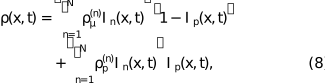
where  is the indicator function of the cylinder associated with the proteins and
  is the local SLD of the protein within the nth layer of the membrane. Because indicator functions can only take the value 0 or 1, the first term in equation (8) assigns the SLD of the membrane to the points in space outside the cylinders and the second term assigns the SLD of the protein to the points inside the cylinders.
Note that the general expression in equation (8) also allows us to address the case of proteins protruding from the membrane, possibly in an asymmetric way (see Fig. 3). This situation is modelled by adding bogus layers on both sides of the true membrane with the same SLD as the solvent, e.g.  =
=  = 0. Letting the protein SLD be n dependent enables one to assign a lower scattering contrast to any protruding part, as would be expected if these parts were swollen with solvent. Similarly, the approach also enables one to model a protein that extends through an arbitrary fraction of the membrane, by equating the SLDs
  for suitable values of n.
![[Figure 3]](jo5125fig3thm.gif) | Figure 3 Examples of configurations captured by equation (8) , whereby the protein (a) crosses through the membrane, (b) extends through a fraction of the membrane or (c) protrudes out of the membrane. In the last case, a bogus layer is added to the membrane with the same SLD as the solvent. The different colours in the figure denote different SLDs. |
Starting from equation (1), and without any assumption besides the statistical independence of the protein and membrane structures, i.e. of and , one finds that the correlation function that replaces equation (6) in the case of membranes with included proteins is

with

and

Here, ϕp is the of the protein cylinder phase, which is equal to the of proteins within the membrane in the case of Fig. 3(a). Comparison with equation (6) shows that  is the correlation function of the original membrane with the SLD of each layer replaced by an average value that accounts for the presence of proteins
  . The correlation function
  has a similar interpretation, with the SLD of each layer replaced by its contrast with the protein
  . The last factor in equation (9) is the correlation function of the protein cylinder phase, defined as

where the angle brackets are ensemble averages or averages over x1. Note that, by construction of the cylinders, the dependence of Cp(r, τ) on r is only through its component in the plane rxy. The last term in equation (12) ensures that the correlation function Cp(r, τ) converges to 0 for large values of rxy.
3.2. Specific models
3.2.1. Protein model
We are concerned here with the modelling of the cylinder phase in Fig. 2(b), which aims to capture the spatial distribution of proteins within the membrane plane. Mathematically, this boils down to proposing an analytical expression for Cp(r, τ) in equation (9), which is independent of the membrane model itself.
In the specific case of elastic scattering, the relevant correlation function is Cp(r, 0), i.e. for τ = 0. In that case, a possible approach consists of assuming a (2D) monodispersed hard-disc model with radius Rp. This is equivalent to writing the 2D Fourier transform of Cp(r, 0),

where θp is the number of proteins per unit area of the xy plane,  is their projected area and Pp(qxy) is their form factor.

where J1( ) is the Bessel function of the first kind of order 1. SHD(qxy) is the hard-disc structure factor. There exists no exact analytical form for SHD(qxy), but the following is a good approximation for low densities (Baus & Colot, 1986; Studart et al., 1996):

where ϕp = θpAp is the of protein cylinders.
Although this approach based on a can in principle be generalized to by time-dependent systems (Zhang et al., 2014), this can be done more easily with Boolean models (Sonntag et al., 1981; Jeulin, 2000; Gommes, 2022). In that spirit, the interactions of the proteins are ignored altogether and the discs are allowed to overlap. Due to this overlap, the volume fraction of the protein does not depend linearly on their surface concentration θp and the relationship is

For ϕp ≃ 0.25 the overlapping of discs amounts to less than 4% of the space. Although letting the discs (and proteins) overlap is physically unrealistic, from a scattering perspective this assumption is relatively inconsequential. The corresponding in-plane correlation function is

where K(rxy, 0) is the intersection area of two discs with their centres at a distance rxy from each other, namely

for rxy ≤ 2R and K = 0 otherwise. In the limit of  , the correlation function converges to Cp ≃ θpK. In that limit, the scattering coincides with equation (13) with SHD = 1. The approach based on Boolean models is easily generalized to from time-dependent structures by letting the proteins move in the xy plane. Equation (17) remains valid in that general case, only with K(rxy, τ) obtained from K(rxy, 0) in equation (18) via convolution with the protein displacement law (Gommes, 2022).
3.2.2. Slab membrane model
The simplest membrane model we consider is a static and deterministic scattering density profile ρ(z), independent of both x and y (Kiselev et al., 2002; Kučerka et al., 2004). In this case, the Fourier transform of Cρ(r) from equation (3) is

where ρ(qz) is the 1D Fourier transform of ρ(z) and the two delta functions arise from Cρ(r) being independent of the in-plane components of r. The rotational average of I(q) uniformly over all directions of space is

This results from integrating equation (19) over a sphere of radius q and dividing by its area 4πq2.
When proteins are present in the membrane, the corresponding scattering is obtained as the Fourier transform of equation (9). After averaging over all directions of space, the result is

where ρ(a)(qz) and ρ(c)(qz) are the Fourier transforms of the modified SLD profiles with ρ(z) → (1 − ϕp)ρ(z) + ϕpρp and ρ(z) → ρ(z) − ρp, respectively. In the second term of equation (21) the integration results from rotational averaging. μ is the cosine of the azimuthal angle and Ip(q, τ) is the 2D Fourier transform of Cp(rxy, τ) within the membrane plane, namely

where J0( ) is the Bessel function of the first kind of order zero. Note that, in the particular case of elastic scattering by a static structure, Ip(qxy, 0) can be modelled as in equation (13).
We now consider the particular case of membranes made up of amphiphilic molecules with a hydrophobic chain of length lC and a hydrophilic head of thickness lH. To keep the discussion general, we also allow the presence of solvated parts of proteins that protrude from the membrane over a distance lS on both sides. The Fourier transform of the corresponding SLD is

where ρS, ρH and ρC are the SLDs in each region. This expression corresponds to the scattering density contrasted with the void. When contrasted with the solvent and in the presence of membrane proteins, ρS, ρH and ρC must first be formally replaced by the protein-corrected average and contrasted values, from which ρS is afterwards subtracted. In other words, ρ(a)(q) and ρ(c)(q) are obtained by replacing the SLDs in equation (23) by

and

respectively.
3.2.3. Gaussian membrane model
The general procedure in Fig. 2 and equation (9) for adding proteins to an existing membrane model is not restricted to slabs. We discuss here the case of a Gaussian membrane model, which was developed for the joint analysis of both elastic and inelastic scattering data (Gommes et al., 2024). The model is illustrated in Fig. 4. In addition to the same parameters as in the slab models, capturing the thicknesses of the various sublayers, the Gaussian model has other parameters characterizing the random fluctuations.
![[Figure 4]](jo5125fig4thm.gif) | Figure 4 Realizations of the Gaussian membrane model with thickness 40 Å and (a) lα = 0, identical to a slab model, (b) lα = 15 Å and lxy = 100 Å, (c) lα = 30 Å and lxy = 100 Å, and (d) lα = 15 Å and lxy = 50 Å. The corresponding scattering patterns for a homogeneous SLD are shown underneath. |
In the general model, both compression and bending fluctuations are accounted for. In the simpler version that we consider here, only bending fluctuations are included. These are captured by two parameters: a lα controlling the amplitude of the fluctuations, and a lxy controlling the size of the deformations in the direction parallel to the membrane. The different effects of these two parameters are illustrated in Figs. 4(a) to 4(d). In the case of inelastic scattering, additional parameters are needed to characterize the dynamics of the fluctuations, as we will discuss later.
In the context of the Gaussian model, the correlation function Cρ(r, τ) comprises two contributions,

The first term accounts for the average structure, averaged either over time or over the entire xy plane. The second term accounts for the deviations from the average, i.e. for the statistical fluctuations, which are generally time dependent. Mathematically, the first term in equation (26) is the self-convolution of the average SLD profile, namely

where 〈ρ〉(z) is given in equation (22) of Gommes et al. (2024). Because this function depends only on the coordinate rz, it leads to a contribution identical to the slab model in equation (21).
The second term in equation (26) characterizes the deviations from the average structure. The latter fluctuations are captured in the model by a Gaussian random field, which is comprehensively described by its space and time correlation function. The specific analytical form that we assume here is

which is a particular case of equation (45) of Gommes et al. (2024) in the limit lz → ∞. This limit is structurally equivalent to suppressing compression fluctuations of the membrane. Equation (28) describes the membrane bending in terms of Gaussian wave packets of size lxy that randomly move in the xy plane with D and randomly overlap positively or negatively. Based on gW(rxy, τ), the scattering length correlation function  is calculated using equation (26) of Gommes et al. (2024). The latter equation still holds when proteins are present in the membrane, but two versions are calculated for the protein-corrected SLDs
  and
and  in line with equations (10) and (11).
Note that the correlation function of the fluctuations depends on both the out-of-plane rz and in-plane rxy components of r. In that case, unlike the slab model, the evaluation of the second term in equation (9) cannot be done directly in reciprocal space. Therefore, calculating the protein scattering with the Gaussian membrane model requires an analytical expression for the protein correlation function Cp(rxy, τ) in real space. In that respect, the Boolean model is more convenient than the hard-disc model [see equation (17)].
4. Discussion
The chemical composition of RBC membranes is notoriously complex, with a variety of lipid molecules forming a heterogeneous bilayer structure containing both ordered and disordered phases, in which up to 50 different types of proteins are embedded (Mohandas & Gallagher, 2008; Himbert & Rheinstädter, 2022). In order to analyse the scattering data in Fig. 1 with as simple a model as possible, we assume a unique average lipid comprising a hydrophilic head and hydrophobic chain with thicknesses lH and lC, respectively. Biological RBCs also have a spectrin-based cytoskeleton, which is anchored to the RBC membrane via the junctional and ankyrin protein complexes (Bennett & Baines, 2001). As a consequence of the specific RBC liposome preparation used in this work, the cytoskeleton is absent from the samples, but the membrane proteins are largely preserved.
Dupuy & Engelman (2008) provide an estimate of 23% for the overall transmembrane fraction of RBC. Himbert et al. (2017) report that these proteins can effectively be represented as domains having a characteristic size of 28 Å in the membrane plane and a transmembrane thickness of 40.6 Å. More detailed analysis is obtained by separating the proteins using gel electrophoresis; the prevailing proteins are visible as a third band on such gels. The biological function of these `band 3' proteins is to transport anions across the membrane (Aoki, 2017; Poole, 2000). Because of their prevalence, we hereafter consider that the band 3 protein is representative of all other RBC membrane proteins.
The approximate structure and size of the band 3 protein have been determined using AlphaFold (Abramson et al., 2024). The AlphaFold protein model has a thickness of around 40 Å, close to the thickness of the RBC membrane, and a comparable size in the orthogonal direction. Independent cryo-electron microscopy (cryo-EM) shows that the shape of this band 3 protein as a monomer is that of an ellipse with major/minor axes of 59/31 Å and a transmembrane length of 47 Å (PDB ID 7tw2; Xia et al., 2022). These dimensions are similar to those reported by Himbert et al. (2017), which reassures us in our assumption that the band 3 protein is representative of all transmembrane domains in RBCs. The cryo-EM structure (Xia et al., 2022) is shown in Fig. 5. The structural models shown in the figure were generated using PyMOL (Schrödinger LLC, 2015). In the range of q relevant to the data of Fig. 1, the inner structure of the band 3 protein cannot be resolved by small-angle scattering. In order to calculate the scattered intensities, the band 3 protein is therefore assumed to have a homogeneous SLD. The following values are calculated from the protein composition: ρp ≃ 12.062 × 10⁻⁶ Å−2 for X-rays and ρp ≃ 1.685 × 10⁻⁶ Å−2 for neutrons (Kienzle, 2025).
![[Figure 5]](jo5125fig5thm.gif) | Figure 5 Structure and size of the membrane component of the band 3 protein in the monomeric state as found in RBC membranes, as determined by cryo-electron microscopy. (a) Side view and (b) top view. |
The fitting of the membrane scattering data by the slab model with included proteins is shown in Fig. 6. The band 3 protein is modelled as an equivalent cylinder with radius Rp = 21.4 Å, corresponding to an area  identical to that of the actual elliptical section. The protein is assumed not to extend beyond the limits of the membrane, corresponding to setting lS = 0 in equation (23). The following SLDs are used for the lipid heads and chains: ρH ≃ 14.2 × 10⁻⁶ Å−2 and ρC ≃ 8.1 × 10⁻⁶ Å−2 for X-rays, and ρH ≃ 1.87 × 10⁻⁶ Å−2 and ρC ≃ −0.07 × 10⁻⁶ Å−2 for neutrons, which are borrowed from earlier work (Gommes et al., 2024). These values are comparable (though not identical) to the values calculated for complex RBC membranes according to the composition reported by Himbert et al. (2021). In all cases, the solvent is heavy water, with ρW ≃ 9.37 × 10⁻⁶ Å−2 for X-rays and ρW ≃ 6.37 × 10⁻⁶ Å−2 for neutrons.
![[Figure 6]](jo5125fig6thm.gif) | Figure 6 Fitting of the membrane (a) SANS and (b) SAXS data with the slab model with included proteins. The blue and green lines are the membrane and protein contributions, respectively, corresponding to the first and second terms in equation (21) , and the red curve is their sum. The solid and dashed lines are the Boolean and hard-disc protein models, respectively. The fitting range extends from q = 8 × 10⁻³ Å−1 to q = 0.5 Å−1. |
Because the radius of the protein/cylinder is imposed, the only fitting parameters for the fit are lH and lC. Both the hard-disc and Boolean models were tested, and the fitted parameters are very similar in the two cases: lC ≃ 16.3 Å and lH ≃ 5.0 Å for the Boolean model (total membrane thickness 42.6 Å), and lC ≃ 16.6 Å and lH ≃ 4.5 Å for the hard-disc model (total membrane thickness 42.2 Å). In the case of the SANS data, the two models are indistinguishable on the scale of Fig. 6. Note that the total thickness of the membrane is close to the size of the band 3 protein in that direction [Fig. 5(a)], which retrospectively justifies our assumption that the protein does not protrude from the membrane.
In the case of neutron SLDs, the protein contribution to the scattering is found to be two orders of magnitude smaller than the membrane contribution [Fig. 6(a)]. This means that the contribution of band 3 to the SANS is comprehensively captured by its effect on the average SLD, i.e. by the first term in equation (9). Interestingly, this is not the case for the SAXS, for which the protein itself is the the largest contributer to the scattering at intermediate q. In particular, the second term in equation (9) is responsible for the shoulder in the scattering pattern around q ≃ 0.1 Å−1 [Fig. 6(b)].
Under biological conditions, the band 3 protein is generally present in RBC membranes in the form of a dimer, corresponding to an elongated elliptical section with major/minor axes 105/31 Å (Xia et al., 2022). The scattering from this type of structure can be calculated from the general construction in Fig. 2 by using cylinders with elliptical cross sections instead of circular. For the hard-disc model, this is done by replacing equation (14) by the form factor for ellipses, and by identifying the hard-disc radius in the structure factor in equation (15) with the ellipse's major axis. For the Boolean model, this is done by replacing equation (18) by the geometric covariogram of randomly oriented ellipses. The results of the fits are reported in Fig. S1 and Table S1 in the supporting information. Globally, the quality of the fits is slightly degraded when dimers are assumed instead of monomers. However, the effect is very limited. This results from the convolution in the second term of equation (21), by which subtle features in protein scattering Ip(qxy) are smeared in the total scattering pattern of the membrane. In the following, we assume band 3 monomers, modelled as cylinders with a simple circular section.
As an alternative to the slab model, the same SAXS and SANS data sets were also jointly analysed with the Gaussian membrane model. The result of the fit is shown in Fig. 7, together with a realization of the model. The fitted parameters show that the membrane is subject to significant fluctuation. In particular, the standard deviation of the membrane displacement in direction z is lα ≃ 23 Å and the lateral extension of the deformations in the membrane plane is lxy ≃ 63 Å. These values are of the same order of magnitude as those reported in earlier work for different types of membranes (Monzel & Sengupta, 2016; Gommes et al., 2024). Because of these fluctuations, the actual area of the membrane is slightly larger than its projected area in the xy plane. The roughness factor, calculated using equation (S10) of Gommes et al. (2024), is about 1.2. Using this value, the equivalent thicknesses of the chain and head parts of the membrane can be obtained from the fitted parameters of the Gaussian membrane model as the volume-to-area ratios. The values are lC ≃ 16.1 Å and lH ≃ 5 Å, corresponding to a total membrane thickness of 42.2 Å, very similar to the slab model.
![[Figure 7]](jo5125fig7thm.gif) | Figure 7 (a) Fitting of the membrane SANS and SAXS data with the Gaussian random membrane model with included band 3 protein. The circles are the data [same as in Fig. 1 (a)] and the solid lines are the fits. (b) Particular realization of the model with the protein-defining cylinders shown in red, and with the two shades of grey highlighting the chain and head parts. The fitting range extends from q = 8 × 10⁻³ Å−1 to q = 0.5 Å−1. |
These results agree with previous work on oriented multi-lamellar stacks of RBC membranes (Himbert et al., 2017; Himbert & Rheinstädter, 2022). In that work liquid-ordered (lo) and -disordered (ld) lipid phases in RBC membranes, with thicknesses of 48 Å lo and 41 Å ld, and a membrane protein fraction with a thickness of 40.6 Å were reported. Reported ratios of the components are 30.2% lo, 45.0% ld and 24.8% membrane protein (Himbert et al., 2017; Himbert & Rheinstädter, 2022). Taking into account the weighted fractions of the lipid ordered and disordered phases, an average thickness of the RBC membrane of 43.8 Å is obtained.
Elastic scattering data, such as SAXS or SANS, capture only the instantaneous structure of the membrane and are blind to its dynamics. The realizations in Figs. 4(b)–4(d) and Fig. 7(b) are therefore to be understood as instantaneous snapshots of a dynamic structure. Insights into the dynamics of the fluctuations can be experimentally obtained from NSE experiments: the thus-obtained intermediate scattering function I(q, τ) is plotted in Fig. 8. Because the SLDs relevant to these experiments are the same as for SANS, one can safely assume that the band 3 protein does not contribute significantly to the NSE data [Fig. 6(a)]. In other words, the NSE data can be modelled on the basis of the first term in equation (9), namely  , where the proteins only contribute through the modification of the membrane's average SLD.
![[Figure 8]](jo5125fig8thm.gif) | Figure 8 (a) One-parameter fit of the NSE data with the Gaussian membrane model [same data as in Fig. 1 (b)]. The red surface is obtained with the same structural parameters as the SAXS and SANS data, with fitted diffusion coefficient D = 1.85 Å2 ns. (b) Highlighting the fit for (b1) q = 0.036 Å−1, (b2) q = 0.071 Å−1 and (b3) q = 0.109 Å−1. |
The fitting of the Gaussian membrane model to the NSE data is illustrated in Fig. 8. All structural parameters of the model were fixed to their values obtained from the fitting of the SANS and SAXS data. The dynamics of the membrane are then described by the function gW(rxy, τ) from equation (28), which has the diffusion coefficient D as the only additional parameter. The value obtained from the least-squares fitting of the entire NSE data set is D ≃ 1.85 Å2 ns−1. This value can be converted to a typical correlation time by noting that any memory of the earlier structure is lost when the wave packets responsible for the membrane deformation have diffused over a distance larger than their size lxy. The correlation time is therefore  = lxy2/(4D) ≃ 960 ns, where the factor 4 is typical of 2D random walks. Time-dependent realizations of the model over a time span of 3τc are shown in Fig. 9.
![[Figure 9]](jo5125fig9thm.gif) | Figure 9 Time-dependent realization of the Gaussian random membrane model, with structural parameters obtained from the SAXS and SANS data and dynamic parameter D obtained from NSE data. The two shades of grey indicate the head and chain parts of the membrane. |
5. Conclusions
We have developed a general mathematical construction for adding protein-like inclusions to any pre-existing membrane model and for calculating the resulting scattering The general construction is that of Fig. 2, where the inclusions are defined as cylinders that intersect with the membrane. The shape and size of the inclusions can be tuned via the cross section of the cylinders. Through suitable choice of the SLDs along the cylinder, the construction allows one to model inclusions that would cross an arbitrary fraction of the membrane and/or possibly protrude from it (Fig. 3).
In all cases, the elastic and/or inelastic scattering cross sections are calculated using the Fourier transform of equation (9). This expression contains two contributions calculated from the pre-existing membrane model, with two SLDs corresponding to the protein-dependent average and to the local contrast between the protein and the membrane. The protein structure is comprehensively captured through its space and time correlation function in the membrane plane. The versatility of the approach has been illustrated by applying it to two qualitatively different pre-existing membrane models, namely a slab model to analyse the SAXS and SANS of RBC membranes, and a Gaussian model to analyse their SAXS, SANS and NSE.
The present work has several ramifications. Higher-resolution versions of the model could easily be produced to describe e.g. channel proteins. This could be done by introducing two concentric cylinders in the construction of Fig. 2, for the inner channel and for the surrounding wall. On the experimental side, neutron scattering length contrast between the band 3 protein and the RBC membrane proved insufficient to track the band 3 mobility in the available NSE data. Should such experiments be possible with a suitable contrast, the models presented here would offer simple procedures to discriminate in the NSE data between the contribution from the membrane fluctuations and that from the protein mobility within the membrane.
Supporting information
Additional figure and table. DOI: https://doi.org/10.1107/S1600576725007277/jo5125sup1.pdf
Acknowledgements
We gratefully acknowledge beam-time allocation for the neutron scattering experiments on the small-angle diffractometer D22 and on the high-resolution spin–echo spectrometer IN15 at the Institut Laue–Langevin, Grenoble, France, and for X-ray experiments on the KWS-X laboratory beamline at the Heinz Maier-Leibnitz Zentrum in Garching, Germany. Open access funding enabled and organized by Projekt DEAL.
Conflict of interest
There is no conflict of interest.
Data availability
Neutron scattering raw data can be downloaded from the ILL data repository https://doi.ill.fr/10.5291/ILL-DATA.8-03-1061 (Matsarskaia et al., 2023).
Funding information
C. J. Gommes is grateful to the Funds for Scientific Research (FRS-FNRS, Belgium) for supporting this work through a Research Associate position.
References
 Abramson, J., Adler, J., Dunger, J., Evans, R., Green, T., Pritzel, A., Ronneberger, O., Willmore, L., Ballard, A. J., Bambrick, J., Bodenstein, S. W., Evans, D. A., Hung, C.-C., O'Neill, M., Reiman, D., Tunyasuvunakool, K., Wu, Z., Žemgulytė, A., Arvaniti, E., Beattie, C., Bertolli, O., Bridgland, A., Cherepanov, A., Congreve, M., Cowen-Rivers, A. I., Cowie, A., Figurnov, M., Fuchs, F. B., Gladman, H., Jain, R., Khan, Y. A., Low, C. M. R., Perlin, K., Potapenko, A., Savy, P., Singh, S., Stecula, A., Thillaisundaram, A., Tong, C., Yakneen, S., Zhong, E. D., Zielinski, M., Žídek, A., Bapst, V., Kohli, P., Jaderberg, M., Hassabis, D. & Jumper, J. M. (2024). Nature 630, 493–500. Web of Science CrossRef CAS PubMed Google Scholar
Anghel, V. N. P., Bolmatov, D. & Katsaras, J. (2018). Phys. Rev. E 97, 062405. CrossRef PubMed Google Scholar
Aoki, T. (2017). Membranes 7, 56. CrossRef PubMed Google Scholar
Baus, M. & Colot, J.-L. (1986). J. Phys. C Solid State Phys. 19, L643–L648. CrossRef Google Scholar
Bennett, V. & Baines, A. J. (2001). Physiol. Rev. 81, 1353–1392. CrossRef PubMed CAS Google Scholar
Büldt, G., Gally, H., Seelig, A., Seelig, J. & Zaccai, G. (1978). Nature 271, 182–184. PubMed Google Scholar
Chappa, V., Smirnova, Y., Komorowski, K., Müller, M. & Salditt, T. (2021). J. Appl. Cryst. 54, 557–568. Web of Science CrossRef CAS IUCr Journals Google Scholar
Dewhurst, C. D. (2023). J. Appl. Cryst. 56, 1595–1609. Web of Science CrossRef CAS IUCr Journals Google Scholar
Doster, W. & Longeville, S. (2007). Biophys. J. 93, 1360–1368. Web of Science CrossRef PubMed CAS Google Scholar
Dupuy, A. D. & Engelman, D. M. (2008). Proc. Natl Acad. Sci. USA 105, 2848–2852. CrossRef PubMed CAS Google Scholar
Gommes, C. J. (2018). Microporous Mesoporous Mater. 257, 62–78. Web of Science CrossRef CAS Google Scholar
Gommes, C. J. (2022). Gels 8, 236. CrossRef PubMed Google Scholar
Gommes, C. J., Dubey, P. S., Stadler, A. M., Wu, B., Czakkel, O., Porcar, L., Jaksch, S., Frielinghaus, H. & Holderer, O. (2024). Phys. Rev. E 110, 034608. CrossRef PubMed Google Scholar
Gommes, C. J., Jaksch, S. & Frielinghaus, H. (2021a). J. Appl. Cryst. 54, 1832–1843. CrossRef CAS IUCr Journals Google Scholar
Gommes, C. J., Zorn, R., Jaksch, S., Frielinghaus, H. & Holderer, O. (2021b). J. Chem. Phys. 155, 024121. CrossRef PubMed Google Scholar
Himbert, S., Alsop, R. J., Rose, M., Hertz, L., Dhaliwal, A., Moran-Mirabal, J. M., Verschoor, C. P., Bowdish, D. M., Kaestner, L., Wagner, C. & Rheinstädter, M. C. (2017). Sci. Rep. 7, 39661. CrossRef PubMed Google Scholar
Himbert, S., D'Alessandro, A., Qadri, S. M., Majcher, M. J., Hoare, T., Sheffield, W. P., Nagao, M., Nagle, J. F. & Rheinstädter, M. C. (2022). PLoS One 17, e0269619. CrossRef PubMed Google Scholar
Himbert, S., Qadri, S. M., Sheffield, W. P., Schubert, P., D'Alessandro, A. & Rheinstädter, M. C. (2021). PLoS One 16, e0259267. CrossRef PubMed Google Scholar
Himbert, S. & Rheinstädter, M. C. (2022). Front. Physiol. 13, 953257. CrossRef PubMed Google Scholar
Jeulin, D. (2000). Stat. Comput. 10, 121–132. Web of Science CrossRef Google Scholar
Kienzle, P. (2025). Neutron activation and scattering calculator, https://www.ncnr.nist.gov/resources/activation/. Google Scholar
Kinnun, J. J., Scott, H. L., Bolmatov, D., Collier, C. P., Charlton, T. R. & Katsaras, J. (2023). Biophys. J. 122, 931–949. Web of Science CrossRef CAS PubMed Google Scholar
Kiselev, M. A., Lesieur, P., Kisselev, A. M., Lombardo, D. & Aksenov, V. L. (2002). Appl. Phys. A 74(Suppl. II), S1654–S1656. Google Scholar
Kiselev, M., Zemlyanaya, E., Ryabova, N., Hauss, T., Dante, S. & Lombardo, D. (2008). Chem. Phys. 345, 185–190. CrossRef CAS Google Scholar
Krueger, S., Chen, S. H., Hofrichter, J. & Nossal, R. (1990). Biophys. J. 58, 745–757. CrossRef CAS PubMed Google Scholar
Krueger, S. & Nossal, R. (1988). Biophys. J. 53, 97–105. CrossRef CAS PubMed Web of Science Google Scholar
Krugmann, B., Koutsioubas, A., Haris, L., Micciulla, S., Lairez, D., Radulescu, A., Förster, S. & Stadler, A. M. (2021). Front. Chem. 9, 631277. CrossRef PubMed Google Scholar
Krugmann, B., Radulescu, A., Appavou, M.-S., Koutsioubas, A., Stingaciu, L. R., Dulle, M., Förster, S. & Stadler, A. M. (2020). Sci. Rep. 10, 16691. CrossRef PubMed Google Scholar
Kučerka, N., Nagle, J. F., Feller, S. E. & Balgavý, P. (2004). Phys. Rev. E 69, 051903. Google Scholar
Levental, I. & Lyman, E. (2023). Nat. Rev. Mol. Cell Biol. 24, 107–122. CrossRef CAS PubMed Google Scholar
Longeville, S. & Stingaciu, L.-R. (2017). Sci. Rep. 7, 10448. CrossRef PubMed Google Scholar
Matsarskaia, O., Czakkel, O., Graf von Westarp, I., Pusterla, J. M. & Stadler, A. M. (2023). The role of red blood cells in long Covid: a SANS and NSE study, https://doi.ill.fr/10.5291/ILL-DATA.8-03-1061. Google Scholar
Mohandas, N. & Gallagher, P. G. (2008). Blood 112, 3939–3948. CrossRef PubMed CAS Google Scholar
Monzel, C. & Sengupta, K. (2016). J. Phys. D Appl. Phys. 49, 243002. CrossRef Google Scholar
Nickels, J. D., Smith, J. C. & Cheng, X. (2015). Chem. Phys. Lipids 192, 87–99. CrossRef CAS PubMed Google Scholar
Pedersen, J. S. (1997). Adv. Colloid Interface Sci. 70, 171–210. CrossRef CAS Web of Science Google Scholar
Poole, J. (2000). Blood Rev. 14, 31–43. CrossRef PubMed CAS Google Scholar
Pusterla, J. M., Schneck, E., Funari, S. S., Démé, B., Tanaka, M. & Oliveira, R. G. (2017). PLoS One 12, e0184881. CrossRef PubMed Google Scholar
Pusterla, J. M., Schneck, E. & Oliveira, R. G. (2020). Cells 9, 670. CrossRef PubMed Google Scholar
Schrödinger LLC (2015). The PyMOL molecular graphics system. Version 1.8. https://www.pymol.org/. Google Scholar
Shou, K., Sarter, M., de Souza, N. R., de Campo, L., Whitten, A. E., Kuchel, P. W., Garvey, C. J. & Stadler, A. M. (2020). R. Soc. Open Sci. 7, 201507. Web of Science CrossRef PubMed Google Scholar
Sivia, D. S. (2011). Elementary scattering theory. Oxford University Press. Google Scholar
Sonntag, U., Stoyan, D. & Hermann, H. (1981). Phys. Status Solidi A 68, 281–288. CrossRef CAS Google Scholar
Spinozzi, F., Alcaraz, J.-P., Ortore, M. G., Gayet, L., Radulescu, A., Martin, D. K. & Maccarini, M. (2022). Langmuir 38, 15026–15037. CrossRef CAS PubMed Google Scholar
Spinozzi, F., Barbosa, L. R. S., Corucci, G., Mariani, P. & Itri, R. (2023). J. Appl. Cryst. 56, 1348–1360. CrossRef CAS IUCr Journals Google Scholar
Squires, G. L. (2012). Introduction to the theory of thermal neutron scattering, 3rd ed. Cambridge University Press. Google Scholar
Stadler, A., Digel, I., Artmann, G., Embs, J., Zaccai, G. & Büldt, G. (2008a). Biophys. J. 95, 5449–5461. CrossRef PubMed CAS Google Scholar
Stadler, A. M., Embs, J. P., Digel, I., Artmann, G. M., Unruh, T., Büldt, G. & Zaccai, G. (2008b). J. Am. Chem. Soc. 130, 16852–16853. CrossRef PubMed CAS Google Scholar
Stadler, A. M., Garvey, C. J., Bocahut, A., Sacquin-Mora, S., Digel, I., Schneider, G. J., Natali, F., Artmann, G. M. & Zaccai, G. (2012). J. R. Soc. Interface 9, 2845–2855. CrossRef CAS PubMed Google Scholar
Stadler, A. M., Garvey, C. J., Embs, J. P., Koza, M., Unruh, T., Artmann, G. & Zaccai, G. (2014). Biochim. Biophys. Acta 1840, 2989–2999. CrossRef CAS PubMed Google Scholar
Stadler, A. M., van Eijck, L., Demmel, F. & Artmann, G. (2011). J. R. Soc. Interface 8, 590–600. CrossRef CAS PubMed Google Scholar
Studart, N., Da Silveira, H. V. & De Freitas, U. (1996). Mod. Phys. Lett. B 10, 393–400. CrossRef CAS Google Scholar
Van Hove, L. (1954). Phys. Rev. 95, 249–262. CrossRef CAS Web of Science Google Scholar
von Heijne, G. (2006). Nat. Rev. Mol. Cell Biol. 7, 909–918. CrossRef PubMed CAS Google Scholar
Watson, H. (2015). Essays Biochem. 59, 43–69. CrossRef PubMed Google Scholar
Xia, X., Liu, S. & Zhou, Z. H. (2022). Nat. Struct. Mol. Biol. 29, 698–705. CrossRef CAS PubMed Google Scholar
Zhang, B.-K., Li, H.-S., Tian, W.-D., Chen, K. & Ma, Y.-Q. (2014). J. Chem. Phys. 140, 094506. CrossRef PubMed Google Scholar
This is an open-access article distributed under the terms of the Creative Commons Attribution (CC-BY) Licence, which permits unrestricted use, distribution, and reproduction in any medium, provided the original authors and source are cited.
| JOURNAL OF APPLIED CRYSTALLOGRAPHY |
access


