 | Acta Crystallographica Section E Acta Crystallographica Section E CRYSTALLOGRAPHIC COMMUNICATIONS |


 journal menu


organic compounds
| CRYSTALLOGRAPHIC COMMUNICATIONS |
 access
4,4′-Bipyridine–cyanoacetic acid (1/2)

aCollege of Chemistry and Environmental Science, Henan Normal University, Xinxiang 453007, People's Republic of China
*Correspondence e-mail: [email protected]
Crystals of the title adduct, C10H8N2·2C3H3NO2, were obtained from a methanol/water solution of cyanoacetic acid and 4,4′-bipyridine at room temperature. In the crystal structure, cyanoacetic acid and centrosymmetric 4,4′-bipyridine molecules are linked by O—H⋯N hydrogen bonds to form three-component supramolecular adducts. The acidic H atom is almost midway between the O and N atoms of the cyanoacetic acid and bipyridine molecules, with O—H and N—H distances of 1.19 (3) and 1.39 (3) Å, respectively, so that the H-atom transfer is best regarded as partial. The three-component adducts are further interconnected with neighboring molecules by weak intermolecular C—H⋯O and C—H⋯N hydrogen bonds and by π–π stacking interactions [centroid–centroid distance = 3.7200 (11) Å] to generate a three-dimensional supramolecular structure.
Related literature
For similar partial proton transfer from a carbonic acid towards a nitrogen base, see: Farrell et al. (2002a![[Farrell, D. M. M., Ferguson, G., Lough, A. J. & Glidewell, C. (2002a). Acta Cryst. B58, 272-288.]](../../../../../../logos/arrows/e_arr.gif "Farrell, D. M. M., Ferguson, G., Lough, A. J. & Glidewell, C. (2002a). Acta Cryst. B58, 272-288.") ,b); For C—H⋯O and C—H⋯N hydrogen bonds, see: Balakrishna et al. (2005); Wang et al. (2008).
,b); For C—H⋯O and C—H⋯N hydrogen bonds, see: Balakrishna et al. (2005); Wang et al. (2008).
![[Scheme 1]](zl2142scheme1.gif)
Experimental
Crystal data
|
Refinement
|
|
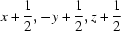 ; (ii)
 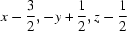 .
. Data collection: SMART (Bruker, 1997); cell refinement: SAINT (Bruker, 1997); data reduction: SAINT; program(s) used to solve structure: SHELXS97 (Sheldrick, 2008); program(s) used to refine structure: SHELXL97 (Sheldrick, 2008); molecular graphics: SHELXTL (Sheldrick, 2008); software used to prepare material for publication: SHELXTL.
Supporting information
contains datablocks I, global. DOI: 10.1107/S1600536808031322/zl2142sup1.cif
Structure factors: contains datablock I. DOI: 10.1107/S1600536808031322/zl2142Isup2.hkl
Cyanoacetic acid (0.2 mmol) and 4,4'-bipyridine (0.2 mmol) were dissolved in methanol (5 ml) and water (1 ml) at room temperature. The single crystals of the title compound were obtained from the solution after ten days.
H1D was found in a difference Fourier map and was refined with Uiso(H) = 1.5Ueq(O). All other H atoms were positioned geometrically and treated as riding, with C—H bonding lengths constrained to 0.93 (aromatic CH) or 0.97 Å (methylene CH2), and with Uiso(H) = 1.2Ueq(C).
Data collection: SMART (Bruker, 1997); cell SAINT (Bruker, 1997); data reduction: SAINT (Bruker, 1997); program(s) used to solve structure: SHELXS97 (Sheldrick, 2008); program(s) used to refine structure: SHELXL97 (Sheldrick, 2008); molecular graphics: SHELXTL (Sheldrick, 2008); software used to prepare material for publication: SHELXTL (Sheldrick, 2008).
![[Figure 1]](./zl2142fig1thm.gif) | Fig. 1. A view of the title compound, showing 30% probability displacement ellipsoids. Symmetry code: (iv) -x, 1 - y,-z. |
![[Figure 2]](./zl2142fig2thm.gif) | Fig. 2. A view of the three-dimensional hydrogen-bonding pattern network. |
![[Figure 3]](./zl2142fig3thm.gif) | Fig. 3. View of the π-π interactions between bipyridine rings in the of the title compound. |
| C10H8N2·2C3H3NO2 | F(000) = 340 |
| Mr = 326.31 | Dx = 1.332 Mg m−3 |
| Monoclinic, P21/n | Mo Kα radiation, λ = 0.71073 Å |
| a = 4.887 (2) Å | Cell parameters from 1445 reflections |
| b = 21.383 (10) Å | θ = 2.8–27.1° |
| c = 7.921 (4) Å | µ = 0.10 mm−1 |
| β = 100.664 (8)° | T = 291 K |
| V = 813.4 (7) Å3 | Block, colorless |
| Z = 2 | 0.34 × 0.26 × 0.19 mm |
| Bruker SMART CCD area-detector diffractometer | 1487 independent reflections |
| Radiation source: fine-focus sealed tube | 1153 reflections with I > 2σ(I) |
| Graphite monochromator | Rint = 0.031 |
| ϕ and ω scans | θmax = 25.5°, θmin = 2.8° |
| Absorption correction: multi-scan (SADABS; Bruker, 1997) | h = −5→5 |
| Tmin = 0.952, Tmax = 0.982 | k = −25→24 |
| 3537 measured reflections | l = −9→7 |
| Refinement on F2 | Primary atom site location: structure-invariant direct methods |
| Least-squares matrix: full | Secondary atom site location: difference Fourier map |
| R[F2 > 2σ(F2)] = 0.046 | Hydrogen site location: inferred from neighbouring sites |
| wR(F2) = 0.133 | H atoms treated by a mixture of independent and constrained refinement |
| S = 1.04 | w = 1/[σ2(Fo2) + (0.0577P)2 + 0.1963P] where P = (Fo2 + 2Fc2)/3 |
| 1487 reflections | (Δ/σ)max < 0.001 |
| 112 parameters | Δρmax = 0.16 e Å−3 |
| 0 restraints | Δρmin = −0.15 e Å−3 |
| C10H8N2·2C3H3NO2 | V = 813.4 (7) Å3 |
| Mr = 326.31 | Z = 2 |
| Monoclinic, P21/n | Mo Kα radiation |
| a = 4.887 (2) Å | µ = 0.10 mm−1 |
| b = 21.383 (10) Å | T = 291 K |
| c = 7.921 (4) Å | 0.34 × 0.26 × 0.19 mm |
| β = 100.664 (8)° |
| Bruker SMART CCD area-detector diffractometer | 1487 independent reflections |
| Absorption correction: multi-scan (SADABS; Bruker, 1997) | 1153 reflections with I > 2σ(I) |
| Tmin = 0.952, Tmax = 0.982 | Rint = 0.031 |
| 3537 measured reflections |
| R[F2 > 2σ(F2)] = 0.046 | 0 restraints |
| wR(F2) = 0.133 | H atoms treated by a mixture of independent and constrained refinement |
| S = 1.04 | Δρmax = 0.16 e Å−3 |
| 1487 reflections | Δρmin = −0.15 e Å−3 |
| 112 parameters |
| x | y | z | Uiso*/Ueq | ||
| O1 | 0.9569 (3) | 0.33450 (7) | 0.35022 (19) | 0.0763 (5) | |
| H1D | 0.779 (6) | 0.3714 (12) | 0.298 (3) | 0.114* | |
| O2 | 1.0674 (4) | 0.40335 (8) | 0.5596 (2) | 0.1022 (6) | |
| N1 | 0.5590 (3) | 0.40726 (7) | 0.21445 (19) | 0.0595 (4) | |
| N2 | 1.4242 (5) | 0.21975 (10) | 0.3693 (3) | 0.1017 (7) | |
| C1 | 0.3898 (4) | 0.38664 (9) | 0.0757 (3) | 0.0729 (6) | |
| H1 | 0.4196 | 0.3468 | 0.0354 | 0.087* | |
| C2 | 0.1717 (4) | 0.42138 (9) | −0.0118 (3) | 0.0682 (6) | |
| H2 | 0.0604 | 0.4052 | −0.1100 | 0.082* | |
| C3 | 0.1174 (3) | 0.48036 (7) | 0.04596 (19) | 0.0464 (4) | |
| C4 | 0.2939 (4) | 0.50109 (9) | 0.1930 (2) | 0.0652 (5) | |
| H4 | 0.2662 | 0.5402 | 0.2384 | 0.078* | |
| C5 | 0.5109 (4) | 0.46370 (9) | 0.2722 (2) | 0.0685 (6) | |
| H5 | 0.6278 | 0.4787 | 0.3700 | 0.082* | |
| C6 | 1.1058 (4) | 0.35458 (9) | 0.4903 (2) | 0.0598 (5) | |
| C7 | 1.3428 (4) | 0.31156 (10) | 0.5682 (3) | 0.0707 (6) | |
| H7A | 1.5125 | 0.3360 | 0.5955 | 0.085* | |
| H7B | 1.3038 | 0.2948 | 0.6750 | 0.085* | |
| C8 | 1.3896 (4) | 0.25990 (10) | 0.4580 (3) | 0.0699 (6) |
| U11 | U22 | U33 | U12 | U13 | U23 | |
| O1 | 0.0708 (9) | 0.0714 (9) | 0.0772 (9) | 0.0193 (7) | −0.0112 (7) | −0.0097 (7) |
| O2 | 0.1424 (17) | 0.0813 (11) | 0.0760 (11) | 0.0340 (11) | 0.0021 (10) | −0.0164 (8) |
| N1 | 0.0558 (9) | 0.0595 (9) | 0.0611 (9) | 0.0096 (7) | 0.0053 (7) | 0.0059 (7) |
| N2 | 0.1006 (16) | 0.0809 (13) | 0.1175 (17) | 0.0300 (12) | 0.0043 (13) | −0.0100 (12) |
| C1 | 0.0752 (14) | 0.0532 (11) | 0.0818 (14) | 0.0146 (9) | −0.0073 (11) | −0.0079 (9) |
| C2 | 0.0700 (13) | 0.0540 (10) | 0.0708 (12) | 0.0087 (9) | −0.0122 (10) | −0.0092 (9) |
| C3 | 0.0465 (9) | 0.0460 (8) | 0.0468 (8) | 0.0003 (7) | 0.0088 (7) | 0.0027 (7) |
| C4 | 0.0685 (12) | 0.0620 (11) | 0.0592 (11) | 0.0143 (9) | −0.0038 (9) | −0.0121 (8) |
| C5 | 0.0663 (13) | 0.0744 (12) | 0.0583 (11) | 0.0123 (10) | −0.0051 (9) | −0.0077 (9) |
| C6 | 0.0676 (12) | 0.0595 (10) | 0.0536 (10) | 0.0058 (9) | 0.0143 (9) | 0.0026 (8) |
| C7 | 0.0672 (13) | 0.0827 (13) | 0.0586 (11) | 0.0084 (10) | 0.0025 (9) | 0.0020 (9) |
| C8 | 0.0613 (12) | 0.0669 (12) | 0.0773 (14) | 0.0145 (10) | 0.0021 (10) | 0.0099 (10) |
| O1—C6 | 1.283 (2) | C3—C4 | 1.388 (2) |
| O1—H1D | 1.19 (3) | C3—C3i | 1.498 (3) |
| O2—C6 | 1.209 (2) | C4—C5 | 1.382 (3) |
| N1—C1 | 1.323 (2) | C4—H4 | 0.9300 |
| N1—C5 | 1.327 (2) | C5—H5 | 0.9300 |
| N2—C8 | 1.142 (3) | C6—C7 | 1.518 (3) |
| C1—C2 | 1.377 (3) | C7—C8 | 1.452 (3) |
| C1—H1 | 0.9300 | C7—H7A | 0.9700 |
| C2—C3 | 1.384 (2) | C7—H7B | 0.9700 |
| C2—H2 | 0.9300 | ||
| C6—O1—H1D | 109.8 (12) | C5—C4—H4 | 119.9 |
| C1—N1—C5 | 117.80 (16) | C3—C4—H4 | 119.9 |
| C1—N1—H1D | 121.6 (10) | N1—C5—C4 | 122.65 (17) |
| C5—N1—H1D | 120.6 (10) | N1—C5—H5 | 118.7 |
| C1—N1—H1D | 121.6 (10) | C4—C5—H5 | 118.7 |
| C5—N1—H1D | 120.6 (10) | O2—C6—O1 | 124.78 (19) |
| N1—C1—C2 | 123.03 (18) | O2—C6—C7 | 120.59 (19) |
| N1—C1—H1 | 118.5 | O1—C6—C7 | 114.63 (17) |
| C2—C1—H1 | 118.5 | C8—C7—C6 | 114.18 (17) |
| C1—C2—C3 | 120.22 (18) | C8—C7—H7A | 108.7 |
| C1—C2—H2 | 119.9 | C6—C7—H7A | 108.7 |
| C3—C2—H2 | 119.9 | C8—C7—H7B | 108.7 |
| C2—C3—C4 | 116.19 (16) | C6—C7—H7B | 108.7 |
| C2—C3—C3i | 121.79 (18) | H7A—C7—H7B | 107.6 |
| C4—C3—C3i | 122.02 (18) | N2—C8—C7 | 179.0 (2) |
| C5—C4—C3 | 120.11 (17) | ||
| C5—N1—C1—C2 | 1.2 (3) | C3i—C3—C4—C5 | −178.96 (19) |
| H1D—N1—C1—C2 | −179.1 (12) | C1—N1—C5—C4 | −0.3 (3) |
| N1—C1—C2—C3 | −1.2 (3) | H1D—N1—C5—C4 | −180.0 (12) |
| C1—C2—C3—C4 | 0.2 (3) | C3—C4—C5—N1 | −0.7 (3) |
| C1—C2—C3—C3i | 179.8 (2) | O2—C6—C7—C8 | −170.9 (2) |
| C2—C3—C4—C5 | 0.7 (3) | O1—C6—C7—C8 | 9.4 (3) |
| Symmetry code: (i) −x, −y+1, −z. |
| D—H···A | D—H | H···A | D···A | D—H···A |
| C7—H7A···N2ii | 0.97 | 2.92 | 3.420 (3) | 113 |
| C2—H2···O2iii | 0.93 | 2.62 | 3.361 (3) | 137 |
| C2—H2···N2iv | 0.93 | 2.75 | 3.322 (3) | 121 |
| O1—H1D···N1 | 1.19 (3) | 1.39 (3) | 2.566 (2) | 170 (2) |
| Symmetry codes: (ii) x+1/2, −y+1/2, z+1/2; (iii) x−1, y, z−1; (iv) x−3/2, −y+1/2, z−1/2. |
Experimental details
| Crystal data | |
| Chemical formula | C10H8N2·2C3H3NO2 |
| Mr | 326.31 |
| Crystal system, space group | Monoclinic, P21/n |
| Temperature (K) | 291 |
| a, b, c (Å) | 4.887 (2), 21.383 (10), 7.921 (4) |
| β (°) | 100.664 (8) |
| V (Å3) | 813.4 (7) |
| Z | 2 |
| Radiation type | Mo Kα |
| µ (mm−1) | 0.10 |
| Crystal size (mm) | 0.34 × 0.26 × 0.19 |
| Data collection | |
| Diffractometer | Bruker SMART CCD area-detector diffractometer |
| Absorption correction | Multi-scan (SADABS; Bruker, 1997) |
| Tmin, Tmax | 0.952, 0.982 |
| No. of measured, independent and observed [I > 2σ(I)] reflections | 3537, 1487, 1153 |
| Rint | 0.031 |
| (sin θ/λ)max (Å−1) | 0.606 |
| Refinement | |
| R[F2 > 2σ(F2)], wR(F2), S | 0.046, 0.133, 1.04 |
| No. of reflections | 1487 |
| No. of parameters | 112 |
| H-atom treatment | H atoms treated by a mixture of independent and constrained refinement |
| Δρmax, Δρmin (e Å−3) | 0.16, −0.15 |
Computer programs: SMART (Bruker, 1997), SAINT (Bruker, 1997), SHELXS97 (Sheldrick, 2008), SHELXL97 (Sheldrick, 2008), SHELXTL (Sheldrick, 2008).
| D—H···A | D—H | H···A | D···A | D—H···A |
| C7—H7A···N2i | 0.97 | 2.92 | 3.420 (3) | 112.8 |
| C2—H2···O2ii | 0.93 | 2.62 | 3.361 (3) | 136.6 |
| C2—H2···N2iii | 0.93 | 2.75 | 3.322 (3) | 120.7 |
| O1—H1D···N1 | 1.19 (3) | 1.39 (3) | 2.566 (2) | 170 (2) |
| Symmetry codes: (i) x+1/2, −y+1/2, z+1/2; (ii) x−1, y, z−1; (iii) x−3/2, −y+1/2, z−1/2. |
References
 Balakrishna, R. B., Srinivas, B. & Ashwini, N. (2005). Cryst. Growth Des. 5, 1683–1686. Google Scholar
Bruker (1997). SMART, SAINT and SADABS. Bruker AXS Inc., Madison, Wisconsin, USA. Google Scholar
Farrell, D. M. M., Ferguson, G., Lough, A. J. & Glidewell, C. (2002a). Acta Cryst. B58, 272–288. Web of Science CSD CrossRef CAS IUCr Journals Google Scholar
Farrell, D. M. M., Ferguson, G., Lough, A. J. & Glidewell, C. (2002b). Acta Cryst. B58, 530–544. Web of Science CSD CrossRef CAS IUCr Journals Google Scholar
Sheldrick, G. M. (2008). Acta Cryst. A64, 112–122. Web of Science CrossRef CAS IUCr Journals Google Scholar
Wang, Y.-T., Tang, G.-M., Zhang, Y.-C. & Wan, W.-Z. (2008). Acta Cryst. E64, o1753. Web of Science CSD CrossRef IUCr Journals Google Scholar
This is an open-access article distributed under the terms of the Creative Commons Attribution (CC-BY) Licence, which permits unrestricted use, distribution, and reproduction in any medium, provided the original authors and source are cited.
| CRYSTALLOGRAPHIC COMMUNICATIONS |


A view of the title structure is shown in Fig. 1. The asymmetric unit consists of one cyanoacetic acid molecule and half a 4,4'-bipyridine molecule. The H1D was found in a Fourier map and its position was refined freely. Within the asymmetric unit, atom H1D is almost mid-way between atoms O1 and N1, so that the H-atom transfer is best regarded as partial. The distances of O1—H1D and N1—H1D are 1.19 (3) Å and 1.39 (3) Å, respectively, which are comparable with literature data (Farrell et al., 2002a,b). Cyanoacetic acid and 4,4'-bipyridine molecules are linked by these O—H···N hydrogen bonds to form 3-component supramolecular adducts.
The 3-compenent adducts interact with neigboring molecules via by weak intermolecular C—H···O and C—H···N hydrogen bonds, and by π-π stacking interactions. Within the asymmetric unit, the atoms C2 and C7 act as hydrogen-bond donors, via atoms H2, H2, and H7A, to atoms O2ii , N2iii and N2i, respectively (symmetry operators: i = x + 1/2,-y + 1/2,z + 1/2; ii = x - 1,y,z -1; iii = x - 3/2,-y + 1/2,z - 1/2). The bond lengths and angles of the above three hydrogen bonds (Table 1) are comparable with literature data (Balakrishna et al., 2005; Wang et al., 2008). These hydrogen bonds, albeit rather weak, link the 3-component supramolecular adducts into a three-dimensional supramolecular structure, which is further stabilized by weak intermolecular π-π stacking interactions, formed by adjacent bipyridine rings (centroid–centroid distance = 3.7200 (11) Å) (Fig. 2 and Fig. 3).