

 menu


early career research
 | STRUCTURAL CHEMISTRY |
 access
Structural investigations of halide and polyhalide salts of 1-methyl-2,1,3-benzoselenadiazol-1-ium

aDepartment of Chemistry, Queen's University, 90 Bader Lane, Kingston, ON, K7L 3N6, Canada, and bMcMaster Analytical X-ray Diffraction Facility (MAX), McMaster University, 1280 Main St. W. Hamilton, ON, L8S 4M1, Canada
*Correspondence e-mail: [email protected]
This article is part of the collection Early Career Scientists in Structural Science.
To examine the effect of counteranion identity on chalcogen bonding (ChB), three new crystal structures were obtained by mixing N-methyl-2,1,3-benzoselenadiazolium chloride (C7H7N2Se+·Cl−) with N-bromosuccinimide, affording salts of a polybromide [1-methyl-2,1,3-benzoselenadiazol-1-ium bromide hemi(dibromine), C7H7N2Se+·Br−·0.5Br2, denoted [Se]Br2·Br], a disordered bromide/chloride (1-methyl-2,1,3-benzoselenadiazol-1-ium bromide/chloride(0.33/0.67), C7H7N2Se+·Br0.33/Cl0.67−, denoted [Se]Br/Cl) and a disordered chloride dichlorobromide/tribromide [1-methyl-2,1,3-benzoselenadiazol-1-ium hemichloride dichlorobromide/tribromide(0.365/0.135), C7H7N2Se+·0.5Cl−·0.365BrCl2−·0.135Br3−, denoted [Se]Cl·BrCl2/Br3]. In two of the three structures, the selenium centre forms a short contact to a halide X (X = Cl, Br), trans to the Se—N(methyl) bond, with distances ranging from 2.772 (2) to 2.796 (2) Å. These contacts are substantially shorter than the sum of the respective van der Waals radii, and the σ-hole N—Se⋯X angles are highly directional, ranging from 171.5 (3) to 178.98 (5)°. In [Se]Br2·Br, the polybromide does not occupy this position. The selenadiazolium rings instead form a symmetric [Se⋯N]2 motif at 2.594 (1) Å [75% of ΣrvdW(Se⋯N) = 3.45 Å], and the bromide engages the second weaker σ-hole cis to the Se—N(methyl) bond at 3.2817 (6) Å. Anion identity therefore decides whether the dimeric synthon forms or is displaced by the counteranion for these selenadiazolium systems.
1. Introduction
Derivatives of 1,2,5-chalcogenadiazoles have become established platforms widely exploited as supramolecular building blocks presenting two well-defined Ch⋯N (Ch = S, Se, Te) chalcogen-bonding (ChB) interactions enabling self-assembly through the dimeric [Ch⋯N]2 synthon. Tellurium-based chalcogenadiazoles form the strongest chalcogen bonds; however, they are also susceptible to oxidative breakdown and are sensitive to moisture (Cozzolino & Vargas-Baca, 2007 ; Lee et al., 2016; Lee et al., 2019; Petrov et al., 2020). Selenium analogues, such as 2,1,3-benzoselenadiazoles, form weaker ChB interactions, although these can be strengthened by fine-tuning methods, including N-methylation to give the corresponding benzoselenadiazolium cations, increasing the electron-withdrawing ability of the N atom and, in turn, deepening the σ-hole on the chalcogen (Dutton et al., 2006; Risto et al., 2008; Berionni et al., 2009; Lee et al., 2016; Lee et al., 2019; Rowett et al., 2026; Sysoeva et al., 2024). The N-methyl derivatives are particularly interesting compared to other alkylated species, as their synthesis is facile and the minimal steric demand of the methyl group leaves the chalcogen-bond donor site accessible for anion binding and catalysis.
Structurally characterized examples of these cations nevertheless remain scarce. Only seven depositions of N-methyl-2,1,3-benzoselenadiazolium cations are so far reported in the Cambridge Structural Database (Groom et al., 2016), containing the tetrafluoroborate (Berionni et al., 2009), iodide (Lee et al., 2016; Sysoeva et al., 2024), and triflate salts (Sysoeva et al., 2024), disordered bromide/chloride and tribromide/chloride salts (Rowett et al., 2026), and a pseudo-trimer structure containing two iodide salts bridged by the neutral 2,1,3-benzoselenaidazole compound (Lee et al., 2016). All of these structures exhibit short Se⋯anion contacts similar to those observed in the crystals reported here, indicating that the anion is an integral part of the coordination environment of the selenium centre rather than a passive spectator.
Strongly coordinating halide counteranions are known to disrupt the supramolecular [Se⋯N]2 synthon in these salts (Lee et al., 2016; Lee et al., 2019). Such coordination is a limitation in the solid state, but in solution, the counteranion is directly involved in catalysis. We recently showed that benzoselenadiazolium chloride catalyzes aromatic halogenation, the Se⋯anion ChB and cooperative halogen bonding to chloride together stabilizing the pre-complex and facilitating subsequent bromine and proton transfers (Rowett et al., 2026). The same principle extends to function, Wang and co-workers having recently described a ChB catalysis system in which ChB donation by a selenium-based cation and binding of the GaCl4− counteranion operate together in substrate activation (Dong et al., 2026). Together, these results establish the counteranion as a design element rather than an incidental component, and they motivated us to expand the library of structurally characterized benzoselenadiazolium salts so that the accessible anion environments and Se⋯anion coordination modes can be surveyed systematically.
The present work describes three structurally distinct salts, including polyhalide anions (Fig. 1), showcasing the diversity of supramolecular assemblies accessible from this system.
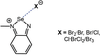 | Figure 1 The molecular structure of the N-methyl-2,1,3-benzoselenadiazolium cation and counteranions crystallized within the investigated crystal structures. Anion compositions are given per cation and are charge-balanced, except for [Se]Cl·BrCl2/Br3, which is per two cations. A slash denotes a single crystallographic site shared by two species at partial occupancy, Br/Cl is a halide site with mixed bromide and chloride occupancy [53.1 (4):46.9 (4), 21.3 (7):78.7 (7), 17.8 (7):82.2 (7) and 40.1 (8):59.9 (8)] and Cl·BrCl2/Br3 is a trihalide site occupied by both BrCl2− and Br3− [72.9 (2):27.1 (2)]. In [Se]Cl·BrCl2/Br3, the chloride and the trihalide each lie on an inversion centre and are therefore present at half occupancy. |
2. Experimental
2.1. Materials and methods
The 1-methyl-2,1,3-benzoselenadiazol-1-ium chloride salt was prepared according to the procedure of Rowett et al. (2026). N-Bromosuccinimide (NBS) was purchased from Sigma–Aldrich and used as received. Solvents were obtained commercially and used without further purification.
2.2. Synthesis and crystallization of complexes
Crystals were grown by vapour diffusion of diethyl ether into a solution of the chloride salt and NBS, in a 1:3 molar ratio, in acetonitrile, held at 3 °C to room temperature in the dark. Three crystalline materials formed concomitantly within a single crystallization vial and were separated manually. Yellow and dark-red blocks were hand-picked, mounted on the diffractometer, which identified the yellow crystals as [Se]Br/Cl and the dark-red crystals as [Se]Br2·Br and [Se]Cl·BrCl2/Br3. The latter two crystals were differentiated only after unit-cell determination. Although NBS was present in the crystallization medium, it was not incorporated into any of the products; instead, NBS acted as an in-situ bromine source, and halide redistribution afforded cocrystallizing salts of the cation containing chloride, bromide and polybromide anions. Because the three structures crystallize together from the same solution and were isolated only as individual hand-selected species, no yields can be quoted for these materials.
2.3. Refinement
Crystal data, data collection and structure details are summarized in Table 1. H atoms were generated in ideal positions and then updated with each cycle of refinement.
|
In [Se]Br/Cl and [Se]Cl·BrCl2/Br3, Br/Cl disorder was modelled at each appropriate site using a free variable, so that the combined occupancies of the two atoms equalled 1, and displacement parameters were constrained to share identical anisotropic displacement parameters. The asymmetric unit in [Se]Br/Cl contained four unique sites featuring Br/Cl disorder, each modelled by a different free variable. The asymmetric unit in [Se]Cl·BrCl2/Br3 contained a single unique site with Br/Cl disorder (the terminal atom in the X2Br− ligand). For [Se]Cl·BrCl2/Br3, the occupancies of the free chloride ion and central Br atom were assigned as 0.5 to reflect the presence of half an equivalent of Cl− and half an equivalent of X2Br− (X = Cl or Br) per molecule. For sites where refinement was unstable with respect to the disordered Br and Cl atoms (three of the four Cl/Br sites in [Se]Br/Cl), atom locations were constrained to share identical fractional coordinates. The higher R factors of [Se]Br/Cl (R1 = 0.0688 and wR2 = 0.1602) compared with the other two structures (R1 = 0.0167 and 0.0237) are primary caused by weaker diffraction at high angles, potentially combined with the presence of merohedral twinning.
3. Results and discussion
Vapour diffusion of the chloride salt with NBS, carried out at temperatures from 3 °C to ambient over several days, generated a bromide-rich environment from which three distinct structures were obtained. Decomposition of NBS under these conditions likely liberates Br2, which combines with residual bromide and chloride to yield the polyhalide species described below.
All structures contain the same N-methyl-2,1,3-benzoselenadiazolium monocation, C7H7N2Se+, and differ only in the accompanying bromide or chloride-based counteranions (each crystal will be denoted as [Se]X, where [Se] represents the cation and X the counteranion). The [Se]Br2·Br salt crystallizes in the triclinic centrosymmetric space group P , whereas [Se]Br/Cl and [Se]Cl·BrCl2/Br3 are monoclinic, in the centrosymmetric space groups P21/c and C2/c, respectively. The asymmetric units of [Se]Br2·Br and [Se]Cl·BrCl2/Br3 contain one cation, while that of [Se]Br/Cl is comprised of four independent cation–anion pairs. Both [Se]Br/Cl and [Se]Cl·BrCl2/Br3 contain disordered anion positions over bromide and chloride. Two of the three structures feature nearly planar aromatic benzoselenadiazolium scaffolds in which the dihedral angles between the five-membered C2N2Se ring and the fused benzene ring are 0.67 (6)° in [Se]Br2·Br and 0.09 (7)° in [Se]Cl·BrCl2/Br3. [Se]Br/Cl exhibits significantly larger dihedral angles ranging from 3.36 (3) to 4.74 (4)° across four cations.
The Se—N1(methyl) and Se—N bond lengths within all cations across the three crystal structures are in the ranges 1.836 (1)–1.911 (1) and 1.758 (8)–1.824 (1) Å, respectively, and the N—CH3 distances vary over the range 1.453 (1)–1.489 (2) Å. Each of these individual sets of bond distances is very similar to those reported in previous work on benzoselenadiazolium cations, which all feature lengths lying within the above corresponding ranges (Berionni et al., 2009; Lee et al., 2016; Rowett et al., 2026).
The two Se—N bonds in each benzoselenadiazolium cation within the investigated crystal structures are crystallographically distinct, with the bond to the N-methylated N atom consistently the longer of the pair, for example, Se1—N1(methyl) = 1.836 (1) Å versus Se1—N2 = 1.779 (1) Å in [Se]Br2·Br [Fig. 2(a)]. The shorter Se—N2 bond involves the lone-pair-retaining N atom able to delocalize into the aromatic ring, providing a partial double-bond character. The methylated N atom on the other hand is unable to contribute to delocalization and withdraws electron density away from the chalcogen, resulting in the corresponding Se—N1(methyl) bond being longer, weaker and more polarized. This, in turn, provides a lower-lying more accessible σ* orbital and enhanced positive electrostatic potential specifically at the extension of this elongated bond, consistent with the partial charge transfer (n→σ*) component of ChB and reflecting the high directionality of these interactions.
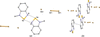 | Figure 2 (a) The extended structure of [Se]Br2·Br with Se⋯N chalcogen-bond and Br⋯Br halogen-bond interactions. Displacement ellipsoids are drawn at the 50% probability level. All H atoms have been omitted for clarity. (b) The packing arrangement, viewed along the c axis, showing the π-stacking interactions. |
The dimeric motif of [Se]Br2·Br is shown in Fig. 2(a) arranged in the typical antiparallel fashion (Cozzolino & Vargas-Baca, 2007; Cozzolino et al., 2013; Lee et al., 2016) featuring short [2.594 (1) Å] Se⋯N contacts (75% of the corresponding ΣrvdW = 3.45 Å). This supramolecular synthon occupies the position trans to the Se—N1(methyl) bond of each cation, displacing the polybromide counteranions further from Se. The polybromide assembly consists of a bromide ion and a dibromine (Br2) unit; the Br—Br bond length of the Br2 molecule is 2.407 (4) Å, associating with the bromide ion through a Br⋯Br contact of 2.996 (5) Å. Each of the benzoselenadiazolium cations also forms contacts with the bromide ion at a distance of 3.282 (6) Å, shorter than the ΣrvdW(Se⋯Br) of 3.75 Å, indicating simultaneous halogen-bond (XB) and ChB interactions from the halide ion, comparable to an occurrence reported in a selenium(IV) polybromide complex featuring pyramidal [SeBr5]− anions (Korobeynikov et al., 2022). Another notable structural feature is the π-stacking interaction between the six-membered rings of two selenadiazolium cations [Fig. 2(b)], with a centroid-to-centroid distance of 3.527 Å. Due to the relative positioning of the cations and counteranions within [Se]Br2·Br, the σ-hole N2—Se1⋯Br angle of 159.14 (4)° necessarily deviates from linearity as compared to the other investigated structures.
The four selenadiazolium rings within the asymmetric unit of [Se]Br/Cl, shown in Fig. 3(a), are each anchored to a disordered halide anion through short charge-assisted Se⋯X ChB interactions (X = Cl/Br). From top to bottom, the four halide sites are disordered over Cl/Br in the ratios 46.9 (4)/53.1 (4), 78.7 (7)/21.3 (7), 82.2 (7)/17.8 (7) and 59.9 (8)/40.1 (8)%. The bromide content varies markedly between sites, from 53.1 (4)% at the first site Br1, the only site where bromide is the majority component, down to 17.8 (7)% for Br3. Comparison with the near-isostructural salt reported recently (Rowett et al., 2026) shows that this uneven halide distribution has a substantial effect on the overall symmetry, with the present structure [Se]Br/Cl crystallizing in the monoclinic space group P21/c with Z′ = 4, whereas the more nearly stoichiometric analogue adopts the higher symmetry orthorhombic space group Pca21 with Z′ = 2. One of the four cations of [Se]Br/Cl is disordered [the C5—C6 distance is short at 1.208 (2) Å], and its geometric parameters are correspondingly less precise than those of the three ordered cations.
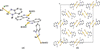 | Figure 3 (a) The asymmetric unit of [Se]Br/Cl, showing four cation–anion pairs and chalcogen-bond interactions to halide anions (disordered over bromide and chloride). (b) The crystal packing arrangement, viewed down the b axis, displaying the π-stacking interactions. |
The cation–anion units in the crystal packing [Fig. 3(b)], viewed down the b axis, are arranged in a helical pattern with 21 screw axes. In addition, π-stacking interactions occur at centroid-to-centroid distances of 4.861 and 4.900 Å. The Se⋯X distances span the range 2.772 (2)–2.796 (2) Å [ΣrvdW(Se⋯Br) = 3.75 Å and ΣrvdW(Se⋯Cl) = 3.65 Å] and the σ-hole N—Se⋯X angles are highly directional, ranging from 171.5 (3) to 174.9 (2)°.
[Se]Cl·BrCl2/Br3 contains two crystallographically independent anions, a chloride ion and a trihalide ion disordered over Br3 and BrCl2 [Fig. 4(a)]. Both lie on inversion centres and are therefore present at half occupancy in the asymmetric unit, the trihalide being necessarily linear and centrosymmetric about its central Br1 atom. Unlike said central atom, while the terminal atoms are disordered over Cl [72.9 (2)%] and Br [27.1 (2)%], so that the trihalide is a superposition of dichlorobromide, [Cl—Br—Cl] (major), and tribromide, [Br—Br—Br] (minor) [Br—Cl = 2.402 (11) Å and Br—Br = 2.486 (12) Å; X—Br—X (X = Cl or Br) = 180.0°]. The crystal packing is shown in Fig. 4(b), projected onto the bc plane, arranged with C2 proper rotation axes and 21 screw axes. Each selenadiazolium cation forms a Se⋯Cl ChB interaction to the discrete chloride ion at a distance of 2.785 (6) Å [ΣrvdW(Se⋯Cl) = 3.65 Å], with an almost geometrically ideal σ-hole N—Se⋯Cl angle of 178.98 (5)°.
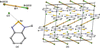 | Figure 4 (a) The extended structure containing an asymmetric unit and one disordered Br/Cl atom in [Se]Cl·BrCl2/Br3, showing Se⋯Cl chalcogen-bond interactions and disordered trihalide. Displacement ellipsoids are drawn at the 50% probability level. All H atoms have been omitted for clarity. (b) The packing arrangement projected onto the bc plane. |
4. Conclusions
Three new salts consisting of the N-methyl-2,1,3-benzoselenadiazolium cation with Br2·Br, disordered Br/Cl and disordered Cl·BrCl2/Br3 anions were synthesized and crystallized from a single reaction mixture of the chloride salt and NBS. Se⋯X contacts span the range from 2.772 (2) to 3.2817 (6) Å, corresponding to 76% of the sum of the van der Waals radii, with N—Se⋯X angles ranging from 159.14 (4) to 178.98 (5)°, consistent with donation into the σ-hole trans along the extension of the Se—N1(methyl) bond. Of the three anions, only [Se]Br2·Br allows formation of the [Se⋯N]2 supramolecular synthon, the remaining two outcompeting the cation as a ChB acceptor. From a synthetic point of view, the oxidation of bromide by NBS affords a series of accessible bromine-containing anions, offering a route to further members of this family and to the systematic tuning of ChB donor strength in these cationic selenium systems.
Supporting information
contains datablocks llq1, mo_llq9, mo_llq14_0m, global. DOI: https://doi.org/10.1107/S2053229626011976/jx3113sup1.cif
Structure factors: contains datablock llq1. DOI: https://doi.org/10.1107/S2053229626011976/jx3113llq1sup2.hkl
Structure factors: contains datablock mo_llq9. DOI: https://doi.org/10.1107/S2053229626011976/jx3113mo_llq9sup3.hkl
Structure factors: contains datablock mo_llq14_0m. DOI: https://doi.org/10.1107/S2053229626011976/jx3113mo_llq14_0msup4.hkl
| C7H7N2Se+·Br−·0.5Br2 | Z = 2 |
| Mr = 357.93 | F(000) = 334 |
| Triclinic, P1 | Dx = 2.506 Mg m−3 |
| a = 7.7284 (18) Å | Mo Kα radiation, λ = 0.71073 Å |
| b = 7.729 (2) Å | Cell parameters from 9988 reflections |
| c = 8.5175 (16) Å | θ = 2.7–30.5° |
| α = 89.276 (6)° | µ = 12.33 mm−1 |
| β = 70.277 (6)° | T = 100 K |
| γ = 82.282 (10)° | Block, orange |
| V = 474.3 (2) Å3 | 0.1 × 0.1 × 0.05 mm |
| Bruker Venture diffractometer | 2676 reflections with I > 2σ(I) |
| φ and ω scans | Rint = 0.048 |
| Absorption correction: multi-scan (SADABS; Bruker, 2016) | θmax = 30.5°, θmin = 2.5° |
| Tmin = 0.650, Tmax = 0.862 | h = −11→11 |
| 29869 measured reflections | k = −11→11 |
| 2879 independent reflections | l = −12→12 |
| Refinement on F2 | Primary atom site location: dual |
| Least-squares matrix: full | Hydrogen site location: inferred from neighbouring sites |
| R[F2 > 2σ(F2)] = 0.017 | H-atom parameters constrained |
| wR(F2) = 0.038 | w = 1/[σ2(Fo2) + (0.016P)2 + 0.1586P] where P = (Fo2 + 2Fc2)/3 |
| S = 1.09 | (Δ/σ)max = 0.002 |
| 2879 reflections | Δρmax = 0.60 e Å−3 |
| 110 parameters | Δρmin = −0.59 e Å−3 |
| 0 restraints |
Geometry. All esds (except the esd in the dihedral angle between two l.s. planes) are estimated using the full covariance matrix. The cell esds are taken into account individually in the estimation of esds in distances, angles and torsion angles; correlations between esds in cell parameters are only used when they are defined by crystal symmetry. An approximate (isotropic) treatment of cell esds is used for estimating esds involving l.s. planes. |
Refinement. Crystallographic data were obtained from crystals coated in Paratone oil and mounted on a Bruker Dual Source D8 Venture diffractometer using the IµS 3.0 Mo source at 70 W with a HELIOS Mo focusing optic (ELM33) in the McMaster Analytical X-ray (MAX) Diffraction Facility. Raw data were processed using XPREP as part of the APEX (v5/v6 software) and solved by intrinsic phasing (SHELXT) (Sheldrick, 2015b). Non-H atoms were refined anisotropically. H atoms were generated in ideal positions and then updated with each cycle of refinement, which was performed with SHELXL (Sheldrick, 2015a) in OLEX2-1.5 (Dolomanov et al., 2009). |
| x | y | z | Uiso*/Ueq | ||
| Br1 | 0.07851 (2) | 0.55244 (2) | 0.86438 (2) | 0.01263 (4) | |
| Br2 | 0.27819 (2) | 0.70550 (2) | 0.53920 (2) | 0.01575 (5) | |
| Se1 | 0.41327 (2) | 0.43826 (2) | 0.21096 (2) | 0.01129 (4) | |
| N1 | 0.29073 (18) | 0.25661 (17) | 0.31033 (16) | 0.0114 (2) | |
| N2 | 0.42818 (17) | 0.35004 (17) | 0.01413 (15) | 0.0108 (2) | |
| C1 | 0.2218 (2) | 0.2356 (2) | 0.49200 (19) | 0.0158 (3) | |
| H1A | 0.278938 | 0.311770 | 0.545401 | 0.024* | |
| H1B | 0.253973 | 0.113715 | 0.516649 | 0.024* | |
| H1C | 0.086681 | 0.267282 | 0.534956 | 0.024* | |
| C2 | 0.3474 (2) | 0.2067 (2) | 0.03058 (18) | 0.0104 (3) | |
| C3 | 0.3358 (2) | 0.1088 (2) | −0.10598 (19) | 0.0129 (3) | |
| H3 | 0.388867 | 0.142957 | −0.217683 | 0.015* | |
| C4 | 0.2465 (2) | −0.0348 (2) | −0.0714 (2) | 0.0140 (3) | |
| H4 | 0.235405 | −0.100197 | −0.160432 | 0.017* | |
| C5 | 0.1689 (2) | −0.0892 (2) | 0.0963 (2) | 0.0143 (3) | |
| H5 | 0.109370 | −0.191118 | 0.114888 | 0.017* | |
| C6 | 0.1771 (2) | −0.0003 (2) | 0.23052 (19) | 0.0127 (3) | |
| H6 | 0.124642 | −0.038399 | 0.340883 | 0.015* | |
| C7 | 0.2670 (2) | 0.1511 (2) | 0.19861 (18) | 0.0108 (3) |
| U11 | U22 | U33 | U12 | U13 | U23 | |
| Br1 | 0.01285 (7) | 0.01205 (8) | 0.01343 (7) | −0.00072 (5) | −0.00531 (5) | −0.00178 (5) |
| Br2 | 0.02090 (8) | 0.01515 (8) | 0.01068 (7) | −0.00086 (6) | −0.00527 (6) | −0.00038 (5) |
| Se1 | 0.01401 (8) | 0.01232 (8) | 0.00815 (7) | −0.00577 (6) | −0.00305 (5) | 0.00033 (5) |
| N1 | 0.0131 (6) | 0.0119 (6) | 0.0097 (6) | −0.0054 (5) | −0.0034 (5) | 0.0022 (5) |
| N2 | 0.0121 (6) | 0.0117 (6) | 0.0088 (5) | −0.0013 (5) | −0.0038 (5) | −0.0004 (5) |
| C1 | 0.0204 (8) | 0.0193 (8) | 0.0083 (6) | −0.0078 (6) | −0.0039 (6) | 0.0045 (6) |
| C2 | 0.0096 (6) | 0.0107 (7) | 0.0105 (6) | 0.0000 (5) | −0.0034 (5) | 0.0004 (5) |
| C3 | 0.0132 (7) | 0.0135 (7) | 0.0121 (7) | −0.0002 (6) | −0.0053 (5) | −0.0005 (5) |
| C4 | 0.0134 (7) | 0.0130 (7) | 0.0170 (7) | 0.0003 (6) | −0.0074 (6) | −0.0034 (6) |
| C5 | 0.0134 (7) | 0.0119 (7) | 0.0191 (7) | −0.0033 (6) | −0.0070 (6) | −0.0001 (6) |
| C6 | 0.0124 (7) | 0.0119 (7) | 0.0136 (7) | −0.0025 (6) | −0.0038 (5) | 0.0017 (5) |
| C7 | 0.0102 (6) | 0.0113 (7) | 0.0115 (6) | −0.0003 (5) | −0.0050 (5) | −0.0003 (5) |
| Br1—Br1i | 2.4066 (5) | C2—C7 | 1.441 (2) |
| Se1—N1 | 1.8359 (13) | C3—H3 | 0.9500 |
| Se1—N2 | 1.7794 (13) | C3—C4 | 1.362 (2) |
| N1—C1 | 1.4714 (19) | C4—H4 | 0.9500 |
| N1—C7 | 1.335 (2) | C4—C5 | 1.433 (2) |
| N2—C2 | 1.327 (2) | C5—H5 | 0.9500 |
| C1—H1A | 0.9800 | C5—C6 | 1.365 (2) |
| C1—H1B | 0.9800 | C6—H6 | 0.9500 |
| C1—H1C | 0.9800 | C6—C7 | 1.417 (2) |
| C2—C3 | 1.430 (2) | ||
| N2—Se1—N1 | 88.50 (6) | C4—C3—C2 | 118.14 (14) |
| C1—N1—Se1 | 123.41 (10) | C4—C3—H3 | 120.9 |
| C7—N1—Se1 | 111.84 (10) | C3—C4—H4 | 119.3 |
| C7—N1—C1 | 124.72 (13) | C3—C4—C5 | 121.35 (14) |
| C2—N2—Se1 | 111.62 (10) | C5—C4—H4 | 119.3 |
| N1—C1—H1A | 109.5 | C4—C5—H5 | 118.7 |
| N1—C1—H1B | 109.5 | C6—C5—C4 | 122.59 (15) |
| N1—C1—H1C | 109.5 | C6—C5—H5 | 118.7 |
| H1A—C1—H1B | 109.5 | C5—C6—H6 | 121.3 |
| H1A—C1—H1C | 109.5 | C5—C6—C7 | 117.32 (14) |
| H1B—C1—H1C | 109.5 | C7—C6—H6 | 121.3 |
| N2—C2—C3 | 124.12 (14) | N1—C7—C2 | 111.91 (13) |
| N2—C2—C7 | 116.12 (13) | N1—C7—C6 | 127.27 (14) |
| C3—C2—C7 | 119.76 (14) | C6—C7—C2 | 120.82 (14) |
| C2—C3—H3 | 120.9 | ||
| Se1—N1—C7—C2 | 1.16 (16) | C1—N1—C7—C2 | 179.02 (14) |
| Se1—N1—C7—C6 | −179.32 (12) | C1—N1—C7—C6 | −1.4 (2) |
| Se1—N2—C2—C3 | 179.20 (12) | C2—C3—C4—C5 | −1.2 (2) |
| Se1—N2—C2—C7 | −0.44 (16) | C3—C2—C7—N1 | 179.84 (14) |
| N1—Se1—N2—C2 | 0.88 (11) | C3—C2—C7—C6 | 0.3 (2) |
| N2—Se1—N1—C1 | −179.08 (13) | C3—C4—C5—C6 | 1.0 (2) |
| N2—Se1—N1—C7 | −1.18 (11) | C4—C5—C6—C7 | −0.1 (2) |
| N2—C2—C3—C4 | −179.08 (14) | C5—C6—C7—N1 | −179.99 (15) |
| N2—C2—C7—N1 | −0.50 (19) | C5—C6—C7—C2 | −0.5 (2) |
| N2—C2—C7—C6 | 179.94 (13) | C7—C2—C3—C4 | 0.6 (2) |
| Symmetry code: (i) −x, −y+1, −z+2. |
| C7H7Br0.33Cl0.67N2Se+·Br0.33/Cl0.67− | F(000) = 1919 |
| Mr = 248.26 | Dx = 1.977 Mg m−3 |
| Monoclinic, P21/c | Mo Kα radiation, λ = 0.71073 Å |
| a = 25.825 (7) Å | Cell parameters from 9145 reflections |
| b = 5.8156 (15) Å | θ = 2.4–29.9° |
| c = 22.219 (7) Å | µ = 6.23 mm−1 |
| β = 90.018 (11)° | T = 100 K |
| V = 3337.1 (16) Å3 | Needle, yellow |
| Z = 16 | 0.3 × 0.02 × 0.02 mm |
| Bruker Venture diffractometer | 7304 reflections with I > 2σ(I) |
| φ and ω scans | Rint = 0.097 |
| Absorption correction: multi-scan (SADABS; Bruker, 2016) | θmax = 30.5°, θmin = 1.6° |
| Tmin = 0.803, Tmax = 0.927 | h = −36→36 |
| 141706 measured reflections | k = −8→8 |
| 10191 independent reflections | l = −31→31 |
| Refinement on F2 | Primary atom site location: dual |
| Least-squares matrix: full | Hydrogen site location: inferred from neighbouring sites |
| R[F2 > 2σ(F2)] = 0.069 | H-atom parameters constrained |
| wR(F2) = 0.160 | w = 1/[σ2(Fo2) + 63.2353P] where P = (Fo2 + 2Fc2)/3 |
| S = 1.08 | (Δ/σ)max = 0.001 |
| 10191 reflections | Δρmax = 3.61 e Å−3 |
| 391 parameters | Δρmin = −1.82 e Å−3 |
| 313 restraints |
Geometry. All esds (except the esd in the dihedral angle between two l.s. planes) are estimated using the full covariance matrix. The cell esds are taken into account individually in the estimation of esds in distances, angles and torsion angles; correlations between esds in cell parameters are only used when they are defined by crystal symmetry. An approximate (isotropic) treatment of cell esds is used for estimating esds involving l.s. planes. |
Refinement. Refined as a 2-component twin. Crystallographic data were obtained from crystals coated in Paratone oil and mounted on a Bruker Dual Source D8 Venture diffractometer using the IµS 3.0 Mo source at 70 W with a HELIOS Mo focusing optic (ELM33) in the McMaster Analytical X-ray (MAX) Diffraction Facility. Raw data were processed using XPREP as part of the APEX (v5/v6 software) and solved by intrinsic phasing (SHELXT) (Sheldrick, 2015b). Non-H atoms were refined anisotropically. H atoms were generated in ideal positions and then updated with each cycle of refinement, which was performed with SHELXL (Sheldrick, 2015a) in OLEX2-1.5 (Dolomanov et al., 2009). |
| x | y | z | Uiso*/Ueq | Occ. (<1) | |
| Se1 | 0.50874 (4) | −0.22945 (18) | 0.43976 (4) | 0.01358 (12) | |
| N1 | 0.5644 (4) | −0.1096 (18) | 0.3926 (5) | 0.036 (2) | |
| N2 | 0.4698 (4) | −0.0008 (19) | 0.4064 (5) | 0.039 (2) | |
| C1 | 0.6171 (4) | −0.212 (3) | 0.3974 (6) | 0.040 (3) | |
| H1A | 0.614039 | −0.376975 | 0.406155 | 0.060* | |
| H1B | 0.636247 | −0.136573 | 0.429872 | 0.060* | |
| H1C | 0.635579 | −0.191237 | 0.359287 | 0.060* | |
| C2 | 0.4974 (5) | 0.128 (2) | 0.3697 (6) | 0.039 (2) | |
| C3 | 0.4756 (5) | 0.300 (3) | 0.3358 (6) | 0.048 (2) | |
| H3 | 0.439047 | 0.319169 | 0.334910 | 0.058* | |
| C4 | 0.5077 (6) | 0.449 (2) | 0.3024 (6) | 0.045 (3) | |
| H4 | 0.493594 | 0.579108 | 0.282267 | 0.054* | |
| C5 | 0.5623 (6) | 0.400 (2) | 0.2995 (6) | 0.045 (3) | |
| H5 | 0.584475 | 0.502329 | 0.278502 | 0.054* | |
| C6 | 0.5805 (6) | 0.231 (3) | 0.3230 (6) | 0.048 (2) | |
| H6 | 0.615992 | 0.197834 | 0.315769 | 0.058* | |
| C7 | 0.5514 (5) | 0.074 (2) | 0.3619 (5) | 0.034 (2) | |
| Br1 | 0.42181 (8) | −0.3388 (3) | 0.50710 (8) | 0.0255 (5) | 0.531 (4) |
| Se2 | 0.75898 (5) | 0.72761 (17) | 0.31292 (5) | 0.0240 (2) | |
| N3 | 0.8150 (3) | 0.6197 (13) | 0.3583 (3) | 0.0164 (13) | |
| N4 | 0.7200 (3) | 0.5150 (14) | 0.3474 (4) | 0.0226 (16) | |
| C8 | 0.8672 (4) | 0.7107 (18) | 0.3517 (5) | 0.0215 (19) | |
| H8A | 0.888596 | 0.600022 | 0.329586 | 0.032* | |
| H8B | 0.882279 | 0.737372 | 0.391561 | 0.032* | |
| H8C | 0.865918 | 0.856111 | 0.329426 | 0.032* | |
| C9 | 0.7475 (4) | 0.3843 (16) | 0.3863 (4) | 0.0239 (17) | |
| C10 | 0.7264 (4) | 0.1902 (19) | 0.4171 (5) | 0.032 (2) | |
| H10 | 0.690645 | 0.152967 | 0.413959 | 0.038* | |
| C11 | 0.7589 (5) | 0.0607 (17) | 0.4512 (4) | 0.0289 (19) | |
| H11 | 0.745144 | −0.064945 | 0.473351 | 0.035* | |
| C12 | 0.8125 (4) | 0.1072 (17) | 0.4547 (4) | 0.0245 (18) | |
| H12 | 0.833953 | 0.007852 | 0.477697 | 0.029* | |
| C13 | 0.8342 (4) | 0.2884 (17) | 0.4262 (4) | 0.0204 (16) | |
| H13 | 0.870274 | 0.318564 | 0.429766 | 0.024* | |
| C14 | 0.8014 (4) | 0.4352 (16) | 0.3903 (4) | 0.0194 (16) | |
| Br2 | 0.67206 (8) | 0.8358 (3) | 0.24344 (8) | 0.0191 (5) | 0.213 (7) |
| Se3 | 0.74109 (5) | 0.28193 (16) | 0.19257 (5) | 0.0206 (2) | |
| N5 | 0.6865 (3) | 0.3815 (13) | 0.1446 (3) | 0.0183 (14) | |
| N6 | 0.7805 (3) | 0.4955 (13) | 0.1604 (4) | 0.0191 (15) | |
| C15 | 0.6338 (4) | 0.2895 (19) | 0.1489 (5) | 0.027 (2) | |
| H15A | 0.634881 | 0.136456 | 0.167325 | 0.041* | |
| H15B | 0.618688 | 0.278499 | 0.108574 | 0.041* | |
| H15C | 0.612646 | 0.392116 | 0.173793 | 0.041* | |
| C16 | 0.7538 (4) | 0.6230 (15) | 0.1210 (4) | 0.0215 (16) | |
| C17 | 0.7743 (4) | 0.8153 (18) | 0.0899 (4) | 0.0227 (12) | |
| H17 | 0.809776 | 0.854314 | 0.094613 | 0.027* | |
| C18 | 0.7443 (5) | 0.9425 (17) | 0.0540 (4) | 0.0285 (19) | |
| H18 | 0.758685 | 1.071335 | 0.033793 | 0.034* | |
| C19 | 0.6900 (4) | 0.8872 (18) | 0.0454 (4) | 0.0250 (18) | |
| H19 | 0.669649 | 0.979423 | 0.019189 | 0.030* | |
| C20 | 0.6675 (4) | 0.7044 (18) | 0.0743 (4) | 0.0227 (12) | |
| H20 | 0.631770 | 0.670418 | 0.069362 | 0.027* | |
| C21 | 0.6997 (4) | 0.5675 (17) | 0.1118 (4) | 0.0207 (16) | |
| Br3 | 0.82746 (8) | 0.1684 (3) | 0.26133 (8) | 0.0200 (5) | 0.178 (7) |
| Se4 | 0.99107 (4) | 0.26291 (19) | 0.05987 (4) | 0.01358 (12) | |
| N7 | 0.9357 (3) | 0.3703 (13) | 0.1063 (3) | 0.0174 (14) | |
| N8 | 1.0308 (3) | 0.4747 (13) | 0.0952 (3) | 0.0178 (14) | |
| C22 | 0.8828 (4) | 0.286 (2) | 0.1036 (5) | 0.025 (2) | |
| H22A | 0.862065 | 0.387473 | 0.077967 | 0.038* | |
| H22B | 0.868033 | 0.282578 | 0.144193 | 0.038* | |
| H22C | 0.882603 | 0.129997 | 0.086702 | 0.038* | |
| C23 | 1.0029 (4) | 0.6032 (15) | 0.1328 (4) | 0.0151 (15) | |
| C24 | 1.0252 (4) | 0.7865 (17) | 0.1656 (4) | 0.0219 (17) | |
| H24 | 1.061247 | 0.818341 | 0.163202 | 0.026* | |
| C25 | 0.9925 (5) | 0.9186 (16) | 0.2015 (4) | 0.0247 (18) | |
| H25 | 1.006023 | 1.044461 | 0.223773 | 0.030* | |
| C26 | 0.9401 (4) | 0.8659 (18) | 0.2046 (4) | 0.0273 (19) | |
| H26 | 0.918610 | 0.965092 | 0.227569 | 0.033* | |
| C27 | 0.9172 (4) | 0.6830 (16) | 0.1771 (4) | 0.0244 (19) | |
| H27 | 0.881670 | 0.647770 | 0.183033 | 0.029* | |
| C28 | 0.9491 (4) | 0.5485 (15) | 0.1395 (4) | 0.0180 (15) | |
| Cl1 | 0.4211 (2) | −0.1778 (9) | 0.5112 (2) | 0.0255 (5) | 0.469 (4) |
| Cl2 | 0.67206 (8) | 0.8358 (3) | 0.24344 (8) | 0.0191 (5) | 0.787 (7) |
| Cl3 | 0.82746 (8) | 0.1684 (3) | 0.26133 (8) | 0.0200 (5) | 0.822 (7) |
| Cl4 | 0.92138 (6) | 0.8306 (3) | 0.00993 (7) | 0.0243 (5) | 0.599 (8) |
| Br4 | 0.92138 (6) | 0.8306 (3) | 0.00993 (7) | 0.0243 (5) | 0.401 (8) |
| U11 | U22 | U33 | U12 | U13 | U23 | |
| Se1 | 0.0129 (2) | 0.0158 (2) | 0.0121 (2) | 0.0000 (2) | 0.0006 (3) | −0.0021 (2) |
| N1 | 0.030 (4) | 0.038 (5) | 0.042 (5) | −0.008 (4) | 0.002 (4) | 0.005 (4) |
| N2 | 0.047 (5) | 0.041 (5) | 0.030 (5) | 0.002 (4) | 0.003 (4) | −0.001 (4) |
| C1 | 0.015 (5) | 0.070 (8) | 0.036 (7) | −0.003 (5) | −0.001 (4) | 0.007 (6) |
| C2 | 0.031 (5) | 0.048 (6) | 0.038 (6) | −0.009 (4) | −0.002 (4) | −0.003 (4) |
| C3 | 0.036 (5) | 0.078 (6) | 0.030 (4) | 0.008 (4) | 0.018 (4) | 0.014 (4) |
| C4 | 0.056 (6) | 0.041 (6) | 0.037 (7) | −0.006 (5) | 0.004 (5) | −0.009 (5) |
| C5 | 0.061 (6) | 0.039 (6) | 0.034 (6) | −0.010 (5) | 0.024 (5) | −0.008 (4) |
| C6 | 0.036 (5) | 0.078 (6) | 0.030 (4) | 0.008 (4) | 0.018 (4) | 0.014 (4) |
| C7 | 0.048 (5) | 0.030 (5) | 0.024 (5) | −0.002 (4) | 0.006 (4) | −0.007 (3) |
| Br1 | 0.0281 (10) | 0.0262 (9) | 0.0223 (8) | −0.0034 (7) | −0.0001 (7) | −0.0005 (7) |
| Se2 | 0.0174 (5) | 0.0250 (4) | 0.0295 (5) | 0.0004 (4) | 0.0004 (6) | −0.0013 (4) |
| N3 | 0.014 (3) | 0.020 (3) | 0.015 (3) | 0.003 (3) | 0.001 (2) | 0.000 (3) |
| N4 | 0.012 (3) | 0.022 (4) | 0.033 (4) | −0.005 (3) | 0.007 (3) | 0.005 (3) |
| C8 | 0.014 (4) | 0.027 (4) | 0.023 (5) | −0.001 (3) | 0.001 (3) | 0.008 (4) |
| C9 | 0.018 (4) | 0.021 (4) | 0.032 (5) | 0.000 (3) | 0.002 (3) | 0.001 (3) |
| C10 | 0.027 (5) | 0.026 (5) | 0.042 (6) | −0.010 (4) | 0.002 (4) | 0.008 (4) |
| C11 | 0.033 (4) | 0.027 (4) | 0.026 (5) | −0.009 (4) | −0.001 (4) | 0.010 (3) |
| C12 | 0.031 (4) | 0.021 (4) | 0.021 (4) | 0.004 (3) | −0.001 (4) | 0.001 (3) |
| C13 | 0.015 (4) | 0.030 (4) | 0.016 (4) | 0.003 (3) | 0.008 (3) | 0.000 (3) |
| C14 | 0.018 (4) | 0.018 (4) | 0.022 (4) | 0.000 (3) | 0.004 (3) | −0.002 (3) |
| Br2 | 0.0195 (9) | 0.0159 (8) | 0.0217 (8) | 0.0018 (6) | 0.0001 (6) | 0.0030 (6) |
| Se3 | 0.0166 (5) | 0.0178 (3) | 0.0274 (5) | 0.0018 (4) | 0.0005 (5) | 0.0014 (3) |
| N5 | 0.022 (3) | 0.018 (3) | 0.015 (3) | 0.003 (3) | 0.002 (3) | −0.004 (3) |
| N6 | 0.020 (3) | 0.014 (3) | 0.024 (4) | −0.004 (3) | 0.001 (3) | 0.003 (3) |
| C15 | 0.018 (4) | 0.029 (5) | 0.035 (6) | 0.002 (4) | −0.004 (4) | −0.017 (4) |
| C16 | 0.020 (4) | 0.021 (4) | 0.023 (4) | 0.000 (3) | 0.003 (3) | 0.001 (3) |
| C17 | 0.025 (3) | 0.033 (3) | 0.010 (3) | 0.001 (3) | 0.005 (2) | 0.005 (2) |
| C18 | 0.040 (5) | 0.027 (4) | 0.019 (4) | −0.004 (4) | 0.002 (4) | 0.007 (3) |
| C19 | 0.033 (4) | 0.028 (4) | 0.014 (4) | 0.003 (4) | 0.008 (3) | 0.006 (3) |
| C20 | 0.025 (3) | 0.033 (3) | 0.010 (3) | 0.001 (3) | 0.005 (2) | 0.005 (2) |
| C21 | 0.020 (4) | 0.027 (4) | 0.015 (4) | 0.003 (3) | 0.008 (3) | 0.000 (3) |
| Br3 | 0.0194 (9) | 0.0154 (8) | 0.0251 (9) | 0.0044 (6) | −0.0003 (7) | 0.0036 (6) |
| Se4 | 0.0129 (2) | 0.0158 (2) | 0.0121 (2) | 0.0000 (2) | 0.0006 (3) | −0.0021 (2) |
| N7 | 0.018 (3) | 0.020 (3) | 0.015 (3) | 0.001 (3) | 0.005 (3) | −0.003 (3) |
| N8 | 0.022 (4) | 0.020 (3) | 0.011 (3) | 0.000 (3) | 0.004 (3) | −0.004 (3) |
| C22 | 0.018 (4) | 0.035 (5) | 0.022 (5) | −0.003 (4) | 0.002 (4) | −0.014 (4) |
| C23 | 0.025 (4) | 0.016 (3) | 0.005 (3) | 0.003 (3) | 0.006 (3) | −0.003 (3) |
| C24 | 0.029 (5) | 0.017 (3) | 0.020 (4) | 0.001 (3) | 0.001 (3) | 0.005 (3) |
| C25 | 0.049 (5) | 0.010 (3) | 0.015 (4) | 0.003 (3) | −0.001 (4) | 0.002 (3) |
| C26 | 0.044 (5) | 0.025 (4) | 0.013 (4) | 0.011 (4) | 0.007 (4) | 0.001 (3) |
| C27 | 0.036 (5) | 0.015 (4) | 0.022 (4) | 0.011 (3) | 0.007 (4) | −0.003 (3) |
| C28 | 0.026 (4) | 0.017 (3) | 0.011 (3) | 0.007 (3) | 0.004 (3) | 0.003 (3) |
| Cl1 | 0.0281 (10) | 0.0262 (9) | 0.0223 (8) | −0.0034 (7) | −0.0001 (7) | −0.0005 (7) |
| Cl2 | 0.0195 (9) | 0.0159 (8) | 0.0217 (8) | 0.0018 (6) | 0.0001 (6) | 0.0030 (6) |
| Cl3 | 0.0194 (9) | 0.0154 (8) | 0.0251 (9) | 0.0044 (6) | −0.0003 (7) | 0.0036 (6) |
| Cl4 | 0.0254 (9) | 0.0273 (9) | 0.0202 (8) | 0.0010 (6) | 0.0007 (5) | −0.0028 (6) |
| Br4 | 0.0254 (9) | 0.0273 (9) | 0.0202 (8) | 0.0010 (6) | 0.0007 (5) | −0.0028 (6) |
| Se1—N1 | 1.911 (10) | Se3—N5 | 1.860 (8) |
| Se1—N2 | 1.824 (11) | Se3—N6 | 1.757 (7) |
| Se1—Br1 | 2.772 (2) | Se3—Br3 | 2.783 (2) |
| N1—C1 | 1.489 (15) | N5—C15 | 1.466 (13) |
| N1—C7 | 1.312 (15) | N5—C21 | 1.347 (12) |
| N2—C2 | 1.318 (16) | N6—C16 | 1.338 (12) |
| C1—H1A | 0.9800 | C15—H15A | 0.9800 |
| C1—H1B | 0.9800 | C15—H15B | 0.9800 |
| C1—H1C | 0.9800 | C15—H15C | 0.9800 |
| C2—C3 | 1.374 (19) | C16—C17 | 1.417 (13) |
| C2—C7 | 1.439 (17) | C16—C21 | 1.448 (13) |
| C3—H3 | 0.9500 | C17—H17 | 0.9500 |
| C3—C4 | 1.409 (19) | C17—C18 | 1.335 (14) |
| C4—H4 | 0.9500 | C18—H18 | 0.9500 |
| C4—C5 | 1.44 (2) | C18—C19 | 1.450 (16) |
| C5—H5 | 0.9500 | C19—H19 | 0.9500 |
| C5—C6 | 1.21 (2) | C19—C20 | 1.371 (13) |
| C6—H6 | 0.9500 | C20—H20 | 0.9500 |
| C6—C7 | 1.465 (17) | C20—C21 | 1.422 (14) |
| Se2—N3 | 1.872 (7) | Se4—N7 | 1.870 (7) |
| Se2—N4 | 1.770 (8) | Se4—N8 | 1.784 (8) |
| Se2—Br2 | 2.796 (2) | Se4—Br4i | 2.7957 (19) |
| N3—C8 | 1.455 (12) | N7—C22 | 1.455 (12) |
| N3—C14 | 1.335 (11) | N7—C28 | 1.318 (11) |
| N4—C9 | 1.352 (12) | N8—C23 | 1.333 (10) |
| C8—H8A | 0.9800 | C22—H22A | 0.9800 |
| C8—H8B | 0.9800 | C22—H22B | 0.9800 |
| C8—H8C | 0.9800 | C22—H22C | 0.9800 |
| C9—C10 | 1.430 (13) | C23—C24 | 1.414 (13) |
| C9—C14 | 1.425 (13) | C23—C28 | 1.432 (13) |
| C10—H10 | 0.9500 | C24—H24 | 0.9500 |
| C10—C11 | 1.358 (15) | C24—C25 | 1.393 (14) |
| C11—H11 | 0.9500 | C25—H25 | 0.9500 |
| C11—C12 | 1.413 (15) | C25—C26 | 1.390 (16) |
| C12—H12 | 0.9500 | C26—H26 | 0.9500 |
| C12—C13 | 1.351 (13) | C26—C27 | 1.360 (15) |
| C13—H13 | 0.9500 | C27—H27 | 0.9500 |
| C13—C14 | 1.444 (13) | C27—C28 | 1.411 (12) |
| N1—Se1—Br1 | 171.6 (3) | N5—Se3—Br3 | 174.9 (3) |
| N2—Se1—N1 | 85.7 (5) | N6—Se3—N5 | 89.2 (4) |
| N2—Se1—Br1 | 86.6 (3) | N6—Se3—Br3 | 85.8 (3) |
| C1—N1—Se1 | 120.1 (8) | C15—N5—Se3 | 123.5 (7) |
| C7—N1—Se1 | 112.9 (8) | C21—N5—Se3 | 111.6 (6) |
| C7—N1—C1 | 126.8 (10) | C21—N5—C15 | 124.4 (9) |
| C2—N2—Se1 | 111.7 (9) | C16—N6—Se3 | 111.1 (6) |
| N1—C1—H1A | 109.5 | N5—C15—H15A | 109.5 |
| N1—C1—H1B | 109.5 | N5—C15—H15B | 109.5 |
| N1—C1—H1C | 109.5 | N5—C15—H15C | 109.5 |
| H1A—C1—H1B | 109.5 | H15A—C15—H15B | 109.5 |
| H1A—C1—H1C | 109.5 | H15A—C15—H15C | 109.5 |
| H1B—C1—H1C | 109.5 | H15B—C15—H15C | 109.5 |
| N2—C2—C3 | 122.2 (12) | N6—C16—C17 | 124.4 (9) |
| N2—C2—C7 | 118.3 (12) | N6—C16—C21 | 117.7 (8) |
| C3—C2—C7 | 119.3 (12) | C17—C16—C21 | 117.8 (9) |
| C2—C3—H3 | 120.2 | C16—C17—H17 | 119.6 |
| C2—C3—C4 | 119.7 (13) | C18—C17—C16 | 120.8 (10) |
| C4—C3—H3 | 120.2 | C18—C17—H17 | 119.6 |
| C3—C4—H4 | 120.8 | C17—C18—H18 | 119.4 |
| C3—C4—C5 | 118.5 (13) | C17—C18—C19 | 121.1 (9) |
| C5—C4—H4 | 120.8 | C19—C18—H18 | 119.4 |
| C4—C5—H5 | 119.2 | C18—C19—H19 | 119.4 |
| C6—C5—C4 | 121.7 (13) | C20—C19—C18 | 121.3 (10) |
| C6—C5—H5 | 119.2 | C20—C19—H19 | 119.4 |
| C5—C6—H6 | 118.0 | C19—C20—H20 | 121.3 |
| C5—C6—C7 | 124.1 (14) | C19—C20—C21 | 117.4 (10) |
| C7—C6—H6 | 118.0 | C21—C20—H20 | 121.3 |
| N1—C7—C2 | 111.3 (11) | N5—C21—C16 | 110.3 (8) |
| N1—C7—C6 | 133.0 (12) | N5—C21—C20 | 128.1 (9) |
| C2—C7—C6 | 115.7 (12) | C20—C21—C16 | 121.5 (9) |
| N3—Se2—Br2 | 173.4 (2) | N7—Se4—Br4i | 171.6 (2) |
| N4—Se2—N3 | 88.4 (4) | N8—Se4—N7 | 88.0 (3) |
| N4—Se2—Br2 | 86.5 (3) | N8—Se4—Br4i | 85.0 (2) |
| C8—N3—Se2 | 122.6 (6) | C22—N7—Se4 | 125.6 (6) |
| C14—N3—Se2 | 110.6 (6) | C28—N7—Se4 | 111.8 (6) |
| C14—N3—C8 | 126.2 (8) | C28—N7—C22 | 122.4 (8) |
| C9—N4—Se2 | 111.7 (6) | C23—N8—Se4 | 110.6 (6) |
| N3—C8—H8A | 109.5 | N7—C22—H22A | 109.5 |
| N3—C8—H8B | 109.5 | N7—C22—H22B | 109.5 |
| N3—C8—H8C | 109.5 | N7—C22—H22C | 109.5 |
| H8A—C8—H8B | 109.5 | H22A—C22—H22B | 109.5 |
| H8A—C8—H8C | 109.5 | H22A—C22—H22C | 109.5 |
| H8B—C8—H8C | 109.5 | H22B—C22—H22C | 109.5 |
| N4—C9—C10 | 123.3 (9) | N8—C23—C24 | 121.7 (9) |
| N4—C9—C14 | 115.9 (8) | N8—C23—C28 | 117.7 (8) |
| C14—C9—C10 | 120.4 (9) | C24—C23—C28 | 120.6 (8) |
| C9—C10—H10 | 121.0 | C23—C24—H24 | 121.2 |
| C11—C10—C9 | 118.0 (10) | C25—C24—C23 | 117.6 (9) |
| C11—C10—H10 | 121.0 | C25—C24—H24 | 121.2 |
| C10—C11—H11 | 119.0 | C24—C25—H25 | 120.1 |
| C10—C11—C12 | 122.0 (9) | C26—C25—C24 | 119.8 (9) |
| C12—C11—H11 | 119.0 | C26—C25—H25 | 120.1 |
| C11—C12—H12 | 119.0 | C25—C26—H26 | 117.5 |
| C13—C12—C11 | 122.1 (9) | C27—C26—C25 | 125.0 (9) |
| C13—C12—H12 | 119.0 | C27—C26—H26 | 117.5 |
| C12—C13—H13 | 120.8 | C26—C27—H27 | 121.8 |
| C12—C13—C14 | 118.4 (9) | C26—C27—C28 | 116.4 (10) |
| C14—C13—H13 | 120.8 | C28—C27—H27 | 121.8 |
| N3—C14—C9 | 113.0 (8) | N7—C28—C23 | 111.8 (7) |
| N3—C14—C13 | 127.9 (9) | N7—C28—C27 | 127.9 (9) |
| C9—C14—C13 | 119.1 (8) | C27—C28—C23 | 120.3 (9) |
| Se1—N1—C7—C2 | −3.3 (12) | Se3—N5—C21—C20 | −173.9 (8) |
| Se1—N1—C7—C6 | 176.2 (12) | Se3—N6—C16—C17 | 176.9 (8) |
| Se1—N2—C2—C3 | 174.9 (11) | Se3—N6—C16—C21 | 0.1 (10) |
| Se1—N2—C2—C7 | −0.4 (15) | N5—Se3—N6—C16 | 1.8 (7) |
| N1—Se1—N2—C2 | −1.1 (9) | N6—Se3—N5—C15 | −175.0 (7) |
| N2—C2—C3—C4 | 173.1 (13) | N6—Se3—N5—C21 | −3.5 (6) |
| N2—C2—C7—N1 | 2.6 (16) | N6—C16—C17—C18 | −175.8 (9) |
| N2—C2—C7—C6 | −177.0 (12) | N6—C16—C21—N5 | −2.8 (12) |
| C1—N1—C7—C2 | −177.6 (11) | N6—C16—C21—C20 | 175.2 (9) |
| C1—N1—C7—C6 | 2 (2) | C15—N5—C21—C16 | 175.5 (8) |
| C2—C3—C4—C5 | 7 (2) | C15—N5—C21—C20 | −2.4 (15) |
| C3—C2—C7—N1 | −172.9 (13) | C16—C17—C18—C19 | −0.4 (15) |
| C3—C2—C7—C6 | 7.5 (18) | C17—C16—C21—N5 | −179.8 (8) |
| C3—C4—C5—C6 | 3 (2) | C17—C16—C21—C20 | −1.8 (13) |
| C4—C5—C6—C7 | −7 (2) | C17—C18—C19—C20 | 0.8 (15) |
| C5—C6—C7—N1 | −177.4 (14) | C18—C19—C20—C21 | −1.6 (14) |
| C5—C6—C7—C2 | 2 (2) | C19—C20—C21—N5 | 179.8 (9) |
| C7—C2—C3—C4 | −12 (2) | C19—C20—C21—C16 | 2.1 (14) |
| Br1—Se1—N2—C2 | 175.3 (9) | C21—C16—C17—C18 | 0.9 (14) |
| Se2—N3—C14—C9 | −5.8 (10) | Br3—Se3—N6—C16 | −177.2 (6) |
| Se2—N3—C14—C13 | 173.4 (8) | Se4—N7—C28—C23 | −2.7 (9) |
| Se2—N4—C9—C10 | −175.6 (8) | Se4—N7—C28—C27 | 175.8 (8) |
| Se2—N4—C9—C14 | −2.1 (11) | Se4—N8—C23—C24 | −178.8 (7) |
| N3—Se2—N4—C9 | −1.0 (7) | Se4—N8—C23—C28 | 1.7 (10) |
| N4—Se2—N3—C8 | 176.3 (8) | N7—Se4—N8—C23 | −2.5 (6) |
| N4—Se2—N3—C14 | 4.0 (6) | N8—Se4—N7—C22 | 177.9 (8) |
| N4—C9—C10—C11 | 174.7 (10) | N8—Se4—N7—C28 | 3.0 (7) |
| N4—C9—C14—N3 | 5.4 (12) | N8—C23—C24—C25 | 176.8 (8) |
| N4—C9—C14—C13 | −173.9 (8) | N8—C23—C28—N7 | 0.8 (11) |
| C8—N3—C14—C9 | −177.8 (9) | N8—C23—C28—C27 | −177.9 (8) |
| C8—N3—C14—C13 | 1.4 (15) | C22—N7—C28—C23 | −177.8 (8) |
| C9—C10—C11—C12 | −2.6 (17) | C22—N7—C28—C27 | 0.8 (15) |
| C10—C9—C14—N3 | 179.1 (9) | C23—C24—C25—C26 | 0.8 (14) |
| C10—C9—C14—C13 | −0.2 (14) | C24—C23—C28—N7 | −178.8 (8) |
| C10—C11—C12—C13 | 2.7 (17) | C24—C23—C28—C27 | 2.6 (13) |
| C11—C12—C13—C14 | −1.3 (15) | C24—C25—C26—C27 | 3.7 (15) |
| C12—C13—C14—N3 | −179.1 (9) | C25—C26—C27—C28 | −4.7 (15) |
| C12—C13—C14—C9 | 0.1 (14) | C26—C27—C28—N7 | −176.9 (9) |
| C14—C9—C10—C11 | 1.4 (16) | C26—C27—C28—C23 | 1.5 (13) |
| Br2—Se2—N4—C9 | 174.8 (7) | C28—C23—C24—C25 | −3.7 (13) |
| Se3—N5—C21—C16 | 4.0 (9) | Br4i—Se4—N8—C23 | 172.7 (6) |
| Symmetry code: (i) −x+2, −y+1, −z. |
| C7H7N2Se+·0.5Cl−·0.365BrCl2−·0.135Br3− | F(000) = 1159 |
| Mr = 303.30 | Dx = 2.112 Mg m−3 |
| Monoclinic, C2/c | Mo Kα radiation, λ = 0.71073 Å |
| a = 11.062 (2) Å | Cell parameters from 9861 reflections |
| b = 13.640 (2) Å | θ = 2.5–32.9° |
| c = 13.498 (2) Å | µ = 7.46 mm−1 |
| β = 110.489 (8)° | T = 100 K |
| V = 1907.8 (6) Å3 | Block, yellow |
| Z = 8 | 0.1 × 0.1 × 0.1 mm |
| Bruker APEXII CCD diffractometer | 3269 reflections with I > 2σ(I) |
| φ and ω scans | Rint = 0.066 |
| Absorption correction: multi-scan (SADABS; Bruker, 2016) | θmax = 33.2°, θmin = 2.5° |
| Tmin = 0.766, Tmax = 0.862 | h = −17→16 |
| 53658 measured reflections | k = −20→20 |
| 3644 independent reflections | l = −20→20 |
| Refinement on F2 | Primary atom site location: dual |
| Least-squares matrix: full | Hydrogen site location: inferred from neighbouring sites |
| R[F2 > 2σ(F2)] = 0.024 | H-atom parameters constrained |
| wR(F2) = 0.058 | w = 1/[σ2(Fo2) + (0.0191P)2 + 4.5883P] where P = (Fo2 + 2Fc2)/3 |
| S = 1.07 | (Δ/σ)max = 0.002 |
| 3644 reflections | Δρmax = 0.86 e Å−3 |
| 116 parameters | Δρmin = −1.21 e Å−3 |
| 0 restraints |
Geometry. All esds (except the esd in the dihedral angle between two l.s. planes) are estimated using the full covariance matrix. The cell esds are taken into account individually in the estimation of esds in distances, angles and torsion angles; correlations between esds in cell parameters are only used when they are defined by crystal symmetry. An approximate (isotropic) treatment of cell esds is used for estimating esds involving l.s. planes. |
Refinement. Crystallographic data were obtained from crystals coated in Paratone oil and mounted on a Bruker Dual Source D8 Venture diffractometer using the IµS 3.0 Mo source at 70 W with a HELIOS Mo focusing optic (ELM33) in the McMaster Analytical X-ray (MAX) Diffraction Facility. Raw data were processed using XPREP as part of the APEX (v5/v6 software) and solved by intrinsic phasing (SHELXT) (Sheldrick, 2015b). Non-H atoms were refined anisotropically. H atoms were generated in ideal positions and then updated with each cycle of refinement, which was performed with SHELXL (Sheldrick, 2015a) in OLEX2-1.5 (Dolomanov et al., 2009). |
| x | y | z | Uiso*/Ueq | Occ. (<1) | |
| Se | 0.18236 (2) | 0.52058 (2) | 0.79354 (2) | 0.01324 (5) | |
| Br1 | 0.000000 | 0.500000 | 0.500000 | 0.01527 (6) | |
| Cl2 | −0.0101 (11) | 0.6565 (7) | 0.5783 (9) | 0.0206 (4) | 0.729 (2) |
| Cl1 | 0.000000 | 0.37081 (4) | 0.750000 | 0.01722 (11) | |
| N1 | 0.30515 (14) | 0.61938 (10) | 0.82492 (12) | 0.0140 (3) | |
| N2 | 0.30759 (14) | 0.43259 (11) | 0.82653 (12) | 0.0144 (3) | |
| C1 | 0.27314 (18) | 0.72426 (13) | 0.81572 (17) | 0.0208 (3) | |
| H1A | 0.179278 | 0.732317 | 0.792375 | 0.031* | |
| H1B | 0.305465 | 0.754527 | 0.764002 | 0.031* | |
| H1C | 0.313330 | 0.755930 | 0.884654 | 0.031* | |
| C7 | 0.42417 (16) | 0.58236 (13) | 0.85653 (13) | 0.0134 (3) | |
| C6 | 0.54255 (17) | 0.63534 (13) | 0.88755 (14) | 0.0165 (3) | |
| H6 | 0.544070 | 0.704976 | 0.887630 | 0.020* | |
| C4 | 0.65333 (17) | 0.47696 (14) | 0.91747 (14) | 0.0175 (3) | |
| H4 | 0.733191 | 0.442802 | 0.938469 | 0.021* | |
| C3 | 0.54138 (17) | 0.42466 (13) | 0.88844 (14) | 0.0168 (3) | |
| H3 | 0.542597 | 0.355018 | 0.889313 | 0.020* | |
| C2 | 0.42242 (16) | 0.47704 (13) | 0.85672 (13) | 0.0134 (3) | |
| C5 | 0.65407 (17) | 0.58156 (14) | 0.91724 (14) | 0.0181 (3) | |
| H5 | 0.734490 | 0.614942 | 0.938362 | 0.022* | |
| Br2 | −0.0081 (12) | 0.6642 (8) | 0.5774 (10) | 0.0206 (4) | 0.271 (2) |
| U11 | U22 | U33 | U12 | U13 | U23 | |
| Se | 0.01085 (8) | 0.01124 (8) | 0.01692 (8) | 0.00025 (5) | 0.00398 (6) | 0.00076 (5) |
| Br1 | 0.01204 (10) | 0.01718 (11) | 0.01554 (11) | 0.00019 (8) | 0.00349 (8) | 0.00201 (8) |
| Cl2 | 0.0223 (3) | 0.0143 (12) | 0.0229 (2) | 0.0016 (7) | 0.00510 (18) | −0.0003 (6) |
| Cl1 | 0.0158 (2) | 0.0111 (2) | 0.0265 (3) | 0.000 | 0.0095 (2) | 0.000 |
| N1 | 0.0119 (6) | 0.0120 (6) | 0.0171 (6) | −0.0009 (5) | 0.0039 (5) | 0.0017 (5) |
| N2 | 0.0143 (6) | 0.0128 (6) | 0.0161 (6) | 0.0018 (5) | 0.0055 (5) | 0.0004 (5) |
| C1 | 0.0164 (8) | 0.0109 (7) | 0.0325 (10) | −0.0007 (6) | 0.0054 (7) | 0.0018 (6) |
| C7 | 0.0123 (7) | 0.0155 (7) | 0.0124 (7) | −0.0005 (5) | 0.0045 (6) | 0.0016 (5) |
| C6 | 0.0147 (7) | 0.0181 (8) | 0.0159 (7) | −0.0021 (6) | 0.0042 (6) | 0.0024 (6) |
| C4 | 0.0124 (7) | 0.0255 (9) | 0.0146 (7) | 0.0020 (6) | 0.0048 (6) | 0.0011 (6) |
| C3 | 0.0156 (8) | 0.0183 (8) | 0.0168 (7) | 0.0042 (6) | 0.0060 (6) | 0.0006 (6) |
| C2 | 0.0132 (7) | 0.0153 (7) | 0.0118 (7) | 0.0011 (5) | 0.0043 (6) | 0.0005 (5) |
| C5 | 0.0129 (7) | 0.0256 (9) | 0.0155 (7) | −0.0010 (6) | 0.0045 (6) | 0.0020 (6) |
| Br2 | 0.0223 (3) | 0.0143 (12) | 0.0229 (2) | 0.0016 (7) | 0.00510 (18) | −0.0003 (6) |
| Se—N1 | 1.8541 (15) | C1—H1C | 0.9800 |
| Se—N2 | 1.7681 (15) | C7—C6 | 1.424 (2) |
| Br1—Cl2 | 2.403 (11) | C7—C2 | 1.437 (2) |
| Br1—Cl2i | 2.403 (11) | C6—H6 | 0.9500 |
| Br1—Br2 | 2.486 (12) | C6—C5 | 1.369 (3) |
| Br1—Br2i | 2.486 (12) | C4—H4 | 0.9500 |
| N1—C1 | 1.469 (2) | C4—C3 | 1.362 (3) |
| N1—C7 | 1.333 (2) | C4—C5 | 1.427 (3) |
| N2—C2 | 1.336 (2) | C3—H3 | 0.9500 |
| C1—H1A | 0.9800 | C3—C2 | 1.425 (2) |
| C1—H1B | 0.9800 | C5—H5 | 0.9500 |
| N2—Se—N1 | 89.38 (7) | C6—C7—C2 | 121.23 (15) |
| Cl2—Br1—Cl2i | 180.0 | C7—C6—H6 | 121.4 |
| Cl2i—Br1—Br2i | 1.6 (6) | C5—C6—C7 | 117.11 (17) |
| Cl2—Br1—Br2i | 178.4 (6) | C5—C6—H6 | 121.4 |
| Br2—Br1—Br2i | 180.0 | C3—C4—H4 | 119.1 |
| C1—N1—Se | 123.58 (12) | C3—C4—C5 | 121.89 (17) |
| C7—N1—Se | 111.12 (11) | C5—C4—H4 | 119.1 |
| C7—N1—C1 | 125.30 (15) | C4—C3—H3 | 120.8 |
| C2—N2—Se | 110.26 (12) | C4—C3—C2 | 118.33 (17) |
| N1—C1—H1A | 109.5 | C2—C3—H3 | 120.8 |
| N1—C1—H1B | 109.5 | N2—C2—C7 | 117.73 (15) |
| N1—C1—H1C | 109.5 | N2—C2—C3 | 122.92 (16) |
| H1A—C1—H1B | 109.5 | C3—C2—C7 | 119.35 (15) |
| H1A—C1—H1C | 109.5 | C6—C5—C4 | 122.09 (17) |
| H1B—C1—H1C | 109.5 | C6—C5—H5 | 119.0 |
| N1—C7—C6 | 127.25 (16) | C4—C5—H5 | 119.0 |
| N1—C7—C2 | 111.52 (15) | ||
| Se—N1—C7—C6 | −179.74 (14) | C1—N1—C7—C6 | 0.2 (3) |
| Se—N1—C7—C2 | 0.17 (17) | C1—N1—C7—C2 | −179.93 (16) |
| Se—N2—C2—C7 | −0.36 (18) | C7—C6—C5—C4 | 0.0 (3) |
| Se—N2—C2—C3 | 179.75 (13) | C6—C7—C2—N2 | −179.96 (15) |
| N1—Se—N2—C2 | 0.37 (12) | C6—C7—C2—C3 | −0.1 (2) |
| N1—C7—C6—C5 | −179.99 (17) | C4—C3—C2—N2 | 179.77 (16) |
| N1—C7—C2—N2 | 0.1 (2) | C4—C3—C2—C7 | −0.1 (2) |
| N1—C7—C2—C3 | −179.98 (15) | C3—C4—C5—C6 | −0.2 (3) |
| N2—Se—N1—C1 | 179.79 (15) | C2—C7—C6—C5 | 0.1 (2) |
| N2—Se—N1—C7 | −0.31 (12) | C5—C4—C3—C2 | 0.3 (3) |
| Symmetry code: (i) −x, −y+1, −z+1. |
Conflict of interest
The authors declare there are no competing interests.
Funding information
Funding for this research was provided by: Natural Sciences and Engineering Research Council of Canada (NSERC) (grant No. RGPIN-2023-04617 to Lucia M. Lee); 2025-2026 Queen Elizabeth II Graduate Scholarship in Science and Technology (to D. Rowett); Larry Calvert Award provided by the Canadian National Committee for Crystallography (S. K. Gupta).
References
 Berionni, G., Pégot, B., Marrot, J. & Goumont, R. (2009). CrystEngComm 11, 986. CrossRef Google Scholar
Bruker (2016). SAINT and SADABS. Bruker AXS Inc., Madison, Wisconsin, USA. Google Scholar
Bruker (2023). APEX5. Bruker AXS Inc., Madison, Wisconsin, USA. Google Scholar
Cozzolino, A. F., Elder, P. J. W., Lee, L. M. & Vargas-Baca, I. (2013). Can. J. Chem. 91, 338–347. CrossRef CAS Google Scholar
Cozzolino, A. F. & Vargas-Baca, I. (2007). J. Organomet. Chem. 692, 2654–2657. CrossRef CAS Google Scholar
Dolomanov, O. V., Bourhis, L. J., Gildea, R. J., Howard, J. A. K. & Puschmann, H. (2009). J. Appl. Cryst. 42, 339–341. Web of Science CrossRef CAS IUCr Journals Google Scholar
Dong, P., Ge, F., Gu, Y.-C. & Wang, Y. (2026). ACS Catal. 16, 1493–1501. CrossRef CAS Google Scholar
Dutton, J. L., Tuononen, H. M., Jennings, M. C. & Ragogna, P. J. (2006). J. Am. Chem. Soc. 128, 12624–12625. CrossRef PubMed CAS Google Scholar
Groom, C. R., Bruno, I. J., Lightfoot, M. P. & Ward, S. C. (2016). Acta Cryst. B72, 171–179. Web of Science CrossRef IUCr Journals Google Scholar
Korobeynikov, N. A., Usoltsev, A. N., Novikov, A. S., Abramov, P. A., Sokolov, M. N. & Adonin, S. A. (2022). Molecules 27, 5355. CrossRef PubMed Google Scholar
Lee, L. M., Corless, V., Luu, H., He, A., Jenkins, H., Britten, J. F., Adam Pani, F. & Vargas-Baca, I. (2019). Dalton Trans. 48, 12541–12548. CSD CrossRef CAS PubMed Google Scholar
Lee, L. M., Corless, V. B., Tran, M., Jenkins, H., Britten, J. F. & Vargas-Baca, I. (2016). Dalton Trans. 45, 3285–3293. CrossRef CAS PubMed Google Scholar
Petrov, P. A., Kadilenko, E. M., Sukhikh, T. S., Eltsov, I. V., Gushchin, A. L., Nadolinny, V. A., Sokolov, M. N. & Gritsan, N. P. (2020). Chem. Eur. J. 26, 14688–14699. CrossRef CAS PubMed Google Scholar
Risto, M., Reed, R. W., Robertson, C. M., Oilunkaniemi, R., Laitinen, R. S. & Oakley, R. T. (2008). Chem. Commun. pp. 3278–3280. CrossRef Google Scholar
Rowett, D., Gupta, S. K., So, S., Strom, C., Sarker, M. & Lee, L. M. (2026). Can. J. Chem. https://doi.org/10.1139/cjc-2026-0117. Google Scholar
Sheldrick, G. M. (2015a). Acta Cryst. C71, 3–8. Web of Science CrossRef IUCr Journals Google Scholar
Sheldrick, G. M. (2015b). Acta Cryst. A71, 3–8. Web of Science CrossRef IUCr Journals Google Scholar
Sysoeva, A. A., Novikov, A. S., Suslonov, V. V., Bolotin, D. S. & Il'in, M. V. (2024). Inorg. Chim. Acta 561, 121867. CrossRef Google Scholar
This is an open-access article distributed under the terms of the Creative Commons Attribution (CC-BY) Licence, which permits unrestricted use, distribution, and reproduction in any medium, provided the original authors and source are cited.
| STRUCTURAL CHEMISTRY |
access