


 menu


issue contents
November 2026 issue
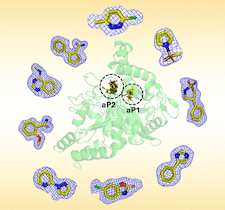
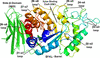
Cover illustration: A fragment-based approach was used to characterize the active sites of two novel urethanases with different catalytic scaffolds, employing a crystallographic fragment-screening campaign to map subpockets in the active site and validate these subpockets as plastic binding sites by using soluble plastic fragment analogues that mimic the substrate, transition state or product [Bicer et al. (2026), Acta Cryst. D82, 1298–1317]. Here, fragment-based active-site mapping/probing identifies potential pockets for plastic binding to amidase U11-S173A.
image processing for cryoem


Open  access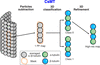
CsMT is a robust and streamlined CryoSPARC-based workflow to reconstruct undecorated and decorated microtubule maps. By unifying the processing pipeline into a single user-friendly tool, it makes high-resolution microtubule research significantly more accessible and reproducible for laboratories worldwide.
research papers

Open access
access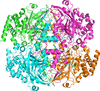
Structural and biochemical characterization of the extracellular fungal catalase ClCPO uncovers an unexpected phenol oxidase promiscuity. Crystal structures, substrate docking and electron-transfer pathway analysis identify ligand-binding regions and support a working mechanistic model for catalase-associated phenol oxidase activity.
Open access
access
An open-source entropy-regularized deconvolution workflow is presented for denoising tomographic reconstructions from cryo-electron microscopy.
Open access
access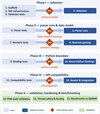
Artificial intelligence (AI)-assisted development can significantly reduce the effort of coding scientific tools and software. At the same time, the approach requires detailed oversight, as well as domain knowledge and codebase expertise. The conditions under which AI assistance is reliable, the kinds of mistakes coding LLMs can make and why expert judgment is necessary are examined through the example of developing a new CIF file parser that focuses particularly on speed of execution.
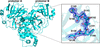
Crystal structures of SARS-CoV-2 main protease (Mpro) and its complex with PBI-0451 expand the conformational landscape of Mpro and offer structural guidance for the design of Mpro-targeted antiviral drugs.
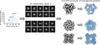
Cryo-EM analysis of a size-exclusion chromatography fraction initially attributed to an oligomeric form of a recombinant OGFOD1 protein expressed in Escherichia coli instead revealed three endogenous E. coli proteins: ArnA, GTP cyclohydrolase I and glycerol dehydrogenase. The three protein assemblies had comparable predicted hydrodynamic radii, which plausibly explained their partial coelution during size-exclusion chromatography, indicating that rigid, symmetric endogenous complexes can dominate heterogeneous cryo-EM datasets and highlighting the value of systematic analysis of off-target particle populations.
EMDB references: ArnA, EMD-82347; glycerol dehydrogenase, EMD-82348; GTP cyclohydrolase I, EMD-82349
Open access
access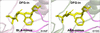
This article presents a systematic structural curation of all deposited GSK3β crystal structures to map its conformational ensemble, revealing eight distinct conformational states.
Open access
access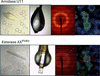
Fragment-based active-site exploration of urethanases was performed to elucidate polyurethane binding and cleavage.
PDB references: esterase AXPUR5, 29jv; 29jy; 29kj; 29kx; 29nv; 29nw; 29oj; 29oo; 29qc; 29pw; 29pz; 29qa; 29qe; 29qs; 29qu; 29qx; 29rs; 29ru; 29rv; 29rw; 30tv; 30va; amidase U11, 29zk; 30fo; 30ge; 30gv; 30hf; 30hg; 30nq; 30pj; 30ob; 30om; 30op; 30pl; 30qo; 30qp; 30qw; 30qy; 30rg; 30sd; 30tu; 30oc; 34fs
addenda and errata
Free
The article by St John et al. [(2026), Acta Cryst. D82, 370–382] is corrected.