

 menu


a tribute to George Sheldrick
 | JOURNAL OF APPLIED CRYSTALLOGRAPHY |
George Sheldrick's keen interest in crystallography education

aDepartment of Chemistry, University of Manchester, Manchester M13 9PL, United Kingdom
*Correspondence e-mail: [email protected]
This article is part of the collection A Tribute to George Sheldrick: the Legacy of a Crystallographic Computing Pioneer
As well as his highly successful research career, George Sheldrick had a keen interest in crystallography education. This included being a frequent speaker at crystallography schools and open sharing of his presentation slides. He was also a university professor teaching undergraduate crystallography and structural chemistry alongside his supervision of generations of PhD and Masters students. The predominance of the SHELX chemical crystallography software suite meant that its users' manual shaped the education of a very high proportion of all crystallographers. His career spanned two distinct phases: firstly, at the University of Cambridge, UK, then the University of Göttingen in Germany. Both are historic universities with outstanding research reputations and are prominent centres for science education. I encountered George Sheldrick at many events during my five-decade career in crystallography, and both of us were educated at schools in West Yorkshire, UK. George's Wikipedia page description of his school education provides details of his outstanding achievements at school. Our common background provides the basis for this article on our crystallography education and research contributions and my observations on the science teaching we received in school.
Keywords: crystallography education; West Yorkshire schools; Cambridge University; Göttingen University.
1. Introduction
George Sheldrick had an outstanding crystallography research career, notably through his software system for crystallography, the SHELX suite. He wrote a look back at the history of SHELX in 2008 (Sheldrick, 2008 ). At the time of writing the present article it has been cited 86874 times. The success of SHELX was not simply because George Sheldrick wrote excellent software algorithms. He also wrote one of the finest scientific software manuals of its era. The SHELX Users' Manual became, in effect, a textbook on practical crystallography. Fig. 1 shows the opening pages of this manual, kindly provided by Isabel Uson, who also wrote to me that
George [commenced postgraduate supervisions] starting barely after he had presented his own PhD thesis since his supervisor Evelyn Ebsworth took a chair at the University of Edinburgh and over a dozen PhD students did not want to move away from Cambridge and it fell to George to supervise them all. … A hallmark of George's teaching was that he would guide rather than compel, leaving the freedom to do and learn (or not) to the mentee or student as well as the ownership and joy of discovery.
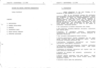
Figure 1
The opening pages of the SHELX76 users' manual in its 1976 `no fuss' format. The huge impact of this program suite is illustrated by the fact that a book in the IUCr Texts on Crystallography book series was, in the fullness of time, devoted to it (Müller et al., 2006
).The first phase of my encounters with George, besides at crystallography research conferences, was at crystallography schools. My encounters were mainly at CCP4 Study Weekends. Occasionally there were also presentations in the day-zero workshops at the ACA annual meetings. We shared this enthusiasm for presenting regularly at crystallography schools.
A very interesting and career-defining event for both of us was the retirement symposium of Durward Cruickshank held at the University of Manchester Institute of Science and Technology in 1985. We both presented lectures and each of us wrote articles (Sheldrick, 1985; Helliwell, 1985). I reread George's recently and it is a treasure trove of insights on crystallographic computing at the time, also with some history of his interactions with Cruickshank.
We were also both educated at schools in West Yorkshire. I offer a range of observations in this article on George's education activities over these decades. I follow a reverse chronological order, i.e. with the more recent instances described first.
2. George at crystallography schools: my observations on his style
His style was to have an opening section which I assumed followed W. L. Bragg's guideline of `Never underestimate the pleasure that audiences get from being told what they already know' (Sir John Meurig Thomas, personal communication). He would then proceed to lay out in careful, systematic detail a topic of current focus of the crystallographic community.
An example of his approach would be the microsymposium he organized with Isabel Uson in 2015 at the European Crystallography Meeting ECM29 in Rovinj (Sheldrick & Uson, 2015).
My opportunities to see him in action were at the annual Study Weekends of the UK Collaborative Computational Project No. 4 (CCP4) in Protein Crystallography, for example in 2009 (Sheldrick, 2010a). Although my first-hand experience of his teaching was therefore in the field of macromolecular crystallography, his educational contributions clearly extended to the chemical crystallography community as well. His talks would show all the steps in the derivation of a key equation. All symbols in his equations he carefully defined. His slides, however, would be dense with text, thus defying a common guideline of presentations that such blocks of text had to be avoided. He would use a mix of black and blue colours for this text. An example of George's slides is here: https://www.ccdc.cam.ac.uk/media/resources/mc3_10_10e.pdf. These are preserved within the CCDC's Database of Educational Crystallographic Online Resources: https://www.ccdc.cam.ac.uk/community/education-and-outreach/education/decor/. In addition, a comprehensive set of his talks is available here: https://shelx.uni-goettingen.de/tutorials.php. George Sheldrick obviously took a pride in his education lectures.
3. Secondary school education in West Yorkshire
Much later in my career, when I discovered that I had a Wikipedia page, I looked at notable people like George to see what their Wikipedia page described. (I hasten to say that I was looking for the Wikipedia entry of the Canadian economist John F. Helliwell, as I had realized that this specialist on `happiness' was why I received invitations to give a Ted Talk on that topic.)
It was in George's Wikipedia entry that I saw the details of his secondary school education in West Yorkshire. His school was just 10 miles away from mine. I knew he was from Yorkshire but not precisely where. In the early 1990s, he and I shared a suite at the Panama City Beach macromolecular crystallography school in Florida, organized by Charlie Bugg of the University of Alabama at Birmingham; I tried to get him talking about Yorkshire, but he was not talkative about it at all. So, we focused on our current research. It was this conference where Charlie Bugg, then Editor-in-Chief of Acta Crystallographica, launched Acta Crystallographica Section D (the inaugural Section Editor was Jenny Glusker). The first issue was based on articles from the Panama City Beach School [see our preface (Bugg & Helliwell, 1993)]. George presented details on the application of direct methods and Patterson interpretation to high-resolution native protein data (Sheldrick et al., 1993). I presented on how we at the synchrotron radiation facilities were reaching towards the measurement of `ideal' data for macromolecular crystallography (Helliwell et al., 1993). This last theme stays with me to this day (Helliwell, 2025). I will quote from George's 2010 lecture slide 11 entitled Least-squares algebra and standard uncertainties (Sheldrick, 2010b) with reference to a chemical crystal structure refinement at around 0.8 Å. It has a very decent data-to-parameter ratio, unlike what is typical for a macromolecular crystal structure at say 2 Å:
These estimates [of standard uncertainties] only take random errors into account. Since systematic errors can never be completely eliminated, such e.s.d.'s are always underestimated. Comparison of independent determinations of the same small molecule structures suggest that coordinate e.s.d.'s are underestimated by a factor of about 1.5 and e.s.d.'s in U or Uij by a factor of about 2. Nevertheless, for a single structure determination they are by far the best estimates that we have.
George's Wikipedia page describes his outstanding performance at his secondary school as follows:
He was educated at Huddersfield New College, then an all-boys grammar school. He completed nine O-Levels, six A-Levels, and two S-Levels. At A-Level, he achieved a distinction (the highest grade) in chemistry, mathematics and physics.
For the benefit of an international audience, O and A levels were the standard `ordinary' and `advanced' secondary school qualifications at that time. S level means `scholarship' or `special paper', a higher standard than the A level. From my own experience at my school, where I undertook three A levels (chemistry, mathematics and physics), I can imagine the challenges of school timetabling (my request, with another pupil, to be entered into the maths special paper was refused `because they had not the teaching staff to support us'). Isabel Uson (personal communication) mentioned that there even was no chemistry teacher at George's school. So, I assume that he must have had to learn a great deal on his own.
George was ten years ahead of me by age, but the Joint Matriculation Examining Board that was the governing body for those exam papers would I believe have been largely the same. These exam papers are held at the University College London School Examination Papers Collection, which can be consulted via a personal visit by prior appointment (https://www.ucl.ac.uk/library/collections/special-collections/our-collections/rare-books-and-printed-material/z-ioe-rare-book-18).
4. Primary school science education
I find it interesting that one of George's past students, Dr Erhard Irmer, has led initiatives in German secondary school science teaching so as to include crystallography (Irmer, 2025). Furthermore, Erhard's article dedicated to the memory of George M. Sheldrick, remarks `Even in primary school mathematics lessons, pupils can be introduced to plane symmetry in a playful way.'
Very recently I reviewed a book on the constructivist method of teaching in primary school by a USA education specialist Eugene Geist (2025). Under this approach children are not told an answer but must find out for themselves. This sets out a very different approach than my own primary school education in West Yorkshire, and I think it would have likely been the same for George. This `constructivist' method is strongly criticized, though, for spending too much time reinventing the wheel. The conclusion of my book review (Helliwell 2026) was that the issue becomes: what balance of time in the primary school teaching week is devoted to facts and to children learning by themselves?
A question I have wondered about is why George left his post at Cambridge University for Göttingen University? Both universities are leading research and education institutions, but George was British after all. His move could purely have been a career-based move, with better prospects in Germany. At the IUCr 2026 Congress a colleague who went to the same secondary school as myself told me (Sean Parkin personal communication) that his father worked with George's father at Imperial Chemical Industries. He went on to say that George's move to Göttingen from Cambridge was because Cambridge declined his request for his own computer, which Göttingen said they would provide for him (see Sella, 2022). Also, Sean pointed out that George's younger brother, William, had been in Germany since 1971, first as a post doc and then as a faculty member (see his brother's obituary; Seidel, 2015). This would have meant that George had very good inside knowledge of the German academic atmosphere through the 1970s, and I wonder if, with a young family, was the move also a rebellion against the facts-based teaching methods in UK primary schools that he might have had himself?
5. Conclusions
George Sheldrick obviously took considerable pride in preparing, presenting and then archiving his education lectures. I witnessed these being delivered not only in Florida but also at several CCP4 Study Weekends. I am, like so many other people I meet, proud to have known George Sheldrick. I learnt from him. I looked up to him: not least because of his own significant achievements at school!
Acknowledgements
I am grateful to Isabel Uson, Regine Herbst Irmer and Sean Parkin for the personal communications that I quote in this article.
References
 Bugg, C. E. & Helliwell, J. R. (1993). Acta Cryst. D49, 2. CrossRef IUCr Journals Google Scholar
Ebsworth, E., Rankin, D. W. H. & Cradock, S. (1991). Structural Methods in Inorganic Chemistry, 2nd ed. Abingdon: Taylor & Francis. Google Scholar
Geist, E. (2025). Reinventing STEM in Early Childhood Education: a Constructivist Approach. New York, Abingdon: Routledge. Google Scholar
Helliwell, J. R. (1985). J. Mol. Struct. 130, 63–91. CrossRef CAS Web of Science Google Scholar
Helliwell, J. R. (2025). Precision and Accuracy in Biological Crystallography, Diffraction, Scattering, Microscopies, and Spectroscopies, International Union of Crystallography Texts on Crystallography 25. Oxford University Press. Google Scholar
Helliwell, J. R. (2026). Crystallogr. Rev. https://doi.org/10.1080/0889311X.2026.2692377. Google Scholar
Helliwell, J. R., Ealick, S., Doing, P., Irving, T. & Szebenyi, M. (1993). Acta Cryst. D49, 120–128. CrossRef CAS Web of Science IUCr Journals Google Scholar
Irmer, E. (2025). J. Appl. Cryst. 58, 1802–1809. Web of Science CrossRef CAS IUCr Journals Google Scholar
Müller, P., Herbst-Irmer, R., Spek, A., Schneider, T. R. & Sawaya, M. R. (2006). Crystal Structure Refinement: A Crystallographer's Guide to SHELXL, International Union of Crystallography Texts on Crystallography 8. Oxford University Press. Google Scholar
Seidel, R. W. (2015). Z. Anorg. Allge Chem. 641, 750. CrossRef Google Scholar
Sella, A. (2022). Chemistry World, https://www.chemistryworld.com/opinion/sheldricks-SHELX/4015554.article. Google Scholar
Sheldrick, G. M. (1985). J. Mol. Struct. 130, 9–16. CrossRef CAS Google Scholar
Sheldrick, G. M. (2008). Acta Cryst. A64, 112–122. Web of Science CrossRef CAS IUCr Journals Google Scholar
Sheldrick, G. M. (2010a). Acta Cryst. D66, 479–485. CrossRef IUCr Journals Google Scholar
Sheldrick, G. M. (2010b). Methods in Chemistry III – Part 1 Modern Methods of Inorganic Chemistry. Archived at the Cambridge Crystallographic Data Centre, Cambridge, UK. Google Scholar
Sheldrick, G. M., Dauter, Z., Wilson, K. S., Hope, H. & Sieker, L. C. (1993). Acta Cryst. D49, 18–23. CrossRef CAS Web of Science IUCr Journals Google Scholar
Sheldrick, G. M. & Uson, I. (2015). IUCr Newsl. 23, No. 4. Google Scholar
This article is published by the International Union of Crystallography. Prior permission is not required to reproduce short quotations, tables and figures from this article, provided the original authors and source are cited. For more information, click here.
| JOURNAL OF APPLIED CRYSTALLOGRAPHY |