

 menu


issue contents
December 2026 issue
Early view articles

a tribute to George Sheldrick


Open  access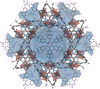
PrimeXP is a modern Python/OpenGL re-interpretation of George Sheldrick's classic model editing, analysis and publication-quality graphics preparation program XP.
Free
George Sheldrick had a keen interest in crystallography education. This included being a frequent speaker at crystallography schools and the open sharing of his presentation slides. He was also a university professor teaching undergraduate crystallography and structural chemistry alongside his supervision of generations of PhD students. The predominance of the SHELX chemical crystallography software suite meant that its users' manual shaped the education of a very high proportion of all crystallographers.
research papers
Open access
access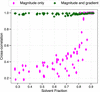
Incorporating molecular intensity gradients into an iterative projection algorithm enables model-free electron-density reconstruction even for low-solvent macromolecular crystals.
Open access
access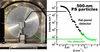
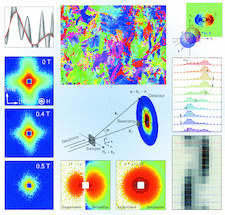
Replacing conventional position-sensitive photomultiplier tube detector systems with a square array of four flat-panel-type photomultiplier tube detectors enables simultaneous very small angle and small-angle neutron scattering measurements, while improving the effective neutron detection area, spatial resolution, sensitivity and signal-to-background ratio.
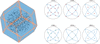
Three-dimensional modeling of exsolution textures using MATLAB and the MTEX toolbox is described, alongside a theoretical analysis of crystallographic orientation relationships.
Open access
access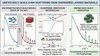
A unified multi-scale framework is proposed for the consistent analysis of small-angle X-ray scattering (SAXS) and X-ray diffraction (XRD) in disordered clay minerals, combining morphology, stacking and turbostratic contributions within a single formalism. The approach resolves long-standing inconsistencies in the SAXS–XRD junction and provides a physically interpretable method for extracting structural parameters across multiple length scales.
Open access
access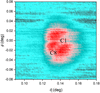
The first experimental observation of grazing-incidence X-ray back-diffraction validates both the dynamical description and a simple geometrical interpretation of its exceptionally large angular dispersion.
Open access
access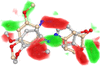
TorchRef is an open-source PyTorch-based crystallographic refinement framework that exposes all refinable parameters to automatic differentiation, accelerates structure factor evaluation by about two orders of magnitude on a GPU and enables novel workflows such as direct refinement against amplitude differences in time-resolved crystallography.
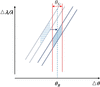
This study introduces a physically deterministic method for the high-precision characterization of light source size via dynamical crystal diffraction, providing a robust tool for advancements in accelerator physics and metrology.

Download citation


Download citation
Open access
access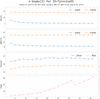
Dynamical diffraction effects in electron diffraction can now be modelled directly within Olex2–AutoChem using data processed with CrysAlisPro, enabled by a new N-Beam refinement method based on the Bloch-wave formalism. This workflow allows dynamical refinement of integrated rotation electron diffraction intensities, improving structural models and enabling determination of absolute structure in a streamlined, accessible environment.
CCDC reference: 2584530
Download citation

Download citation
Open access
access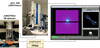
A complete workflow of data acquisition and processing for 3D electron crystallography with the JUNGFRAU 1M pixel detector is described. Typical crystallographic use cases engaging with multiple software applications are presented.
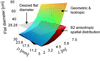
Optimization of the SAFARI-1 neutron radiography replacement collimator is investigated using coupled Monte Carlo N-particle transport derived surface source terms with McStas beam optics. A 2 mm pinhole positioned upstream, combined with single-crystal Al2O3 and Bi as beam filters, achieves a 98.1% thermal neutron beam flux of 2.6 × 10⁷ n cm−2 s−1, strong gamma suppression and a flat 20 × 20 cm2 field of view.
Open access
access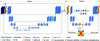
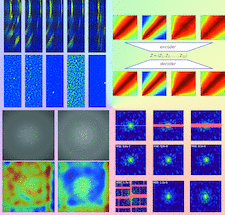
This study proposes a machine-learning-based network for gap filling in small-angle X-ray scattering and wide-angle X-ray diffraction patterns, which can reconstruct missing regions in two-dimensional patterns to recover a sample's true structural information.
Open access
access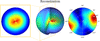
In small-angle X-ray scattering tensor tomography experiments, the 3D reciprocal-space map is reconstructed, which contains information about the scatterer's size, shape, polydispersity and orientation. We present a deconvolution algorithm that can separate the shape and size information from the orientation information and which yields the scatterer's orientation distribution function.
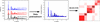
Sample–sample two-dimensional correlation spectroscopy was used successfully to detect similarity or collinearity among a series of lanthanide complexes based on their single-crystal X-ray diffraction patterns.
Open access
access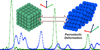
This work enables powder-diffraction analysis of crystal shape and lattice deformation beyond predefined shape models by treating the two effects as coupled yet independently refinable degrees of freedom. This capability is achieved by extending the established common volume function formalism, allowing unified refinement of shape, lattice deformation and their relative misorientation.
short communications
Open access
access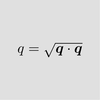
Under grazing incidence, form and structure factors must be evaluated for complex scattering vectors, which can be done by analytic continuation.
computer programs
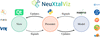
NeuXtalViz is a Python-based visualization and analysis platform that integrates Mantid, PyVista, Matplotlib and Qt to support key single-crystal neutron diffraction workflows. By embedding interactive three-dimensional tools directly into the experimental workflow, the software improves the planning, execution and analysis of single-crystal neutron diffraction experiments while providing a flexible framework for future instrument and user-driven development.
Open access
access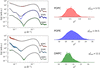
SAS_MoCa is an open-source Python package for quantitative analysis of small-angle scattering (SAS) data from large unilamellar vesicles, combining a compositional scattering density profile model of lipid bilayers with a separated form factor description of vesicle size and polydispersity in a Bayesian framework. It yields full posterior parameter distributions, uncertainties and correlations from single SAS curves, enabling reproducible and extensible high-throughput membrane structural characterization.
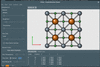
CView is an open-source, Linux-native crystal structure visualization and analysis program written in Rust with GTK4 and Cairo. It integrates a range of analyses into a single desktop application aimed at the pre- and post-processing of plane-wave density-functional-theory calculations.
Open access
access
McSAS3 consists of a pair of tools: a command-line, Monte Carlo based fitting engine for headless, automated analysis of large quantities of a broad range of small-angle scattering data, and a graphical user interface to simplify configuration and batch fitting. It is the completely refactored successor to the McSAS software.
Open access
access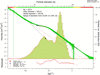
Irena is a comprehensive small-angle scattering analysis suite that has served the small-angle scattering community for 25 years and has been cited more than 2000 times. Its Python companion pyIrena reimplements the most widely used Irena tools, removes the dependency on the commercial Igor Pro package, and exposes most analysis through four complementary methods: an interactive Qt graphical interface, a scriptable batch API for beamline pipelines, JSON replay, and a Model Context Protocol server that lets large-language-model agents read pyIrena data files and call its analysis tools directly.
book reviews
Free