


 menu


scientific commentaries
 access
Crystal structures of low-melting molecular materials

aEaStCHEM School of Chemistry and Centre for Science at Extreme Conditions, University of Edinburgh, King's Buildings, W. Mains Road, Edinburgh EH9 3FJ, United Kingdom
*Correspondence e-mail: [email protected]
Keywords: propane; propene; neutron diffraction; extraterrestrial compounds.
The crystal structures of simple materials form the basis of our understanding of the structures of solids. Very many inorganic materials crystallize in basic structural types such as the NaCl or CaF2 structures. The work of Kitaigorodski (Kitaigorodski, 1973 ) and Peresypkina & Blatov (Peresypkina & Blatov, 2000a; Peresypkina & Blatov, 2000b) showed that simple sphere-packing archetypes apply also to molecular materials. The crystal structures of simple molecular solids provide archetypes for intermolecular interactions in more complex materials, while they are also small enough for theoretical modelling at the highest levels.
The Cambridge Structural Database (Groom et al., 2016) now contains over 1.4 million crystal structures, and yet it is often surprising to discover that structural data on the very simplest compounds have not been determined. Usually this is because they form liquids or gases under normal conditions and therefore special techniques have to be applied for crystallization. For the purposes of single-crystal diffraction experiments, amongst the most successful of these is Boese's in situ crystal growth method in which a focused CO2-laser beam is moved along a capillary containing the frozen material of interest while mounted on a diffractometer (Boese & Nussbaumer, 1994). Crystal growth is achieved through careful control of a liquid–solid phase boundary which is tracked slowly along the length of the sample, somewhat akin to zone refinement. Among Boese's most highly cited papers is his report of the crystal structures of the primary alkanes, which identified the structural reason for the alternation of melting points along the series (Boese et al., 1999).
Powder diffraction is an attractive alternative technique for the study of low-melting materials as they usually have quite simple crystal structures. Neutron powder diffraction is particularly attractive, as structures can be determined at temperatures near absolute zero, providing a rigorous benchmark for theoretical work. The HRPD instrument at the ISIS Neutron and Muon Source has a distinguished record in this respect, some personally selected highlights being ozone (Marx & Ibberson, 2001), stannane (Maley et al., 2008), pyridine (Crawford et al., 2009), ammonia hydrates (Fortes et al., 2009; Griffiths et al., 2012), iron pentacarbonyl (Fortes & Parker, 2022) and phosgene (Ringelband et al., 2026) and its sulfur-containing analogue, thiophosphene (Tambornino et al., 2024). This is the technique applied by Fortes, Howard & Parker in their paper on the structures of propane and propene, which appears in this issue of IUCrJ (Fortes et al., 2026).
Propane (C3H8) and propene (C3H6) are among the very simplest hydrocarbons. They are found in interstellar environments, planetary atmospheres and icy bodies such as Saturn's moon, Titan. Understanding their physical properties in the solid state is important for interpreting astronomical infrared spectra and modelling the behaviour of hydrocarbon ice under the extreme conditions of extraterrestrial environments. Prior to this work, the crystal structure of propene had not been reliably determined at all, and even for propane, little was known of its structural response to temperature or its solid-state vibrational properties, especially for the external phonon modes which are critical for modelling thermodynamic properties.
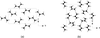
The crystal structures of both compounds have been determined between 10–80 K for propane and 10–85 K for propene (Fig. 1). The structure determined for propane is the same as that determined by Boese, but, of course, the neutron data provide the H-atom positions with much higher precision and accuracy. The structure of propene forms in P212121 with Z′ = 2. Intermolecular energies were estimated for both structures. Whereas propane forms a layered structure, propene forms a three-dimensional arrangement of interlocking, canted molecules. The variable-temperature data enable thermal expansion properties of the solids to be determined for the first time. Expansion is moderately anisotropic for propane, with the greatest effect seen along the direction of the weakest interlayer contact. Expansion of propene is approximately uniaxial, perhaps as a result of the underlying tetragonal symmetry of its crystal structure (see below).
|
Figure 1
The crystal structures of (a) propane and (b) propene at 10 K. |
The structural data were obtained for deuterated isotopologues of propane and propene in order to avoid the high backgrounds in the diffraction patterns associated with inelastic scattering from protium. Volume isotope effects arising from replacing hydrogen with deuterium were estimated, enabling the densities of ordinary, hydrogenated propane and propene to be parameterized across their solid-state temperature ranges. These estimates provide useful inputs for planetary models, particularly calculations of whether hydrocarbon ice particles can float in Titan's liquid hydrocarbon lakes and rivers.
Inelastic neutron scattering (INS) measurements (a form of vibrational spectroscopy), supported by periodic DFT calculations, enabled the assignment of vibrational modes in both hydrogenated and deuterated propane and propene, with excellent agreement between the observed and calculated spectra.
The INS data help resolve the more complex phase behaviour of propane and propene seen using vibrational spectroscopy (Hudson et al., 2021). Previous investigations have shown that propane exists in two solid forms, a metastable phase I which emerges at 40–50 K from an amorphous solid deposited at 10 K, and a phase II which is formed on warming above 60 K. The observed and calculated INS data clearly identify the structure determined with the spectroscopists' phase II, and the structure of phase I remains unknown.
Two phases have also been observed spectroscopically for propene, a metastable phase I transforming to a stable phase II above 70 K (Hudson et al., 2021). A related study along similar lines to the present one was carried out by Lennon et al. in 2000 (Lennon et al., 2000). No reliable structure solution could be obtained, but the diffraction data were clearly different to those collected in the present study. Reindexing of the old data suggested an alternative tetragonal phase with cell dimensions which are similar but significantly different to the orthorhombic phase determined here. Crystal structure prediction suggests a structure in I4 with slightly different relative orientations of the molecules to those in the orthorhombic structure. While the INS data collected in this study are consistent with the reported orthorhombic phase, calculated infrared data for the I4 phase are more consistent with Hudson's infrared data for phase I.
The authors point out that these results demonstrate the merits of revisiting old data using modern methods, but it is also a nice example of the detail and insight that can be obtained when diffraction, spectroscopy and theory are combined.
Conflict of interest
There are no conflicts of interest to declare.
References
 Boese, R. & Nussbaumer, M. (1994). International Union of Crystallography. Crystallographic Symposia, 7, 20–37.
Google Scholar
Boese, R., Weiss, H.-C. & Bläser, D. (1999). Angew. Chem. Int. Ed. 38, 988–992.
CrossRef
CAS
Google Scholar
Crawford, S., Kirchner, M. T., Bläser, D., Boese, R., David, W. I. F., Dawson, A., Gehrke, A., Ibberson, R. M., Marshall, W. G., Parsons, S. & Yamamuro, O. (2009). Angew. Chem. Int. Ed. 48, 755–757.
Web of Science
CSD
CrossRef
CAS
Google Scholar
Fortes, A. D., Howard, C. M. & Parker, S. F. (2026). IUCrJ, 13, 689–704.
CrossRef
IUCr Journals
Google Scholar
Fortes, A. D. & Parker, S. F. (2022). J. Am. Chem. Soc. 144, 17376–17386.
CrossRef
CAS
PubMed
Google Scholar
Fortes, A. D., Suard, E., Lemée-Cailleau, M.-H., Pickard, C. J. & Needs, R. J. (2009). J. Am. Chem. Soc. 131, 13508–13515.
Web of Science
CrossRef
PubMed
CAS
Google Scholar
Griffiths, G. I. G., Fortes, A. D., Pickard, C. J. & Needs, R. J. (2012). J. Chem. Phys. 136, 174512.
CrossRef
PubMed
Google Scholar
Groom, C. R., Bruno, I. J., Lightfoot, M. P. & Ward, S. C. (2016). Acta Cryst. B72, 171–179.
Web of Science
CrossRef
IUCr Journals
Google Scholar
Hudson, R. L., Gerakines, P. A., Yarnall, Y. Y. & Coones, R. T. (2021). Icarus 354, 114033.
Web of Science
CrossRef
Google Scholar
Kitaigorodski, A. I. (1973). Molecular Crystals. New York, USA: Academic Press.
Google Scholar
Lennon, D., McNamara, J., Phillips, J. R., Ibberson, R. M. & Parker, S. F. (2000). Phys. Chem. Chem. Phys. 2, 4447–4451.
Web of Science
CrossRef
CAS
Google Scholar
Maley, I. J., Brown, D. H., Ibberson, R. M. & Pulham, C. R. (2008). Acta Cryst. B64, 312–317.
CrossRef
IUCr Journals
Google Scholar
Marx, R. & Ibberson, R. M. (2001). Solid State Sci. 3, 195–202.
CrossRef
CAS
Google Scholar
Peresypkina, E. V. & Blatov, V. A. (2000a). Acta Cryst. B56, 501–511.
Web of Science
CrossRef
CAS
IUCr Journals
Google Scholar
Peresypkina, E. V. & Blatov, V. A. (2000b). Acta Cryst. B56, 1035–1045.
Web of Science
CrossRef
CAS
IUCr Journals
Google Scholar
Ringelband, S., Pfeiffer, J., Fortes, A. D., Howard, C. M., Parker, S. F., Karttunen, A. J. & Tambornino, F. (2026). Angew. Chem. Int. Ed. 65, e17323.
CrossRef
Google Scholar
Tambornino, F., Ringelband, S., Parker, S. F., Howard, C. M. & Fortes, D. (2024). Acta Cryst. B80, 495–503.
CrossRef
IUCr Journals
Google Scholar
This is an open-access article distributed under the terms of the Creative Commons Attribution (CC-BY) Licence, which permits unrestricted use, distribution, and reproduction in any medium, provided the original authors and source are cited.
access