


 menu


issue contents
 access
November 2026 issue
scientific commentaries


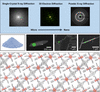
Three-dimensional electron diffraction is a powerful tool for studying nanocrystalline metal–organic and covalent organic frameworks, linking structure determination to chemical insight. In their topical review in this issue of IUCrJ, Wang & Huang [IUCrJ (2026), 13, 675–688] highlight its role in discovering overlooked phases and revealing host–guest interactions, framework flexibility and structural dynamics.
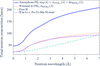
In this issue, Xu et al. [IUCrJ (2026), 13, 784–806] develop an open-source, simulation-guided workflow for wavelength-resolved neutron imaging that detects hydrogen-equivalent concentrations down to about 10 wt p.p.m. in bulk stainless steel, opening a route to mapping the hydrogen responsible for embrittlement in structural alloys.
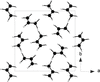
The crystal structures of propane and propene have been studied by Fortes and co-workers [IUCrJ (2026), 13, 689–704] using neutron diffraction, spectroscopy and theoretical calculations. The combination of these methods reveals their crystal structures, thermal expansion, vibrational properties and phase behaviour, with implications for understanding hydrocarbon ices in extraterrestrial environments.
topical reviews
ELECTRON CRYSTALLOGRAPHY
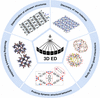
Three-dimensional electron diffraction (3D ED) has been developed for structural analysis of metal–organic frameworks (MOFs) and covalent organic frameworks (COFs) that are inaccessible to conventional X-ray methods. This review highlights recent advances in applying 3D ED to framework materials, including discovery and structure determination of novel MOFs and COFs, and obtaining chemical insights.
research papers
CHEMISTRY | CRYSTENG

Download citation


Download citation
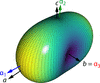
We have carried out a variable-temperature high-resolution neutron powder diffraction study of perdeuterated propane and propene, as well as an inelastic neutron spectroscopy study of both the protiated and deuterated isotopologues of each substance. Coupled with first-principles computer simulations, these provide new insights into the structure and properties of these cosmically abundant molecular solids.
NEUTRON | SYNCHROTRON

An advanced X-ray excited optical luminescence experimental probe has been developed and commissioned at the BM08-XAFS/XRF beamline, SESAME. The setup is now available to users for measuring emission spectra and performing hyperspectral mapping of a wide range of optical materials over the 200–950 nm spectral range, under monochromatic X-ray beam and laser (UV–Vis/NIR) excitation.
MATERIALS | COMPUTATION
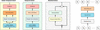
We address the challenge of solving ab initio crystal structures from X-ray powder diffraction (XRPD) data acquired from nanomaterials. Our approach employs artificial intelligence to pre-process XRPD profiles with the aim of recovering information lost by lack of crystalline order.
CRYO | EM
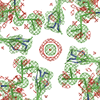
New tools implemented in CCTBX and Phenix allow the calculation of variable-resolution maps through a sum of finite-resolution atomic images expressed as analytic functions of all atomic parameters, along with their associated local resolution.
CRYO | EM
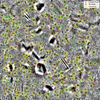
CryoQSeg, a novel cryo-EM particle segmentation algorithm harnessing the state-of-the-art Qwen-Image-Edit visual large model fine-tuned on the CryoPPP dataset, demonstrates outstanding particle picking and segmentation performance for cryo-EM imaging data.
BIOLOGY | MEDICINE

A new concept for high-pressure macromolecular crystallography is presented and applied to five diverse proteins.
PDB references: RNase A at atmospheric pressure, 7q75; RNase A at 22 MPa, 7q76; RNase A at 50 MPa, 7q77; RNase A at 72 MPa, 7q78; RNase A at 100 MPa, 7q79; RNase A at 120 MPa, 7q7a; RNase A at atmospheric pressure after pressure release, 7q7b; DRAK2 at atmospheric pressure, 7q7c; DRAK2 at 110 MPa, 7q7d; DRAK2 at atmospheric pressure after pressure release, 7q7e; photosynthetic reaction center at atmospheric pressure, 7q7f; photosynthetic reaction center at 30 MPa, 7q7g; photosynthetic reaction center at 51 MPa, 7q7h; photosynthetic reaction center at 75 MPa, 7q7j; photosynthetic reaction center at 100 MPa, 7q7m; photosynthetic reaction center at 120 MPa, 7q7n; photosynthetic reaction center at atmospheric pressure after pressure release, 7q7o; N-acetylglucosamine 2-epimerase at atmospheric pressure, 8bry; N-acetylglucosamine 2-epimerase at 52 MPa, 8brz; N-acetylglucosamine 2-epimerase at 80 MPa, 8bs0; SARS-CoV-2 main protease at atmospheric pressure, 8bs1; SARS-CoV-2 main protease at 104 MPa, 8bs2
CHEMISTRY | CRYSTENG
Download citation
Download citation
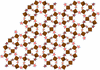
This study investigates [Cu(im)2], a zeolitic imidazolate framework (ZIF) originally discovered in the 1960s but widely overlooked since. We characterize its B polymorph with the sodalite topology. By measuring its gas-adsorption isotherms to establish its permanent porosity, we demonstrate that the origins of modern ZIFs lie much earlier than previously recognized.
CCDC reference: 2583741
NEUTRON | SYNCHROTRON
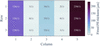
We have developed a comprehensive quantitative methodology for analysing wavelength-resolved neutron transmission spectra and here demonstrate its application to metallic alloys. The approach integrates Monte Carlo simulations, which serve as a digital twin of the experiment, with NCrystal-based least-squares fitting. By using open-source software, this method resolves and quantifies trace element contributions, as demonstrated here for detecting hydrogen-equivalent concentrations below 10 wt p.p.m. in stainless steel.
CRYO | EM
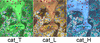
Three high-resolution catalase structures have been determined by cryoEM, two bacterial and one human. Comparison of the haem and NADPH cofactor binding, water molecules and channel structure between these and previous X-ray crystal structures provides insight into the different features of the structures and the strengths of the methodologies.
CHEMISTRY | CRYSTENG
Download citation
Download citation
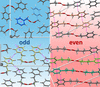
We report the structures of four alcohols from a homologous series: benzyl alcohol, 2-phenylethanol, 3-phenyl-1-propanol and 4-phenyl-1-butanol, obtained under high pressure (1 GPa). Their structures were determined using single-crystal X-ray diffraction supported by powder diffraction and periodic density functional theory calculations. The even alcohols are more efficiently packed than their odd counterparts, and all of these structures are characterized by strong hydrogen bonds and stabilizing aromatic interactions.
BIOLOGY | MEDICINE
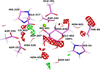
We show that quantum refinement can be used to improve the interpretation of structures from time-resolved serial crystallography. Examples are shown for bacteriorhodopsin, xylose isomerase and fluoroacetate dehalogenase, leading to better interpretations and improved structures in terms of difference maps, real-space Z-scores and strain energies.
CHEMISTRY | CRYSTENG
Download citation
Download citation
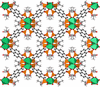
The synthesis and structures of two novel porous calcium-based phosphonate MOFs are reported, and their chemical stability and light absorption properties are investigated.
