


 menu


issue contents
December 2026 issue
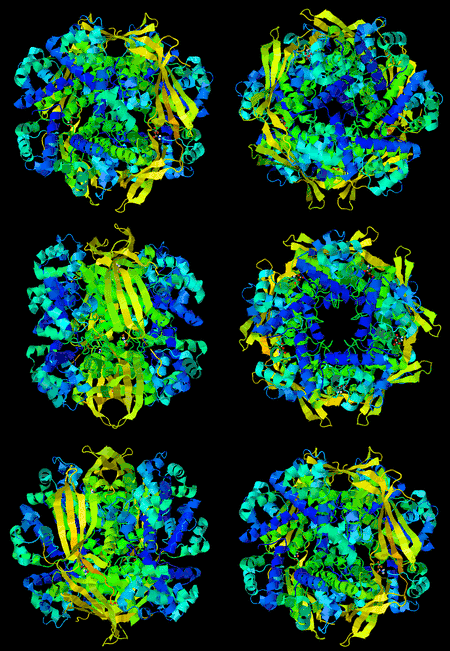
Cover illustration: The structure of cyanase from Serratia sp. The structure of this enzyme has been reported multiple times after crystallizing as a contaminant from a species other than the expression system. It is proposed that azide, a common antimicrobial added to biochemical buffers to prevent microbial growth, induces the production of cyanase by contaminating bacteria within the crystallization experiment, leading to protein accumulation and serendipitous crystallization [Gulick (2026), Acta Cryst. F82, 454–463].
topical reviews


Open  access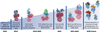
Structural studies of cereblon-recruiting degrader complexes have transformed our understanding of targeted protein degradation. This review discusses selected examples of how X-ray crystallography and cryogenic-electron microscopy have enabled the structure-guided optimization of heterobifunctional degraders and molecular-glue degraders. These structural insights have also revealed the molecular basis of degrader-induced non-native target selectivity and laid the foundation for increasingly predictive computational approaches towards degrader design.
research communications


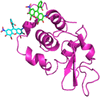
The crystal structure of hen egg-white lysozyme in complex with the dye eosin B reveals multiple contacts between the protein and dye molecules involving electrostatic, hydrogen-bonding and hydrophobic interactions.
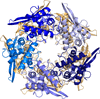
The structure determination is described of a cyanase enzyme, which was not the target of study. The serendipitous crystallization of this enzyme has been observed frequently and I propose that sodium azide induces the production of cyanase from a contaminating organism.
PDB reference: cyanase from Serratia sp., 38yu
Open access
access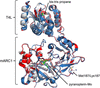
The structure of the disease-relevant human mitochondrial amidoxime-reducing component 1 M187K variant was determined at 1.63 Å resolution after iterative micro-seeding. The variant does not display relevant perturbations of the overall protein fold or active-site structure, but differential scanning fluorimetry detects a pH-dependent decrease in overall protein stability associated with the M187K amino-acid exchange.
PDB reference: human mARC1 M187K variant, 29aj
methods communications
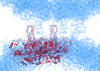
The crystal structure of the T = 4 Lake Sinai virus 2 virus-like particle was phased at 8.0 Å resolution by direct density optimization under 60-fold icosahedral noncrystallographic symmetry constraints, using a starting density built from two cryo-EM models superimposed at different radii to accommodate the unknown particle radius.