
Acta Crystallographica
Section E CRYSTALLOGRAPHIC COMMUNICATIONS


 menu


research communications
| CRYSTALLOGRAPHIC COMMUNICATIONS |
 access
Photo-induced synthesis and structure of (benzo[4,5]imidazo[2,1-b]thiazol-2-yl)[4-(trifluoromethyl)phenyl]methanone

aChemical Biology Lab, School of Chemical and Biotechnology, SASTRA Deemed University, Tirumalaisamudiram, Thanjavur-613401, Tamil Nadu, India, and bOrganic Synthesis & Catalysis Lab, Department of Chemistry, School of Chemical and Biotechnology, SASTRA Deemed University, Thanjavur-613401, Tamil Nadu, India
*Correspondence e-mail: [email protected]
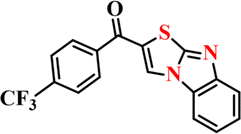
The title compound, C17H9F3N2OS, crystallizes in the monoclinic space group P21/n. The fused thiazolo[3,2-a]benzimidazole core is nearly planar, whereas the 4-(trifluoromethyl)phenyl ring is twisted by 52.6 (2)° from the thiazole ring. In the crystal, C—H⋯N hydrogen bonds form [101] chains, complemented by C—F⋯π and π–π contacts. Hirshfeld analysis reveals major H⋯F/F⋯H (21.4%) and C⋯H/H⋯C (17.5%) contributions. Energy-framework analysis shows that dispersion (−172.0 kJ mol−1) dominates over Coulombic interactions (−53.8 kJ mol−1), indicating that cumulative dispersion forces are primarily responsible for crystal cohesion.
CCDC reference: 2598652
1. Chemical context
Benzimidazole is a nitrogen-containing heterocyclic scaffold in medicinal chemistry, exhibiting a broad range of biological activities, including anticancer, antimicrobial, antiviral, anti-inflammatory and enzyme-inhibitory properties (Shrivastava et al., 2017 ; Tahlan et al., 2019a,b; Anichina et al., 2017; Al-Rashood & Abdel-Aziz, 2010). Fusion of a thiazole ring with the benzimidazole framework affords thiazolo[3,2-a]benzimidazole derivatives with increased structural rigidity and extended π-conjugation, which can influence their pharmacological and physicochemical properties (Tahlan et al., 2019b; Khaldi et al., 2020; Ramos Rodríguez et al., 2020). These fused heterocycles have also attracted interest as potential functional materials because of their tunable electronic and supramolecular characteristics. Their biological and physicochemical properties are closely related to molecular conformation, substituent effects and crystal-packing arrangements. Consequently, single-crystal X-ray diffraction is particularly valuable for establishing the molecular geometry and elucidating intermolecular interactions, including hydrogen bonding and aromatic stacking, that may contribute to structure–property relationships (Braga & Grepioni, 2000; Ramos Rodríguez et al., 2020). Complementary Hirshfeld surface analysis and density functional theory calculations can provide further insight into the intermolecular contacts and electronic properties of these systems. As part of our ongoing investigations of fused and biologically relevant heterocycles (Al-Ansary et al., 2017), we report here the synthesis and crystal structure of compound 3, with particular emphasis on its molecular conformation and supramolecular assembly.
2. Structural commentary
The title compound 3, C17H9F3N2OS (Fig. 1), crystallizes in the centrosymmetric monoclinic space group P21/n. The molecular structure consists of a fused thiazolo[3,2-a]benzimidazole framework comprising benzene (A), imidazole (B) and thiazole (C) rings. The fused heterocyclic core is essentially planar, as indicated by the small interplanar angles of 0.72 (2), 0.57 (2) and 0.21 (3)°, respectively, between the A/B, B/C and C/A ring pairs. This pronounced coplanarity is consistent with related thiazolo[3,2-a]benzimidazole structures reported in the literature (Fun et al., 2012a,b; Wang et al., 2011). In contrast, the 4-(trifluoromethyl)phenyl ring (D), connected to the thiazole ring (C) is twisted appreciably, with a C/D dihedral angle of 52.6 (2)°. This deviation from coplanarity may result from a combination of steric interactions associated with the bulky –CF3 substituent, electronic conjugation, and intermolecular interactions within the crystal. Similar variations in the orientation of have been observed in related structures (Fun et al., 2012a,b; Wang et al., 2011), although the precise dihedral angle depends on the molecular connectivity and crystal-packing environment. The bond lengths and bond angles fall within the normal ranges for comparable heterocyclic compounds and agree well with standard crystallographic values (Allen et al., 1987; Fun et al., 2012a,b; Wang et al., 2011). Overall, the structure exhibits a highly planar fused thiazolo[3,2-a]benzimidazole core, accompanied by a significantly twisted 4-(trifluoromethyl)phenyl ring.
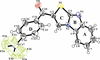 | Figure 1 The molecular structure of the title compound, with displacement ellipsoids drawn at the 50% probability level. |
The para-trifluoromethyl substituent in the title compound 3 exhibits rotational disorder, with the fluorine atoms distributed over two alternative orientations. Following the site-occupancy factors (SOFs) of the major and minor disorder components were refined to 0.701 (7) and 0.299 (7), respectively. This disorder is consistent with the presence of alternative orientations of the CF3 group about the Csp2—C(F3) bond (C14—C17). Rotational disorder of CF3 groups has been reported in related crystal structures, including (E)-4-(trifluoromethyl)benzaldehyde oxime (Jia et al., 2006) and 3,5-bis(trifluoromethyl)pyrazolide anions (Phan et al., 2010). The Hirshfeld surface reveals short contacts involving the fluorinated and aromatic regions of neighbouring molecules; however, these features alone do not confirm specific intermolecular interactions involving the disordered fluorine atoms. The overall crystal packing is supported by the intermolecular contacts established through crystallographic analysis.
Two weak intramolecular C—H⋯F contacts (Table 1) are present, which contribute to maintaining the molecular conformation.
| |||||||||||||||||||||||||||
 .
3. Supramolecular features
The crystal packing of the title compound (3), viewed along the a axis, is illustrated in Fig. 2. The crystal structure is mainly governed by weak intermolecular C2—H2⋯N1 hydrogen bonds (Table 1), forming supramolecular chain propagating along the [101] direction. Furthermore, the crystal packing is reinforced by several C—F⋯π contacts (Table 2). Additionally, weak π–π contacts between the fused-ring system and the pendant phenyl ring are observed (Hunter & Sanders, 1990; Wang et al., 2011), with centroid-to-centroid distances of Cg2⋯Cg4(− + x, − y, − − z) = 3.787 (1) Å and Cg3⋯Cg4(− + x, − y, − − < z) = 3.772 (1) Å (Cg2, Cg3 and Cg4 are the centroids of the N1/C3/N2/C9/C4, C4–C9 and C11–C16 rings, respectively).
|
 .
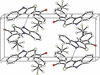 | Figure 2 Crystal packing of compound (3) viewed along the a axis. Dashed lines indicate intermolecular C2—H2⋯N1 hydrogen bonds linking symmetry-related molecules into one-dimensional chains propagating along the [101] direction. |
The Hirshfeld surface analysis provides quantitative support for the intermolecular interactions identified from the H⋯F/F⋯H contacts make the largest contribution (21.4%), highlighting the importance of fluorine-associated contacts and being consistent with the observed C—F⋯π interactions (Table 2). However, this contribution represents the overall close H⋯F contacts and cannot be attributed exclusively to C—F⋯π interactions. The N⋯H/H⋯N contacts contribute 9.3%, consistent with the intermolecular C2—H2⋯N1 hydrogen bond, which generates the observed supramolecular chain. The C⋯C contacts (7.0%) are compatible with the aromatic contacts associated with the observed π–π interactions, although the fingerprint plot alone does not establish π-stacking. The substantial C⋯H/H⋯C (17.5%) and H⋯H (13.9%) contributions further indicate that dispersive and van der Waals contacts contribute significantly to the crystal architecture (Fig. 3). Overall, the crystallographic and Hirshfeld analyses are complementary: the former identifies specific C—H⋯N, C—F⋯π and π⋯π interactions, whereas the latter quantifies their broader intermolecular contact environment, showing that H⋯F/F⋯H, C⋯H/H⋯C, H⋯H and N⋯H/H⋯N contacts collectively dominate the packing.
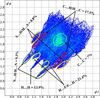 | Figure 3 Two-dimensional fingerprint plots for compound (3), showing the percentage contributions of the major intermolecular contacts to the Hirshfeld surface. |
The Hirshfeld surface (Spackman et al., 2021) mapped over (dnorm) (Fig. 4) provides a visual depiction of the close intermolecular contacts in the crystal. The prominent red spots correspond to the C2—H2⋯N1 contact, confirming its directional nature and involvement in the supramolecular arrangement. Additional features observed on the Hirshfeld surface indicate short intermolecular contacts involving the fluorinated and aromatic regions of neighbouring molecules, consistent with the C—F⋯π and π–π interactions identified from the crystallographic analysis. However, these surface features provide supporting evidence rather than definitive confirmation of these specific interactions. Thus, the dnorm surface visually complements the crystallographic analysis by highlighting the principal regions of close molecular contact without implying that any single interaction alone governs the crystal cohesion.
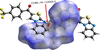 | Figure 4 Hirshfeld surface (HS) of compound (3) mapped over dnorm, highlighting the principal intermolecular C—H⋯N contact contributing to crystal packing. |
The energy-framework analysis (Fig. 5) provides further insight into the energetic origin of the crystal packing. The pairwise intermolecular interaction energies were calculated for all molecular pairs within a 3.8 Å cluster of the reference molecule using CrystalExplorer (Spackman et al., 2021). Summing these pairwise contributions gives a total interaction energy of −161.8 kJ mol−1 for the reference molecule, comprising a dispersion contribution of −172.0 kJ mol−1 and a Coulombic contribution of −53.8 kJ mol−1. These values refer to the total interaction of the reference molecule with its first coordination sphere. They indicate that dispersion forces provide the dominant energetic contribution to the intermolecular consolidation within this cluster, although electrostatic interactions also contribute significantly. Therefore, the directional C—H⋯N hydrogen bonds, C—F⋯π contacts and π–π interactions help organize the molecules within the lattice, whereas the cumulative dispersion interactions provide the major energetic consolidation.
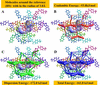 | Figure 5 Energy-framework analysis of the crystal packing of compound (3): (A) Pairwise intermolecular interaction energies calculated for molecules within 3.8 Å of the reference molecule (HS); (B) Coulombic (Eele); (C) dispersion (Edis); and (D) total (Etot) interaction energies, in kJ mol−1. Negative values indicate consolidating interactions. |
Overall, compound (3) exhibits stable crystal packing through a cooperative interplay of weak hydrogen bonding, C—F⋯π and π–π contacts and numerous close-contact interactions. Hirshfeld and dnorm analyses confirm the extensive intermolecular contact network, while the energy framework identifies dispersion (−172.0 kJ mol−1) as the principal stabilizing force over the Coulombic contribution (−53.8 kJ mol−1). Thus, directional interactions govern molecular organization, whereas cumulative dispersion forces provide the dominant energetic stabilization of the crystal packing.
4. Database survey
A systematic search of the Cambridge Structural Database (CSD, Version 5.47, November 2025 update; Groom et al., 2016), conducted using the CCDC CONQUEST interface, identified two closely related thiazolobenzimidazole derivatives, namely benzo[4,5]imidazo[2,1-b]thiazol-2-yl(p-tolyl)methanone and benzo[4,5]imidazo[2,1-b]thiazol-2-yl(4-fluorophenyl)methanone (CSD refcodes ABESUY and ABESOS; Ambethkar et al., 2017). These derivatives contain para-methyl and para-fluoro substituents, respectively, on the benzoyl phenyl ring; however, despite their presence in the CSD, detailed crystallographic parameters are not readily available. A broader search for structurally related compounds containing the thiazolo[3,2-a]benzimidazole core identified additional entries, including BACCUH (Chen et al., 2020) and AMUCIW (Yallur et al., 2016). In these compounds, the benzoyl moiety is replaced by an aldehyde group, while their molecular geometries and conformational characteristics are closely comparable with those observed for the title compound 3. The compounds CANHEI (Zhang et al., 2021) and CANHEI01 (Chen et al., 2022), which contain an unsubstituted benzoyl group, likewise display geometrical parameters that are in good agreement with those of compound 3. The methyl ketone derivative FAQPAQ (Abdel-Aziz, Saleh & El-Zahabi, 2010), contains a closely related thiazolo[3,2-a]benzimidazole moiety adopting an essentially planar conformation as observed in compound 3. Other structurally related derivatives include the benzylidene-substituted compound EXIVOX (Wang et al., 2011), in which no significant intermolecular hydrogen-bonding interactions were observed, and the analogous compound QECZAB (Fun et al., 2012b), whose crystal packing is predominantly consolidated by π–π stacking interactions. Collectively, these crystallographic examples indicate that the thiazolo[3,2-a]benzimidazole core has a pronounced tendency to adopt an approximately planar conformation. In contrast, incorporation of a benzoyl substituent can result in rotation of the pendant phenyl ring with respect to the heteroaromatic core. The extent of this torsional deviation is influenced by the electronic and steric characteristics of the substituent, particularly when substitution occurs at the para position of the phenyl ring. The conformational features observed for the title compound are therefore consistent with the structural trends reported for related thiazolo[3,2-a]benzimidazole derivatives.
5. Synthesis and crystallization
The title compound 3 was synthesized (Fig. 6) by combining equal molar quantities of 2-mercaptobenzimidazole (1), enaminone (2), and N-methyl-2-pyrrolidone (NMP; 1 mL) in a borosilicate reaction tube equipped with an O2-filled balloon. The reaction mixture was stirred under blue LED irradiation (2 × 14 W) for 4–6 h. The progress of the reaction was monitored by TLC. After completion, the reaction mixture was diluted with ethylacetate and washed with H2O (2 × 15 mL). The organic layer was separated, dried over anhydrous Na2SO4, and concentrated under reduced pressure. The crude product was purified by column chromatography using hexane/ethylacetate (8:2, v/v) as the eluent. Colourless crystals suitable for single-crystal X-ray diffraction analysis were obtained by slow evaporation of an ethyl acetate solution at room temperature.
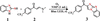 | Figure 6 Synthesis of the title compound 3. |
6. Refinement
Crystal data, data-collection parameters, and structure-refinement details are summarized in Table 3. Hydrogen atoms bonded to carbon were placed in geometrically calculated positions (C—H = 0.93 Å) and refined using a riding model, with their isotropic displacement parameters fixed at Uiso(H) = 1.2Ueq(C). The CF3 group is disordered over two orientations. The site-occupancy factors refined to 0.701 (7) and 0.299 (7). Two fluorine atoms in each component showed elongated displacement ellipsoids and were each modelled as split over two positions. SADI, SIMU and RIGU restraints were applied to the disordered group (114 restraints in total). Final R1 = 0.043 for I > 2σ(I) and wR2 = 0.107 for all data.
|
Supporting information
CCDC reference: 2598652
contains datablock I. DOI: https://doi.org/10.1107/S2056989026011230/jp2035sup1.cif
Structure factors: contains datablock I. DOI: https://doi.org/10.1107/S2056989026011230/jp2035Isup2.hkl
Supporting information file. DOI: https://doi.org/10.1107/S2056989026011230/jp2035Isup3.cml
| C17H9F3N2OS | F(000) = 704 |
| Mr = 346.32 | Dx = 1.496 Mg m−3 |
| Monoclinic, P21/n | Mo Kα radiation, λ = 0.71073 Å |
| a = 8.5887 (9) Å | Cell parameters from 37328 reflections |
| b = 18.995 (2) Å | θ = 2.1–28.3° |
| c = 9.4591 (9) Å | µ = 0.25 mm−1 |
| β = 94.774 (3)° | T = 293 K |
| V = 1537.8 (3) Å3 | Block, colourless |
| Z = 4 | 0.28 × 0.16 × 0.12 mm |
| Bruker APEXII CCD diffractometer | Rint = 0.050 |
| φ and ω scans | θmax = 28.3°, θmin = 2.1° |
| 37328 measured reflections | h = −11→11 |
| 3827 independent reflections | k = −25→25 |
| 2632 reflections with I > 2σ(I) | l = −12→12 |
| Refinement on F2 | Hydrogen site location: inferred from neighbouring sites |
| Least-squares matrix: full | H-atom parameters constrained |
| R[F2 > 2σ(F2)] = 0.043 | w = 1/[σ2(Fo2) + (0.029P)2 + 0.786P] where P = (Fo2 + 2Fc2)/3 |
| wR(F2) = 0.107 | (Δ/σ)max < 0.001 |
| S = 1.03 | Δρmax = 0.21 e Å−3 |
| 3827 reflections | Δρmin = −0.29 e Å−3 |
| 246 parameters | Extinction correction: SHELXL-2025/1 (Sheldrick 2015a), Fc*=kFc[1+0.001xFc2λ3/sin(2θ)]-1/4 |
| 114 restraints | Extinction coefficient: 0.0035 (7) |
Geometry. All esds (except the esd in the dihedral angle between two l.s. planes) are estimated using the full covariance matrix. The cell esds are taken into account individually in the estimation of esds in distances, angles and torsion angles; correlations between esds in cell parameters are only used when they are defined by crystal symmetry. An approximate (isotropic) treatment of cell esds is used for estimating esds involving l.s. planes. |
| x | y | z | Uiso*/Ueq | Occ. (<1) | |
| S1 | 0.21482 (6) | 0.12390 (3) | 0.33024 (5) | 0.05476 (17) | |
| F1A | 0.6110 (4) | 0.1253 (3) | 1.2294 (3) | 0.0955 (13) | 0.701 (7) |
| F1B | 0.6865 (17) | 0.0865 (6) | 1.2212 (9) | 0.147 (6) | 0.299 (7) |
| F2A | 0.7790 (7) | 0.1870 (2) | 1.1381 (4) | 0.128 (2) | 0.701 (7) |
| F2B | 0.6701 (12) | 0.1933 (5) | 1.1883 (10) | 0.117 (4) | 0.299 (7) |
| F3A | 0.8126 (5) | 0.0787 (2) | 1.1641 (4) | 0.1149 (17) | 0.701 (7) |
| F3B | 0.8535 (7) | 0.1385 (7) | 1.1237 (7) | 0.104 (4) | 0.299 (7) |
| O1 | 0.31967 (19) | 0.02097 (7) | 0.55604 (16) | 0.0671 (4) | |
| N1 | 0.23203 (19) | 0.24075 (9) | 0.14990 (16) | 0.0533 (4) | |
| N2 | 0.38054 (16) | 0.23609 (8) | 0.35833 (15) | 0.0411 (3) | |
| C1 | 0.3455 (2) | 0.13667 (9) | 0.48196 (18) | 0.0428 (4) | |
| C2 | 0.4228 (2) | 0.19826 (9) | 0.47840 (18) | 0.0418 (4) | |
| H2 | 0.496548 | 0.213344 | 0.549530 | 0.050* | |
| C3 | 0.2698 (2) | 0.20429 (10) | 0.26496 (19) | 0.0457 (4) | |
| C4 | 0.3249 (2) | 0.30140 (11) | 0.1681 (2) | 0.0500 (5) | |
| C5 | 0.3333 (3) | 0.35976 (13) | 0.0801 (2) | 0.0681 (7) | |
| H5 | 0.272716 | 0.362671 | −0.005837 | 0.082* | |
| C6 | 0.4340 (3) | 0.41276 (14) | 0.1245 (3) | 0.0762 (7) | |
| H6 | 0.440577 | 0.452223 | 0.067152 | 0.091* | |
| C7 | 0.5263 (3) | 0.40982 (13) | 0.2518 (3) | 0.0702 (7) | |
| H7 | 0.593182 | 0.447031 | 0.277306 | 0.084* | |
| C8 | 0.5207 (2) | 0.35272 (11) | 0.3411 (2) | 0.0569 (5) | |
| H8 | 0.582374 | 0.350123 | 0.426513 | 0.068* | |
| C9 | 0.4187 (2) | 0.29975 (10) | 0.29673 (19) | 0.0444 (4) | |
| C10 | 0.3690 (2) | 0.07979 (10) | 0.5852 (2) | 0.0463 (4) | |
| C11 | 0.4576 (2) | 0.09501 (9) | 0.72468 (18) | 0.0419 (4) | |
| C12 | 0.4361 (2) | 0.15625 (10) | 0.8002 (2) | 0.0496 (5) | |
| H12 | 0.366730 | 0.190400 | 0.762928 | 0.059* | |
| C13 | 0.5175 (2) | 0.16671 (11) | 0.9309 (2) | 0.0533 (5) | |
| H13 | 0.502156 | 0.207715 | 0.981689 | 0.064* | |
| C14 | 0.6211 (2) | 0.11662 (10) | 0.98605 (19) | 0.0484 (5) | |
| C15 | 0.6431 (2) | 0.05546 (11) | 0.9116 (2) | 0.0574 (5) | |
| H15 | 0.713178 | 0.021617 | 0.948954 | 0.069* | |
| C16 | 0.5612 (2) | 0.04457 (10) | 0.7821 (2) | 0.0517 (5) | |
| H16 | 0.575506 | 0.003058 | 0.732714 | 0.062* | |
| C17 | 0.7076 (3) | 0.12874 (12) | 1.1281 (2) | 0.0630 (6) |
| U11 | U22 | U33 | U12 | U13 | U23 | |
| S1 | 0.0536 (3) | 0.0547 (3) | 0.0526 (3) | −0.0066 (2) | −0.0162 (2) | −0.0027 (2) |
| F1A | 0.099 (2) | 0.149 (4) | 0.0384 (13) | −0.001 (2) | 0.0056 (12) | −0.0022 (17) |
| F1B | 0.211 (12) | 0.140 (8) | 0.076 (6) | −0.112 (8) | −0.065 (7) | 0.073 (6) |
| F2A | 0.195 (6) | 0.102 (3) | 0.078 (2) | −0.092 (3) | −0.049 (3) | 0.025 (2) |
| F2B | 0.114 (6) | 0.131 (6) | 0.098 (6) | 0.028 (5) | −0.034 (5) | −0.064 (5) |
| F3A | 0.122 (3) | 0.124 (3) | 0.089 (2) | 0.045 (2) | −0.053 (2) | −0.010 (2) |
| F3B | 0.065 (3) | 0.183 (11) | 0.062 (3) | −0.004 (5) | −0.018 (3) | −0.008 (6) |
| O1 | 0.0851 (11) | 0.0477 (8) | 0.0654 (9) | −0.0147 (8) | −0.0118 (8) | 0.0012 (7) |
| N1 | 0.0491 (9) | 0.0680 (11) | 0.0408 (9) | 0.0088 (8) | −0.0086 (7) | 0.0038 (8) |
| N2 | 0.0389 (8) | 0.0453 (8) | 0.0376 (8) | 0.0022 (6) | −0.0056 (6) | 0.0024 (6) |
| C1 | 0.0417 (10) | 0.0455 (10) | 0.0398 (9) | −0.0005 (8) | −0.0051 (7) | −0.0012 (8) |
| C2 | 0.0393 (9) | 0.0478 (10) | 0.0366 (9) | 0.0015 (8) | −0.0074 (7) | 0.0014 (8) |
| C3 | 0.0396 (10) | 0.0548 (11) | 0.0407 (9) | 0.0065 (8) | −0.0083 (8) | −0.0044 (8) |
| C4 | 0.0428 (10) | 0.0639 (12) | 0.0434 (10) | 0.0131 (9) | 0.0035 (8) | 0.0111 (9) |
| C5 | 0.0566 (13) | 0.0901 (17) | 0.0578 (13) | 0.0160 (12) | 0.0058 (11) | 0.0291 (12) |
| C6 | 0.0614 (15) | 0.0788 (17) | 0.0909 (18) | 0.0098 (13) | 0.0205 (13) | 0.0423 (14) |
| C7 | 0.0558 (13) | 0.0633 (14) | 0.0924 (18) | −0.0047 (11) | 0.0112 (13) | 0.0211 (13) |
| C8 | 0.0486 (11) | 0.0577 (12) | 0.0639 (13) | −0.0028 (9) | 0.0021 (10) | 0.0098 (10) |
| C9 | 0.0391 (10) | 0.0503 (10) | 0.0438 (10) | 0.0067 (8) | 0.0035 (8) | 0.0075 (8) |
| C10 | 0.0464 (10) | 0.0456 (10) | 0.0463 (10) | −0.0010 (8) | 0.0009 (8) | 0.0003 (8) |
| C11 | 0.0433 (10) | 0.0421 (9) | 0.0403 (9) | −0.0023 (8) | 0.0037 (8) | 0.0051 (8) |
| C12 | 0.0534 (11) | 0.0492 (11) | 0.0457 (11) | 0.0100 (9) | 0.0020 (9) | 0.0028 (8) |
| C13 | 0.0655 (13) | 0.0519 (11) | 0.0432 (11) | 0.0031 (10) | 0.0079 (9) | −0.0051 (9) |
| C14 | 0.0501 (11) | 0.0559 (11) | 0.0389 (10) | −0.0053 (9) | 0.0026 (8) | 0.0070 (9) |
| C15 | 0.0605 (13) | 0.0542 (12) | 0.0555 (12) | 0.0087 (10) | −0.0069 (10) | 0.0089 (10) |
| C16 | 0.0606 (12) | 0.0420 (10) | 0.0516 (11) | 0.0049 (9) | −0.0017 (9) | 0.0009 (9) |
| C17 | 0.0748 (16) | 0.0705 (15) | 0.0426 (11) | −0.0094 (12) | −0.0015 (11) | 0.0072 (11) |
| S1—C1 | 1.7635 (17) | C5—C6 | 1.370 (3) |
| S1—C3 | 1.728 (2) | C6—H6 | 0.9300 |
| F1A—C17 | 1.320 (3) | C6—C7 | 1.386 (3) |
| F1B—C17 | 1.216 (6) | C7—H7 | 0.9300 |
| F2A—C17 | 1.264 (3) | C7—C8 | 1.378 (3) |
| F2B—C17 | 1.400 (6) | C8—H8 | 0.9300 |
| F3A—C17 | 1.335 (3) | C8—C9 | 1.377 (3) |
| F3B—C17 | 1.271 (6) | C10—C11 | 1.496 (2) |
| O1—C10 | 1.218 (2) | C11—C12 | 1.386 (3) |
| N1—C3 | 1.308 (2) | C11—C16 | 1.387 (3) |
| N1—C4 | 1.404 (3) | C12—H12 | 0.9300 |
| N2—C2 | 1.367 (2) | C12—C13 | 1.383 (3) |
| N2—C3 | 1.382 (2) | C13—H13 | 0.9300 |
| N2—C9 | 1.393 (2) | C13—C14 | 1.375 (3) |
| C1—C2 | 1.347 (2) | C14—C15 | 1.379 (3) |
| C1—C10 | 1.459 (2) | C14—C17 | 1.498 (3) |
| C2—H2 | 0.9300 | C15—H15 | 0.9300 |
| C4—C5 | 1.392 (3) | C15—C16 | 1.376 (3) |
| C4—C9 | 1.402 (2) | C16—H16 | 0.9300 |
| C5—H5 | 0.9300 | ||
| C3—S1—C1 | 89.70 (8) | O1—C10—C11 | 121.25 (17) |
| C3—N1—C4 | 103.48 (15) | C1—C10—C11 | 118.63 (16) |
| C2—N2—C3 | 114.97 (15) | C12—C11—C10 | 122.48 (16) |
| C2—N2—C9 | 138.44 (15) | C12—C11—C16 | 119.13 (17) |
| C3—N2—C9 | 106.58 (14) | C16—C11—C10 | 118.36 (17) |
| C2—C1—S1 | 112.39 (13) | C11—C12—H12 | 119.9 |
| C2—C1—C10 | 128.24 (16) | C13—C12—C11 | 120.14 (18) |
| C10—C1—S1 | 119.07 (13) | C13—C12—H12 | 119.9 |
| N2—C2—H2 | 123.8 | C12—C13—H13 | 119.9 |
| C1—C2—N2 | 112.33 (15) | C14—C13—C12 | 120.15 (18) |
| C1—C2—H2 | 123.8 | C14—C13—H13 | 119.9 |
| N1—C3—S1 | 135.16 (15) | C13—C14—C15 | 120.08 (18) |
| N1—C3—N2 | 114.22 (17) | C13—C14—C17 | 119.38 (19) |
| N2—C3—S1 | 110.62 (13) | C15—C14—C17 | 120.54 (19) |
| C5—C4—N1 | 129.59 (19) | C14—C15—H15 | 120.0 |
| C5—C4—C9 | 118.8 (2) | C16—C15—C14 | 119.94 (19) |
| C9—C4—N1 | 111.57 (16) | C16—C15—H15 | 120.0 |
| C4—C5—H5 | 121.2 | C11—C16—H16 | 119.7 |
| C6—C5—C4 | 117.7 (2) | C15—C16—C11 | 120.55 (18) |
| C6—C5—H5 | 121.2 | C15—C16—H16 | 119.7 |
| C5—C6—H6 | 118.7 | F1A—C17—F3A | 103.4 (3) |
| C5—C6—C7 | 122.5 (2) | F1A—C17—C14 | 110.4 (2) |
| C7—C6—H6 | 118.7 | F1B—C17—F2B | 103.2 (6) |
| C6—C7—H7 | 119.4 | F1B—C17—F3B | 109.1 (6) |
| C8—C7—C6 | 121.2 (2) | F1B—C17—C14 | 117.1 (4) |
| C8—C7—H7 | 119.4 | F2A—C17—F1A | 108.6 (3) |
| C7—C8—H8 | 121.9 | F2A—C17—F3A | 106.9 (3) |
| C9—C8—C7 | 116.2 (2) | F2A—C17—C14 | 113.7 (2) |
| C9—C8—H8 | 121.9 | F2B—C17—C14 | 112.7 (4) |
| N2—C9—C4 | 104.15 (16) | F3A—C17—C14 | 113.2 (2) |
| C8—C9—N2 | 132.28 (17) | F3B—C17—F2B | 98.4 (5) |
| C8—C9—C4 | 123.57 (18) | F3B—C17—C14 | 114.2 (3) |
| O1—C10—C1 | 120.10 (17) | ||
| S1—C1—C2—N2 | 0.3 (2) | C6—C7—C8—C9 | −0.2 (3) |
| S1—C1—C10—O1 | 11.9 (3) | C7—C8—C9—N2 | −178.9 (2) |
| S1—C1—C10—C11 | −169.56 (13) | C7—C8—C9—C4 | 0.7 (3) |
| O1—C10—C11—C12 | −139.6 (2) | C9—N2—C2—C1 | −179.05 (19) |
| O1—C10—C11—C16 | 38.2 (3) | C9—N2—C3—S1 | 179.45 (12) |
| N1—C4—C5—C6 | 179.3 (2) | C9—N2—C3—N1 | −0.2 (2) |
| N1—C4—C9—N2 | −0.2 (2) | C9—C4—C5—C6 | 0.1 (3) |
| N1—C4—C9—C8 | −179.90 (18) | C10—C1—C2—N2 | 173.84 (17) |
| C1—S1—C3—N1 | 179.4 (2) | C10—C11—C12—C13 | 177.92 (18) |
| C1—S1—C3—N2 | −0.22 (14) | C10—C11—C16—C15 | −178.62 (18) |
| C1—C10—C11—C12 | 41.9 (3) | C11—C12—C13—C14 | 0.5 (3) |
| C1—C10—C11—C16 | −140.32 (18) | C12—C11—C16—C15 | −0.8 (3) |
| C2—N2—C3—S1 | 0.45 (19) | C12—C13—C14—C15 | −0.6 (3) |
| C2—N2—C3—N1 | −179.23 (16) | C12—C13—C14—C17 | −179.72 (19) |
| C2—N2—C9—C4 | 178.9 (2) | C13—C14—C15—C16 | 0.0 (3) |
| C2—N2—C9—C8 | −1.5 (4) | C13—C14—C17—F1A | 69.4 (3) |
| C2—C1—C10—O1 | −161.2 (2) | C13—C14—C17—F1B | 119.0 (10) |
| C2—C1—C10—C11 | 17.3 (3) | C13—C14—C17—F2A | −53.0 (5) |
| C3—S1—C1—C2 | −0.06 (15) | C13—C14—C17—F2B | −0.5 (7) |
| C3—S1—C1—C10 | −174.23 (16) | C13—C14—C17—F3A | −175.2 (3) |
| C3—N1—C4—C5 | −179.1 (2) | C13—C14—C17—F3B | −111.7 (7) |
| C3—N1—C4—C9 | 0.1 (2) | C14—C15—C16—C11 | 0.7 (3) |
| C3—N2—C2—C1 | −0.5 (2) | C15—C14—C17—F1A | −109.8 (3) |
| C3—N2—C9—C4 | 0.26 (19) | C15—C14—C17—F1B | −60.1 (11) |
| C3—N2—C9—C8 | 179.9 (2) | C15—C14—C17—F2A | 127.8 (4) |
| C4—N1—C3—S1 | −179.49 (17) | C15—C14—C17—F2B | −179.6 (7) |
| C4—N1—C3—N2 | 0.1 (2) | C15—C14—C17—F3A | 5.6 (4) |
| C4—C5—C6—C7 | 0.3 (4) | C15—C14—C17—F3B | 69.1 (7) |
| C5—C4—C9—N2 | 179.06 (17) | C16—C11—C12—C13 | 0.2 (3) |
| C5—C4—C9—C8 | −0.6 (3) | C17—C14—C15—C16 | 179.11 (19) |
| C5—C6—C7—C8 | −0.2 (4) |
| Cg1 and Cg2 are the centroids of the S1/C1/C2/N2/C3 and N1/C3/N2/C9/C4 rings, respectively. |
| D—H···A | D—H | H···A | D···A | D—H···A |
| C2—H2···N1i | 0.93 | 2.33 | 3.211 (2) | 158 |
| C13—H13···F2B | 0.93 | 2.37 | 2.715 (10) | 103 |
| C15—H15···F3A | 0.93 | 2.40 | 2.727 (6) | 101 |
| C17—F1A···Cg1ii | 1.32 (1) | 3.12 (1) | 4.331 (3) | 152 (1) |
| C17—F1A···Cg2ii | 1.32 (1) | 3.51 (1) | 4.309 (3) | 119 (1) |
| C17—F2B···Cg1ii | 1.40 (1) | 3.98 (1) | 4.331 (3) | 99 (1) |
| C17—F2B···Cg2ii | 1.40 (1) | 3.29 (1) | 4.309 (3) | 129 (1) |
| Symmetry codes: (i) x+1/2, −y+1/2, z+1/2; (ii) x, y, z+1. |
Acknowledgements
The authors gratefully acknowledge the Vellore Institute of Technology (VIT) for providing the single crystal X-ray diffraction data.
References
 Abdel–Aziz, H. A., Saleh, T. S. & El–Zahabi, H. S. A. (2010). Arch. Pharm. 343, 24–30. CAS Google Scholar
Al-Ansary, G. H., Eldehna, W. M., Ghabbour, H. A., Al-Rashood, S. T., Al-Rashood, K. A., Eladwy, R. A., Al-Dhfyan, A., Kabil, M. M. & Abdel-Aziz, H. A. (2017). J. Enzyme Inhib. Med. Chem. 32, 986–991. CAS PubMed Google Scholar
Allen, F. H., Kennard, O., Watson, D. G., Brammer, L., Orpen, A. G. & Taylor, R. (1987). J. Chem. Soc. Perkin Trans. 2 pp. S1–S19. Google Scholar
Al-Rashood, S. T. & Abdel-Aziz, H. A. (2010). Molecules 15, 3775–3815. CAS PubMed Google Scholar
Ambethkar, S., Vellimalai, M., Padmini, V. & Bhuvanesh, N. (2017). New J. Chem. 41, 75–80. Web of Science CSD CrossRef CAS Google Scholar
Anichina, K., Mavrova, A., Yancheva, D., Tsenov, J. & Dimitrov, R. (2017). J. Mol. Struct. 1150, 179–187. Web of Science CrossRef CAS Google Scholar
Braga, D. & Grepioni, F. (2000). Acc. Chem. Res. 33, 601–608. Web of Science CrossRef PubMed CAS Google Scholar
Bruker (2017). APEX3 and SAINT. Bruker AXS Inc., Madison, Wisconsin, USA. Google Scholar
Chen, Z., Jin, W., Xia, Y., Zhang, Y., Xie, M., Ma, S. & Liu, C. (2020). Org. Lett. 22, 8261–8266. Web of Science CSD CrossRef CAS PubMed Google Scholar
Chen, Z., Xue, F., Zhang, Y., Jin, W., Wang, B., Xia, Y., Xie, M., Abdukader, A. & Liu, C. (2022). Org. Lett. 24, 3149–3154. Web of Science CSD CrossRef CAS PubMed Google Scholar
Dolomanov, O. V., Bourhis, L. J., Gildea, R. J., Howard, J. A. K. & Puschmann, H. (2009). J. Appl. Cryst. 42, 339–341. Web of Science CrossRef CAS IUCr Journals Google Scholar
Fun, H.-K., Chantrapromma, S. & Abdel-Aziz, H. A. (2012a). Acta Cryst. E68, o1393–o1394. CSD CrossRef IUCr Journals Google Scholar
Fun, H.-K., Quah, C. K., Abdel-Aziz, H. A. & Ghabbour, H. A. (2012b). Acta Cryst. E68, o2705. CSD CrossRef IUCr Journals Google Scholar
Groom, C. R., Bruno, I. J., Lightfoot, M. P. & Ward, S. C. (2016). Acta Cryst. B72, 171–179. Web of Science CrossRef IUCr Journals Google Scholar
Hunter, C. A. & Sanders, J. K. M. (1990). J. Am. Chem. Soc. 112, 5525–5534. CrossRef CAS Web of Science Google Scholar
Jia, J., Wang, X.-Z., Zhang, Y. & Wang, J.-W. (2006). Acta Cryst. E62, o2683–o2684. CSD CrossRef IUCr Journals Google Scholar
Khaldi, H., Djafri, A., Megrouss, Y., Khelloul, N., Chouaih, A. & Djafri, A. (2020). Acta Cryst. E76, 1832–1836. CSD CrossRef IUCr Journals Google Scholar
Phan, H. N., Lerner, H.-W. & Bolte, M. (2010). Acta Cryst. E66, m928. CSD CrossRef IUCr Journals Google Scholar
Ramos Rodríguez, O. A., Magaña Vergara, N. E., Mojica Sánchez, J. P., Sumaya Martínez, M. T., Gómez Sandoval, Z., Cruz, A. & Ramos Organillo, Á. (2020). J. Mol. Struct. 1199, 127036. Google Scholar
Sheldrick, G. M. (2015a). Acta Cryst. A71, 3–8. Web of Science CrossRef IUCr Journals Google Scholar
Sheldrick, G. M. (2015b). Acta Cryst. C71, 3–8. Web of Science CrossRef IUCr Journals Google Scholar
Shrivastava, N., Naim, M. J., Alam, M. J., Nawaz, F., Ahmed, S. & Alam, O. (2017). Arch. Pharm. 350, e201700040. CrossRef Google Scholar
Spackman, P. R., Turner, M. J., McKinnon, J. J., Wolff, S. K., Grimwood, D. J., Jayatilaka, D. & Spackman, M. A. (2021). J. Appl. Cryst. 54, 1006–1011. Web of Science CrossRef CAS IUCr Journals Google Scholar
Tahlan, S., Kumar, S. & Narasimhan, B. (2019a). BMC Chem. 13, 18. Google Scholar
Tahlan, S., Kumar, S. & Narasimhan, B. (2019b). BMC Chem. 13, 101. Google Scholar
Wang, Z.-M., Yu, B., Cui, Y., Zhang, X.-Q. & Sun, X.-Q. (2011). Acta Cryst. E67, o2540. Web of Science CSD CrossRef IUCr Journals Google Scholar
Yallur, B., Krishna, P. M. & Hosamani, A. A. (2016). IUCrData 1, x160778. Google Scholar
Zhang, J., She, M., Liu, L., Feng, X., Li, Y., Liu, H., Zheng, T., Leng, X., Liu, P., Zhang, S. & Li, J. (2021). Org. Lett. 23, 8396–8401. Web of Science CSD CrossRef CAS PubMed Google Scholar
This is an open-access article distributed under the terms of the Creative Commons Attribution (CC-BY) Licence, which permits unrestricted use, distribution, and reproduction in any medium, provided the original authors and source are cited.
| CRYSTALLOGRAPHIC COMMUNICATIONS |