

 menu


issue contents
December 2026 issue
Early view articles

early career research


Download citation


Download citation
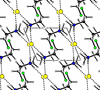
The crystal structure for (R)-3-fluoropyrrolidine hydrochloride, C4H9FN+·Cl−, is presented. It features an extended hydrogen-bonded arrangement linking the ammonium N—H groups with the chloride anions.
CCDC reference: 2598580
research communications
Download citation
Download citation
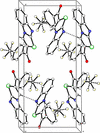
The title compound features a nearly planar thiazolo[3,2-a]benzimidazole core and a twisted 4-(trifluoromethyl)phenyl ring, which subtends a dihedral angle of 52.6 (2)° with the thiazole ring. The crystal packing is governed by C—H⋯N hydrogen-bonded chains, C—F⋯π and π–π contacts, with Hirshfeld and energy-framework analyses showing substantial dispersion-driven consolidation.
CCDC reference: 2598652
Download citation
Download citation
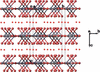
The crystal structure of (H3O)Pb2Br5 contains an extended two-periodic Pb—Br network extending parallel to the ab plane, with hydroxonium ions embedded between neighbouring layers. O⋯Br contacts suggest possible O—H⋯Br hydrogen bonding.
CCDC reference: 2599077
Download citation
Download citation
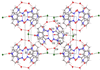
Reactions of cyclohexane-1,3-dione dioxime in the presence of nickel(II) salts yield a hydrocarbazole oxime cation, isolated as a nitrate salt and as a hydrated chloride co-crystal with cyclohexane-1,2,3-trione 1,3-dioxime. The two structures show different proton arrangements and hydrogen-bonding environments.