


 menu


issue contents
November 2026 issue
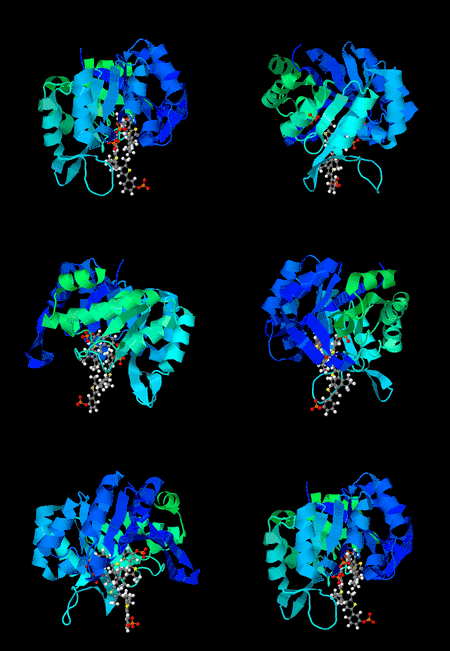
Cover illustration: The crystal structure of phosphoribosyl isomerase A from Mycobacterium tuberculosis (mtPriA) was determined with a bound light-controllable 1,2-dithienylethene inhibitor (DTE LC6) at a resolution of 1.95 Å, explaining the previously reported inhibitory effect of DTE LC6 on the catalytic activity of mtPriA [Rajendran & Sterner (2026), Acta Cryst. F82, 385–390].
early career research


Open  access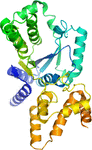
The production, crystallization and 2.2 Å resolution structure of H. pylori tyrosine-tRNA synthetase are reported.
PDB reference: tyrosine-tRNA synthetase from Helicobacter pylori G27, 6byq
research communications
Open access
access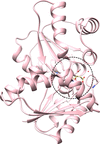
The crystal structure of H. pylori MurI is reported at 1.43 Å resolution.
PDB reference: MurI, 29pa
Open access
access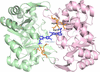
We have determined the crystal structure of an isomerase catalyzing two steps in histidine and tryptophan biosynthesis with a bound light-switchable competitive inhibitor. The work explains the mode of action of the inhibitor and describes the discovery of a hitherto unknown third phosphate-binding site of the enzyme.
PDB reference: inhibitor-bound PriA, 30hl
Open access
access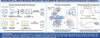
For the first time, the recombinant core botulinum neurotoxin type A (BoNT/A) expressed in Escherichia coli and nicked in vitro is shown to be structurally identical to native BoNT/A from Clostridium botulinum, enabling direct activity comparison between the recombinant product and the native toxin.
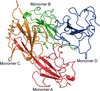
Crystal structures of the SARS-CoV-2 N protein N-terminal domain and C-terminal domain determined at resolutions of 1.30–1.94 Å reveal a conserved N-terminal domain fold containing a positively charged cleft encompassing residues previously implicated in RNA binding and a conserved β-hairpin-mediated C-terminal domain dimer.
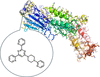
Nijmegen breakage syndrome 1 (NBS1), a component of the MRE11–RAD50–NBS1 complex, plays a key role in the repair of DNA double-strand breaks. We report the first experimentally determined X-ray crystal structure of the FHA–BRCT region of human NBS1 and the results of docking simulations of candidate radiosensitizing compounds.
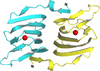
The GloB cupin domain from an unknown biosynthetic gene cluster from P. aeruginosa shows similarities to isomerase enzymes.
PDB reference: GloB from Pseudomonas aeruginosa, 32xb

