

 journal menu


computer programs
 | JOURNAL OF APPLIED CRYSTALLOGRAPHY |
 access
The in crystallo toolbox

aEuropean Synchrotron Radiation Facility, 71 Avenue des Martyrs, CS 40220, 38043 Grenoble Cedex 9, France, bInstitute for Nanostructure and Solid State Physics, Universität Hamburg, Center for Ultrafast Imaging, HARBOR, Bldg 610, Luruper Chaussee 149, Hamburg 22761, Germany, and cUniv. Grenoble Alpes, CNRS, CEA, Institut de Biologie Structurale (IBS), 71 Avenue des Martyrs, CS 10090, 38044 Grenoble Cedex 9, France
*Correspondence e-mail: [email protected], [email protected]
Over the past ten years, there has been a surge in the demand for in crystallo (icOS), since optical spectroscopy is one of the few biophysical characterization methods applicable to both protein solutions and crystals. Historically, icOS has been used to compare the state of proteins in crystals and in solution, and to assess their functionality by determining the redox state of metal ions, cofactors or chromophores. The recent rejuvenation of time-resolved crystallography experiments has sparked a renewed interest in optical spectroscopy as a bridge between kinetic studies in solution and in the crystalline state. The method of icOS can be defined as the ensemble of spectroscopic techniques in the UV–visible–infrared range that can be applied to crystals. It has also been instrumental in understanding specific X-ray radiation damage to redox-sensitive parts of proteins. Spectra recorded from crystals are affected by crystal orientation, shape or position due to various optical phenomena. Fortunately, these can be modelled and their effect can be corrected. The icOS laboratory at the European Synchrotron Radiation Facility (ESRF) specializes in recording UV–Vis absorption, fluorescence emission and Raman spectra from protein crystals. Here, we present a suite of utilities that streamline the analysis and correction of UV–Vis absorption icOS data, encased in a graphical interface. This was originally developed for the icOS laboratory at ESRF but is available as a standalone package, with the aim of making icOS more accessible.
Keywords: in crystallo spectroscopy; macromolecular crystallography; time-resolved crystallography; optical spectroscopy; absorption spectroscopy; protein crystals.
1. Introduction
In crystallo (icOS) was born of the need for the first protein crystallographers to assess how comparable their crystal structures were to the conformations of biomolecules in solution (Mozzarelli & Rossi, 1996![[Mozzarelli, A. & Rossi, G. L. (1996). Annu. Rev. Biophys. Biomol. Struct. 25, 343-365.]](../../../../../../logos/arrows/j_arr.gif "Mozzarelli, A. & Rossi, G. L. (1996). Annu. Rev. Biophys. Biomol. Struct. 25, 343-365.") ). This validation was achieved by performing kinetic assays using UV–Vis absorption spectroscopy (AS) on a suspension of crystals instead of a protein solution. AS studies conducted on slurries of crystals within their mother liquor validated that ribonuclease S (Doscher & Richards, 1963), α-chymotrypsin (Kallos, 1964) and carboxypeptidase A (Quiocho & Richards, 1966), as well as many other enzymes both at physiological and sub-zero temperatures (Fink & Ahmed, 1976; Makinen & Fink, 1977), were active in the crystalline state. AS spectra of solutions were recorded in UV–Vis absorption spectrophotometers producing millimetre-sized collimated light beams traversing quartz cuvettes. Because of the beam size, such devices are not suited for single macromolecular crystals, and crystal suspensions needed to be used, resulting in significant light scattering and spectra with poor signal-to-noise ratio. Microspectrophotometers were developed to record AS from single crystals by focusing the incident beam down to a few micrometres (Hadfield & Hajdu, 1993). This allowed the recording of spectra from the same sample that was used for diffraction, either directly at the beamline or in a nearby off-line facility (Pearson et al., 2004). Since then, icOS has become the technique of choice for functionally characterizing crystallized biomolecules such as metalloproteins (Berglund et al., 2002; Rose et al., 2024), fluorescent proteins (Royant et al., 2007; De Zitter et al., 2020), photoactive proteins (Edman et al., 1999; Kovalev et al., 2023) and enzymes with coloured cofactors (Orru et al., 2011; Safari et al., 2023).
). This validation was achieved by performing kinetic assays using UV–Vis absorption spectroscopy (AS) on a suspension of crystals instead of a protein solution. AS studies conducted on slurries of crystals within their mother liquor validated that ribonuclease S (Doscher & Richards, 1963), α-chymotrypsin (Kallos, 1964) and carboxypeptidase A (Quiocho & Richards, 1966), as well as many other enzymes both at physiological and sub-zero temperatures (Fink & Ahmed, 1976; Makinen & Fink, 1977), were active in the crystalline state. AS spectra of solutions were recorded in UV–Vis absorption spectrophotometers producing millimetre-sized collimated light beams traversing quartz cuvettes. Because of the beam size, such devices are not suited for single macromolecular crystals, and crystal suspensions needed to be used, resulting in significant light scattering and spectra with poor signal-to-noise ratio. Microspectrophotometers were developed to record AS from single crystals by focusing the incident beam down to a few micrometres (Hadfield & Hajdu, 1993). This allowed the recording of spectra from the same sample that was used for diffraction, either directly at the beamline or in a nearby off-line facility (Pearson et al., 2004). Since then, icOS has become the technique of choice for functionally characterizing crystallized biomolecules such as metalloproteins (Berglund et al., 2002; Rose et al., 2024), fluorescent proteins (Royant et al., 2007; De Zitter et al., 2020), photoactive proteins (Edman et al., 1999; Kovalev et al., 2023) and enzymes with coloured cofactors (Orru et al., 2011; Safari et al., 2023).
Interest in tracking the molecular details of biological processes via X-ray crystallography soon evolved into a wide range of methods designed to characterize reaction intermediate states (RIS), either by chemically or thermally altering a reaction (Fink & Ahmed, 1976; Edman et al., 1999) or by recording time-resolved Laue diffraction patterns on the fly during a reaction, using isolated electron bunches at synchrotron sources (Šrajer et al., 1996). icOS was key to both the experimental design and the validation of the trapped or caught RIS (Bourgeois & Royant, 2005). However, it rapidly became apparent that the X-ray radiation used for the measurement itself was altering the structure of the biomolecules in the crystal (Ravelli & McSweeney, 2000). This soon became a sizeable issue for kinetic crystallography experiments when it was demonstrated that X-ray-induced features around redox-sensitive moieties could be mistaken for RIS (Matsui et al., 2002). In crystallo UV–Vis absorption spectroscopy (icAS) (McGeehan et al., 2009) and Raman spectroscopy (Carpentier et al., 2010) were leveraged to assess both the nature and the extent of the effect of the radicals generated in protein crystals. While originally identified in cryo-cooled crystal structures, specific radiation damage remains a concern for diffraction data obtained at room temperature (Nave & Garman, 2005; Garman, 2010; Garman & Weik, 2023), although its impact on the resulting electron-density map depends on the single-crystal or serial-crystallography nature of the experiment (Gotthard et al., 2019; de la Mora et al., 2020).
Time-resolved macromolecular crystallography (TR-MX) experienced a renaissance when it was demonstrated that the femtosecond-long X-ray pulses created by X-ray free electron laser sources could produce diffraction images from single micro- or nano-crystals (Neutze et al., 2000; Chapman et al., 2011). The resulting time-resolved serial-crystallography methodology has since been applied to study many different macromolecular systems, predominantly those that could be activated by light (Brändén & Neutze, 2021). This developing field builds on the knowledge of reaction kinetics in solution obtained from transient and steady-state optical spectroscopy. For example, the RIS identified in the first ultrafast serial femtosecond crystallography study on photoactive yellow protein (Pande et al., 2016) were named after the intermediates identified via ultrafast spectroscopy studies (Lincoln et al., 2012). Recording a crystallographic dataset of a reaction intermediate state by serial crystallography requires large amounts of the protein sample; hence, when possible, these experiments are often planned using information from preliminary biophysical studies. Spectroscopy, when available, is becoming the biophysical technique of choice for both the validation and the planning of transient-state structural characterization (Nass Kovacs et al., 2019).
Importantly, the densely packed environment of a crystal can hinder or even prevent the movements required for a protein to perform its function. Very often, reaction kinetics are altered in crystallo. This can be because of the crystal packing itself (Kort et al., 2003; Konold et al., 2020; Aumonier et al., 2022), the hydration level (Efremov et al., 2006; Konold et al., 2020) or a crystallization pH different from that of the in-solution studies (Makinen & Fink, 1977; Mozzarelli & Rossi, 1996). The presence of viscous precipitants such as polyethylene glycol can also alter kinetics in proteins (Saxena et al., 2005). Because of this, whenever possible, reaction timescales must also be assessed in crystallo. The assumption that the crystal packing, crystallization condition or slow cryo-trapping technique has not driven the reaction off the physiological pathway must be verified (Wilmot et al., 2002; Caramello & Royant, 2024). This can be achieved using a complementary biophysical characterization technique that can be applied both in crystallo and in solution, such as icOS.
TR-MX experiments relying on photoactivation usually require pulsed laser sources. Because macromolecular crystals are optically dense, high peak fluences are often used to ensure activation of a significant proportion of the molecules in the crystal so that RIS can be detected in the diffraction data. Using these high peak fluences increases the likelihood of two-photon absorption in parts of the crystal. This possibility must be evaluated, as multiphoton absorption can lead to artefactual reaction pathways (Barends et al., 2024). Indeed, artefacts created by pump laser intensity have been observed for reactions in crystals both by time-resolved icOS (TR-icOS) AS (Engilberge et al., 2024) and by TR-MX (Barends et al., 2024; Bertrand et al., 2024).
The method of icOS can also help estimate the occupancy of a reaction intermediate state over time or with respect to pump light fluence (Engilberge et al., 2024). This information is crucial to guide the refinement of TR-MX structures and is particularly relevant for structure-factor extrapolation (De Zitter et al., 2022; Vallejos et al., 2024).
Recording meaningful icOS data, with minimal optical artefacts, requires knowledge of the setup used and its limitations. Such spectroscopy setups are scarce and often only available only for short beamtimes. In this article, we describe the optical artefacts affecting in crystallo UV–Vis absorption and fluorescence, and we present the icOS toolbox, a user-friendly graphical application aimed at correcting such artefacts as well as providing live quality assessment and analysis of icOS data.
2. Challenges for in crystallo absorption spectroscopy
2.1. Background subtraction
In AS, the baseline of a spectrum is defined by one or several wavelength ranges where the sample does not have significant absorption. Using a reference cuvette in which the molecule of interest is missing allows for the subtraction of the contribution of the sample holder and solvent components. Thus solution spectra of non-turbid solutions (e.g. where there is no aggregation when the protein of interest is added or during the studied reaction) recorded in cuvettes typically exhibit flat baselines [Fig. 1(a), orange curve]. Such a subtraction is not possible for icAS since the sample holder cannot be mimicked, as it consists of a complex ensemble of a loop, a mother-liquor droplet and a crystal scaffold. The latter particularly contributes to loss of transmitted photons via diverse optical phenomena.
![[Figure 1]](jo5121fig1thm.gif) | Figure 1 Optical phenomena occurring in a protein crystal. (a) Comparison of in-solution (orange curve) and in crystallo (green curve, with a non-null non-flat baseline) AS spectra. (b) Representation of several optical phenomena occurring in crystals that can contribute to the background: reflectivity (green rays), refraction (orange rays), which does not per se cause photon loss, and (blue rays), which causes photon loss. (c) Schematic representation of a single-crystal microspectrophotometry setup. The crystal is mounted in a loop and surrounded by its mother liquor. The focal cones of the upstream (top right, focusing the incident beam) and downstream (to the spectrophotometer, bottom left) objectives are shown in grey. The downstream focal cone is larger than the upstream one to mitigate the displacement of the focal-point effect described by von Stetten et al. (2015 ). |
Due to the high density of scattering material in biomacromolecular crystals, as well as the grating effect of their surface, the quantity of photons diverted from the downstream (after the sample) objective focal cone is much higher in crystals than in solution (Dworkowski et al., 2015; von Stetten et al., 2015). This loss, and associated apparent increase in absorption throughout the spectrum, can be broken down into distinct phenomena: reflectivity and refraction of light at interfaces (Cole et al., 1995), and diffuse Rayleigh scattering [Fig. 1(b)]. Reflectivity and refraction depend on the refractive indices of the various media and the angle of the incident light ray. Refraction of light at the interfaces can be neglected with the reasonable hypothesis that the refractive index of the crystal is constant throughout and that its faces are parallel [Fig. 1(b)], but reflectivity cannot. The refractive index of a medium is a function of the wavelength of the incoming light. Therefore, achromatic reflectivity will contribute to the background of the icAS spectrum. In order to minimize reflectivity, the crystal should be aligned to present a flat face to both incoming and downstream objective. This orientation usually yields the `flattest' baseline. Rayleigh scattering occurs when the incoming light interacts with particles that are much smaller than the wavelength of the light (Lahiri, 2016). The incoming photons are elastically scattered in a random direction [Fig. 1(b)]. Rayleigh scattering scales inversely proportional to wavelength (λ) with a 1/λ4 dependence, resulting in an increasing number of photons scattered away from the measuring objective as the wavelength decreases. Consequently, the baseline of an icAS spectrum is not flat but instead progressively increases as the wavelength decreases [Fig. 1(a), green curve]. In order to make the icAS spectrum comparable to the corresponding solution spectrum, this background must be modelled and subtracted from the observed signal.
An additional contribution to the absolute absorption measured is the crystal size, or variation in the thickness of material probed by the incoming light. The height of the absorbance peaks and signal-to-noise ratio increase for bigger crystals, up to the point where the peak of interest can become saturated because all of the incoming light at that particular wavelength is absorbed.
2.2. Focal-spot displacement
The light beam used for in-solution AS is collimated, whereas it must be focused on the crystal for icAS. Refraction of light at the interfaces of both the crystal and its mother liquor displaces the focal point of the objective, contributing to photon loss (von Stetten et al., 2015). This effect artificially increases the measured optical density in icAS across the whole spectrum with a `flat baseline' [Fig. 1(a)]. This effect can be mitigated by using a larger-diameter optical fibre for the downstream objective than for the upstream objective, thereby increasing the downstream focal cone and catching most stray refracted photons [Fig. 1(c)].
2.3. Spectral anisotropy
The anisotropic properties of protein crystals also cause spectral artefacts. Photons are maximally absorbed when their electric vector (polarization) is parallel to the dipole transition moment of a chromophore (Eaton & Hofrichter, 1981). In a solution with randomly oriented chromophores, this does not matter, as photons polarized in any direction are absorbed with an equal probability. This is no longer true in protein crystals, because the chromophores are oriented along a restricted number of directions as a result of the crystallographic and non-crystallographic symmetry axes (Eaton & Hofrichter, 1981). As a consequence, protein crystals exhibit different extinction coefficients depending on crystal orientation with respect to the incident light beam (Eaton & Hochstrasser, 1968), thus breaking the Beer–Lambert law. An extreme example of optical anisotropy can be observed for the orange carotenoid protein (OCP), where the two carotenoid chromophores are positioned almost parallel to each other in the asymmetric unit (Kerfeld et al., 2003). If observed through a polarized filter, OCP crystals appear totally colourless in some orientations and orange in others; in other words, the crystals are birefringent (Kerfeld et al., 1997). While OCP is an extreme example, all protein crystals exhibit anisotropic optical properties to varying degrees. Because the protein crystal also acts as a light polarizer, the shape of an icAS spectrum will depend strongly on the crystal orientation. In order to record quantitative absorbance in crystals, the incoming and downstream light must be polarized along one of the symmetry axes of the crystals. In this case, the probability of absorption is equal for all photons and the Beer–Lambert law is again applicable (Mozzarelli & Rossi, 1996).
2.4. Artefacts associated with fluorescence
Other phenomena can unfortunately not be reliably modelled and corrected. Owing to the density of fluorophores in protein crystals (including aromatic amino acids), a significant part of the absorbed light will generate fluorescent photons, some of which are collected by the measuring objective, creating dips in measured absorbance (visible in the red spectrum represented in all parts of Fig. 2) (von Stetten et al., 2015). Conversely, when measuring fluorescence emission spectra, the focusing volumes of the cones for both the excitation light and the measured signal need to be carefully chosen to prevent the `self-absorption' phenomenon leading to apparent red shifts of emission maxima (Barros et al., 2009; von Stetten et al., 2015).
![[Figure 2]](jo5121fig2thm.gif) | Figure 2 The icAS spectra of different crystals of the Cerulean fluorescent protein, at several points after they were soaked from pH 8.0 to pH 4.0 (red to blue–green). (a) Without correction and (b) after constant-baseline correction and smoothing. (c) Example of baseline and scattering baseline correction of the red spectrum from (a), with the three segments used to fit the baseline: red-side baseline segment (cyan), peakless segment (magenta) and near-UV segment (lime). (d) Baseline and scattering corrected spectra, scaled according to their absorption at 430 nm for comparison purposes. The correction separates the red and yellow spectra from the dark-green and light-green spectra. The inset shows the detail of the peak summit, 390 to 450 nm. |
3. Correction of in crystallo UV–Vis absorption spectra in the icOS toolbox
The example spectra analysed here have been recorded on various instruments on beamlines at the European Synchrotron Radiation Facility (ESRF) or on off-line setups nearby: the icOS laboratory at the ESRF (von Stetten et al., 2015) or the CAL(AI)2DOSCOPE at the Institut de Biologie Structurale (IBS) (Byrdin & Bourgeois, 2016). The CAL(AI)2DOSCOPE has been specifically designed, though not exclusively, for the study of fluorescent proteins (De Zitter et al., 2019, 2020).
In these setups, a `dark' reference is first recorded (Ibackground) with the white lamp turned off, corresponding to the background counts of the CCD camera. Then, with the lamp turned on, the reference light signal (Ireference) is recorded, without any sample present in the optical path. Finally, after the sample is mounted and aligned, the experimental signal (Isample) is recorded, which consists of the photons transmitted through the sample. Accordingly, absorbance is calculated as follows:

All the phenomena discussed above complicate the direct comparison of icAS data with in-solution AS data. Before an icAS spectrum is measured, the orientation of the crystal must be carefully chosen to minimize the effect of focal spot displacement, anisotropy and potentially fluorescence. Additionally, contributions from Rayleigh scattering, focal-spot displacement and reflection must be modelled to allow icAS data recorded on different crystals to be compared. Here, we present a workflow for these correction procedures. The Python application described here is wrapped in a graphical interface [Fig. 3(a)] able to apply these corrections to icAS and in crystallo fluorescence spectra, as well as analyse and compare spectra and prepare publication-ready figures.
![[Figure 3]](jo5121fig3thm.gif) | Figure 3 The icOS app GUI – (a) main panel, (b) kinetic analysis panel and (c) figure-customization panel. |
Several types of background and data correction are available, each of them addressing a specific optical artefact. In addition, the icOS toolbox provides a tool for live kinetic analysis of the data [Fig. 3(b)]. Finally, figures are generated using the wxmplot package (Newville, 2024), and can be fully customized to reach publication quality [Fig. 3(c)]. The corrected data can be saved to ASCII format. This software is already deployed on the main setup of the icOS laboratory at the ESRF [HR2000+ or QE65Pro spectrophotometer (Ocean Optics), spectra recorded using SpectraSuite (Ocean Optics)], on the TR-icOS instrument (Engilberge et al., 2024) [AvaSpec-ULS2048CL-EVO-RS-UA spectrophotometer (Avantes), spectra recorded using AvaSoft v 8.11 (Avantes)], and on the BM07-FIP2 on-line microspectrophotometry setup [QE65Pro spectrophotometer (Ocean Optics), spectra recorded using OceanView (Ocean Optics)] and the CAL(AI)2DOSCOPE setup at IBS. It is available for off-line use at https://github.com/ncara/icOS and has been adapted to process solution data from JASCO spectrophotometers as well as on-line icAS data recorded on beamline I24 at Diamond Light Source (Rose et al., 2024). It can also be used to treat data recorded on solutions and on small-molecule crystals.
3.1. Levelling and scaling: correcting optical density and baseline level
Various phenomena previously described contribute to uniformly raising the baseline of icAS spectra [Figs. 1(a) and 2(a)]. This is easily corrected, provided the spectrum features a region devoid of absorption. The average of absorption in this band is subtracted from each spectrum to bring them onto a common baseline [Fig. 2(b)]. In the app, this function is called `constant-baseline correction'.
Unlike solutions in spectroscopy cuvettes, the shape of protein crystals is irregular: they present an optical path of varying depth. The concentration of absorbing species in protein crystals cannot be adjusted and their optical density is anisotropic. Therefore, the amount of absorbing material traversed by the incoming light depends not only on the size and shape of the crystal but also on the orientation of the crystal with respect to the light path. Spectra from different crystals or orientations should thus be scaled with respect to a conserved absorption peak. The choice of peak can be inferred from prior knowledge in solution data.
3.2. Scattering and reflection correction
Protein crystals are dense optical media, often surrounded by a layer of solution. The amount of light lost to reflectivity at each interface depends on the refraction indices of the crystal and its mother liquor, which are a function of the wavelength. The contribution of reflectivity to the baseline can be estimated by the Fresnel equations. Assuming the spectra have been recorded in the optimal direction, and the angle of incidence of the incoming light is mostly normal, the share of light lost to reflectivity (R) as a function of the refractive indices (ni) of both media at the interface corresponds to
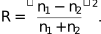
The refractive index of each medium can be expressed as a function of the wavelength ( ) with the Cauchy equations, where a and b are material-specific coefficients that can be derived by fitting to the measured at different wavelengths but are used here as parameters fitted against the data to estimate the contribution of reflectivity:

Therefore, the contribution of reflectivity to the baseline distortion of an icAS spectrum can be estimated as
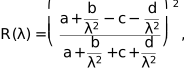
where a, b, c and d are parameters that will be fitted against the data.
The number of visible-range photons Rayleigh scattered by a protein crystal scales inversely proportional to λ4 (Calvert, 1990):

The combined contribution of reflectivity and Rayleigh scattering to the baseline can thus be estimated as a function of the wavelength using
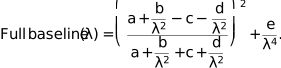
In this model, parameters a, b, c, d and e are fitted against the data points from three non-absorbing (supposed baseline) segments of the spectra via the least-square minimization method [lime, magenta and cyan segments in Fig. 2(c)]. Ideally, two of these segments are on either side of the recorded range [Fig. 2(c)], one where Rayleigh scattering is strongest [lime, Fig. 2(c)] and the other where it is weakest [cyan, Fig. 2(c)]. Because the UV segment is sometimes unreliable [loss of signal through the optics visible in Fig. 4(a)], a third segment, between the UV range and the absorption peak of interest [magenta, Fig. 2(c)], is also used to fit the baseline model [plotted in red in Fig. 2(c)]. Additionally, a divergence factor [always positive, 1 by default, as visible in Fig. 3(a)] can be applied to decrease the weight of each segment in the fit of the scattering baseline. This divergence factor should be inversely proportional to the length of its segment and increased if the segment is less reliable. The segments on the left and right side of the region of interest are chosen by the user [boundaries can be filled in the fields visible in Fig. 3(a)]. If the absorbance does not go back to the baseline between the absorption peak of interest and the UV range, a percentage of the maximum absorbance peak can be supplied to create a constant offset between the fit and the absorbance [using the field labeled `baseline' in the `Segment divergences' subsection, Fig. 3(a)]. A diagnostic plot is generated for each spectrum. In this diagnostic plot, segments used in the fit are coloured (lime, magenta and cyan) and the fit baseline is overlaid (red) for assessment of the background-correction quality [Fig. 2(c)]. The range and divergence factor of each segment should be adjusted so that the fit baseline best matches the segments. Finally, the modelled contribution of both phenomena as well as the flat baseline can be subtracted from the raw spectrum, effectively bringing the baseline to 0 [Fig. 2(d)].
The data shown in Fig. 2 correspond to absorption spectra of crystals of the Cerulean fluorescent protein grown at neutral pH and cryo-cooled at various delays after they were soaked in acidic pH buffer [the behaviour of Cerulean at neutral and low pH is characterized by Gotthard et al. (2017)]. For these spectra, the background correction reveals a blue shift and a change of shape in the main absorbance peak, and allows grouping of spectra into two distinct families: red and yellow spectra with a two-shouldered shape peak at 430 nm, and green and dark-green spectra with a Gaussian shaped peak centred at 425 nm. There is also a change of shape from the initial one-peaked two-shouldered shape [red and yellow spectra, Fig. 2(d)] to a blue-shifted peak without shoulders as time goes on [green spectra, Fig. 2(d)]. The two families of spectra were not so easily discernible in the raw data.
In some cases, such as X-ray-induced baseline alterations (Bolton et al., 2024), the standard baseline model does not perform well. The user can then choose between pure Rayleigh scattering (no reflectivity) and a custom λ−n, which, in our experience, has empirically performed well for X-ray-induced optical artefacts.
3.3. Smoothing
Due to variations in crystal shape and the signal-to-noise ratio of icAS data can sometimes be low. Identification of correct peak positions and centre of mass can benefit from a noise-removal step. Both a Savitzky–Golay filter (in this case, by fitting a third-degree polynomial over 21-point windows) and a rolling average are available as options in the `expert features' tab for the smoothing of icOS data.
4. Kinetic icOS data analysis
The icOS laboratory allows recording of kinetic series on millisecond to minute timescales for fluorescence decay analysis, monitoring slow protein dynamic events or deriving a photoreduction dose for an X-ray-sensitive species on-line (Bolton et al., 2024) and off-line (Aumonier et al., 2022). A recent instrumentation update now allows off-line recording of time-resolved icAS down to the microsecond range (Engilberge et al., 2024). Depending on the recording procedure, different data-processing pipelines should be used.
4.1. Spectral series: the case of time-resolved or dose-resolved data
In an ideal case, a kinetic series is recorded on the same crystal at the same angle and position. Even then, slight wavelength-independent baseline variations can still be observed due to fluctuations of the cryo-stream or humidifier (Sanchez-Weatherby et al., 2009), or variation in intensity of the pulsed white lamp in the case of the TR-icOS instrument at ESRF. In this ideal case, only the constant-baseline correction described in Section 2.1 is needed, and potentially a smoothing of the data [Figs. 4(a) and 4(b)]. The example shown in Fig. 4 depicts the correction, smoothing [Fig. 4(b)] and calculation of a series of difference absorption spectra [Fig. 4(c)] of a bacteriorhodopsin (BR) crystal. These corrections allow precise assessment of the timescale of the rise of the characteristic M state 400 nm peak (Efremov et al., 2006) and the drop in absorbance of the main 600 nm peak as the sample returns to the ground state.
![[Figure 4]](jo5121fig4thm.gif) | Figure 4 Time-resolved icOS data in the GUI. (a) Series of time-resolved AS spectra, collected on BR crystals, after exposure to a 560 nm nanosecond laser pulse, raw. (b) Constant-baseline corrected and smoothed spectra, with laser trace removed. (c) Series of light − dark difference spectra. For panels (a)–(c), the colour ramps from red to blue as the reaction progresses, and spectra are recorded at 3 µs, 10 µs, 30 µs, 100 µs, 300 µs, 1 ms, 3 ms, 10 ms, 30 ms, 100 ms, 300 ms and 1 s. (d) Absorption at 400 nm (M state of BR), as taken from the spectra presented in (b), with the Hill equation fitted to data points from 10 to 1000 µs (pale-blue line). (e) Absorption spectrum recorded 3 µs after the actinic laser pulse, in which all dips in absorbance are identified by red dots. The largest dip in absorbance is identified by green dots and corresponds to the tail of the nanosecond laser pulse. (f) Confidence plot of the 300 µs TR-icOS spectrum; each data point is plotted from orange (low confidence) to green (good confidence). |
4.1.1. Time trace and constant fitting
Spectral regions corresponding to absorption features of key species can be identified. Absorbance in these regions can be plotted over time in the icOS toolbox graphical user interface (GUI) to create a time trace [Fig. 4(d)]. Provided these prerequisites are met, a kinetic model can be fitted to the data points. The icOS toolbox currently allows the fitting of a mono-exponential decay or rise, as well as the Hill equation. The produced reaction-rate constant provides an estimation of an intermediate-state lifetime and can be used to plan a TR-MX experiment. Finally, rate-constant fits are particularly suited to the detection of artefactual reaction pathways caused by non-linear multi-photon absorption events (Do et al., 2023; Engilberge et al., 2024; Barends et al., 2024; Bertrand et al., 2024).
4.1.2. Laser dent removal
Because of the duration of integration of the spectrophotometer, the tail of the nanosecond laser pulse used to initiate a reaction in a crystal can also contribute to the in the form of a negative dip or dent in the [Fig. 4(e)]. Local minima of the second derivative of the absorbance spectrum are used to identify both the position and boundaries of the absorption dips. The largest absorption dip (in amplitude) marks the contribution of the nanosecond laser to the spectrum, while all other dips are marked by red dots. The data points corresponding to the contribution of the laser are removed. For spectra of subsequent time points, only the main dent in the area of the previously detected laser dent is marked, and the corresponding data points are also removed.
4.1.3. Confidence score
The polychromatic light sources used for icOS often contain regions of lower photon flux, causing low photon counts in these regions of Ireference. Because of low transmission through the sample, Isample also frequently features low-photon-count regions. The signal-to-noise ratio of the calculated absorbance spectrum decreases significantly in regions of low photon counts of either Isample or Ireference.
Any photons above the maximum of the dynamic range of the spectrophotometer detector are not measured, distorting the shape of both Ireference and Isample, and the resulting calculated absorbance. This is referred to as `saturation' and is often apparent in series of contiguous data points of either Isample or Ireference plateauing at the maximum of the detector dynamic range.
We have implemented a confidence score to highlight, to the user, regions where the absorbance was calculated from critically low or saturated Isample and Ireference photon counts. These regions are shown in orange in the confidence plot [Fig. 4(f)] available from the `expert features' tab of the app, provided the Ireference, Isample and Ibackground signals have been saved by the spectrophotometer instead of only the absorbance spectrum.
Poor signal-to-noise ratio regions of the absorbance spectrum often exhibit large variations between contiguous data points. It is likely that a criterion of `maximal meaningful variation of absorbance' could be applied to detect these regions. While we have not achieved this yet, we hope to implement this feature in the future development of this software.
4.1.4. Singular value decomposition
When a series of spectra is available, it can be analysed with singular value decomposition (SVD) to provide additional insights into time- or dose-dependent behaviour. SVD is an algebra-based analysis technique that has been widely used in the field of (Henry, 1997; Henry & Hofrichter, 1992). Briefly, the aim of SVD is to determine a minimal set of basis spectra that can be linearly combined to make up any of the observed spectra across the series. It consists of the decomposition of a matrix, A, containing the observed spectra in rows, in chronological order. This input matrix traditionally contains light − dark difference spectra to remove unchanging features. A is eigen-decomposed into U, S and V, containing, respectively, the basis spectra (left singular vector, lSV), weighting factors of each feature from U (singular values, SVs) and scalars weighting each basis spectrum from U to recreate the observed spectra from A (right singular vector, rSV). This corresponds, in the case of a time-resolved series of spectra, to a decomposition into bases of time-invariant spectra and time traces of these basis spectra over the studied time range.
In order to illustrate the potential of SVD analysis, we decomposed a series of time-resolved icAS spectra [Fig. 5(a), red to blue] collected on crystals of the LOV2 domain of phototropin II from Arabidopsis thaliana (Aumonier et al., 2022). This study monitors the structural and spectroscopic relaxation of the LOV2 photoadduct, in which the flavin cofactor forms a covalent bond with a nearby cysteine, into the ground state.
![[Figure 5]](jo5121fig5thm.gif) | Figure 5 SVD of time-resolved icAS spectra. (a) Red to blue, spectra collected on LOV2 crystals, during the relaxation from the photoproduct to the ground state, smoothed and constant-baseline corrected as described by Aumonier et al. (2022 ). (b) Light − dark difference absorption spectra. (c) Five first time-invariant components (lSV) resulting from the decomposition of the series of difference spectra: lSV0 (red) dominates the series and contains the negative difference absorption band at 390 nm corresponding to photoproduct relaxation, as well as the large positive band spanning from 420 to 500 nm corresponding to ground-state recovery; lSV1 (orange) is mostly flat but contains some sparse features from 350 to 510 nm corresponding to systematic background-noise elements; and lSV2 (pale yellow), lSV3 (pale green) and lSV4 (green–blue) only contain non-systematic background noise. (d) Time-varying magnitudes (rSV) resulting from the decomposition: rSV0 (red) follows the kinetics identified by Aumonier et al. (2022); rSV1 (orange) follows a linear decay trend, identified as a crystal-displacement component within the loop over the duration of data collection; and rSV2 (pale yellow), rSV3 (pale green) and rSV4 (green–blue) are flat and correspond to background-noise components. |
The decomposition of light − dark difference spectra [represented in Fig. 5(b)] produces one main time-invariant component [lSV0, red in Fig. 5(c)] with a negative difference peak centred on 390 nm (corresponding to the absorption peak characteristic of the photoadduct) and a large positive peak spanning from 420 to 500 nm (corresponding to the absorption band of the ground state). The time trace of this main time-invariant element [rSV0, red in Fig. 5(d)] follows a mono-exponential decay corresponding to the first-order reaction of conversion between two single species. The analysis also reveals a minor time-invariant component [lSV1, orange in Fig. 5(c)] that contains systematic background features and whose time trace [rSV1, orange in Fig. 5(d)] drifts linearly, on average, over the course of the data collection.
The fact that the main component contains signals from both the photoproduct depletion and the ground-state recovery demonstrates that the two phenomena are simultaneous in crystallo, i.e. that the photoproduct converts into the ground state without going through another intermediate state, which is consistent with studies in solution (Alexandre et al., 2007). Moreover, the analysis is sensitive enough to show a quasi-linear component that can be attributed to progressive crystal displacement within the sample support, a typical issue at room temperature, paving the way for optimal spectrum correction.
4.2. Serial time-resolved in crystallo UV–Vis absorption spectroscopy
For reactions that are too slow or irreversible in crystallo, only one measurement per crystal is possible. For measurements performed on the same crystal, only the constant-baseline correction is needed, to account for variation in surrounding-medium refractive index or flash-lamp pulse intensity. After this correction, light − dark difference spectra can be calculated for each time point. In a series of spectra (recorded on different crystals), the height of the difference peaks is influenced by the thickness of each crystal, meaning a scaling scheme has to be applied before comparison. This enables pairwise analysis if the correction of crystal-shape-derived baseline artefacts proves impossible. Here, once bands of interest are identified in the difference spectra, the area under the bands of interest can be integrated and plotted against time, creating a serial-icOS time trace. Because of all the phenomena described in Section 2, it is challenging to translate an integrated absorbance value into the occupancy of a reactive intermediate in this case. However, a kinetic model can be fitted to this set of points, providing a precise estimation of a reaction intermediate rise and decay time in crystallo.
5. Dos and don'ts
The wavelength, or wavelength range, chosen for the extraction must be devoid of any saturation (shown by noisy truncated peak summits), but must also exhibit reasonably high confidence [see Fig. 4(f)].
Ideally, only the tracked species should absorb in the chosen region, so that a change of absorption can be solely attributed to a change in occupancy of the tracked species. Choosing a good wavelength for the investigation of a reaction intermediate state can mean choosing to minimize noise and contamination over maximizing the intensity of the signal.
6. Conclusions
In this article, we have described the optical phenomena altering icOS data and outlined a workflow to correct them during data analysis. We have also presented a workflow to analyse icOS data, and finally, a set of tools that can be used to achieve each step. A GUI is supplied with these tools to allow the analysis of icOS data directly at the beamline or on the icOS platform at ESRF so that the majority of the analysis can be done during a diffraction beam time. The icOS app has already been successfully used in several TR-MX projects, including by non-experts or unsupervised users.
Footnotes
‡Present address: Univ. Grenoble Alpes, CNRS, CEA, Institut de Biologie Structurale (IBS), 71 Avenue des Martyrs, 38044 Grenoble Cedex 9, France
Acknowledgements
The authors thank Sylvain Engilberge, Samuel Rose, Sergei Bukhdruker, Mohammad Chorfa and Alexander Sprott for fruitful interaction and requests for developments. Christoph Mueller-Dieckmann and David von Stetten are also acknowledged for insightful discussions and advice. The ESRF is acknowledged for access to the icOS laboratory via its in-house research programme. The ESRF Structural Biology Group and the Pearson Research Group are acknowledged for their continuous support.
Data availability
The icOS app, as well as instructions on how to use it, can be found at https://github.com/ncara/icOS.
Funding information
NC acknowledges a joint PhD fellowship from ESRF and the University of Hamburg, and is supported by the Franco–German Doctoral College (DFH/UFA). This work used the icOS platform of the Grenoble Instruct-ERIC centre (ISBG; UAR 3518 CNRS–CEA–UGA–EMBL) within the Grenoble Partnership for Structural Biology (PSB), supported by FRISBI (ANR-10-INBS-0005-02) and GRAL, financed within the University Grenoble Alpes graduate school (Ecoles Universitaires de Recherche) CBH-EUR-GS (ANR-17-EURE-0003).
References
 Alexandre, M. T. A., Arents, J. C., van Grondelle, R., Hellingwerf, K. J. & Kennis, J. T. M. (2007). Biochemistry 46, 3129–3137. CrossRef PubMed CAS Google Scholar
Aumonier, S., Engilberge, S., Caramello, N., von Stetten, D., Gotthard, G., Leonard, G. A., Mueller-Dieckmann, C. & Royant, A. (2022). IUCrJ 9, 756–767. CrossRef CAS PubMed IUCr Journals Google Scholar
Barends, T. R. M., Gorel, A., Bhattacharyya, S., Schirò, G., Bacellar, C., Cirelli, C., Colletier, J.-P., Foucar, L., Grünbein, M. L., Hartmann, E., Hilpert, M., Holton, J. M., Johnson, P. J. M., Kloos, M., Knopp, G., Marekha, B., Nass, K., Nass Kovacs, G., Ozerov, D., Stricker, M., Weik, M., Doak, R. B., Shoeman, R. L., Milne, C. J., Huix-Rotllant, M., Cammarata, M. & Schlichting, I. (2024). Nature 626, 905–911. CrossRef CAS PubMed Google Scholar
Barros, T., Royant, A., Standfuss, J., Dreuw, A. & Kühlbrandt, W. (2009). EMBO J. 28, 298–306. Web of Science CrossRef PubMed CAS Google Scholar
Berglund, G. I., Carlsson, G. H., Smith, A. T., Szöke, H., Henriksen, A. & Hajdu, J. (2002). Nature 417, 463–468. CrossRef PubMed CAS Google Scholar
Bertrand, Q., Nogly, P., Nango, E., Kekilli, D., Khusainov, G., Furrer, A., James, D., Dworkowski, F., Skopintsev, P., Mous, S., Martiel, I., Börjesson, P., Ortolani, G., Huang, C.-Y., Kepa, M., Ozerov, D., Brünle, S., Panneels, V., Tanaka, T., Tanaka, R., Tono, K., Owada, S., Johnson, P. J. M., Nass, K., Knopp, G., Cirelli, C., Milne, C., Schertler, G., Iwata, S., Neutze, R., Weinert, T. & Standfuss, J. (2024). Nat. Commun. 15, 10278. CrossRef PubMed Google Scholar
Bolton, R., Machelett, M. M., Stubbs, J., Axford, D., Caramello, N., Catapano, L., Malý, M., Rodrigues, M. J., Cordery, C., Tizzard, G. J., MacMillan, F., Engilberge, S., von Stetten, D., Tosha, T., Sugimoto, H., Worrall, J. A. R., Webb, J. S., Zubkov, M., Coles, S., Mathieu, E., Steiner, R. A., Murshudov, G., Schrader, T. E., Orville, A. M., Royant, A., Evans, G., Hough, M. A., Owen, R. L. & Tews, I. (2024). Proc. Natl Acad. Sci. USA 121, e2308478121. CrossRef PubMed Google Scholar
Bourgeois, D. & Royant, A. (2005). Curr. Opin. Struct. Biol. 15, 538–547. Web of Science CrossRef PubMed CAS Google Scholar
Brändén, G. & Neutze, R. (2021). Science 373, eaba0954. PubMed Google Scholar
Byrdin, M. & Bourgeois, D. (2016). Spectrosc. Eur. 28, 14–17. CAS Google Scholar
Calvert, J. G. (1990). Pure Appl. Chem. 62, 2167–2219. CrossRef CAS Google Scholar
Caramello, N. & Royant, A. (2024). Acta Cryst. D80, 60–79. Web of Science CrossRef IUCr Journals Google Scholar
Carpentier, P., Royant, A., Weik, M. & Bourgeois, D. (2010). Structure 18, 1410–1419. CrossRef CAS PubMed Google Scholar
Chapman, H. N., Fromme, P., Barty, A., White, T. A., Kirian, R. A., Aquila, A., Hunter, M. S., Schulz, J., DePonte, D. P., Weierstall, U., Doak, R. B., Maia, F. R. N. C., Martin, A. V., Schlichting, I., Lomb, L., Coppola, N., Shoeman, R. L., Epp, S. W., Hartmann, R., Rolles, D., Rudenko, A., Foucar, L., Kimmel, N., Weidenspointner, G., Holl, P., Liang, M., Barthelmess, M., Caleman, C., Boutet, S., Bogan, M. J., Krzywinski, J., Bostedt, C., Bajt, S., Gumprecht, L., Rudek, B., Erk, B., Schmidt, C., Hömke, A., Reich, C., Pietschner, D., Strüder, L., Hauser, G., Gorke, H., Ullrich, J., Herrmann, S., Schaller, G., Schopper, F., Soltau, H., Kühnel, K.-U., Messerschmidt, M., Bozek, J. D., Hau-Riege, S. P., Frank, M., Hampton, C. Y., Sierra, R. G., Starodub, D., Williams, G. J., Hajdu, J., Timneanu, N., Seibert, M. M., Andreasson, J., Rocker, A., Jönsson, O., Svenda, M., Stern, S., Nass, K., Andritschke, R., Schröter, C.-D., Krasniqi, F., Bott, M., Schmidt, K. E., Wang, X., Grotjohann, I., Holton, J. M., Barends, T. R. M., Neutze, R., Marchesini, S., Fromme, R., Schorb, S., Rupp, D., Adolph, M., Gorkhover, T., Andersson, I., Hirsemann, H., Potdevin, G., Graafsma, H., Nilsson, B. & Spence, J. C. H. (2011). Nature 470, 73–77. CrossRef CAS PubMed Google Scholar
Cole, T., Kathman, A., Koszelak, S. & Mcpherson, A. (1995). Anal. Biochem. 231, 92–98. CrossRef CAS PubMed Google Scholar
de la Mora, E., Coquelle, N., Bury, C. S., Rosenthal, M., Holton, J. M., Carmichael, I., Garman, E. F., Burghammer, M., Colletier, J.-P. & Weik, M. (2020). Proc. Natl Acad. Sci. 117, 4142–4151. CrossRef CAS PubMed Google Scholar
De Zitter, E., Coquelle, N., Oeser, P., Barends, T. R. M. & Colletier, J.-P. (2022). Commun. Biol. 5, 640. Web of Science CrossRef PubMed Google Scholar
De Zitter, E., Ridard, J., Thédié, D., Adam, V., Lévy, B., Byrdin, M., Gotthard, G., Van Meervelt, L., Dedecker, P., Demachy, I. & Bourgeois, D. (2020). J. Am. Chem. Soc. 142, 10978–10988. Web of Science CrossRef CAS PubMed Google Scholar
De Zitter, E., Thédié, D., Mönkemöller, V., Hugelier, S., Beaudouin, J., Adam, V., Byrdin, M., Van Meervelt, L., Dedecker, P. & Bourgeois, D. (2019). Nat. Methods 16, 707–710. CrossRef CAS PubMed Google Scholar
Do, T. N., Menendez, D., Bizhga, D., Stojković, E. A. & Kennis, J. T. M. (2023). J. Mol. Biol. 436, 168357. CrossRef PubMed Google Scholar
Doscher, M. S. & Richards, F. M. (1963). J. Biol. Chem. 238, 2399–2406. CrossRef CAS Google Scholar
Dworkowski, F. S. N., Hough, M. A., Pompidor, G. & Fuchs, M. R. (2015). Acta Cryst. D71, 27–35. Web of Science CrossRef IUCr Journals Google Scholar
Eaton, W. A. & Hochstrasser, R. M. (1968). J. Chem. Phys. 49, 985–995. CrossRef CAS PubMed Google Scholar
Eaton, W. A. & Hofrichter, J. (1981). Methods Enzymol. 76, 175–261. CrossRef CAS PubMed Google Scholar
Edman, K., Nollert, P., Royant, A., Belrhali, H., Pebay-Peyroula, E., Hajdu, J., Neutze, R. & Landau, E. M. (1999). Nature 401, 822–826. CrossRef PubMed CAS Google Scholar
Efremov, R., Gordeliy, V. I., Heberle, J. & Büldt, G. (2006). Biophys. J. 91, 1441–1451. Web of Science CrossRef PubMed CAS Google Scholar
Engilberge, S., Caramello, N., Bukhdruker, S., Byrdin, M., Giraud, T., Jacquet, P., Scortani, D., Biv, R., Gonzalez, H., Broquet, A., van der Linden, P., Rose, S. L., Flot, D., Balandin, T., Gordeliy, V., Lahey-Rudolph, J. M., Roessle, M., de Sanctis, D., Leonard, G. A., Mueller-Dieckmann, C. & Royant, A. (2024). Acta Cryst. D80, 16–25. Web of Science CrossRef IUCr Journals Google Scholar
Fink, A. L. & Ahmed, A. I. (1976). Nature 263, 294–297. CrossRef CAS PubMed Google Scholar
Garman, E. F. (2010). Acta Cryst. D66, 339–351. Web of Science CrossRef CAS IUCr Journals Google Scholar
Garman, E. F. & Weik, M. (2023). Curr. Opin. Struct. Biol. 82, 102662. Web of Science CrossRef PubMed Google Scholar
Gotthard, G., Aumonier, S., De Sanctis, D., Leonard, G., von Stetten, D. & Royant, A. (2019). IUCrJ 6, 665–680. CrossRef CAS PubMed IUCr Journals Google Scholar
Gotthard, G., von Stetten, D., Clavel, D., Noirclerc-Savoye, M. & Royant, A. (2017). Biochemistry 56, 6418–6422. CrossRef CAS PubMed Google Scholar
Hadfield, A. & Hajdu, J. (1993). J. Appl. Cryst. 26, 839–842. CrossRef CAS Web of Science IUCr Journals Google Scholar
Henry, E. R. (1997). Biophys. J. 72, 652–673. CrossRef CAS PubMed Web of Science Google Scholar
Henry, E. R. & Hofrichter, J. (1992). Methods Enzymol. 210, 129–192. CrossRef CAS Google Scholar
Kallos, J. (1964). Biochim. Biophys. Acta 89, 364–366. PubMed CAS Google Scholar
Kerfeld, C. A., Sawaya, M. R., Brahmandam, V., Cascio, D., Ho, K. K., Trevithick-Sutton, C. C., Krogmann, D. W. & Yeates, T. O. (2003). Structure 11, 55–65. CrossRef PubMed CAS Google Scholar
Kerfeld, C. A., Wu, Y. P., Chan, C., Krogmann, D. W. & Yeates, T. O. (1997). Acta Cryst. D53, 720–723. CrossRef CAS Web of Science IUCr Journals Google Scholar
Konold, P. E., Arik, E., Weißenborn, J., Arents, J. C., Hellingwerf, K. J., van Stokkum, I. H. M., Kennis, J. T. M. & Groot, M. L. (2020). Nat. Commun. 11, 4248. CrossRef PubMed Google Scholar
Kort, R., Ravelli, R. B., Schotte, F., Bourgeois, D., Crielaard, W., Hellingwerf, K. J. & Wulff, M. (2003). Photochem. Photobiol. 78, 131–137. Web of Science CrossRef PubMed CAS Google Scholar
Kovalev, K., Tsybrov, F., Alekseev, A., Shevchenko, V., Soloviov, D., Siletsky, S., Bourenkov, G., Agthe, M., Nikolova, M., von Stetten, D., Astashkin, R., Bukhdruker, S., Chizhov, I., Royant, A., Kuzmin, A., Gushchin, I., Rosselli, R., Rodriguez-Valera, F., Ilyinskiy, N., Rogachev, A., Borshchevskiy, V., Schneider, T. R., Bamberg, E. & Gordeliy, V. (2023). Nat. Struct. Mol. Biol. 30, 970–979. Web of Science CrossRef CAS PubMed Google Scholar
Lahiri, A. (2016). Editor. Basic optics, pp. 385–537. Amsterdam: Elsevier. Google Scholar
Lincoln, C. N., Fitzpatrick, A. E. & van Thor, J. J. (2012). Phys. Chem. Chem. Phys. 14, 15752–15764. CrossRef CAS PubMed Google Scholar
Makinen, M. W. & Fink, A. L. (1977). Annu. Rev. Biophys. 6, 301–343. CAS Google Scholar
Matsui, Y., Sakai, K., Murakami, M., Shiro, Y., Adachi, S., Okumura, H. & Kouyama, T. (2002). J. Mol. Biol. 324, 469–481. Web of Science CrossRef PubMed CAS Google Scholar
McGeehan, J., Ravelli, R. B. G., Murray, J. W., Owen, R. L., Cipriani, F., McSweeney, S., Weik, M. & Garman, E. F. (2009). J. Synchrotron Rad. 16, 163–172. Web of Science CrossRef CAS IUCr Journals Google Scholar
Mozzarelli, A. & Rossi, G. L. (1996). Annu. Rev. Biophys. Biomol. Struct. 25, 343–365. CrossRef CAS PubMed Web of Science Google Scholar
Nass Kovacs, G., Colletier, J.-P., Grünbein, M. L., Yang, Y., Stensitzki, T., Batyuk, A., Carbajo, S., Doak, R. B., Ehrenberg, D., Foucar, L., Gasper, R., Gorel, A., Hilpert, M., Kloos, M., Koglin, J. E., Reinstein, J., Roome, C. M., Schlesinger, R., Seaberg, M., Shoeman, R. L., Stricker, M., Boutet, S., Haacke, S., Heberle, J., Heyne, K., Domratcheva, T., Barends, T. R. M. & Schlichting, I. (2019). Nat. Commun. 10, 3177. Web of Science CrossRef PubMed Google Scholar
Nave, C. & Garman, E. F. (2005). J. Synchrotron Rad. 12, 257–260. Web of Science CrossRef CAS IUCr Journals Google Scholar
Neutze, R., Wouts, R., van der Spoel, D., Weckert, E. & Hajdu, J. (2000). Nature 406, 752–757. CrossRef PubMed CAS Google Scholar
Newville, M. (2024). newville/wxmplot, https://github.com/newville/wxmplot. Google Scholar
Orru, R., Dudek, H. M., Martinoli, C., Torres Pazmiño, D. E., Royant, A., Weik, M., Fraaije, M. W. & Mattevi, A. (2011). J. Biol. Chem. 286, 29284–29291. Web of Science CrossRef CAS PubMed Google Scholar
Pande, K., Hutchison, C. D. M., Groenhof, G., Aquila, A., Robinson, J. S., Tenboer, J., Basu, S., Boutet, S., DePonte, D. P., Liang, M., White, T. A., Zatsepin, N. A., Yefanov, O., Morozov, D., Oberthuer, D., Gati, C., Subramanian, G., James, D., Zhao, Y., Koralek, J., Brayshaw, J., Kupitz, C., Conrad, C., Roy-Chowdhury, S., Coe, J. D., Metz, M., Xavier, P. L., Grant, T. D., Koglin, J. E., Ketawala, G., Fromme, R., Šrajer, V., Henning, R., Spence, J. C. H., Ourmazd, A., Schwander, P., Weierstall, U., Frank, M., Fromme, P., Barty, A., Chapman, H. N., Moffat, K., van Thor, J. J. & Schmidt, M. (2016). Science 352, 725–729. CrossRef CAS PubMed Google Scholar
Pearson, A. R., Mozzarelli, A. & Rossi, G. L. (2004). Curr. Opin. Struct. Biol. 14, 656–662. Web of Science CrossRef PubMed CAS Google Scholar
Quiocho, F. A. & Richards, F. M. (1966). Biochemistry 5, 4062–4076. CrossRef CAS Google Scholar
Ravelli, R. B. & McSweeney, S. M. (2000). Structure 8, 315–328. CrossRef PubMed CAS Google Scholar
Rose, S. L., Ferroni, F. M., Horrell, S., Brondino, C. D., Eady, R. R., Jaho, S., Hough, M. A., Owen, R. L., Antonyuk, S. V. & Hasnain, S. S. (2024). J. Mol. Biol. 436, 168706. CrossRef PubMed Google Scholar
Royant, A., Carpentier, P., Ohana, J., McGeehan, J., Paetzold, B., Noirclerc-Savoye, M., Vernède, X., Adam, V. & Bourgeois, D. (2007). J. Appl. Cryst. 40, 1105–1112. Web of Science CrossRef CAS IUCr Journals Google Scholar
Safari, C., Ghosh, S., Andersson, R., Johannesson, J., Båth, P., Uwangue, O., Dahl, P., Zoric, D., Sandelin, E., Vallejos, A., Nango, E., Tanaka, R., Bosman, R., Börjesson, P., Dunevall, E., Hammarin, G., Ortolani, G., Panman, M., Tanaka, T., Yamashita, A., Arima, T., Sugahara, M., Suzuki, M., Masuda, T., Takeda, H., Yamagiwa, R., Oda, K., Fukuda, M., Tosha, T., Naitow, H., Owada, S., Tono, K., Nureki, O., Iwata, S., Neutze, R. & Brändén, G. (2023). Sci. Adv. 9, eadh4179. Web of Science CrossRef PubMed Google Scholar
Sanchez-Weatherby, J., Bowler, M. W., Huet, J., Gobbo, A., Felisaz, F., Lavault, B., Moya, R., Kadlec, J., Ravelli, R. B. G. & Cipriani, F. (2009). Acta Cryst. D65, 1237–1246. Web of Science CrossRef CAS IUCr Journals Google Scholar
Saxena, A. M., Udgaonkar, J. B. & Krishnamoorthy, G. (2005). Protein Sci. 14, 1787–1799. CrossRef PubMed CAS Google Scholar
Šrajer, V., Teng, T., Ursby, T., Pradervand, C., Ren, Z., Adachi, S., Schildkamp, W., Bourgeois, D., Wulff, M. & Moffat, K. (1996). Science 274, 1726–1729. PubMed Google Scholar
Vallejos, A., Katona, G. & Neutze, R. (2024). Struct. Dyn. 11, 044302. CrossRef PubMed Google Scholar
von Stetten, D., Giraud, T., Carpentier, P., Sever, F., Terrien, M., Dobias, F., Juers, D. H., Flot, D., Mueller-Dieckmann, C., Leonard, G. A., de Sanctis, D. & Royant, A. (2015). Acta Cryst. D71, 15–26. CrossRef IUCr Journals Google Scholar
Wilmot, C. M., Sjögren, T., Carlsson, G. H., Berglund, G. I. & Hajdu, J. (2002). Methods Enzymol. 353, 301–318. CrossRef PubMed CAS Google Scholar
This is an open-access article distributed under the terms of the Creative Commons Attribution (CC-BY) Licence, which permits unrestricted use, distribution, and reproduction in any medium, provided the original authors and source are cited.
| JOURNAL OF APPLIED CRYSTALLOGRAPHY |


