

 menu


research papers
 | JOURNAL OF APPLIED CRYSTALLOGRAPHY |
 access
TorchRef: an open-source PyTorch framework for crystallographic refinement

aCenter for Life Sciences, Paul Scherrer Institut, 5232 Villigen PSI, Switzerland
*Correspondence e-mail: [email protected], [email protected], [email protected]
Macromolecular crystallographic refinement is central to structural biology, with a long history of methodological development. Differentiable-programming frameworks now offer a natural base for extending this toolbox with new targets and parameterizations, with access to hardware acceleration. Here we present TorchRef, a PyTorch-based refinement framework that exposes all refinable parameters (atomic coordinates, atomic displacement parameters, occupancies and scale factors) to automatic differentiation. The framework implements fast Fourier transform based structure factor calculations, the French–Wilson treatment of intensities, bulk-solvent modelling and stereochemical restraints from the CCP4 Monomer Library. A modular target architecture allows loss functions to be combined, weighted and extended independently of the core refinement machinery. Across 725 Phaser-placed AlphaFold predictions refined head to head with phenix.refine, REFMAC5 and TorchRef, the three engines reach median Rfree values within 0.30 percentage points of each other while maintaining comparable geometry. TorchRef's structure factor calculation is comparable to existing methods and benefits from multiple CPU cores and GPU acceleration. TorchRef's differentiable, modular design also enables workflows beyond conventional refinement: as an example, we implemented direct refinement against amplitude differences for time-resolved data, where the refined model reproduced the observed difference density more closely than the deposited extrapolation-refined model. TorchRef is released under the MIT licence with full API documentation and tutorials, providing an accessible platform for developing and testing new crystallographic refinement protocols.
Keywords: crystallographic refinement; PyTorch; TorchRef; automatic differentiation; time-resolved crystallography; GPU acceleration.
1. Introduction
Macromolecular crystallographic refinement is a mature and indispensable component of structural biology and was central to building the models that inform our understanding of protein structures hosted in the Protein Data Bank (PDB) (Burley et al., 2019 ). Established refinement software combines well optimized parameterization, chemically informed restraint libraries and cross-validated maximum-likelihood targets to balance prior knowledge against the data (Pannu & Read, 1996; Turk, 2013). This stabilizes refinement in challenging regimes such as low resolution, model incompleteness and complex macromolecular assemblies, and is increasingly complemented by physically motivated force fields (Moriarty et al., 2020). The major suites in current use include Phenix (Adams et al., 2010; Liebschner et al., 2019), REFMAC5 (Murshudov et al., 2011; Murshudov et al., 1997) and BUSTER (Blanc et al., 2004), which remain under active development, as shown by the recent release of Phenix 2.0 and the ongoing modernization and reimplementation of REFMAC5 through gemmi and Servalcat (Yamashita et al., 2023).
At the same time, experimental modalities have diversified. Microcrystal electron diffraction enables structure determination from nanometre-sized crystals (Nannenga & Gonen, 2019; Clabbers & Xu, 2021). X-ray free-electron lasers and upgraded synchrotrons have enabled serial crystallography, which collects tens of thousands of still images from micrometre-sized crystals and merges them into complete datasets while mitigating radiation damage, making room-temperature measurements routinely accessible (Schlichting, 2015; Chapman, 2019; Barends et al., 2022). Time-resolved serial crystallography extends these methods to the recovery of structural intermediates spanning femtosecond-to-second timescales and has revealed reaction pathways in diverse light-triggered systems (Brändén & Neutze, 2021; Schulz et al., 2022; Hekstra, 2023; Khusainov et al., 2024). These modern crystallographic experiments often produce large, heterogeneous datasets that call for refinement frameworks capable of handling ensembles, mixed occupancies and custom priors (Henning Hansen et al., 2026).
Modern experiments increasingly aim to elucidate macromolecular function rather than to determine structure, a modality for which the established, general-purpose refinement software was not designed. A growing ecosystem of specialized tools has emerged to bridge this gap. Some integrate molecular dynamics into refinement workflows (Moriarty et al., 2020), while others use crystallographic data to restrain molecular-dynamics simulations (Mikhailovskii et al., 2024) or couple quantum-mechanical calculations to refinement (Lundgren et al., 2024). A separate line of work targets difference electron density: improving the maps themselves (Fadini et al., 2025), using them for state identification (Wickstrand et al., 2020) and supporting refinement of the weakly populated, transient states they reveal in time-resolved crystallography (De Zitter et al., 2022).
In parallel, the broader machine-learning community has converged on differentiable-programming frameworks, most prominently PyTorch and JAX, that fundamentally change how numerical algorithms are developed and optimized (Paszke et al., 2019; Bradbury et al., 2018). In these frameworks, all numerical operations are performed on multi-dimensional arrays (tensors) and recorded in a dynamic computational graph. When a scalar objective, such as a likelihood function, is evaluated, the framework traverses the graph in reverse to compute exact gradients with respect to every parameter, a process known as automatic differentiation or backpropagation. For crystallographic refinement, this means that new target functions, parameterizations or restraint terms can be implemented without ever deriving or coding analytical gradients by hand. Furthermore, because the same tensor operations execute on both CPUs and GPUs without code changes, algorithms can benefit from hardware acceleration depending on their computational structure.
Within structural biology, usage of these frameworks is gaining traction (AlQuraishi & Sorger, 2021; Gasparotto et al., 2024). Recent work couples machine-learning-accelerated quantum-mechanical potentials with crystallographic and cryo-electron microscopy refinement, making the case for end-to-end differentiable models in academic research (Zubatyuk et al., 2025). In a separate line of work, OpenFold has been used as a structural prior to aid refinement (Fadini et al., 2026), building on SFCalculator (Li et al., 2025), which evaluates structure factors within PyTorch and exposes them to automatic differentiation. These efforts demonstrate the value of differentiable methods in refinement, yet they typically address individual components or build on established packages rather than providing a fully differentiable refinement framework.
Here, we introduce TorchRef, a PyTorch-based macromolecular refinement framework in which all refinable parameters (atomic coordinates, displacement parameters, occupancies and scale factors) are exposed to automatic differentiation. TorchRef is designed primarily as a platform for method development rather than as a replacement for established packages, while still achieving refinement quality comparable to that of widely used programs. It supports fast Fourier transform (FFT)-based structure factor calculation and benefits from the associated  scaling. The framework includes French–Wilson treatment of intensities (French & Wilson, 1978), bulk-solvent and anisotropic scaling following established implementations (Adams et al., 2010; Blanc et al., 2004; Afonine et al., 2005), and stereochemical restraints derived from the CCP4 Monomer Library and available via the GitHub repository at https://github.com/MonomerLibrary/monomers. Full API documentation of TorchRef and tutorials are available at https://github.com/HatPdotS/TorchRef. TorchRef is under active development; this paper describes v0.6.4.
2. Results
2.1. TorchRef module structure
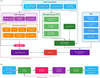
TorchRef implements a crystallographic refinement pipeline as a collection of differentiable PyTorch modules [Fig. 1(a)]. This section sketches the conceptual role of each module and the design decisions that shape the pipeline; functional forms, default parameters and implementation details are collected in the Supplementary methods (see the supporting information), and the full API is documented with the source code.
|
Figure 1
(a) Schematic overview of information flow during a forward pass in the standard TorchRef refinement loop. The central goal of any macromolecular refinement is to improve the data–model fit. Atomic coordinates are used to evaluate geometry-based restraint targets: bond lengths, bond angles, torsion angles, planarity, non-bonded repulsion, chiral volumes and an opt-in Ramachandran score (off by default and unused in the AlphaFold benchmark). ADPs are used to feed three regularization targets: a bonded similarity restraint, a shifted inverse-gamma population restraint on the B-value distribution and a kNN locality restraint on  . From all model parameters, structure factors  are computed, scaled against experimental data and compared with observed amplitudes  through a maximum-likelihood target. Individual target values are aggregated according to their respective weights into a scalar loss, from which gradients are backpropagated to all refinable parameters via PyTorch's autograd. (b) Overview of the TorchRef refinement workflow. The process begins by loading structure coordinates (PDB or mmCIF format) and reflection data (MTZ or CIF format). An initial scale refinement is performed, followed by the main refinement loop: scale update, coordinate refinement, and joint optimization of occupancies and ADPs. After the specified number of cycles, a final round of scale refinement is performed, followed by writing out the refined model and structure factors. |
The base module provides the shared input/output and numerical primitives. Operations are expressed in native PyTorch, providing identical code paths on the CPU and GPU; dedicated kernels (device-specific low-level routines) are introduced as alternative paths for performance-critical operations, e.g. structure factor calculation (Supplementary methods, Structure factor calculation).
Experimental data are handled by the ReflectionData class. It carries the reflections together with their outlier and cross-validation flags, performs French–Wilson conversion when intensities are supplied (French & Wilson, 1978), and exposes the data and respective subsets via a property-style accessor syntax. MTZ and CCP4-map I/O is delegated to reciprocalspaceship and gemmi (Greisman et al., 2021; Wojdyr, 2022), and reflections are stored in the CCP4 asymmetric unit; for details on data handling see Supplementary methods, Reflection data preparation. A companion class, DatasetCollection, organizes multiple datasets under a shared scale for time-resolved and ensemble workflows (Supplementary methods, Multi-dataset and multi-model infrastructure).
The Model object encapsulates all parameters relating to the crystallographic model: coordinates, atomic displacement parameters (ADPs) and occupancies, with support for selective freezing, group selection and reparameterization. Coordinates are stored and refined in Cartesian coordinates (Å), with fractional coordinates generated on demand for structure factor evaluation; ADPs are stored in log-space (isotropic) or Cholesky-decomposed form (anisotropic) to enforce positivity and positive-definiteness without bound constraints; occupancies are parameterized at the residue level with optional sum-to-one constraints for alternate conformers (Supplementary methods, Parameterization).
The Scaler module estimates the bulk-solvent and overall scale contributions and combines them with the calculated structure factors before they reach the data target. Bulk solvent is modelled by an exponentially attenuated flat mask following the approach of Afonine et al. (2005); the overall scale carries an anisotropic component together with a smooth resolution-dependent isotropic rescaling. The scaler is fitted with PyTorch's L-BFGS optimizer using a separate α-free scale objective (default ls, with nll and ml_noalpha available) rather than the α-centred body target, with a soft penalty on  that keeps the anisotropic correction minimal so it does not absorb B-value information that belongs in the atomic model (Supplementary methods, Bulk-solvent mask and Scaling).
Stereochemical restraints are built by the Restraint module from the CCP4 Monomer Library (Long et al., 2017), with user-supplied CIFs overlaid where required. The restraint topology is constructed lazily on first access, after which atom indices are cached and per-restraint deviations are evaluated in a single vectorized pass. The full set of restraint targets (bonds, angles, planes, chirals, torsions, non-bonded repulsion with riding hydrogens and an opt-in Ramachandran target), together with their functional forms, is described in Supplementary methods, Geometric restraints and Hydrogen handling for non-bonded repulsion. A fully differentiable AMBER14/GAFF2 force-field target is provided as an experimental alternative; its construction and the bridge exposing OpenMM energies to PyTorch's automatic differentiation (autograd) are described in Supplementary methods, AMBER14/GAFF2 force-field target.
Data targets and regularizers are implemented as dedicated modules that share a common forward() contract returning a scalar loss. The default X-ray target is the Read maximum-likelihood ml target (Read, 1986): a Rice/folded-normal likelihood centred on the Luzzati-coupled mean  (
 for unnormalized amplitudes). The coupling
 [where, in each resolution shell,
 is the noise-corrected observed power and
 the model power, with ɛ the reflection multiplicity factor (Supplementary methods, X-ray target functions)] and total variance β (including the model-error component
 ) are derived from a per-shell maximum-likelihood estimate of
 on free reflections, using noise-corrected shell moments; the scale fit itself is restricted to α-free objectives because α is degenerate with the scale. Free reflections do not contribute direct coordinate or ADP gradients, but they do enter the detached shell error model. Consequently
 remains a useful profile diagnostic but is not a strictly untouched held-out score. Several additional targets remain available for diagnostic, benchmarking and prototyping purposes (Supplementary methods, X-ray target functions). ADP regularization comprises a bonded similarity term, a k-nearest-neighbour (kNN) locality term on and a population-level shifted inverse-gamma restraint on the B-value distribution (Supplementary methods, ADP restraints).
A central LossState module tracks all active targets, applies the fixed per-group weights described in Section 2.2, enables parameter gradients on demand and integrates with the caching layer so that shared intermediates (structure factors, the solvent mask, restraint indices) are reused across targets within a refinement step (Supplementary methods, Caching infrastructure).
The Refinement module [Fig. 1(b)] orchestrates macrocycles, tracks refinement statistics and writes outputs. We use L-BFGS as the default optimizer, mirroring phenix.refine (Afonine et al., 2012); for future developmental projects TorchRef retains full compatibility with any other PyTorch optimizer. Macrocycle scheduling, outlier rejection and the multi-resolution rigid-body protocol are described in Supplementary methods, Optimization and refinement cycle.
2.2. Component weighting
Balancing the X-ray likelihood with geometric restraints and ADP regularization is a long-standing challenge in crystallographic refinement. The default production components are formulated as negative log-likelihoods or prior penalties on the same loss scale (with least-squares modes retained as diagnostic alternatives). From first principles these terms can be summed; in practice, the residual mismatch between the data-fit, geometry and ADP-prior scales requires per-group weighting. TorchRef uses fixed per-group weights  ,
 ,
 (DEFAULT_GROUP_WEIGHTS) as the default; these were calibrated by a two-dimensional sweep on a subset of the AlphaFold benchmark (Section 2.3, Fig. S1). Component-level overrides are exposed at the command-line interface for users who wish to fine-tune the weights on a per-structure basis. Adaptive weighting schemes are planned for future versions of TorchRef (see the Discussion).
2.3. Validation of the refinement framework
To verify the functionality of TorchRef, we benchmarked it against phenix.refine and REFMAC5 under matched protocols. To create a challenging and realistic test set, we used AlphaFold (Jumper et al., 2021) predictions placed by molecular replacement and refined them against their respective experimental datasets.
Starting from a 1000-structure non-redundant set assembled from the PDB, we mapped each protein chain to its UniProt accession via the Research Collaboratory for Structural Bioinformatics (RCSB) Data API, downloaded the corresponding AlphaFold-DB model and trimmed it to the crystallized construct. Residues at which the AlphaFold sequence disagreed with the construct were truncated to alanine, except at proline and glycine positions, which were kept as is. The trimmed search models were pLDDT  -converted with phenix.process_predicted_model invoked with maximum_rmsd=100 so that no further confidence-based residue removal was applied beyond the sequence-based trimming above; the default pLDDT-to-B mapping of phenix.process_predicted_model was used. The processed models were placed by Phaser in MR_AUTO mode using the crystallized composition (McCoy et al., 2007). Phaser solved 767 of 825 (93%) AlphaFold-complete structures; the solved subset defines the benchmark set used.
Placed AlphaFold models were then refined with TorchRef, phenix.refine (Liebschner et al., 2019) and REFMAC5 (Murshudov et al., 2011) under matched protocols. All refined models, and the unrefined placed models for reference, were independently re-scored by phenix.model_vs_data against identical structure factors and free flags to produce the R factors reported here, holding the scoring conditions constant across engines. Geometry was assessed by REFMAC5 zero-cycle scoring against a common restraint library so root-mean-square Z-score (RMSZ) values are comparable across engines.
Of the 767 Phaser-solved starting models, Phenix-validated refinements were obtained for 750 with TorchRef, 734 with phenix.refine and 760 with REFMAC5. The dominant failure modes were a special-position pathology in some Phaser-placed AlphaFold starting models (which is unscoreable for every engine and additionally caused phenix.refine to abort) and out-of-memory (OOM) errors at the 8 GB job limit for TorchRef on the largest structures (nine structures, all of which pass at 16 GB). The conserved set on which all three engines refined and Phenix-validated successfully comprises 725 structures; this is the set used for the headline endpoint comparisons below.
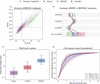
R factors. The median Phenix-validated values were 0.3165 for TorchRef, 0.3161 for phenix.refine and 0.3135 for REFMAC5 [Fig. 2(a)], all substantially below the unrefined prediction's 0.4083. The three engines therefore agree to within 0.30 percentage points, a spread far smaller than the separation between the refined and unrefined states, so at this level the differences are of little practical consequence for refinement quality. Median  values are 0.2695 for TorchRef, 0.2719 for REFMAC5 and 0.2744 for phenix.refine: TorchRef reaches the lowest but the largest – gap, 0.0470, above REFMAC5 (0.0416) and phenix.refine (0.0417). This gap points to a mild tendency to overfit the working set. Broken down per structure, the paired median difference is −0.0010 against phenix.refine and +0.0030 against REFMAC5 (Fig. S2). The excess over REFMAC5 is small but statistically robust (
 ). TorchRef's internal scorer agrees with phenix.model_vs_data to within a few tenths of a percentage point, and a cross-scoring analysis on the AlphaFold benchmark (Fig. S3) confirms that no engine favours its own refinement output. We report Phenix-validated R factors from phenix.model_vs_data as a single external scorer applied uniformly to every engine output.
|
Figure 2
AlphaFold benchmark; 767 Phaser-solved candidates. Panels (a)–(c) use the conserved subset of 725 structures on which all three engines refined and Phenix-validated successfully. Panel (d) additionally excludes trajectories with less than 0.02 total improvement, leaving 676 REFMAC5, 663 phenix.refine and 666 TorchRef trajectories. R factors are Phenix-validated under constant scoring conditions; geometry RMSZ is REFMAC5-validated against a uniform restraint library. Engines: unrefined AlphaFold prediction (green), REFMAC5 (purple), phenix.refine (blue), TorchRef (red). (a) versus scatter. Dashed lines mark per-engine medians. (b) Geometry RMSZ strip (bond, angle, chiral, main-chain B value); point = median, band = 25–75th percentile. (c) Wall-clock runtime (log scale). (d) Convergence speed: fraction of total improvement versus macrocycle, shown as the median across structures with a 25–75th percentile band. |
Geometry. Bond, angle, chiral and main-chain B-value RMSZ values were computed by REFMAC5 against a uniform restraint library so the metric is comparable across engines [Fig. 2(b)]. TorchRef's coordinate geometry is essentially on par with REFMAC5: bond, angle and chiral RMSZ are 0.58, 0.99 and 0.60 for TorchRef, and 0.58, 0.95 and 0.54 for REFMAC5. This agreement is consistent with both programs using the CCP4 Monomer Library restraint definitions. The remaining discrepancy is in the ADPs: TorchRef's main-chain bonded-B RMSZ is 1.55, in contrast to 0.90 for REFMAC5 and 1.03 for phenix.refine.
Weight calibration. The default per-group weights were chosen from a two-dimensional sweep of  at fixed
 on a subset of the benchmark (Fig. S1). Bond/angle RMSZ tightens as
 is increased (Fig. S1, top left), whereas the main-chain bonded-B RMSZ responds primarily to
 and is treated separately (Fig. S1, top right). Meanwhile, shows a U-shaped dependence on : it falls as the geometry weight is increased from very loose values, reaches a minimum at moderate geometry weights slightly below the chosen default and rises sharply once the restraint terms begin to dominate the X-ray likelihood (Fig. S1, bottom right). The – gap closes as either weight is tightened (Fig. S1, bottom left), so the looser end of the sweep also carries the heaviest overfitting penalty. The chosen default
 sits just to the tighter side of the minimum, trading a small amount of for tighter bond/angle geometry and a smaller – gap. Pushing the restraint weights further past this point results in significantly worse values, likely due to underfitting and convergence problems; adaptive weighting schemes are planned for a future release.
Convergence and runtime. The per-cycle program-reported shows TorchRef and phenix.refine converging at essentially the same rate, both reaching ∼90% of their total improvement by macrocycle three and both faster in cycle count than REFMAC5 [Fig. 2(d)]. Wall-clock per refinement [Fig. 2(c)] shows TorchRef 4.0 times faster than phenix.refine but 3.1 times slower than REFMAC5. In a single-core comparison (Fig. S4), TorchRef is 21.0 times slower than REFMAC5 and 1.4 times slower than phenix.refine. We note that the definition of a macrocycle differs between TorchRef, phenix.refine and REFMAC5, which is reflected in the differing convergence behaviour. The compiled Fortran implementation of REFMAC5 and its use of second-derivative information make it more efficient than either phenix.refine or TorchRef.
2.4. Performance
TorchRef implements both direct summation-based and FFT-based structure factor calculations. Most processes default to the FFT-based structure factor calculation, as it is more efficient. This calculation proceeds in three stages. First, we sample the model's electron density on a real-space grid in P1. This involves sampling the per-atom electron density on a local grid (with a per-atom truncation radius based on the ADP and atomic form factor of the atom) and then coalescing the local grids onto a global grid (Supplementary methods, FFT path and electron-density sampling). Second, we perform an FFT on the grid. Last, we extract the structure factors from the grid in P1 and apply the symmetry operations (Supplementary methods, Reciprocal basis and late symmetry expansion).
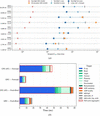
Across a set of benchmark structures spanning roughly 1300–10000 atoms we compare TorchRef's FFT-based structure factor calculation against CCTBX's (Grosse-Kunstleve et al., 2002) optimized routine. We include SFCalculator's direct-summation GPU path (Li et al., 2025) in this comparison as it covers similar functionality in enabling structure factor calculations in a PyTorch framework. On a single CPU core, TorchRef's FFT-based forward is generally on par with CCTBX's routine [Fig. 3(a)]. At four cores, TorchRef is generally faster than CCTBX, with further improvement at 16 cores. When running on the GPU (A100) with the custom Triton kernel (Tillet et al., 2019), the forward is a median 124-fold faster than CCTBX [52–179-fold across the set; Fig. 3(a)]. For comparison, the direct-summation-based structure factor path of SFCalculator (Li et al., 2025) running on an A100 is roughly comparable in performance to CCTBX, but suffers from OOM errors on the largest two structures [Fig. 3(a)].
|
Figure 3
Structure factor and refinement-cycle performance. GPU timings were recorded on an NVIDIA A100 40 GB and CPU and CCTBX timings on an Intel Xeon 6230R (Cascade Lake), chosen to be generation-matched to the A100. (a) Forward time across nine benchmark structures (one row each, labelled by atom count and resolution; log scale), comparing TorchRef on the GPU (red stars) and on 1/4/16 CPU cores (light-to-dark blue circles) against SFCalculator on the GPU (orange diamonds) and CCTBX on a single CPU thread (black ticks, reference). TorchRef matches CCTBX on a single core and overtakes it at four cores; on the GPU it is a median 124-fold faster than CCTBX (52–179-fold across the set). SFCalculator's direct-summation GPU path is one to two orders of magnitude slower than TorchRef's GPU kernel and is absent for the two largest structures, where it runs out of memory. (b) Per-target time breakdown of a refinement cycle for pdb_00001daw (3051 atoms, 23356 reflections,  = 2.05 Å) on CPU (eight threads) and GPU, for the forward pass and the full forward + backward pass. Stacked bars show the individually timed targets: the X-ray target dominates, and the hollow red box is the independently measured full cycle. A full forward + backward cycle takes ∼14 ms on the GPU and ∼75 ms on eight CPU cores. |
A per-target breakdown for pdb_00001daw (Niefind et al., 1999) of a full refinement iteration shows that the X-ray target dominates the cost [Fig. 3(b)]. While the classic refinement workload cannot fully exploit the speed of GPU structure factor calculations, it does show a significant speedup compared with CPU evaluation. A complete forward-plus-backward cycle takes ∼14 ms on the GPU and ∼75 ms on eight CPU cores, roughly a fivefold GPU speedup over CPU evaluation.
2.5. Difference refinement
The end-to-end differentiability of TorchRef enables gradient propagation through complex computational pipelines that would be difficult to implement in conventional refinement programs. In particular, it supports multi-model, multi-dataset workflows. As an example, we implement difference-amplitude-based refinement (Terwilliger &; Berendzen, 1995), which is useful for time-resolved crystallography and related fields. Alongside the geometric restraints and atomic displacement regularization already in the refinement, we add an X-ray difference loss: a Gaussian negative log-likelihood on the amplitude differences between two related datasets (a Gaussian negative log-likelihood is, up to additive constants independent of the refined parameters, equivalent to an inverse-variance-weighted least-squares residual). Because the target models the difference directly, systematic errors common to both datasets cancel rather than bias the fit. We further place a spike-and-slab prior on the per-atom coordinate change between the dark and light models, treating small displacements as noise (the spike) while leaving larger, genuine movements essentially unpenalized (the slab). The full target, the mixed-model parameterization, and the prior are derived in Supplementary methods, Difference refinement for time-resolved data.
Combining this with mixed-model refinement, where we define a combined model as a linear combination of a reference and a light model, we can optimize the light model to explain the observed structure factor differences. This is a simple example of a multi-model, multi-dataset approach that can be extended to fit the data (Supplementary methods, Multi-dataset and multi-model infrastructure).
To validate different solutions, we implemented a command-line tool that calculates local correlation coefficients between the weighted difference observed structure factor (WDFo) density map and the weighted difference calculated structure factor (WDFc) density map for a given atom selection and masking radius (see Materials and methods) under consideration of the dark phases. Here, we use inverse-variance weights for the difference observations. Additionally, we calculate reciprocal-space correlation on the differences. Localization of the signal within the structure yields noticeably higher real-space correlations than reciprocal-space correlations, allowing meaningful correlations to be extracted even for a strongly localized change.
To assess the utility of the difference-refinement approach, we applied it to dataset pdb_00007yyz from a time-resolved serial crystallography study of the photo-pharmacological drug azo-combretastatin A4 (azo-CA4) bound to  -tubulin (Wranik et al., 2023) (for the full refinement protocol, see Materials and methods). In that study, cis-to-trans photoisomerization of the azobenzene moiety was triggered by light, and nine structural snapshots spanning 1 ns to 100 ms captured the resulting ligand release and collapse of the colchicine-site binding pocket. The pdb_00007yyz dataset corresponds to the 10 µs timepoint, at which the ligand has begun to shift but remains bound. The deposited structure was originally refined with phenix.refine using extrapolated structure factors at an estimated light-state occupancy of 0.22.
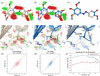
TorchRef difference refinement was performed with a resolution cutoff of 2.2 Å at an assumed light-state occupancy of 0.22, matching the published structure. The occupancy can optionally be refined, but from a single timepoint this is generally not recommended and any refined value must be interpreted with care, so we fixed it to the published estimate. Within a 2.5 Å radius around both the dark and light conformations of the IBL ligand (azo-CA4), the resulting model matched the WDFo with a local correlation of 0.85, in contrast to 0.74 for the deposited model refined using extrapolated structure factors (Fig. 4). Considering the global fit of the model, the calculated difference structure factor amplitudes show correlations of 0.51 and 0.31 with the observed difference structure factor amplitudes for the TorchRef difference-refined model and the extrapolated model, respectively. Notably, the differences in the resulting structures are subtle and the models are qualitatively similar.
|
Figure 4
Difference refinement of azo-CA4 (IBL) cis-to-trans isomerization in tubulin (pdb_00007yyz). Weighted difference electron-density (WDFo) maps are visualized via a volume ramp from 3 to 5σ around the ligand (green, positive; red, negative) (a, b) and 2.5 to 4.5σ in the wider binding pocket (d, e). Top row (a–c): IBL ligand close-up. Bottom row (d–f): binding pocket view showing the changes in the βt7-loop resulting from the unbinding of the trans conformer ligand. Dark-state structure pdb_00008ql2 (grey), published extrapolated structure pdb_00007yyz (wheat) and TorchRef difference-refined structure (blue). (a, d) WDFo map with the deposited pdb_00007yyz structure refined from extrapolated structure factors. (b, e) WDFo map with the TorchRef difference-refined structure. (c, f) Superposition of the TorchRef-refined (blue) and deposited pdb_00007yyz (wheat) conformations, showing the agreement and differences between the independently determined light-state structures. Scatter plots (g) and (h) show the distribution of WDFc voxel values relative to WDFo voxels within a 2.5 Å radius around the dark and light conformations of the ligand. (g) shows the scatter plot for the extrapolated data, while (h) shows the TorchRef difference-refinement scatter plot. The correlation between calculated and observed difference amplitudes is shown in panel (i), binned by resolution. |
3. Discussion
TorchRef provides a PyTorch-based crystallographic refinement framework that exposes all relevant parameters to automatic differentiation. This design paradigm offers significant advantages over classic implementations, as it correctly handles complex gradient computations through automatic backpropagation, removing the need for manually derived analytical gradients. This not only reduces implementation effort but also eliminates an important source of programming errors when developing new refinement targets or parameterizations. TorchRef's native PyTorch implementation enables deep integration within the growing ecosystem of PyTorch-based tools in structural biology, including molecular-dynamics engines such as TorchMD (Doerr et al., 2021), structural prediction models such as OpenFold (Ahdritz et al., 2024) [as demonstrated by the recent Rocket project (Fadini et al., 2026)] and machine-learning-accelerated quantum-mechanical potentials such as those used in AQuaRef (Zubatyuk et al., 2025).
A central concern for any new refinement framework is whether its design choices compromise refinement quality. Across 725 Phaser-placed AlphaFold predictions refined head-to-head with phenix.refine, REFMAC5 and TorchRef, the three engines reach median values within 0.30 percentage points of each other (TorchRef 0.3165, phenix.refine 0.3161, REFMAC5 0.3135), a spread small enough that the differences carry no practical weight, even though the paired comparison against REFMAC5 remains statistically resolvable in its favour. TorchRef reaches the lowest median but the largest – gap (0.0470, against 0.0416–0.0417 for the reference engines), a mild overfitting signature. We hypothesize that the current global fixed-weight target contributes to it and that resolution-dependent or adaptive weighting would reduce it, though the concurrent tendency towards low absolute ADPs (main-chain bonded-B RMSZ 1.55 against 0.90 for REFMAC5) leaves open an ADP-driven component. TorchRef's coordinate-geometry RMSZ is essentially on par with REFMAC5, consistent with the use of the same CCP4 Monomer Library restraint definitions. The one clear residual is a small excess relative to REFMAC5 (paired median +0.0030), whereas against phenix.refine TorchRef is marginally lower.
The difference-refinement procedure demonstrates a use case that is difficult to implement in conventional refinement programs. Existing approaches to time-resolved crystallographic data analysis typically rely on extrapolated structure factors, which amplify the signal from a partially occupied excited state to simulate a fully occupied one. While powerful, extrapolation introduces noise amplification that scales inversely with occupancy.
Additionally, because extrapolated structure factor amplitudes are calculated with phases derived from the dark state, any phase difference between the dark and light models introduces error into the resulting maps. Extrapolation also systematically produces negative amplitudes from phase mismatches and noise amplification. The standard correction protocols absorb this as additional noise in the active region rather than as a systematic bias, which accounts for the general success of extrapolation-based methods while leaving the excited-state density noisier than the true signal. Modern extrapolation tools further apply Bayesian weighting that downweights noisy-difference amplitudes, at the cost of shrinking the signal towards the dark reference (De Zitter et al., 2022).
Direct refinement of a mixed model against amplitude differences, as implemented in TorchRef, sidesteps these issues by fitting the difference between the dark-state model and the occupancy-weighted combination of dark- and light-state models to the observed difference in the dark and light data. In the case of pdb_00007yyz, this approach yielded a higher local correlation between calculated and observed difference maps (0.85 versus 0.74 for the deposited structure around the chromophore). The differences between the extrapolated structure and the TorchRef difference-refined structure are subtle, but the local-correlation improvement is reproduced across the chromophore region. Beyond the two-dataset case shown here, this approach extends naturally to more than two datasets and multiple transient structures.
TorchRef is designed as a platform for method development and does not yet implement the full feature set of established refinement packages. On the modelling side, it lacks automated water placement and deletion, non-crystallographic symmetry restraints, reference-model restraints, twinning support and translation–libration–screw parameterization. On the optimization side, simulated annealing and Langevin-style stochastic optimizers are implemented as experimental alternatives, but they are not part of the production protocol benchmarked here and still require systematic validation. On the target side, adaptive weighting remains an open problem and may help reduce the small residual excess. Qualitative inspection of the rerun models shows a systematic tendency towards low absolute ADPs, pointing to a possible scale-factor–ADP interaction; this diagnosis is provisional and will be tested in future work.
Looking ahead, TorchRef's modular architecture opens several avenues for development. The multi-model, multi-dataset framework demonstrated here for difference refinement generalizes naturally to kinetic multi-state refinement against time-resolved serial crystallography data, where a small number of conformational states would be refined against many datasets simultaneously. As an experimental proof of concept for force-field integration, TorchRef already includes a working differentiable AMBER14/GAFF2 target (Maier et al., 2015; Wang et al., 2004) coupled to OpenMM (Eastman et al., 2017), with analytical forces bridged into PyTorch autograd, non-standard residues parameterized on the fly via antechamber (Wang et al., 2006) and a riding-hydrogen model that redistributes H forces onto the heavy-atom frame. The AMBER target is not yet at production quality and is not used in the AlphaFold benchmark above. Replacing the empirical AMBER potential with learned energy surfaces such as MACE-OFF (Kovács et al., 2025) or AIMNet2 (Anstine et al., 2025) would combine deep-learned physical priors with the data-driven X-ray maximum likelihood, much as AQuaRef (Zubatyuk et al., 2025) has demonstrated for quantum-mechanical refinement within Phenix. However, the advantage is that, in TorchRef, the potential is a native PyTorch module and its gradients propagate through the same computational graph as the other targets of the refinement.
Given the well documented, open-source nature of TorchRef, we hope to make the development of custom refinement protocols accessible to a broader community of crystallographers and method developers. The full API documentation, Jupyter notebook tutorials and permissive MIT licence are intended to lower the barrier to experimentation. As a concrete example, the difference refinement was initially implemented in approximately 1000 lines of Python code (of which the core logic accounts for 200 lines), a task that would require substantially more effort in a conventional refinement codebase, where analytical gradients must be derived and implemented by hand.
We hope that TorchRef, or projects like it, will allow many more researchers to contribute effectively to macromolecular structure refinement, a field in which the depth and complexity of established codebases have historically concentrated methodological development among a small number of specialists. We are open to contributions and collaborations, and welcome feedback to help shape the future of TorchRef.
4. Materials and methods
4.1. Structure selection and dataset preparation
A non-redundant benchmark dataset of 1000 protein crystal structures was assembled from the PDB. Structures were selected programmatically via the RCSB PDB Search API using the following criteria: (i) experimental method restricted to X-ray diffraction, (ii) resolution between 1.5 and 3.0 Å, and (iii) maximum pairwise sequence identity of 30%, enforced by retaining only cluster representatives from the RCSB sequence clustering at the 30% identity level. From an initial pool of 1500 candidate entries, structures were filtered to retain only those with deposited structure factor data, yielding the final set of 1000 structures. For each structure, coordinate files [PDB and macromolecular CIF (mmCIF) formats] and structure factor files [structure factor CIF (SF-CIF) format] were downloaded from the RCSB.
4.2. MTZ conversion and Rfree flag generation
SF-CIF files were converted to MTZ format using TorchRef's ReflectionData module. flags were regenerated for all structures [regenerate_rfree_flags(force=True)], as deposited flags were inconsistent across the benchmark set. Flags are assigned by resolution-stratified random sampling: the reflections are binned in shells of
d*2 and a fixed fraction of each shell is drawn at random. Reflections are stored in the canonical CCP4 asymmetric unit, so every space-group-symmetry equivalent maps to a single asymmetric unit reflection and shares its flag. The generator does not, however, currently group reflections related by higher metric (lattice) symmetry (for example, twin operators or pseudosymmetry not expressed by the space group), so under twinning or pseudosymmetry a free reflection could be related to a working reflection, leaking information across the work/free boundary; metric-symmetry-aware flag grouping is planned as future work. We did not perform a dedicated cohort-wide twinning or pseudosymmetry screen and therefore do not claim that these pathologies are absent from every benchmark structure.
4.3. AlphaFold search model preparation and molecular replacement
For each benchmark structure, each protein chain was mapped to its UniProt accession via the RCSB Data API (GraphQL endpoint), and the corresponding AlphaFold2 model was downloaded from the AlphaFold Protein Structure Database (Varadi et al., 2022; https://alphafold.ebi.ac.uk/api/prediction/accession). Structures for which every protein chain had an AlphaFold model (af_complete) defined the AlphaFold benchmark cohort.
For each UniProt component, the AlphaFold model was aligned to the crystallized construct sequence using gemmi pairwise alignment (Wojdyr, 2022). From the alignment (i) AlphaFold-only flanks and insertions were trimmed; (ii) residues matching the construct were retained; and (iii) residues whose AlphaFold identity disagreed with the construct were truncated to alanine (residue renamed ALA, side chain stripped to {N, Cα, C, O, Cβ}), except proline and glycine, which were kept as is. Trimmed search models were then pLDDT -converted with phenix.process_predicted_model (maximum_rmsd=100, disabling confidence-based residue removal since the model was already trimmed) and placed by phenix.phaser in MR_AUTO mode using the crystallized composition (ENSEMBLE … IDENTITY 0.9; one SEARCH ENSEMBLE … NUMBER{copies} per UniProt component). The top Phaser solution was retained as the placed search model. Out of 825 AlphaFold-complete entries, Phaser produced a solution for 767 structures (93%), defining the benchmark arm used here. The 58 structures that failed Phaser MR were excluded.
4.4. Refinement protocols
The placed AlphaFold model was refined against the structure factors by each engine in turn, using matched protocols and identical hardware (Slurm-managed cluster, four CPU cores and 8 GB of RAM per job):
TorchRef: torchref.refine (v0.6.4), 10 macrocycles, alternating coordinate, ADP/occupancy and scaler blocks (--mode separate); the default maximum-likelihood X-ray target (--X-ray-mode ml) and default group weights , , .
Phenix: phenix.refine v1.20-4459 (Liebschner et al., 2019), 10 macrocycles with the individual_sites + individual_adp + occupancies strategy (separate refinement of atomic coordinates, individual isotropic B values and partial occupancies), bulk-solvent and overall scaling enabled, ordered solvent disabled, Ramachandran restraints enabled, simulated annealing and target-weight optimization disabled.
REFMAC5: refmac5 from the CCP4 suite v7.1 (Murshudov et al., 2011; Agirre et al., 2023), 10 NCYCLES restrained refinement, MAKE HYDR NO, with FreeR_flag read from the input MTZ.
4.5. R-factor scoring and cross-scorer validation
All refined models, and the unrefined placed search models for reference, were independently re-scored against identical structure factors and free flags by three R-factor scorers operating in zero-cycle mode (scaling and bulk-solvent fit only; coordinates and ADPs untouched): REFMAC5 with NCYCLES 0 (Murshudov et al., 2011); phenix.model_vs_data (Liebschner et al., 2019); and torchref.refine -n 0 on the same model. For the main figure, phenix.model_vs_data provides the headline R factors. Geometry RMSZ values reported in Fig. 2(b) were computed from the REFMAC5 zero-cycle restraint table so the underlying restraint library is uniform across engines. Wall-clock per refinement was taken from each program's own log files for successful runs.
4.6. Benchmarking structure factor calculation and gradient performance
4.6.1. Test system
The forward scaling benchmark [Fig. 3(a)] used a set of nine structures spanning roughly 1300–10000 atoms and resolutions of 1.5–2.6 Å. The per-target refinement-cycle breakdown [Fig. 3(b)] used the crystal structure pdb_00001daw (Niefind et al., 1999), comprising 3051 atoms and 23356 unique reflections at a resolution of 2.05 Å.
4.6.2. Quantities benchmarked
Three timing scenarios were measured for TorchRef, each calling compute_structure_factors directly (bypassing the model cache):
(1) Forward: structure factor calculation  inside a torch.no_grad context, measuring the raw forward-pass cost without constructing a computational graph.
(2) Backward only: a forward pass followed by loss.backward() (where loss =  ), with only the backward pass timed. This isolates the cost of automatic differentiation through the structure factor kernel. This timing is less accurate than combined forward + backward pass evaluations due to timing overhead.
(3) Forward + backward: end-to-end computation plus gradient backpropagation, timed together.
As a reference, the forward-only computation via CCTBX [xray_structure.structure_factors(d_min=…).f_calc()] was timed on a CPU under identical conditions, using cctbx-base (the version pinned by the TorchRef installation) and the same OMP_NUM_THREADS/MKL_NUM_THREADS/OPENBLAS_NUM_THREADS caps as the TorchRef runs. CCTBX gradients were not benchmarked: a documented public API for differentiating f_calc() through CCTBX was not identified at the time of writing. As a second reference, SFCalculator (Li et al., 2025) was benchmarked on the GPU for the forward under matching conditions; OOM failures on the largest structures were recorded as such.
4.6.3. CPU thread scaling
To assess parallelism, benchmarks were run across one to 16 CPU threads; the scaling figure reports one, four and 16 cores. Each configuration was executed in an isolated subprocess with TORCHREF_NUM_THREADS, OMP_NUM_THREADS, MKL_NUM_THREADS and OPENBLAS_NUM_THREADS all set to the target thread count, ensuring consistent control over intra-operator parallelism in PyTorch, BLAS and OpenMP. The TorchRef __init__ module reads TORCHREF_NUM_THREADS and calls torch.set_num_threads() accordingly.
4.6.4. GPU benchmarks
GPU timings were collected on an NVIDIA A100-PCIE-40 GB. All GPU timings bracket each iteration with torch.cuda.synchronize() to ensure asynchronous kernel launches are fully completed before reading the wall-clock time.
4.6.5. Timing protocol
For each configuration (thread count and device), three warm-up iterations were run followed by ten timed iterations. Wall-clock time was measured with time.perf_counter(). Summary statistics reported are the mean, minimum and maximum over the ten timed iterations. Speedup is defined as the ratio of the single-thread CPU mean time to the mean time at a given thread count (or on a GPU).
4.7. Difference refinement
Difference refinement was performed with torchref.difference-refine, which targets the residual between the observed and calculated structure factor amplitude differences of the light and dark datasets, with the dark model held fixed (see Supplementary methods, Difference refinement for time-resolved data). Refined models were validated with torchref.validate-ded, which reports the local correlation between the weighted observed difference map ( , from
 ) and the weighted calculated difference map (
 , from
 ) within a masking radius around a selected atom set; maps were calculated using dark-state phases and Bayesian weights.
To demonstrate the approach we refined against PDB entry pdb_00007yyz (Wranik et al., 2023), a time-resolved serial crystallography structure of a photoisomerized azobenzene-analogue ligand. The deposited model was originally refined with phenix.refine using extrapolated structure factors at 0.22 occupancy and a 2.2 Å resolution cutoff. For TorchRef difference refinement we used the recently released dark structure pdb_00008ql2 (Weinert, T., Wranik, M., Seidel, H.-P., Church, J., Steinmetz, M.O., Schapiro, I. & Standfuss, J., to be published) as both the initial light and dark model with a fixed 22% light-state fraction. Following an automated pass, two cycles of manual real-space adjustment in Coot (Emsley et al., 2010), using the phase-corrected extrapolated structure factors written by torchref.difference-refine, alternated with refinement; a final equilibration cycle set both the difference-target and coordinate-similarity weights to 1. Reflections were used to 2.2 Å, validation correlations were computed at the same resolution to allow direct comparison with the deposited model, and flags were grafted from the pdb_00008ql2 dataset to give meaningful values.
5. Related literature
The following references are cited in the supporting information: Brünger (1992), Croll & Read (2021), Cromer & Liberman (1981), Engh & Huber (1991), Lunin & Skovoroda (1995), Masmaliyeva et al. (2020), Mitchell & Beauchamp (1988), Nicholls et al. (2014), Sheldrick (2015), Wilson (1992).
6. Data and code availability
TorchRef is available on GitHub under an MIT licence and can be installed via pip. Full API documentation and Jupyter notebook tutorials are available via GitHub at https://github.com/HatPdotS/TorchRef. The scripts used to generate the figures are available via GitHub at https://github.com/HatPdotS/TorchRef-paper. The difference-refined structure is pending release in the PDB and will be available under code pdb_0000030as.
Supporting information
Supporting information. DOI: https://doi.org/10.1107/S1600576726009258/lan5006sup1.pdf
Acknowledgements
The project was conceived by H-PS and TW. The code was authored by H-PS under the supervision of TW and JS. The manuscript was authored by H-PS and TW with input from JS. Figures were made by H-PS with the help of TW. The manuscript was reviewed by JS, TW and H-PS. Claude Code was used during the development of TorchRef for prototyping, refactoring and documentation. Claude was used to review and rephrase text during the preparation of this manuscript. Open access publishing facilitated by ETH-Bereich Forschungsanstalten, as part of the Wiley–ETH-Bereich Forschungsanstalten agreement via the Consortium Of Swiss Academic Libraries.
Conflict of interest
The authors declare that they have no conflicts of interest.
Funding information
This work was supported by Swiss National Science Foundation project grants 10.007.643 (JS) and 10.003.847 (TW).
References
 Adams, P. D., Afonine, P. V., Bunkóczi, G., Chen, V. B., Davis, I. W., Echols, N., Headd, J. J., Hung, L.-W., Kapral, G. J., Grosse-Kunstleve, R. W., McCoy, A. J., Moriarty, N. W., Oeffner, R., Read, R. J., Richardson, D. C., Richardson, J. S., Terwilliger, T. C. & Zwart, P. H. (2010). Acta Cryst. D66, 213–221.
Web of Science
CrossRef
CAS
IUCr Journals
Google Scholar
Afonine, P. V., Grosse-Kunstleve, R. W. & Adams, P. D. (2005). Acta Cryst. D61, 850–855.
Web of Science
CrossRef
CAS
IUCr Journals
Google Scholar
Afonine, P. V., Grosse-Kunstleve, R. W., Echols, N., Headd, J. J., Moriarty, N. W., Mustyakimov, M., Terwilliger, T. C., Urzhumtsev, A., Zwart, P. H. & Adams, P. D. (2012). Acta Cryst. D68, 352–367.
CrossRef
IUCr Journals
Google Scholar
Agirre, J., Atanasova, M., Bagdonas, H., Ballard, C. B., Baslé, A., Beilsten-Edmands, J., Borges, R. J., Brown, D. G., Burgos-Mármol, J. J., Berrisford, J. M., Bond, P. S., Caballero, I., Catapano, L., Chojnowski, G., Cook, A. G., Cowtan, K. D., Croll, T. I., Debreczeni, J. É., Devenish, N. E., Dodson, E. J., Drevon, T. R., Emsley, P., Evans, G., Evans, P. R., Fando, M., Foadi, J., Fuentes-Montero, L., Garman, E. F., Gerstel, M., Gildea, R. J., Hatti, K., Hekkelman, M. L., Heuser, P., Hoh, S. W., Hough, M. A., Jenkins, H. T., Jiménez, E., Joosten, R. P., Keegan, R. M., Keep, N., Krissinel, E. B., Kolenko, P., Kovalevskiy, O., Lamzin, V. S., Lawson, D. M., Lebedev, A. A., Leslie, A. G. W., Lohkamp, B., Long, F., Malý, M., McCoy, A. J., McNicholas, S. J., Medina, A., Millán, C., Murray, J. W., Murshudov, G. N., Nicholls, R. A., Noble, M. E. M., Oeffner, R., Pannu, N. S., Parkhurst, J. M., Pearce, N., Pereira, J., Perrakis, A., Powell, H. R., Read, R. J., Rigden, D. J., Rochira, W., Sammito, M., Sánchez Rodríguez, F., Sheldrick, G. M., Shelley, K. L., Simkovic, F., Simpkin, A. J., Skubak, P., Sobolev, E., Steiner, R. A., Stevenson, K., Tews, I., Thomas, J. M. H., Thorn, A., Valls, J. T., Uski, V., Usón, I., Vagin, A., Velankar, S., Vollmar, M., Walden, H., Waterman, D., Wilson, K. S., Winn, M. D., Winter, G., Wojdyr, M. & Yamashita, K. (2023). Acta Cryst. D79, 449–461.
Web of Science
CrossRef
IUCr Journals
Google Scholar
Ahdritz, G., Bouatta, N., Floristean, C., Kadyan, S., Xia, Q., Gerecke, W., O'Donnell, T. J., Berenberg, D., Fisk, I., Zanichelli, N., Zhang, B., Nowaczynski, A., Wang, B., Stepniewska-Dziubinska, M. M., Zhang, S., Ojewole, A., Guney, M. E., Biderman, S., Watkins, A. M., Ra, S., Lorenzo, P. R., Nivon, L., Weitzner, B., Ban, Y. A., Chen, S., Zhang, M., Li, C., Song, S. L., He, Y., Sorger, P. K., Mostaque, E., Zhang, Z., Bonneau, R. & AlQuraishi, M. (2024). Nat. Methods 21, 1514–1524.
CrossRef
CAS
PubMed
Google Scholar
AlQuraishi, M. & Sorger, P. K. (2021). Nat. Methods 18, 1169–1180.
CrossRef
CAS
PubMed
Google Scholar
Anstine, D. M., Zubatyuk, R. & Isayev, O. (2025). Chem. Sci. 16, 10228–10244.
CrossRef
CAS
PubMed
Google Scholar
Barends, T. R. M., Stauch, B., Cherezov, V. & Schlichting, I. (2022). Nat. Rev. Methods Primers 2, 59.
Web of Science
CrossRef
PubMed
Google Scholar
Blanc, E., Roversi, P., Vonrhein, C., Flensburg, C., Lea, S. M. & Bricogne, G. (2004). Acta Cryst. D60, 2210–2221.
Web of Science
CrossRef
CAS
IUCr Journals
Google Scholar
Bradbury, J., Frostig, R., Hawkins, P., Johnson, M. J., Katariya, Y., Leary, C., Maclaurin, D., Necula, G., Paszke, A., VanderPlas, J., Wanderman-Milne, S. & Zhang, Q. (2018). JAX: Composable Transformations of Python+NumPy Programs, https://github.com/jax-ml/jax.
Google Scholar
Brändén, G. & Neutze, R. (2021). Science 373, eaba0954.
Web of Science
PubMed
Google Scholar
Brünger, A. T. (1992). Nature 355, 472–475.
PubMed
Google Scholar
Burley, S. K., Berman, H. M., Bhikadiya, C., Bi, C., Chen, L., Di Costanzo, L., Christie, C., Dalenberg, K., Duarte, J. M., Dutta, S., Feng, Z., Ghosh, S., Goodsell, D. S., Green, R. K., Guranović, V., Guzenko, D., Hudson, B. P., Kalro, T., Liang, Y., Lowe, R., Namkoong, H., Peisach, E., Periskova, I., Prlić, A., Randle, C., Rose, A., Rose, P., Sala, R., Sekharan, M., Shao, C., Tan, L., Tao, Y.-P., Valasatava, Y., Voigt, M., Westbrook, J., Woo, J., Yang, H., Young, J., Zhuravleva, M. & Zardecki, C. (2019). Nucleic Acids Res. 47, D464–D474.
CrossRef
CAS
PubMed
Google Scholar
Chapman, H. N. (2019). Annu. Rev. Biochem. 88, 35–58.
Web of Science
CrossRef
CAS
PubMed
Google Scholar
Clabbers, M. T. B. & Xu, H. (2021). Acta Cryst. D77, 313–324.
CrossRef
IUCr Journals
Google Scholar
Croll, T. I. & Read, R. J. (2021). Acta Cryst. D77, 438–446.
CrossRef
IUCr Journals
Google Scholar
Cromer, D. T. & Liberman, D. A. (1981). Acta Cryst. A37, 267–268.
CrossRef
CAS
IUCr Journals
Google Scholar
De Zitter, E., Coquelle, N., Oeser, P., Barends, T. R. M. & Colletier, J.-P. (2022). Commun. Biol. 5, 640.
Google Scholar
Doerr, S., Majewski, M., Pérez, A., Krämer, A., Clementi, C., Noe, F., Giorgino, T. & De Fabritiis, G. (2021). J. Chem. Theory Comput. 17, 2355–2363.
CrossRef
CAS
PubMed
Google Scholar
Eastman, P., Swails, J., Chodera, J. D., McGibbon, R. T., Zhao, Y., Beauchamp, K. A., Wang, L.-P., Simmonett, A. C., Harrigan, M. P., Stern, C. D., Wiewiora, R. P., Brooks, B. R. & Pande, V. S. (2017). PLoS Comput. Biol. 13, e1005659.
Google Scholar
Emsley, P., Lohkamp, B., Scott, W. G. & Cowtan, K. (2010). Acta Cryst. D66, 486–501.
Web of Science
CrossRef
IUCr Journals
Google Scholar
Engh, R. A. & Huber, R. (1991). Acta Cryst. A47, 392–400.
CrossRef
CAS
Web of Science
IUCr Journals
Google Scholar
Fadini, A., Apostolopoulou, V., Lane, T. J. & van Thor, J. J. (2025). Commun. Biol. 8, 1649.
Google Scholar
Fadini, A., Li, M., McCoy, A. J., Banjara, S., Okumura, H., Napier, E., Fontana, P., Khan, A. R., Jovine, L., Terwilliger, T. C., Read, R. J., Hekstra, D. R. & AlQuraishi, M. (2026). Nat. Methods 23, 785–795.
CrossRef
CAS
PubMed
Google Scholar
French, S. & Wilson, K. (1978). Acta Cryst. A34, 517–525.
CrossRef
CAS
IUCr Journals
Google Scholar
Gasparotto, P., Barba, L., Stadler, H.-C., Assmann, G., Mendonça, H., Ashton, A. W., Janousch, M., Leonarski, F. & Béjar, B. (2024). J. Appl. Cryst. 57, 931–944.
CrossRef
CAS
IUCr Journals
Google Scholar
Greisman, J. B., Dalton, K. M. & Hekstra, D. R. (2021). J. Appl. Cryst. 54, 1521–1529.
CrossRef
CAS
IUCr Journals
Google Scholar
Grosse-Kunstleve, R. W., Sauter, N. K., Moriarty, N. W. & Adams, P. D. (2002). J. Appl. Cryst. 35, 126–136.
Web of Science
CrossRef
CAS
IUCr Journals
Google Scholar
Hekstra, D. R. (2023). Annu. Rev. Biophys. 52, 255–274.
Web of Science
CrossRef
CAS
PubMed
Google Scholar
Henning Hansen, C. G., Orioli, S. & Lindorff-Larsen, K. (2026). ACS Phys. Chem. Au 6, 878–886.
CrossRef
CAS
PubMed
Google Scholar
Jumper, J., Evans, R., Pritzel, A., Green, T., Figurnov, M., Ronneberger, O., Tunyasuvunakool, K., Bates, R., Žídek, A., Potapenko, A., Bridgland, A., Meyer, C., Kohl, S. A. A., Ballard, A. J., Cowie, A., Romera-Paredes, B., Nikolov, S., Jain, R., Adler, J., Back, T., Petersen, S., Reiman, D., Clancy, E., Zielinski, M., Steinegger, M., Pacholska, M., Berghammer, T., Bodenstein, S., Silver, D., Vinyals, O., Senior, A. W., Kavukcuoglu, K., Kohli, P. & Hassabis, D. (2021). Nature 596, 583–589.
CrossRef
CAS
PubMed
Google Scholar
Khusainov, G., Standfuss, J. & Weinert, T. (2024). Struct. Dyn. 11, 020901.
Google Scholar
Kovács, D. P., Moore, J. H., Browning, N. J., Batatia, I., Horton, J. T., Pu, Y., Kapil, V., Witt, W. C., Magdău, I.-B., Cole, D. J. & Csányi, G. (2025). J. Am. Chem. Soc. 147, 17598–17611.
PubMed
Google Scholar
Li, M., Dalton, K. & Hekstra, D. (2025). bioRxiv, https://www.biorxiv.org/content/early/2025/01/19/2025.01.12.632630.
Google Scholar
Liebschner, D., Afonine, P. V., Baker, M. L., Bunkóczi, G., Chen, V. B., Croll, T. I., Hintze, B., Hung, L.-W., Jain, S., McCoy, A. J., Moriarty, N. W., Oeffner, R. D., Poon, B. K., Prisant, M. G., Read, R. J., Richardson, J. S., Richardson, D. C., Sammito, M. D., Sobolev, O. V., Stockwell, D. H., Terwilliger, T. C., Urzhumtsev, A. G., Videau, L. L., Williams, C. J. & Adams, P. D. (2019). Acta Cryst. D75, 861–877.
Web of Science
CrossRef
IUCr Journals
Google Scholar
Long, F., Nicholls, R. A., Emsley, P., Gražulis, S., Merkys, A., Vaitkus, A. & Murshudov, G. N. (2017). Acta Cryst. D73, 112–122.
Web of Science
CrossRef
IUCr Journals
Google Scholar
Lundgren, K. J. M., Caldararu, O., Oksanen, E. & Ryde, U. (2024). IUCrJ 11, 921–937.
CrossRef
CAS
PubMed
IUCr Journals
Google Scholar
Lunin, V. Yu. & Skovoroda, T. P. (1995). Acta Cryst. A51, 880–887.
CrossRef
CAS
IUCr Journals
Google Scholar
Maier, J. A., Martinez, C., Kasavajhala, K., Wickstrom, L., Hauser, K. E. & Simmerling, C. (2015). J. Chem. Theory Comput. 11, 3696–3713.
CrossRef
CAS
PubMed
Google Scholar
Masmaliyeva, R. C., Babai, K. H. & Murshudov, G. N. (2020). Acta Cryst. D76, 926–937.
CrossRef
IUCr Journals
Google Scholar
McCoy, A. J., Grosse-Kunstleve, R. W., Adams, P. D., Winn, M. D., Storoni, L. C. & Read, R. J. (2007). J. Appl. Cryst. 40, 658–674.
Web of Science
CrossRef
CAS
IUCr Journals
Google Scholar
Mikhailovskii, O., Izmailov, S. A., Xue, Y., Case, D. A. & Skrynnikov, N. R. (2024). J. Chem. Inf. Model. 64, 18–25.
CrossRef
CAS
PubMed
Google Scholar
Mitchell, T. J. & Beauchamp, J. J. (1988). J. Am. Stat. Assoc. 83, 1023–1032.
CrossRef
Google Scholar
Moriarty, N. W., Janowski, P. A., Swails, J. M., Nguyen, H., Richardson, J. S., Case, D. A. & Adams, P. D. (2020). Acta Cryst. D76, 51–62.
Web of Science
CrossRef
IUCr Journals
Google Scholar
Murshudov, G. N., Skubák, P., Lebedev, A. A., Pannu, N. S., Steiner, R. A., Nicholls, R. A., Winn, M. D., Long, F. & Vagin, A. A. (2011). Acta Cryst. D67, 355–367.
Web of Science
CrossRef
CAS
IUCr Journals
Google Scholar
Murshudov, G. N., Vagin, A. A. & Dodson, E. J. (1997). Acta Cryst. D53, 240–255.
Web of Science
CrossRef
CAS
IUCr Journals
Google Scholar
Nannenga, B. L. & Gonen, T. (2019). Nat. Methods 16, 369–379.
CrossRef
CAS
PubMed
Google Scholar
Niefind, K., Pütter, M., Guerra, B., Issinger, O. G. & Schomburg, D. (1999). Nat. Struct. Biol. 6, 1100–1103.
CrossRef
PubMed
CAS
Google Scholar
Nicholls, R. A., Fischer, M., McNicholas, S. & Murshudov, G. N. (2014). Acta Cryst. D70, 2487–2499.
CrossRef
IUCr Journals
Google Scholar
Pannu, N. S. & Read, R. J. (1996). Acta Cryst. A52, 659–668.
CrossRef
CAS
IUCr Journals
Google Scholar
Paszke, A., Gross, S., Massa, F., Lerer, A., Bradbury, J., Chanan, G., Killeen, T., Lin, Z., Gimelshein, N., Antiga, L., Desmaison, A., Köpf, A., Yang, E., DeVito, Z., Raison, M., Tejani, A., Chilamkurthy, S., Steiner, B., Fang, L., Bai, J. & Chintala, S. (2019). arXiv, 1912.01703.
Google Scholar
Read, R. J. (1986). Acta Cryst. A42, 140–149.
CrossRef
CAS
Web of Science
IUCr Journals
Google Scholar
Schlichting, I. (2015). IUCrJ 2, 246–255.
Web of Science
CrossRef
CAS
PubMed
IUCr Journals
Google Scholar
Schulz, E. C., Yorke, B. A., Pearson, A. R. & Mehrabi, P. (2022). Acta Cryst. D78, 14–29.
CrossRef
IUCr Journals
Google Scholar
Sheldrick, G. M. (2015). Acta Cryst. C71, 3–8.
Web of Science
CrossRef
IUCr Journals
Google Scholar
Terwilliger, T. C. & Berendzen, J. (1995). Acta Cryst. D51, 609–618.
CrossRef
CAS
IUCr Journals
Google Scholar
Tillet, P., Kung, H. T. & Cox, D. (2019). Proceedings of the 3rd ACM SIGPLAN International Workshop on Machine Learning and Programming Languages (MAPL 2019), pp. 10–19. New York: ACM.
Google Scholar
Turk, D. (2013). Acta Cryst. D69, 1342–1357.
Web of Science
CrossRef
CAS
IUCr Journals
Google Scholar
Varadi, M., Anyango, S., Deshpande, M., Nair, S., Natassia, C., Yordanova, G., Yuan, D., Stroe, O., Wood, G., Laydon, A., Žídek, A., Green, T., Tunyasuvunakool, K., Petersen, S., Jumper, J., Clancy, E., Green, R., Vora, A., Lutfi, M., Figurnov, M., Cowie, A., Hobbs, N., Kohli, P., Kleywegt, G., Birney, E., Hassabis, D. & Velankar, S. (2022). Nucleic Acids Res. 50, D439–D444.
CrossRef
CAS
PubMed
Google Scholar
Wang, J., Wang, W., Kollman, P. A. & Case, D. A. (2006). J. Mol. Graphics Modell. 25, 247–260.
CrossRef
Google Scholar
Wang, J., Wolf, R. M., Caldwell, J. W., Kollman, P. A. & Case, D. A. (2004). J. Comput. Chem. 25, 1157–1174.
CrossRef
PubMed
CAS
Google Scholar
Wickstrand, C., Katona, G., Nakane, T., Nogly, P., Standfuss, J., Nango, E. & Neutze, R. (2020). Struct. Dyn. 7, 024701.
Web of Science
CrossRef
PubMed
Google Scholar
Wilson, A. J. C. (1992). Editor. International Tables for Crystallography, Vol. C, Mathematical, Physical and Chemical Tables. Dordrecht: Kluwer Academic Publishers.
Google Scholar
Wojdyr, M. (2022). J. Open Source Softw. 7, 4200.
CrossRef
Google Scholar
Wranik, M., Weinert, T., Slavov, C., Masini, T., Furrer, A., Gaillard, N., Gioia, D., Ferrarotti, M., James, D., Glover, H., Carrillo, M., Kekilli, D., Stipp, R., Skopintsev, P., Brünle, S., Mühlethaler, T., Beale, J., Gashi, D., Nass, K., Ozerov, D., Johnson, P. J. M., Cirelli, C., Bacellar, C., Braun, M., Wang, M., Dworkowski, F., Milne, C., Cavalli, A., Wachtveitl, J., Steinmetz, M. O. & Standfuss, J. (2023). Nat. Commun. 14, 903.
Google Scholar
Yamashita, K., Wojdyr, M., Long, F., Nicholls, R. A. & Murshudov, G. N. (2023). Acta Cryst. D79, 368–373.
CrossRef
IUCr Journals
Google Scholar
Zubatyuk, R., Biczysko, M., Ranasinghe, K., Moriarty, N. W., Gokcan, H., Kruse, H., Poon, B. K., Adams, P. D., Waller, M. P., Roitberg, A. E., Isayev, O. & Afonine, P. V. (2025). Nat. Commun. 16, 9224.
Google Scholar
This is an open-access article distributed under the terms of the Creative Commons Attribution (CC-BY) Licence, which permits unrestricted use, distribution, and reproduction in any medium, provided the original authors and source are cited.
| JOURNAL OF APPLIED CRYSTALLOGRAPHY |