


 journal menu


research papers
 access
Cryo-EM analysis of cooperative conformational changes in the SARS-CoV-2 spike protein trimer

aDepartment of Computer Science, University of British Columbia, Vancouver, BC V6T 1Z3, Canada, bDepartment of Biochemistry and Molecular Biology, University of British Columbia, Vancouver, BC V6T 1Z3, Canada, and cDepartment of Mathematics, University of British Columbia, Vancouver, BC V6T 1Z3, Canada
*Correspondence e-mail: [email protected]
This article is part of the special issue CryoEM in the Fast Lane of Structural Biology.
The entry of SARS-CoV-2 into cells is mediated by a trimeric spike protein that utilizes its receptor-binding domain (RBD) to engage with the cell surface receptor ACE2, with each protomer capable of shuttling between an `up' conformation that can bind ACE2 and a `down' conformation that prevents ACE2 binding. To discover intermediate conformational states during this transition, we applied and refined a recently reported linear subspace method to embed 2D projection cryo-EM images of ACE2-bound spike proteins into a low-dimensional latent space. From this embedding, multiple conformational states were reconstructed followed by an automated masking protocol, leveraging a topology representing network and optimal transport. A surprising result from our analysis is the finding that the dominant trajectory for the transition between conformations that have one-up and two-up RBD states involves an all-down RBD conformational state. The methods we present here could be generally applicable to other dynamic protein assemblies to uncover novel intermediate conformational states.
Keywords: SARS-CoV-2 receptor-binding domain; cryo-electron microscopy; heterogeneity analysis; structural biology.
1. Introduction
The COVID-19 pandemic, caused by severe acute respiratory syndrome coronavirus 2 (SARS-CoV-2), has led to more than 7 million deaths up to May 2025 (Wu et al., 2020 ; Cascella et al., 2025; World Health Organization, 2025). As the pandemic spread, many efforts were dedicated to resolving the structure of the SARS-CoV-2 spike protein [S protein; Fig. 1(a)], which plays a crucial role in infecting human cells (Duan et al., 2020; Huang et al., 2020; Cerutti et al., 2022; Zhu et al., 2021; Mannar et al., 2022; Saville et al., 2022; Mannar et al., 2024). The receptor-binding domain (RBD), present in each of the three protomers of the S protein, mediates binding to angiotensin-converting enzyme 2 (ACE2), a receptor widely expressed on the membranes of cells in the heart, testis, lung, nasal and oral mucosa, nasopharynx, and muscle (Benton et al., 2020; Lan et al., 2020; Salamanna et al., 2020).
![[Figure 1]](hi5657fig1thm.gif) | Figure 1 SARS-CoV-2 trimeric spike proteins are captured in discrete `RBD up' and `RBD down' states by single-particle cryo-EM and cryo-ET. (a) High-resolution structures of SARS-CoV-2 spike proteins in complex with ACE2 indicate a trimeric spike protein with ACE2 bound to up RBDs (EMDB-25760). (b) Cryo-ET of SARS-CoV-2 virions indicate that prefusion spike proteins can have all RBDs down, one RBD up, or two RBDs up in the absence of ACE2 (PDB IDs 6vyb, 6vxx and 6x2b) (Henderson et al., 2020 ; Ke et al., 2020; Walls et al., 2020). (c) Atomic models of different RBD-directed neutralizing antibodies which have preferential binding to RBDs in the down and/or up position (PDB IDs 7mjh and 7mjj) (Zhu et al., 2021). |
1.1. Nomenclature of `up' and `down' states
The RBDs on each spike trimer can switch between `up' and `down' conformations [Fig. 1(b)], with the transition from down to up states also referred to sometimes as the `opening' of the protein. The number of RBDs in the up and down conformation is described as the `RBD state' of the spike protein. In the down conformation, the ACE2 binding surface of the S protein is blocked. In the open conformation, the S protein gains the ability to interact with ACE2 and facilitate cell entry. RBDs can act as potential targets of antibody therapy (Barnes et al., 2020; Min & Sun, 2021; Yuan et al., 2021; Chen et al., 2023). RBD-directed antibodies neutralize viruses by binding to and occluding receptor engagement [Fig. 1(c)]. RBD-directed antibody binding is sensitive to the RBD conformational state, with antibodies such as ab8 binding to the down conformation and antibodies such as ab1 binding to the up conformation (Zhu et al., 2021). Previous studies on RBD conformations of SARS-CoV-2 S proteins suggest that the conformational dynamics of RBDs are associated with viral infectivity and antibody evasion (Valério et al., 2022; Tang et al., 2025).
Although discrete conformations of RBDs have been well characterized, a description of the cooperative engagement among the three RBDs in the conformational continuum between the various states remains elusive. As mentioned above, the SARS-CoV-2 S protein has three RBDs per trimer, each capable of transitioning between up/ACE2 bound and closed/no ACE2 bound states. Therefore, a single S protein trimer can be accessible for binding through states with one-up, two-up, or three-up RBDs (Zhao et al., 2022; Lee et al., 2023), although three-open RBDs are not frequently observed in structural studies with intact virions (Ke et al., 2020) or in cryo-EM structures of purified spike protein trimers.
To explore intermediate states in the transition between down and up states, we used a data set of ∼700000 projection images extracted from cryo-EM images of spike protein trimers mixed with an excess of ACE2 protein. Under these conditions, we expect that there is enough ACE2 to bind each spike trimer that has one or more protomers in the up state. In our analysis, which is aimed at discovering trajectories and not discrete 3D structures, we therefore equate ACE2-bound protomers with up-state protomers for ease of description and refer to the states solely as being either up or down for each RBD protomer.
To characterize the potential continuous conformational changes between one-up and two-up RBD states, we used a computational approach to uncover novel intermediate conformational states. Upon projecting particles from the dataset into a latent space continuously mapping 3D volumes with regularized covariance estimation for cryo-EM heterogeneity analysis (RECOVAR; Gilles & Singer, 2025), we found a significant presence of particles in both one-up and two-up RBD states, allowing us to extract trajectories between these states. By tracking the displacement of the RBDs along representative trajectories, we find that, surprisingly, the dominant trajectory from the one-up to two-up RBD states involves transition via an all-down RBD state.
2. Results
2.1. Heterogeneity analysis of cryo-EM density maps reveals multiple spike conformations
We performed a heterogeneity analysis on a data set of 716676 particles of the S protein–ACE2 complex using RECOVAR (Gilles & Singer, 2025) to distribute them in a latent space that linearly captures the heterogeneity of their associated 3D volume across the data. Upon applying the k-means clustering algorithm to this distribution, we identified 13 clusters of particles (see Fig. 2 and Methods section). In terms of representation, these clusters were relatively comparable in size, with ∼6–10% of the particles associated with each. As any point in latent space can be associated with a 3D volume, we then isolated the centroids of all the clusters to visualize the corresponding conformation of the spike protein. Upon inspection, we found two incomplete or damaged volumes that we further excluded from our analysis. Among the remaining 11 conformations, we noticed variations of the relative position of their RBDs, suggesting different configurations of up and down states. For ease of reference, we separately named each of the three RBDs as `RBD-A', `RBD-B', and `RBD-C'. RBD-A and RBD-B display different levels of opening, with greater intensity for RBD-A than RBD-B, and with RBD-C remaining in the down state in all 11 clusters.
![[Figure 2]](hi5657fig2thm.gif) | Figure 2 Computational pipeline for extracting domain-specific heterogeneity from cryo-EM 2D particles. 525489 2D particles with estimated contrast-transferring functions (CTFs) and poses from CryoSPARC (Punjani et al., 2017 ) were projected to a low-dimensional latent space by principal component analysis (PCA) using RECOVAR (Gilles & Singer, 2025), from which 13 main volumes were found via k-means clustering. Volumes were constructed from them with RECOVAR, showing different up/down states of RBDs. Two volumes, corresponding to the centroids crossed out in the latent space, were excluded from the analysis since they were incomplete particles. |
2.2. Quantitative comparison of the RBD positions yields three principal RBD/ACE2 arrangements
In the next stage of the analysis, we sought to distinguish all-down, one-up, or two-up states among the 11 main conformational clusters. As the low resolution of the volumes did not allow interpretation of the maps using atomic models, we developed an automated masking procedure, based on optimal transport, to directly identify and measure the difference in the positioning of the RBDs, which would also later be useful to analyze continuous paths between states [see Fig. 3(a) and Methods section]. The goal of this procedure is to guarantee consistency and mitigate bias in our interpretation of different states. After running the procedure to mask RBD-A, we obtained a set of pairwise sliced-Wasserstein distances (SWD) (Bonneel et al., 2015) between the RBD-A masks of different volumes that allowed us to distinguish them using hierarchical clustering [Fig. 3(b)]. We found two main groups: the first contained two volumes showing RBD-A in the down state, while the other cluster had RBD-A in the up state. The same procedure on RBD-B yielded a first group of five volumes, with RBD-B in up states and the remaining six in down states [Fig. 3(b)]. We concluded that the 11 3D volumes extracted from the dataset showed three main RBD/ACE2 arrangements, with one all-closed, six one-up (plus one ACE2), and four two-up (plus two ACE2s) volumes [see Fig. 3(c) and Fig. S1 in the supporting information]. We called the only main volume with all RBDs in the down state `CL-A', the six volumes with one RBD up `1U-A', `1U-B', `1U-C', `1U-D', `1U-E', and `1U-F', and the remaining four in two RBD up arrangements `2U-A', `2U-B', `2U-C', and `2U-D'. Volume 1-F has a reversed RBD state, with RBD-B being in the up state and RBD-A in the down state. The two incomplete volumes that were not used in the analysis were named as `IC-A' and `IC-B'.
![[Figure 3]](hi5657fig3thm.gif) | Figure 3 Clustering results on RBD-A and RBD-B shape reveal three distinct conformations of the main volumes according to their RBD/ACE2 arrangements. (a) The domain of interest of the density maps was masked through an automated protocol. Point clouds were generated using the topology representing network (TRN) sampler (Zhang et al., 2021 ) from the input of (i) the target density map to be masked and (ii) a reference volume provided with the mask on the domain of interest. Points in the target volume corresponding to the points in the reference mask region were found via optimal transport. Gaussian functions centered at the transported points were summed up to form a mask covering the domain of interest in the target density map. (b) Masks were created on RBD-A and RBD-B of the 11 main volumes through the automated masking algorithm. Two clear clusters were formed in the hierarchical trees constructed with the pairwise sliced-Wasserstein distance (SWD) for both RBD-A and RBD-B masks. (c) The main volumes were classified into three RBD conformations based on hierarchical clustering results, namely, down, one-up, and two-up RBD states. Their positions in the plane formed by PC1 and PC2 in the embedding space, and the density maps constructed from their embeddings, are shown. Particles were evenly distributed among the main volumes. |
2.3. Trajectories containing particles in intermediate states between one-RBD-up and two-RBD-up states show cooperativity between RBDs
After extracting different main volumes and identifying the RBD arrangements, we took advantage of the representation of the particles in a latent space, to visualize the opening of RBD-B and the engagement of ACE2 between one-up and two-up states. To do so, we paired the main volumes with only RBD-A in the up state with volumes that had both RBD-A and RBD-B up, and computed for each pair (20 in total) the path joining states using the standard procedure in RECOVAR. We assigned for each path a score, reflecting how representative it is of the particles located in its proximity (see Methods section). Using this score, we then compared the 20 paths joining one-up to two-up states (Table 1), and found that three of them had a significantly lower score, suggesting that they were not representative of particles in the dataset. We then analyzed the 17 remaining representative paths showing the transition from one-up to two-up states. For each path, we ran the automated masking procedure again on the intermediate states of every 20 out of 200 frames, for a total of 11 states along the trajectory, to track the motion of RBD-A and RBD-B, and quantified it using the Wasserstein distance with respect to CL-A, which had all RBDs closed. In the example shown in Fig. 4(a), we can observe that the trajectory significantly bent towards CL-A in the latent space, meaning that the S protein conformation gradually approached the all-down state in the middle of the transition. This is also confirmed by visualizing the RBD-A Wasserstein distance which dropped from the start to approximately frame 80 and then rose to the end. For RBD-B, we did not observe the same drop since it started in the down state, but the Wasserstein distance increased simultaneously as RBD-A, suggesting a joint conformational change in the two RBDs [see Fig. 4(a) and Video S1A in the supporting information]. We show in Fig. 4(b) that this pattern of `cooperativity' is dominant in our dataset by computing a weighted mean of the representative paths (see Methods section for how to calculate weights). We also noted that in contrast, the three paths in the non-representative group showed a distinct pattern, where the distance of RBD-B from CL-A gradually increased, while the distance of RBD-A remained the same (see Fig. S2 and Video S1B in the supporting information for comparison).
|
![[Figure 4]](hi5657fig4thm.gif) | Figure 4 Representative trajectories between the one-RBD-up state and the two-RBD-up state indicate a significant preference to cooperative conformational changes. (a) The embeddings in the latent space and the density maps with the masks on RBD-A and RBD-B of the path connecting 1U-A and 2U-A indicate the existence of cooperativity between RBD-A and RBD-B. The masks were colored according to the sliced-Wasserstein distance (SWD) to the closed state. The conformation moved towards the closed state before transitioning to the two-RBD-up state according to the trajectory in the latent space and the SWD. (b) The line plot shows the SWD in RBD-A and RBD-B from CL-A of every 20 frames along all the representative trajectories. The weighted averages of the SWD in RBD-A and RBD-B of the representative paths were computed to provide an overview of the trend. A drop in RBD-A's SWD, as well as its weighted average, was observed before the SWD of both RBD-A and RBD-B increased. |
To confirm that the transient states showing cooperative conformational changes between RBD-A and RBD-B did not just arise from the averages of the particles in the main states, we re-ran the pipeline with RECOVAR replaced by cryoDRGN (Zhong et al., 2021), which is another heterogeneity analysis method that does not generate averaged volumes. The same cooperative mechanism was found by analysis with cryoDRGN (details are available in the supporting information).
3. Discussion
In this article, we performed a heterogeneity analysis of a dataset of cryo-EM images of ACE2-bound spike proteins, with a spread in the up or down states of the RBD region. The choice of RECOVAR to perform our heterogeneity analysis, compared with other methods (Frank & Ourmazd, 2016; Nakane et al., 2018; Chen & Ludtke, 2021; Punjani & Fleet, 2021; Zhong et al., 2021; Vuillemot et al., 2022; Punjani & Fleet, 2023) allowed us to preserve distances between volumes in the embedded space. In contrast to deep learning methods that are less robust in this regard (Edelberg & Lederman, 2023; Jeon et al., 2024), RECOVAR is more suitable for modeling motions in RBDs considering the size of the domain, the spatial extent of its conformational change, and the consistency of the global shape of the RBD along its trajectory (i.e. as a compact folded domain). RECOVAR also presents the advantage of employing kernel regression to deconvolute uncertainty from the trajectory, so it is not blurred out through low SNR (see Methods section for details). For downstream analysis of the maps and paths generated by RECOVAR, we also needed to implement additional transport-based methods, for both masking and comparing subdomains across volumes and along trajectories. These new methods led to a more rigorous, quantified, and high-throughput analysis of heterogeneity that extends beyond visual inspection of the averaged images.
With the proposed pipeline, we identified different conformations in SARS-CoV-2 S protein RBDs from cryo-EM images, including all down, one-up, and two-up RBD states, guided by the hierarchical analysis with masks. Only around 8% of particles were found to have all RBDs in the down state, consistent with our expectation that the presence of excess ACE2 would result in the transition of most of the RBDs to the up state (Lu et al., 2020). No state with three RBDs up was discovered in this dataset, which is also expected considering the rareness of the conformation (Stalls et al., 2022; Lee et al., 2023). A recent heterogeneity analysis of the SARS-CoV-2 D614G spike (Herreros et al., 2025), similar to the variant in this study, i.e. N501Y+D614G, reveals the same set of RBD arrangements. In essence, the discovery of these main states indicates that our pipeline was able to produce major SARS-CoV-2 RBD conformations consistent with previous studies.
The primary new finding from our work is the discovery of the paths describing the conformational changes between main states. Current descriptions of the opening of the spike protein with ACE2 engagement generally assume a process with sequential opening of RBDs (Benton et al., 2020; Lu et al., 2020). In contrast, our findings offer a different view, suggesting that the opening is a cooperative process. Although the resolution of the maps along the trajectories was not high enough for us to clearly delineate bound ACE2 in the density, our observations suggest the transition from the one-up to two-up states involves the disassociation of ACE2 in the midst of the transition.
The transient states obtained using RECOVAR may arise in principle from the averages of the particles in the main states without sufficient particles associated with the transient states connecting them. However, the representative paths captured from our dataset are not likely to be hallucinated volumes averaged from the main states, because the intermediate conformations are steered towards regions with high densities. We validated our findings by independently analyzing the same data set using cryoDRGN, which also generates a similar cooperative mechanism. In addition, a sanity check on the estimated poses was conducted to rigorously address the issue of (pseudo)symmetry, proving that the transient states of the cooperative behavior were unlikely to be the averages of the maps in the one-RBD-up state rotated by ±120° (see supporting information and Table S1). The heterogeneity analysis results obtained from our dataset thus support the existence of cooperativity between RBD-A and RBD-B, in contrast to a mechanism that implies sequential opening of each RBD protomer.
Many antibodies have been developed to neutralize the SARS-CoV-2 S protein, mostly by interacting with the epitopes in open RBDs (Barnes et al., 2020; Parray et al., 2020; Wec et al., 2020), but strategies that block transitions between conformations by binding to transient states remain underexplored. Targeting these structural motions is therefore an appealing prospect. Recent work in RBD dynamics (Tang et al., 2025) suggests that RBDs of highly infective variants of SARS-CoV-2, such as Omicron, have a high affinity for the open state for ACE2, but may also favor states that lead to immune evasion.
There are multiple avenues to refine our current results. While the cFAR value (0.70) (Fig. S3 in the supporting information) suggests that errors in pose estimation were not large enough to affect our main conclusion, jointly inferring or refining poses with respect to heterogeneity motion or by using a more static region of reference would allow us to decrease the error in our pose estimation step and potentially improve map resolution. To do so, one approach to consider for future studies is to iteratively refine poses and heterogeneity. We also did not consider here whether ACE2 proteins were truly attached to RBDs, which will require analysis of a much larger dataset and methods to segment ACE2 from RBD regions. Another challenge is that, given the nature of the cryo-EM experiment, the trajectories generated by heterogeneity analysis are derived from an analysis of the conformational ensemble as a single point in time when the sample is plunge-frozen. Finally, it will be important to evaluate the generalizability of our results to other SARS-CoV-2 mutants where it is already known that RBD dynamics is impacted (Barton et al., 2021; da Costa et al., 2022; Valério et al., 2022; Xue et al., 2024), and to other protein complexes where there is evidence of large-scale quaternary changes in conformation.
Using a reliable benchmark is an important aspect of conducting heterogeneity analysis in projection images recorded using cryo-EM, in part because it is difficult to establish `ground truth' structures with confidence, and because there is no obvious metric to evaluate the reliability of the heterogeneity analysis. While synthetic cryo-EM datasets can be used as a possible benchmark (Jeon et al., 2024), the performance of the methods can be significantly affected by the type of motion that is being analyzed. It is therefore important to execute multiple types of heterogeneity analysis methods in order not to be biased by a single model. In this study, we focused on the results from RECOVAR, which fits our tasks well as a linear subspace approach, but we also verified its reliability by comparing the results with cryoDRGN. cryoDRGN, with a variational autoencoder (VAE) structure, is based on a completely different framework from RECOVAR, and thus serves as a good independent benchmark model. A recent study has started to systematically evaluate the similarities and differences between those heterogeneity methods by placing embeddings from different methods into a consensus space (Herreros et al., 2025). In the future, it will be interesting to expand the application of different heterogeneity methods to a larger range of datasets.
4. Methods
4.1. Image processing and pose estimation
The cryo-EM dataset used in our analysis was previously used to obtain structures of the N501Y/D614G mutant deposited as PDB ID 7sy1 (EMDB-25513) and PDB ID 7sy2 (EMDB-25514) (Mannar et al., 2021). Cryo-EM samples were prepared at pH 8.0 and imaged using a 300 kV Titan Krios G4 transmission electron microscope (Thermo Fisher Scientific) equipped with a Falcon4 direct electron detector in electron event registration (EER) mode. Movies were collected at 155000× magnification (physical pixel size 0.5 Å). Raw cryo-EM micrographs were processed and poses of extracted particles in the consensus model were estimated with CryoSPARC (version 4.6.0; Punjani et al., 2017), as shown in Fig. S3. Preprocessing started with motion correction, followed by patch contrast transfer function (CTF) estimation. Micrographs with the CTF fit resolution between 2.347 and 10 Å, the relative ice thickness between 0.998 and 2, and the defocus tilt angle between 0 and 20° were selected in the curate exposure. After the Blob picking with the diameter ranging from 120 to 220 Å and a minimum separation of 0.5, the inspect picks with power between 70 and 150, particle extraction with a box size of 800 px, and a brief cleaning by 2D classification with 40 EM iterations, five final iterations, and a batch size of 200, from which clear junk particles were removed in the data, we were left with 716676 particles. Particles were down-sampled to 400 px before the pose estimation.
In the first step of the pose estimation, particles were classified in 2D. We used 217728 particles of different views with the highest quality to construct three ab initio models. Then 22 classes containing 624143 particles that were not junk particles were used to refine three heterogeneous models starting with the ab initio models from the last step. Unlike the regular cryo-EM map construction, all the particles resembling the SARS-CoV-2 S protein were included, even those with low quality, because we were also interested in transient states which were less representative in the dataset and thus had low quality when generating 2D classes. Any junk particles included in this step are expected to be separated out in the heterogeneity analysis. After the heterogeneity 525489 particles assigned to the map of an intact SARS-CoV-2 S protein were retained, with final poses estimated using a homogeneous step. The particles were further down-sampled to 128 px before embedding.
4.2. Heterogeneity analysis with RECOVAR
We performed heterogeneity analysis on the 525489 processed 2D particles using RECOVAR (Gilles & Singer, 2025), with the number of dimensions for the latent space equal to four. After obtaining the embeddings for the 2D particles, we clustered the particles using k-means on all the embedded points except 10% of the points with the highest embedding uncertainty, calculated as the 2-norm of the 4 × 4 covariance matrix of each embedding. The number of clusters was determined by the `elbow rule' and was set to 13. Paths were generated between the main volumes of interest using the path discovery method in RECOVAR, which computed the trajectory with the highest deconvolved density (which was again computed after excluding 10% of the points with the highest embedding uncertainty) between the given start and end points by solving an eikonal equation. Paths were represented by a series of points. 3D density maps corresponding to the cluster centroids and the points along the trajectories were generated by kernel regression in RECOVAR.
4.3. Point cloud sampling and automated masking
We developed a procedure to automate masking of domains of interest (e.g. RBDs) in density maps. Before masking, we cleaned the maps by down-sampling with a bin size of 2 and removing noise `dust' with the tool `Hide Dust' with size limit set to 100 voxels from the raw maps using UCSF ChimeraX (Meng et al., 2023). The algorithm for automated mask generation requires a reference map with the domain of interest masked as input. The topology representing network (TRN) method [see Zhang et al. (2021) or Tajmir Riahi et al. (2025) for similar implementation] was used to create a point cloud from the reference map, with the probability distribution following normalized voxel intensities. To achieve this, 1000 points were first sampled with replacement from the voxel coordinates, using probabilities weighted by voxel intensities. An iterative diffusion process was then applied. In each iteration, a point was sampled from the voxel coordinates, again based on the probability proportional to voxel intensities, and the 1000 points were moved towards the point. The reason we need diffusion besides the initial sampling is that 1000 points are not sufficient to converge to the desired probability distribution, while sampling an excessive number of points could lead to a substantial increase in computational time for solving the optimal transport problem. Points ending up in the masked region were recorded. We could easily find point correspondences between the reference map and the target map via solving an entropic regularization optimal transport problem (Cuturi, 2013), where each point of the source map found a corresponding point on the target by maximizing the transport map. We tried a variety of values of the regularization parameter between 1e-3 and 10 on small samples, and decided to use ω = 5 for the main volume and path mask generation, since at that value we got least noise, as well as reasonable coverage of RBDs.
The mask was then generated by summing up Gaussian functions centered at these points as follows:

where V(x, y, z) is the voxel intensity at coordinate (x, y, z) of the mask we would like to create. Pm is the set of point coordinates in the target map corresponding to the points in the masked region of the reference map. We took a = σ = 1. There is a recent study using k-means instead of TRN to fit a point cloud (Raghu et al., 2025). A comparison was made by replacing TRN with weighted k-means clustering to compute 1000 centroids of the voxel coordinates with weights to be proportional to the voxel intensities. All the other steps or parameters were kept the same. However, no significant difference was noticed between the masks created by TRN and k-means, as indicated by Fig. S4 (see supporting information), and TRN requires significantly less time to compute point clouds. We therefore adopted TRN for our mask generation algorithm.
In our dataset, we used manual masks generated on 1U-A's RBD-A and 2U-A's RBD-B with UCSF ChimeraX (Meng et al., 2023) as reference masks for RBD-A and RBD-B, respectively, since their signals were strong and make it easy to create masks manually. All the masks showed a reasonable shape and placement upon visual inspection (see Fig. S5 in the supporting information for masks of the main volumes).
4.4. Wasserstein distance
After obtaining masks around regions of interest, conformational changes were then directly quantified via the 2-sliced-Wasserstein distance (Bonneel et al., 2015) between the masks, where samples are voxel coordinates, i.e. {(i, j, k) ∣ i, j, k ∈ [N]}, with N being the grid dimension and weights are voxel intensities. The 2-sliced-Wasserstein distance was computed by Monte Carlo approximation. We did not compute the full Wasserstein distance, whose cost matrix is required to hold N6 entries, leading to extremely high computational costs.
To quantitatively infer the states of the main volumes in our dataset, the pairwise 2-sliced-Wasserstein distance was computed between the RBD-A/RBD-B masks generated for the main volumes, from which hierarchical clustering was done by the unweighted pair group method with arithmetic mean (UPGMA). To assess the conformational changes along the paths, the Wasserstein distance was computed between the RBD-A/RBD-B masks of every 20 frames and the RBD-A/RBD-B masks of the CL-A density map with all three RBDs closed, as an estimation of the degree of opening.
4.5. Path analysis
To analyze a collection of paths (Ti) inferred by RECOVAR, each path being represented by a series of points pij, we implemented the following procedure to evaluate their agreement with the data. First, we defined a `representativity score' for each path Ti, computed as:
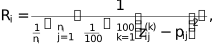
where ni is the number of points along path Ti, pij  is the embedded point corresponding to frame j of path Ti, and
  is the kth point in the ranked embedded points (after excluding 10% of the points with the highest embedding uncertainty) by distance to pij, i.e.

In other words, for each point we found 100 points that were closest to it in the latent space and computed its average squared distance to these 100 points, which tends to be low if the density around the embedded point is high. This was then averaged among all the points along the paths. We took its inverse to obtain the final representativity score. We also computed representativity scores after removing the first and last quarter of the paths to focus on the middle part and found it did not affect our main results and conclusion (see Table 1). In addition, to generate a weighted mean over all the representative trajectories [see Figs. 4(b) and S2(b)], we assigned to each embedded point pij the weight value
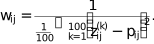
Supporting information
Video S1A. DOI: https://doi.org/10.1107/S2052252526004513/hi5657sup1.mov
Video S1B. DOI: https://doi.org/10.1107/S2052252526004513/hi5657sup2.mov
Video S2. DOI: https://doi.org/10.1107/S2052252526004513/hi5657sup3.mov
Supporting information. DOI: https://doi.org/10.1107/S2052252526004513/hi5657sup4.pdf
Acknowledgements
We thank Dr Amit Singer (Princeton University) for early feedback and discussion on the project, and also thank Dr Wenjun Zhao (Wake Forest University) and Dr Forest Kobayashi (University of Utah) for their assistance on providing preliminary results. We further thank Linu Lawrence from Dr Sriram Subramaniam's team (University of British Columbia) for high-performance computing (HPC) and information technology support throughout the study. This research was supported by an award from the Canada Biomedical Research Fund (CBRF) for the PROGENITER pandemic preparedness project, and by awards to SS from a Canada Excellence Research Chair Award and the VGH Foundation. GW is supported by an NSERC Canada Graduate Scholarship–Doctorate, and was supported by an NSERC Michael Smith Foreign Study Supplement for this research while visiting the Flatiron Institute.
Conflict of interest
We declare that there are no conflicts of interest.
References
 Barnes, C. O., West, A. P., Huey-Tubman, K. E., Hoffmann, M. A. G., Sharaf, N. G., Hoffman, P. R., Koranda, N., Gristick, H. B., Gaebler, C., Muecksch, F., Lorenzi, J. C. C., Finkin, S., Hägglöf, T., Hurley, A., Millard, K. G., Weisblum, Y., Schmidt, F., Hatziioannou, T., Bieniasz, P. D., Caskey, M., Robbiani, D. F., Nussenzweig, M. C. & Bjorkman, P. J. (2020). Cell 182, 828–842. CrossRef CAS PubMed Google Scholar
Barton, M. I., MacGowan, S. A., Kutuzov, M. A., Dushek, O., Barton, G. J. & van der Merwe, P. A. (2021). eLife 10, e70658. CrossRef PubMed Google Scholar
Benton, D. J., Wrobel, A. G., Xu, P., Roustan, C., Martin, S. R., Rosenthal, P. B., Skehel, J. J. & Gamblin, S. J. (2020). Nature 588, 327–330. CrossRef CAS PubMed Google Scholar
Bonneel, N., Rabin, J., Peyré, G. & Pfister, H. (2015). J. Math. Imaging Vis. 51, 22–45. CrossRef Google Scholar
Cascella, M., Rajnik, M., Aleem, A., Dulebohn, S. C. & Di Napoli, R. (2025). StatPearls. Treasure Island (FL): StatPearls Publishing. Google Scholar
Cerutti, G., Guo, Y., Liu, L., Liu, L., Zhang, Z., Luo, Y., Huang, Y., Wang, H. H., Ho, D. D., Sheng, Z. & Shapiro, L. (2022). Cell. Rep. 38, 110428. CrossRef PubMed Google Scholar
Chen, M. & Ludtke, S. J. (2021). Nat. Methods 18, 930–936. CrossRef CAS PubMed Google Scholar
Chen, Y., Zhao, X., Zhou, H., Zhu, H., Jiang, S. & Wang, P. (2023). Nat. Rev. Immunol. 23, 189–199. CrossRef CAS PubMed Google Scholar
Cuturi, M. (2013). Adv. Neural Inf. Process. Syst. 26, 2292–2300. Google Scholar
da Costa, C. H. S., de Freitas, C. A. B., Alves, C. N. & Lameira, J. (2022). Sci. Rep. 12, 8540. CrossRef PubMed Google Scholar
Duan, L., Zheng, Q., Zhang, H., Niu, Y., Lou, Y. & Wang, H. (2020). Front. Immunol. 11, 576622. CrossRef PubMed Google Scholar
Edelberg, D. G. & Lederman, R. R. (2023). arXiv, 2303.07487. Google Scholar
Frank, J. & Ourmazd, A. (2016). Methods 100, 61–67. CrossRef CAS PubMed Google Scholar
Gilles, M. A. & Singer, A. (2025). Proc. Natl Acad. Sci. USA 122, e2419140122. Web of Science CrossRef PubMed Google Scholar
Henderson, R., Edwards, R. J., Mansouri, K., Janowska, K., Stalls, V., Gobeil, S. M. C., Kopp, M., Li, D., Parks, R., Hsu, A. L., Borgnia, M. J., Haynes, B. F. & Acharya, P. (2020). Nat. Struct. Mol. Biol. 27, 925–933. CrossRef CAS PubMed Google Scholar
Herreros, D., Perez Mata, C., Sanchez Sorzano, C. O. & Carazo, J. M. (2025). Nat. Methods 22, 2118–2126. CrossRef CAS PubMed Google Scholar
Huang, Y., Yang, C., Xu, X., Xu, W. & Liu, S. (2020). Acta Pharmacol. Sin. 41, 1141–1149. Web of Science CrossRef PubMed Google Scholar
Jeon, M., Raghu, R., Astore, M., Woollard, G., Feathers, R., Kaz, A., Hanson, S. M., Cossio, P. & Zhong, E. D. (2024). arXiv, 2408.05526. Google Scholar
Ke, Z., Oton, J., Qu, K., Cortese, M., Zila, V., McKeane, L., Nakane, T., Zivanov, J., Neufeldt, C. J., Cerikan, B., Lu, J. M., Peukes, J., Xiong, X., Kräusslich, H.-G., Scheres, S. H. W., Bartenschlager, R. & Briggs, J. A. G. (2020). Nature 588, 498–502. CrossRef CAS PubMed Google Scholar
Lan, J., Ge, J., Yu, J., Shan, S., Zhou, H., Fan, S., Zhang, Q., Shi, X., Wang, Q., Zhang, L. & Wang, X. (2020). Nature 581, 215–220. CrossRef CAS PubMed Google Scholar
Lee, M., Major, M. & Hong, H. (2023). Int. J. Mol. Sci. 24, 3774. CrossRef PubMed Google Scholar
Lu, M., Uchil, P. D., Li, W., Zheng, D., Terry, D. S., Gorman, J., Shi, W., Zhang, B., Zhou, T., Ding, S., Gasser, R., Prévost, J., Beaudoin-Bussières, G., Anand, S. P., Laumaea, A., Grover, J. R., Liu, L., Ho, D. D., Mascola, J. R., Finzi, A., Kwong, P. D., Blanchard, S. C. & Mothes, W. (2020). Cell Host Microbe 28, 880–891. CrossRef CAS PubMed Google Scholar
Mannar, D., Saville, J. W., Poloni, C., Zhu, X., Bezeruk, A., Tidey, K., Ahmed, S., Tuttle, K. S., Vahdatihassani, F., Cholak, S., Cook, L., Steiner, T. S. & Subramaniam, S. (2024). Nat. Commun. 15, 1854. CrossRef PubMed Google Scholar
Mannar, D., Saville, J. W., Zhu, X., Srivastava, S. S., Berezuk, A. M., Tuttle, K. S., Marquez, A. C., Sekirov, I. & Subramaniam, S. (2022). Science 375, 760–764. Web of Science CrossRef CAS PubMed Google Scholar
Mannar, D., Saville, J. W., Zhu, X., Srivastava, S. S., Berezuk, A. M., Zhou, S., Tuttle, K. S., Kim, A., Li, W., Dimitrov, D. S. & Subramaniam, S. (2021). Cell. Rep. 37, 110156. Web of Science CrossRef PubMed Google Scholar
Meng, E. C., Goddard, T. D., Pettersen, E. F., Couch, G. S., Pearson, Z. J., Morris, J. H. & Ferrin, T. E. (2023). Protein Sci. 32, e4792. Web of Science CrossRef PubMed Google Scholar
Min, L. & Sun, Q. (2021). Front. Mol. Biosci. 8, 671633. CrossRef PubMed Google Scholar
Nakane, T., Kimanius, D., Lindahl, E. & Scheres, S. H. (2018). eLife 7, e36861. CrossRef PubMed Google Scholar
Parray, H. A., Chiranjivi, A. K., Asthana, S., Yadav, N., Shrivastava, T., Mani, S., Sharma, C., Vishwakarma, P., Das, S., Pindari, K., Sinha, S., Samal, S., Ahmed, S. & Kumar, R. (2020). J. Biol. Chem. 295, 12814–12821. CrossRef CAS PubMed Google Scholar
Punjani, A. & Fleet, D. J. (2021). J. Struct. Biol. 213, 107702. Web of Science CrossRef PubMed Google Scholar
Punjani, A. & Fleet, D. J. (2023). Nat. Methods 20, 860–870. Web of Science CrossRef CAS PubMed Google Scholar
Punjani, A., Rubinstein, J. L., Fleet, D. J. & Brubaker, M. A. (2017). Nat. Methods 14, 290–296. Web of Science CrossRef CAS PubMed Google Scholar
Raghu, R., Levy, A., Wetzstein, G. & Zhong, E. D. (2025). arXiv, 2506.04490. Google Scholar
Salamanna, F., Maglio, M., Landini, M. P. & Fini, M. (2020). Front. Med. 7, 594495. CrossRef Google Scholar
Saville, J. W., Mannar, D., Zhu, X., Srivastava, S. S., Berezuk, A. M., Demers, J.-P., Zhou, S., Tuttle, K. S., Sekirov, I., Kim, A., Li, W., Dimitrov, D. S. & Subramaniam, S. (2022). Nat. Commun. 13, 742. CrossRef PubMed Google Scholar
Stalls, V., Lindenberger, J., Gobeil, S. M.-C., Henderson, R., Parks, R., Barr, M., Deyton, M., Martin, M., Janowska, K., Huang, X., May, A., Speakman, M., Beaudoin, E., Kraft, B., Lu, X., Edwards, R. J., Eaton, A., Montefiori, D. C., Williams, W. B., Saunders, K. O., Wiehe, K., Haynes, B. F. & Acharya, P. (2022). Cell. Rep. 39, 111009. CrossRef PubMed Google Scholar
Tajmir Riahi, A., Zhang, C., Condon, A., Chen, J. & Dao Duc, K. (2025). PRX Life 3, 023003. Google Scholar
Tang, C., Lupala, C. S., Wang, D., Li, X., Tang, L.-H. & Li, X. (2025). Int. J. Mol. Sci. 26, 3776. CrossRef PubMed Google Scholar
Valério, M., Borges-Araújo, L., Melo, M. N., Lousa, D. & Soares, C. M. (2022). Front. Med. Technol. 4, 1009451. PubMed Google Scholar
Vuillemot, R., Miyashita, O., Tama, F., Rouiller, I. & Jonic, S. (2022). J. Mol. Biol. 434, 167483. Web of Science CrossRef PubMed Google Scholar
Walls, A. C., Park, Y.-J., Tortorici, M. A., Wall, A., McGuire, A. T. & Veesler, D. (2020). Cell 181, 281–292.e6. CrossRef CAS PubMed Google Scholar
Wec, A. Z., Wrapp, D., Herbert, A. S., Maurer, D. P., Haslwanter, D., Sakharkar, M., Jangra, R. K., Dieterle, M. E., Lilov, A., Huang, D., Tse, L. V., Johnson, N. V., Hsieh, C.-L., Wang, N., Nett, J. H., Champney, E., Burnina, I., Brown, M., Lin, S., Sinclair, M., Johnson, C., Pudi, S., Bortz, R., Wirchnianski, A. S., Laudermilch, E., Florez, C., Fels, J. M., O'Brien, C. M., Graham, B. S., Nemazee, D., Burton, D. R., Baric, R. S., Voss, J. E., Chandran, K., Dye, J. M., McLellan, J. S. & Walker, L. M. (2020). Science 369, 731–736. CrossRef CAS PubMed Google Scholar
World Health Organization (2025). Number of COVID-19 deaths reported to WHO. https://data.who.int/dashboards/covid19/deaths. Google Scholar
Wu, F., Zhao, S., Yu, B., Chen, Y.-M., Wang, W., Song, Z.-G., Hu, Y., Tao, Z.-W., Tian, J.-H., Pei, Y.-Y., Yuan, M.-L., Zhang, Y.-L., Dai, F.-H., Liu, Y., Wang, Q.-M., Zheng, J.-J., Xu, L., Holmes, E. C. & Zhang, Y.-Z. (2020). Nature 579, 265–269. CrossRef CAS PubMed Google Scholar
Xue, S., Han, Y., Wu, F. & Wang, Q. (2024). Protein Cell 15, 403–418. CrossRef CAS PubMed Google Scholar
Yuan, M., Liu, H., Wu, N. C. & Wilson, I. A. (2021). Biochem. Biophys. Res. Commun. 538, 192–203. Web of Science CrossRef CAS PubMed Google Scholar
Zhang, Y., Krieger, J., Mikulska-Ruminska, K., Kaynak, B., Sorzano, C. O. S., Carazo, J.-M., Xing, J. & Bahar, I. (2021). Prog. Biophys. Mol. Biol. 160, 104–120. CrossRef CAS PubMed Google Scholar
Zhao, Z., Zhou, J., Tian, M., Huang, M., Liu, S., Xie, Y., Han, P., Bai, C., Han, P., Zheng, A., Fu, L., Gao, Y., Peng, Q., Li, Y., Chai, Y., Zhang, Z., Zhao, X., Song, H., Qi, J., Wang, Q., Wang, P. & Gao, G. F. (2022). Nat. Commun. 13, 4958. CrossRef PubMed Google Scholar
Zhong, E. D., Bepler, T., Berger, B. & Davis, J. H. (2021). Nat. Methods 18, 176–185. Web of Science CrossRef CAS PubMed Google Scholar
Zhu, X., Mannar, D., Srivastava, S. S., Berezuk, A. M., Demers, J.-P., Saville, J. W., Leopold, K., Li, W., Dimitrov, D. S., Tuttle, K. S., Zhou, S., Chittori, S. & Subramaniam, S. (2021). PLOS Biol. 19, e3001237. Google Scholar
This is an open-access article distributed under the terms of the Creative Commons Attribution (CC-BY) Licence, which permits unrestricted use, distribution, and reproduction in any medium, provided the original authors and source are cited.
access


