

 journal menu


research papers
 | JOURNAL OF APPLIED CRYSTALLOGRAPHY |
 access
Spin-contrast-variation small-angle neutron scattering study of fully and partially swollen silica-filled rubber

aInstitute of Quantum Beam Science, Ibaraki University, Ibaraki, 316-8511, Japan, bNeutron Industrial Application Promotion Center, Comprehensive Research Organization for Science and Society (CROSS), Ibaraki, 319-1106, Japan, cResearch Center for Advanced Technology & Innovation, Research & Development HQ, Sumitomo Rubber Industries Ltd, Kobe, 651-0072, Japan, dMaterials Sciences Research Center, Japan Atomic Energy Agency, Ibaraki, 319-1195, Japan, eJ-PARC Center, Japan Atomic Energy Agency, Ibaraki, 319-1195, Japan, and fNeutron Science and Technology Center, Comprehensive Research Organization for Science and Society (CROSS), Ibaraki, 319-1106, Japan
*Correspondence e-mail: [email protected]
We have elucidated the polymer adsorption layer structure in filler–rubber systems by conducting spin-contrast-variation small-angle neutron scattering (SANS) on partially and fully swollen filler–rubber samples with and without a silane coupling agent. In spin-contrast-variation SANS, dynamic nuclear polarization (DNP) was used to polarize protons and change their scattering length with respect to polarized neutron beams significantly. SANS measurements were performed in dynamically polarized states using a DNP cryostat (1.2 K and 3.35 T). From SANS profiles obtained at various proton spin polarizations, partial scattering functions (PSFs) for each component were separated by regarding each sample as a three-component system composed of silica, polymer and deuterated toluene. To analyze the obtained PSFs in detail, we built a structure model for the silica aggregates and the surrounding polymer adsorption layer. Numerical calculation based on this model successfully reproduced the experimentally obtained PSFs, providing the structural parameters of the silica aggregates and polymer adsorption layer. The results showed a considerable difference in structural parameters between the partially and fully swollen states. For the sample with the silane coupling agent, the thickness of the polymer adsorption layer decreased as the solvent fraction increased. The difference in polymer between the polymer adsorption layer and the outside matrix was very small in less swollen states but significant in the fully swollen state. Furthermore, the scattering contribution of the polymer chains in the solvent was accurately separated via contrast variation. In the swollen silica-filled rubber without the silane coupling agent, the size of the polymer-dense regions was almost constant, regardless of the swelling ratio. By contrast, in the swollen silica-filled rubber with the silane coupling agent, the size of the polymer-dense regions significantly increased by a factor of 2 with an increase in the swelling ratio.
Keywords: small-angle neutron scattering; SANS; contrast variation; dynamic nuclear polarization; silica-filled rubber; bound rubber; swelling; polymer adsorption layer.
1. Introduction
Filler–rubber systems are widely used in industrial products such as pneumatic tires, conveyer belts, shock absorbers and rubber seals. Filler particles, such as carbon and silica particles, are added to rubber to improve tear and wear resistance. A polymer adsorption layer forms around these filler particles and plays an important role in boosting mechanical performance. Due to its industrial value, the polymer adsorption layer has been investigated using various approaches, such as small-angle X-ray scattering and small-angle neutron scattering (SANS) (Baeza et al., 2016 ; Botti et al., 2006; Genix & Oberdisse, 2015; Genix et al., 2019; Iwasaki et al., 2025; Jimenez et al., 2019; Jouault et al., 2010; Liu et al., 2017; Mashita et al., 2013; Mashita et al., 2016; Miyazaki et al., 2007; Morfin et al., 2006; Nakanishi et al., 2021; Nakanishi et al., 2024; Presto et al., 2020; Shui et al., 2021a; Shui et al., 2021b; Staropoli et al., 2019; Staropoli et al., 2020; Takenaka et al., 2009; Takenaka et al., 2012; Watanabe et al., 2023; Yamaguchi et al., 2017), neutron reflectivity (Hori et al., 2017; Kumada et al., 2024; Shimokita et al., 2024; Shimomura et al., 2016), neutron spin echo (Jiang et al., 2015; Koga et al., 2018; Salatto et al., 2021), mechanical analysis (Baeza et al., 2014; Mujtaba et al., 2014), nuclear magnetic resonance (NMR) (Chassé et al., 2013; Kishimoto et al., 2023; Valentín et al., 2010), and atomic force microscopy (Ito et al., 2022; Morozov et al., 2012; Ueda et al., 2019). Many researchers have combined several approaches.
Contrast-variation SANS has been successfully performed on filler–rubber systems swollen with deuterated solvents (d-solvents) (Takenaka et al., 2009; Takenaka et al., 2012; Liu et al., 2017; Nakanishi et al., 2024). Polymer confined to the filler surface absorbs less solvent than the surrounding free polymer. This solvent distribution difference can cause a contrast between the polymer adsorption layer and the surrounding free polymer. Researchers have decomposed SANS profiles at various contrasts into partial scattering functions (PSFs) to evaluate the adsorption layer thickness and the local polymer fraction in the polymer adsorption layer and the surrounding matrix. However, such studies have only been performed on systems in the fully swollen state, not those in the partially swollen state. Filler–rubber systems with different swelling ratios should be investigated for a more detailed understanding of the polymer adsorption layer. The existence of a more complex internal structure of the polymer adsorption layer is being debated. For example, Shui et al. (2021a, 2021b) and Huang et al. (2021) proposed a double-layer model.
Spin-contrast-variation SANS combined with d-solvent addition is expected to be an ideal solution for studying partially swollen filler–rubber systems. Deuterium substitution, which utilizes the neutron scattering length difference between a proton and a deuteron, is widely used. As protons and neutrons have spin, the scattering length of a proton (bH) with respect to a fully polarized neutron significantly depends on the proton spin polarization (PH) (Sears, 1992):

where

Nup and Ndown mean the number of up and down proton spins, respectively. Scattering lengths can vary significantly (Fig. 1), which can be utilized for contrast variation in SANS. After the pioneering work of Stuhrmann et al. (1986), we successfully performed spin-contrast-variation SANS for filler–rubber systems (Noda et al., 2013, Noda et al., 2016).
![[Figure 1]](ge5181fig1thm.gif) | Figure 1 Neutron scattering lengths of protons and deuterons as a function of proton spin polarization (PH) in the case of fully polarized protons (PN = 1). |
The use of the conventional approach, namely, control of the solvent H/D ratio, to partially swollen filler–rubber systems is hindered by the following difficulties. (i) The limited amount of solvent in less swollen samples narrows the contrast-variation range. (ii) Samples with solvents with different H/D ratios must be prepared carefully, as fluctuations in the degree of swelling across samples impair the accuracy of decomposed PSFs. (iii) The background tends to increase, as protonated solvents are needed to expand the contrast-variation range.
Spin-contrast-variation SANS is expected to solve these difficulties. (i) The scattering lengths of polymer chain protons can be controlled in spin-contrast-variation SANS, so contrast can be changed significantly, even for less swollen samples. Spin polarization can diffuse through flip-flops between neighboring proton spins. This process differs from the addition of d-solvents, which cannot modify the scattering length of polymer chain protons. (ii) Only one sample is necessary because a set of SANS profiles with different contrasts can be obtained by controlling PH. Fluctuations in swelling degree across samples is not a problem. (iii) Contrast can be controlled through PH, eliminating the need for a protonated solvent. This lowers the incoherent scattering background. In summary, contrast creation via d-solvent introduction and contrast variation via proton spin polarization can be combined to study partially swollen filler–rubber systems effectively.
D-solvent swelling can be used to visualize not only the polymer adsorption layer but also the polymer chain distribution. It has been used to evaluate polymer inhomogeneity and polymer network structure sizes in gel systems. Using this approach, Ikeda et al. (2009) studied sulfur-cross-linked rubber with different zinc oxide concentrations. Karino et al. (2007) and Suzuki et al. (2010) studied peroxide-cross-linked natural rubber containing protein aggregates, finding significant low-q scattering. They performed a contrast-variation study while controlling the solvent H/D ratio and isolated the scattering contribution of the solvent polymer chains from the contribution of protein aggregates. For swollen silica-filled rubber samples, the target material of the current study, the high-q scattering of the structure (mesh size) can be evaluated easily because the scattering contribution of silica particles is small at high q. However, the low-q scattering contribution of polymer distribution inhomogeneity is difficult to evaluate because of its overlap with the silica particle contribution. In the present study, we attempt to use contrast variation to separate the scattering contribution of polymer chains in swollen silica-filled rubber samples. Specifically, we applied spin-contrast-variation SANS to partially and fully swollen silica-filled rubber samples, focusing on the effect of a silane coupling agent.
2. Experimental
2.1. Sample preparation
We studied the polymer adsorption layer around silica particles by preparing two samples without and with a silane coupling agent [Si266; Fig. 2(c)], labeled RN and RCA, respectively. Table 1 shows the sample composition. Both RN and RCA contain 5 vol.% silica particles in a styrene–butadiene [SBR; Fig. 2(b)]. In addition, sulfur, N-tert-butyl-2-benzothiazole sulfenamide [TBBS; Fig. 2(d)] and 1,3-diphenylguanidine [DPG; Fig. 2(e)] were added for vulcanization. All ingredients were mixed in a milling machine, and the resulting mixture was pressed into molds and heated at 170°C for 12 min. The thickness of the rubber sheet before swelling was approximately 0.6 mm for RN and about 0.9 mm for RCA.
| ||||||||||||||||||||||||||||||
![[Figure 2]](ge5181fig2thm.gif) | Figure 2 Molecular structure formulas of TEMPO (a), SBR (b), silane coupling agent Si266 (c), TBBS (d) and DPG (e). In (c), the average sulfur chain length (x) is 2.15. |
Samples in dynamic nuclear polarization (DNP) experiments should include unpaired electrons. The stable 2,2,6,6-tetramethylpiperidin-1-oxyl [TEMPO; Fig. 2(a)] can be used conveniently as an electron spin source (Bunyatova, 2004). In our previous study on filler–rubber systems without solvents, we used vapor sorption, spontaneously diffusing TEMPO vapor into rubber (Noda et al., 2016). TEMPO doping was easily completed by adding TEMPO to the solvent for swelling. The optimal TEMPO concentration is 30 mM for DNP experiments at 3.35 T (Noda et al., 2016), which is much lower than the solvent amount needed for swelling. In addition, the O2 concentration in a sample should be minimized to obtain a high |PH| in DNP experiments. O2 accelerates proton spin relaxation. Considering these issues, we devised the current experimental procedure as follows.
For the swelling of rubber samples, we used deuterated toluene (d-toluene, 99 at.% D; Sigma–Aldrich). To prepare the partially swollen samples, we placed a cut rubber sheet (10.5 × 10.5 mm) of RN or RCA in an aluminium metallized film package. Then, a TEMPO/d-toluene solution (73–109 mM) was added into the package using a microsyringe. By adjusting the solution volume (0.03–0.10 ml), we obtained swollen samples with Qswell ≃ 1.5 for RN1 and RCA1 and Qswell ≃ 2 for RN2 and RCA2, where Qswell is the ratio of the swollen rubber volume to the initial one. Then, we placed an oxygen absorber (A500-HS, AS ONE) in the package and sealed it using a heat sealer. The package containing the swollen sample was kept at room temperature for 12 h before the SANS experiment. The Qswell values in the saturated state were 5.51 and 4.76 for RN and RCA, respectively.
To prepare the fully swollen samples (RN3 and RCA3), we placed a cut rubber sheet (7 × 7 mm) of RN or RCA in a glass bottle with a sealing cap. Then, an excess amount (approximately 0.25 ml) of a TEMPO/d-toluene solution (48 mM), compared with the cut rubber sheet, was added to the bottle. We placed an oxygen absorber in the package while avoiding its contact with the solution. The glass bottle containing the fully swollen sample was kept at room temperature for 12 h before the SANS experiment.
According to electron spin resonance measurements, the TEMPO concentrations of RN1, RN2, RCA1 and RCA2 were 34, 28, 31 and 37 mM, respectively. They were close enough to the optimal TEMPO concentration (30 mM) for DNP experiments at 3.35 T. Loss of TEMPO during swelling was insignificant (approximately 15% at most). Given the confirmed reliability of this procedure, the TEMPO concentration evaluation of RN3 and RCA3 was omitted. For SANS, we prepared samples in different packages in a similar way.
A sample obtained from each package was immediately placed in a sample-holding unit at the end of the sample stick of a DNP cryostat (Section 2.2). Then, the unit was inserted into the sample chamber of the DNP cryostat, which was filled with liquid He.
2.2. Dynamic nuclear polarization
At thermal equilibrium, proton spins are polarized slightly (PH = 0.30%), even at 1.2 K and 3.35 T. However, under the same conditions, electron spins are almost fully polarized (95%). In DNP, microwave irradiation stimulates polarization transfer from electron to proton spins to achieve a high PH (Abragam & Goldman, 1978). Here, we used a DNP cryostat (Kumada et al., 2009) designed for SANS, which had split-type superconducting magnet coils. Between the coils is a sample chamber, which is filled with liquid 4He, and its temperature can be reduced to 1.2 K by evacuating liquid 4He. The magnetic field is parallel to the direction of the neutron beam, which passes along the central axis of the magnet coils. Thin aluminium plates form windows through which the neutron beam passes, causing a slight SANS background.
Each sample was placed in the sample-holding unit at the end of the sample stick of the DNP cryostat. The sample-holding unit had a three-turn NMR coil for PH evaluation. The sample sheet (14 × 14 × ∼1 mm) was inserted in this NMR coil. The NMR signal was proportional to PH, so we could simultaneously measure NMR during the SANS experiment. The NMR coil was made of a 0.1 mm-thick aluminium sheet and caused a slight SANS background. When protons are polarized via DNP, their NMR signal becomes significant. Then, PH can be evaluated accurately in relative terms. To obtain absolute PH values, we needed to calibrate PH using thermal equilibrium NMR signals (PH = 0.082% at 4.2 K and 3.35 T, for example). However, measurement of this NMR signal was not completed because of the low sensitivity of our NMR equipment and limited SANS beam time. Nonetheless, neutron transmission depends on PH. Therefore, we calibrated PH through neutron transmission (Section 2.3).
Microwave radiation for polarization transfer from electron to proton spins was generated using a Gunn oscillator (94 GHz) placed on the top plate of the DNP cryostat, which irradiated the sample through a stainless-steel pipe with a length of 1 m and an inside diameter of 6 mm. PH was controlled through microwave frequency tuning, as PH quickly responds to changes in microwave conditions. The time constant for this response was approximately 3 min.
2.3. Small-angle neutron scattering
SANS experiments were performed using TAIKAN (BL15) (Shinohara et al., 2009; Shinohara et al., 2009; Takata et al., 2015) at the Material and Life Science Experimental Facility (MLF) in the Japan Proton Accelerator Research Complex (J-PARC). The DNP cryostat was placed on the TAIKAN sample stage. The device allocation is described in our previous article (Noda et al., 2016). Because of the DNP cryostat window structure, the available scattering angle 2θ was limited (2θ < 15°) and the detectors could not be fully utilized. A polarized neutron beam was provided by a magnetic supermirror polarizer composed of an Fe/Si multilayer. Since the neutron polarization decreases for short-wavelength neutrons (λ < 4 Å), we employed SANS data with a limited wavelength range (4 < λ < 7.6 Å), where the magnitude of neutron polarization was close enough to 1, resulting in a q range of 0.005 < q < 0.3 Å−1 as in our previous study (Noda et al., 2016). SANS at PH = 0% does not depend on neutron polarization. We will employ the SANS data at PH = 0% for the full wavelength range of neutrons (1 < λ < 7.6 Å) to discuss the high-q profile (q < 1 Å−1) later in Section 3.5.
As TAIKAN simultaneously measures SANS and neutron transmission, we used the observed neutron transmission to calibrate PH. The microscopic total cross sections for H, D, C, N, O, S and Si are σtot,H = (81.99 − 66.97PH) × 10−24 cm2, σtot,D = (7.63 + 3.76PD) × 10−24 cm2, σtot,C = 5.55 × 10⁻²⁴ cm2, σtot,N = 13.41 × 10⁻²⁴ cm2, σtot,O = 4.23 × 10⁻²⁴ cm2, σtot,S = 1.56 × 10⁻²⁴ cm2 and σtot,Si = 2.34 × 10⁻²⁴ cm2, respectively (Sears, 1992). Here, PD is deuteron spin polarization. The macroscopic total (Σtot) of each ingredient and each sample was calculated using the known chemical compositions (Tables 2 and 3).
| ||||||||||||||||||||||||||||||||||||||||||
 )
) )
)
| ||||||||||||||||||||||||||||||||||||||||||
Protons and deuterons have common spin temperatures, even in dynamically polarized states (de Boer et al., 1974). In this case, PD is related to PH by

where EZ,D and EZ,H are the Zeeman splitting energies of protons and deuterons, respectively, and EZ,D/EZ,H is 0.1535. Under our experimental conditions (|PH| < 30%), tanh−1(PH) could be approximately regarded as PH. Hence, we used the approximate equation

Neutron transmission TN was calculated as

where ts is sample thickness. We calibrated PH by comparing the calculated and experimental TN. In Fig. 3, the filled black circles indicate the experimentally obtained TN as a function of PH after calibration, where TN increased with PH. The less swollen samples had steeper slopes than the fully swollen samples, as the latter had a higher proton concentration.
![[Figure 3]](ge5181fig3thm.gif) | Figure 3 Neutron transmission as a function of PH. The top and bottom rows present the results for the rubber samples without and with the silane coupling agent, respectively. In each panel, the filled black circles indicate the experimental results, and the dased lines indicate the numerical calculation results. |
3. Results and discussion
3.1. Small-angle neutron scattering results
Fig. 4 shows SANS profiles observed at various PH for the silica-filled swollen rubber samples. The horizontal axis is the magnitude of the scattering vector q [= (4π/λ) sin θ]. In each panel, the filled gray symbols indicate SANS profiles before DNP. After DNP, the proton spins are polarized by up to several tens in percentage. The red and blue symbols indicate SANS profiles in positively and negatively polarized states, respectively. A significant profile change is thus successfully demonstrated.
![[Figure 4]](ge5181fig4thm.gif) | Figure 4 SANS profiles observed at various PH. The horizontal axis shows the magnitude of the scattering vector q [= (4π/λ) sin θ, where λ is the neutron wavelength and 2θ is the scattering angle]. The top and bottom rows present the results for the rubber samples without and with the silane coupling agent, respectively. In each profile, the intensity contribution is subtracted. |
The profiles in Fig. 4 exclude contributions. These contributions are evaluated as follows. The microscopic cross sections for H and D are σinc,H = 26.64(3 − 2 −
−  ) × 10−24 cm2 and σinc,D = 1.02(2 −
  −
−  ) × 10−24 cm2, respectively (Sears, 1992). Contributions from other atoms are negligible. As PH increases, decreases monotonically. The macroscopic (Σinc) of each ingredient and each sample is calculated using the known chemical compositions (Tables 2 and 3). From the observed SANS profiles, we subtract the incoherent scattering intensity Iinc, which is calculated considering multiple scattering (Shibayama et al., 2005) as

For the less swollen samples [Figs. 4(a), 4(b), 4(d) and 4(e)], a prominent scattering contribution is found at low q (q < 0.03 Å−1), which is probably due to silica aggregates. The low-q contribution exhibits quadratic PH dependence, with its minimum being at around PH = 0%. A less steep contribution is found at high q (q > 0.03 Å−1), which is due to the polymer chains in the d-solvent. The high-q contribution decreases monotonically as PH increases. For the fully swollen samples [Figs. 4(c) and 4(f)], the low-q contribution does not change significantly, whereas the high-q contribution decreases monotonically as PH increases.
The scattering intensity is proportional to the contrast factor, which is the squared difference in scattering length density (SLD) between relevant domains. The coherent scattering lengths for H, D, C, N, O, S and Si are bH = (−0.374 + 1.456PH) × 10−12 cm, bD = (0.667 + 0.27PD) × 10−12 cm, bC = 0.665 × 10⁻¹² cm, bN = 0.936 × 10⁻¹² cm, bO = 0.580 × 10⁻¹² cm, bS = 0.285 × 10⁻¹² cm and bSi = 0.415 × 10⁻¹² cm, respectively (Sears, 1992). The SLD of each ingredient in the swollen filler–rubber samples is calculated using their known chemical compositions (Table 2). The swollen silica-filled rubber is a three-component system composed of silica, polymer and d-toluene. The SLD of each component (ρS for silica, ρP for polymer, ρT for d-toluene) is



To calculate ρP, we considered only the contributions of the SBR and sulfur. We ignored the contributions of the minor components (the silane coupling agent, accelerator and TEMPO), whose PH dependence is close to that of the SBR. Fig. 5 shows the calculated SLDs as a function of PH. Before swelling, ρS and ρP match at PH = 30%.
![[Figure 5]](ge5181fig5thm.gif) | Figure 5 Neutron SLDs of three components as a function of PH. The blue, green and orange solid lines represent neutron SLDs of silica (ρS), polymer (ρP) and d-toluene (ρT), respectively. The gray and black dashed lines represent neutron SLDs calculated for a homogeneous mixture of polymer and d-toluene (ρP+T) at Qswell = 2 and Qswell = 5, respectively. |
In Fig. 5, the gray and black dashed lines indicate SLDs for a homogeneous mixture of polymer and d-toluene (ρP+T) at Qswell of 2 and 5, respectively. At Qswell = 2, the calculated ρP+T and ρS match at around PH = 0%. This explains the observed results for the less swollen samples. The minimum intensity of the low-q contribution is at around PH = 0%. At Qswell = 5, the calculated ρP+T and ρS match at around PH = −75%, which exceeds our experimental PH range. This explains the observed results for the fully swollen samples, in which the low-q contribution does not change significantly with PH.
The scattering contribution of the polymer chains in d-toluene is proportional to the contrast factor (ρP − ρT)2. ρP and ρT match at approximately PH = 62%, which is out of our experimental PH range. This explains the observed high-q scattering contribution, which monotonically decreases as PH increases.
3.2. Partial scattering function
The swollen silica-filled rubber is a three-component system composed of silica, polymer and d-toluene. The spatial distribution function of the SLD is

where φS(r), φP(r) and φT(r) are the spatial distribution functions of silica, polymer and d-toluene, respectively. Then, the scattering intensity, I(q), is calculated as
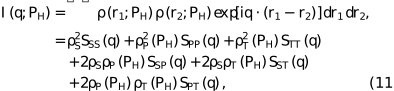
where Sij(q) is the PSF between components i and j,

Vs is sample volume. From the above definition, Sij(q) = Sji(q). The observed SANS profiles are decomposed into PSFs following Endo (2006) and Endo et al. (2008) as follows. Through the incompressibility theorem, the following equation should be satisfied:

Given the definition of PSFs, the following equations are obtained:



Eliminating the PSFs related to the d-toluene component results in the following equation:

SANS profiles with various PH are obtained via contrast-variation experiments. The PSFs are automatically obtained through the procedure described in Appendix A. Consequently, SSS(q), SPP(q) and STT(q) [= SSS(q) + SPP(q) + 2SSP(q)] are obtained (Fig. 6). SSS(q) exhibits a moderate slope (∼q−2) at low q (q < 0.03 Å−1), whereas a steep slope (∼q−4) is identified at high q (q > 0.03 Å−1). The low-q slope (∼q−2) indicates aggregate formation by silica primary particles. The obtained SSS(q) profiles are similar for all samples.
![[Figure 6]](ge5181fig6thm.gif) | Figure 6 The obtained partial scattering functions. The top and bottom rows present the results for the rubber samples without and with the silane coupling agent, respectively. In each panel, the blue squares, green circles and orange diamonds indicate the experimentally obtained SSS(q), SPP(q) and STT(q), respectively. The SSS(q), SPP(q) − SG(q) and STT(q) − SG(q) profiles numerically calculated from the sphere collection model are shown by the dotted-line curves. |
For the less swollen samples (RN1, RN2, RCA1 and RCA2), SPP(q) and STT(q) exhibit similar q dependence with SSS(q) at low q. This is attributed to the Babinet principle as follows. We assume that the polymer and d-toluene volume fractions are φhomo and (1 − φhomo), respectively, and that they mix homogeneously. Then, we obtain φP(r) = φhomo[1 − φS(r)] and φT(r) = (1 − φhomo)[1−φS(r)]. Hence, SPP(q) =  SSS(q) and STT(q) = (1 − φhomo)2SSS(q).
According to the profiles of RN2, RCA1 and RCA2, the low-q slope of STT(q) is slightly steeper than that of SSS(q), whereas that of SPP(q) is slightly less steep than that of SSS(q). This indicates deviation from the assumed homogeneous distribution of the polymer and d-toluene in the matrix and is attributed to the formation of a polymer adsorption layer (Section 3.3).
Unlike SSS(q), SPP(q) and STT(q) indicate similar significant scattering contributions at high q. At the length scale of this high-q region, the spatial distribution of the polymer and d-toluene components is in an inverse relationship [φP(r) = 1 − φT(r)]. Hence, the Babinet principle explains the similarity between SPP(q) and STT(q) at high q.
For the fully swollen samples (RN3 and RCA3), the low-q profile of STT(q) increases, approaching that of SSS(q). By contrast, SPP(q) decreases. This is reasonably understood through the increase in the d-toluene volume fraction and the decrease in the polymer volume fraction outside the silica. The SSS(q) and STT(q) profiles of RN3 are similar at low q, whereas SSS(q) and STT(q) of RCA3 differ considerably at low q. This is attributed to the formation of a polymer adsorption layer (Section 3.3).
Compared with the less swollen samples, the fully swollen ones show greater PSF fluctuations. This can be understood by considering the PH dependence of the SLD. In the less swollen state (Qswell = 2), ρS and ρP+T match at around PH = 0 (Fig. 5). Hence, the scattering intensity significantly changes through its minimum. In the fully swollen state (Qswell = 5), ρS and ρP+T match at approximately PH = −70%, which is beyond our achievable range (|PH| < 30%). Therefore, the scattering intensity changes insignificantly in relative terms. As for the fully swollen state, additional SANS measurements near the matching point should provide PSFs with fewer fluctuations. For this purpose, SANS measurement at high |PH| values is beneficial. This can be achieved using a recently developed high-PH-performance DNP instrument (1.2 K, 6.7 T) designed for BL20 iMATERIA (Noda et al., 2020).
3.3. Partial scattering function ratio
The previous section discusses the decomposed PSFs, focusing on low-q behavior. For RN1, SPP(q), STT(q) and SSS(q) exhibit common q dependence at low q. Therefore, the polymer and d-toluene are homogeneously mixed in the matrix. The different q dependence of SSS(q), SPP(q) and STT(q) of RN2, RCA1, RCA2 and RCA3 at low q suggests the formation of a polymer adsorption layer. This section focuses on the ratio between PSFs as a useful indicator.
The microscopic view of swollen silica-filled rubber in Fig. 7 can be divided into three regions: the silica aggregate (α), polymer adsorption layer (β) and matrix (γ). For these three regions, we define spatial distribution functions φα(r), φβ(r) and φγ(r), whose value is 1 within the corresponding region and 0 otherwise. If the polymer volume fraction is φL in region β and φM in region γ, the spatial distribution functions φS(r), φP(r) and φT(r) are



Hence, for the present three-component system, the PSFs are calculated as






Here Δφ is the difference in polymer (= φL − φM). n is the of the aggregate.  is the form factor of region α.
  is the form factor of region α+β. 〈Fα(q)Fα+β(q)〉 is a cross term between regions α and α+β. The angle brackets indicate an ensemble average, accounting for polydispersity in structural parameters. 〈K(q)〉 is a structure factor accounting for the spatial distribution of the aggregate (Appendix B). SG(q) is the scattering intensity due to the polymer chains in the solvent. The form factors and the cross term are defined as



Here, Vs is the sample volume. φα+β(r) is the spatial distribution function of region α+β [= φα(r) + φβ(r)]. SG(q) is the sum of the Debye–Bueche (DB) and Ornstein–Zernike (OZ) functions (Debye & Bueche, 1949; Ornstein & Zernike, 1914),

where LDB is the size of cross-linking density heterogeneity and LOZ is the mesh size of the For a swollen rubber sample without filler particles, the corresponding PSFs  ,
,  and
and  are
are



These contributions are simply incorporated into SPP(q), STT(q) and SPT(q) as in previous studies (e.g. Nakanishi et al., 2024).
![[Figure 7]](ge5181fig7thm.gif) | Figure 7 Schematic diagram of a silica aggregate surrounded by a polymer adsorption layer. The dark gray region (α) is the silica aggregate, the light gray region (β) is the polymer-dense layer, and the white external region (γ) is the matrix. |
We propose the ratio −SSP(q)/SSS(q) as a useful indicator of the formation of the polymer adsorption layer:

Our use of this ratio avoids the effect of 〈K(q)〉 and SG(q), enabling least-squares fitting in a wider q range with fewer adjustable parameters. In equation (34), the second term on the right side, , is an ordinary form factor that decreases according to Porod's law (q−4) at high q. 〈Fα(q)Fα+β(q)〉 is cross term that is a product of oscillation functions with different frequencies. As q increases, the cross term quickly reduces to a negative value. Hence, 〈Fα(q)Fα+β(q)〉 drops faster than at high q. The contribution of the second term diminishes to provide a constant φL.
The meaning of equation (34) is clarified using the following approximate equations based on the Guinier approximation, which are satisfied only at low q:



where 〈Vα〉 and 〈Vα+β〉 are the expected volumes of regions α and α+β, respectively. Rg,α and Rg,α+β are the gyration radii of regions α and α+β, respectively. Applying these to equation (34) yields the approximate equation

−SSP(q)/SSS(q) is expected to show a flat region (= φL) at high q and a depression at low q. This approximate equation provides an opportunity to evaluate Δφ(〈Vα〉/〈Vα+β〉) as the depression depth and ( ) by the q dependence of the depression curve. −SST(q)/SSS(q) can be used for the same purpose. However, the sum of −SSP(q)/SSS(q) and −SST(q)/SSS(q) is 1. Hence, only one of them should be assessed.
Fig. 8 shows the calculated −SSP(q)/SSS(q), with RN1 exhibiting a flat profile [Fig. 8(a)]. This indicates that the polymer and d-toluene are mixed homogeneously outside the silica. RN2 exhibits a slight depression at low q, indicating the formation of the polymer adsorption layer [Fig. 8(b)]. As the d-toluene volume fraction increases, the high-q constant value falls. As for RN3, as the amount of d-toluene increases to full swelling, the polymer fraction falls further [Fig. 8(c)]. No clear depression is identified, partially due to the larger fluctuations compared with those in the case of RN1 and RN2.
![[Figure 8]](ge5181fig8thm.gif) | Figure 8 −SSP(q)/SSS(q) profiles. The top and bottom rows present the results for the rubber samples without and with the silane coupling agent, respectively. In each panel, the unfilled gray circles represent the experimentally obtained results, and the gray solid-line curves represent the profiles numerically calculated from the structure model. Here, the smear effect is considered. The black dashed-line curves indicate the numerical calculation results obtained using the approximate equation (38) . |
As shown in Figs. 8(d) and 8(e), RCA1 and RCA2 exhibit slight depressions at low q. As the d-toluene volume fraction increases, the high-q constant value falls and the low-q depression becomes clearer. As for RCA3, when the d-toluene volume fraction increases to full swelling, a significant low-q depression emerges [Fig. 8(f)]. The validity of the approximate equation (38) is discussed in Section 3.6.
3.4. Numerical calculation based on sphere collection model
In previous contrast-variation studies on swollen filler–rubber systems (Takenaka et al., 2009; Takenaka et al., 2012; Liu et al., 2017), researchers calculated and from decomposed PSFs and then applied the Beaucage unified equation (Beaucage & Schaefer, 1994; Beaucage, 1995; Beaucage, 1996; Beaucage, 2004) to obtain the structural parameters of the filler aggregate and adsorption layer. The Beaucage unified equation is advantageous for investigating filler aggregate systems with multilevel hierarchies. However, this approach does not provide an explicit formula for the cross term 〈Fα(q)Fα+β(q)〉. Therefore, many trials are required to determine the optimal parameter set.
Another traditional approach numerically calculates scattering profiles based on structure models. Nakanishi et al. (2024) developed a structure model that considers the formation of dimers, in which two primary particles contact each other. This approach was effective for their samples, which consisted of large silica particles with a radius of 523 Å. However, our samples, which were composed of silica particles with a radius of 105 Å, were likely to form aggregates composed of more than two primary particles. Hence, we built a structure model considering aggregates formed by numerous primary particles as follows.
In this structure model, silica aggregates are modeled as a collection of spherical particles, and the outer envelope of the polymer adsorption layer is modeled as a large sphere. Although this structure model is designed to reflect actual silica aggregates as much as possible, simplifications are made to reduce calculation difficulty. The structure model is defined by the following rules:
(i) In one aggregate, all primary particles have a common radius (Rp).
(ii) Each particle center is placed at a lattice point of a face-centered cubic lattice. The lattice constant is set to 2 Rp so that particles at neighboring lattice points contact each other.
(iii) Among the possible aggregate configurations formed by Np particles, we use only the `most compact' one, as determined by the following procedure. The most compact configuration has the largest number of particle pairs with the shortest distance (2Rp). If several configurations satisfy this criterion, then the numbers of particle pairs with the second-shortest distance are compared. If several configurations fulfill this requirement, then the numbers of particle pairs with the third-shortest distance are compared, and so on. Through this procedure, we manually determine the most compact configuration up to Np = 19. As expected from these criteria, symmetric configuration is advantageous. We adopt a dumbbell for Np = 2, an equilateral triangle for Np = 3, a regular tetrahedron for Np = 4, a regular octahedron for Np = 6 and a cuboctahedron (including one particle at the center) for Np = 13. Fig. 9 shows schematic diagrams of configurations up to Np = 4. For Np values not mentioned above, less symmetrical configurations are determined manually on the basis of the defined criteria. In the search process, we start from highly symmetrical configurations and then manually add or remove particles one by one.
![[Figure 9]](ge5181fig9thm.gif) | Figure 9 Schematic diagram of the sphere collection model. The particle configuration up to Np = 4 is indicated. |
(iv) The sum region of the silica aggregate and polymer adsorption layer (α+β) is defined as a single large sphere whose center coincides with the aggregate mass center. The radius of this sum region (L) is

where Ragg is the circumsphere radius of the aggregate and tL is the thickness of the polymer adsorption layer. In Fig. 9, the aggregate circumsphere and the outer envelope of the polymer adsorption layer are schematically indicated by the gray solid-line curves and black dashed-line curves, respectively.
(v) To account for aggregate polydispersity, we assume the distribution functions WNp(Np) and WRp(Rp). WNp(Np) is assumed to be a log-normal distribution,

where Np,med is the median value of Np and σNp is the standard deviation of ln(Np). WRp(Rp) is assumed to be a Gaussian distribution:

where Rp,mean is the mean value of Rp and σRp is the standard deviation of Rp.
Thus, the structure model for the silica aggregate and polymer adsorption layer is built. The aggregate configuration is defined in full detail for scattering intensity calculation. However, the adopted configuration is merely a typical one. A practical sample has various configurations that differ from the analyzed one. These slightly different configurations cannot be distinguished, as their subtle difference causes only a slight fluctuation in scattering profile, which is concealed by the effect of polydispersity in practical samples.
For the determined set of Np particle center positions (ci,Np, where i = 1, 2,…, Np), the spatial distribution functions for regions α and α+β are, respectively,


Here cM,Np is the mass center position of an aggregate formed by Np particles, which is calculated as

φsph(r; R) is the spatial distribution of a sphere and defined as

The form factors for φα,Np(r) and φα+β,Np(r) are

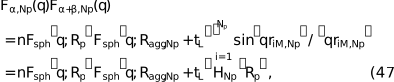

Here n is the of the aggregate [= (fsilica/Qswell)/〈Vα〉, where fsilica is the silica volume fraction]. rij,Np is the distance between particles i and j for the aggregate formed by Np particles (= |ci,Np − cj,Np|). riM,Np is the distance between particle i and the aggregate mass center for the aggregate formed by Np particles (= |ci,Np − cM,Np|). Fsph(q; R) is the form amplitude of a sphere of radius R,

GNp(Rp) in equation (46) is the interference term for the particle pairs in the aggregate. Possible rij,Np values are 2Rp,  Rp,
Rp,  Rp, 4Rp and so on, since the structure model assumes that the particle centers are located in a face-centered cubic lattice with the lattice constant of Rp. For reducing the calculation effort, we rearranged GNp(Rp) as

where Bk,Np is defined for sorting the rij,Np values and Ak,Np is the occurrence number of Bk,Np during the double summation in equation (46). Ak,Np and Bk,Np parameters calculated for the adopted Np particle aggregate configuration are listed in Table 4.
| ||||||||||||||||||||||||||||||||||||||||||||||||||||||||||||||||||||||||||||||||||||||||||||||||||||||||||||||||||||||||||||||||||||||||||||||||||||||||||||||||||||||||||||||||||||||||||||||||||||||||||||||||||||||||||||||||||||||||||||||||||||||||||||||||||||||||||||


HNp(Rp) in equation (47) is the interference term between the particles and mass center of the aggregate. For reducing the calculation effort, we rearranged HNp(Rp) as

where Dk,Np is defined for sorting the riM,Np values and Ck,Np is the occurrence number of Dk,Np during the summation in equation (47). Ck,Np and Dk,Np parameters calculated for the adopted Np particle aggregate configuration are listed in Table 5.
| ||||||||||||||||||||||||||||||||||||||||||||||||||||||||||||||||||||||||||||||||||||||||||||||||||||||||||||||||||||||||||||||||||||||||||||||||||||||||||||||||||||||||||||||||||||||||||||||||||||||||||||||||||||||||||||||||||||||||||||||||||||||||||||||||||||||||||||||||||||||||||||||||||||||||||||||||||||||||||||||||||||||||||||||||||||||||||||||||||||||||||
In addition, we calculate the circumsphere radius Ragg,Np of the adopted Np particle aggregate configuration, and the obtained Ragg,Np values are listed in Table 6. In addition, the squared gyration radius  is calculated for the adopted Np particle aggregate configuration:

The obtained values are listed in Table 6.
| |||||||||||||||||||||||||||||||||||||||||||||||||||||||||||||||||

We account for Np and Rp polydispersity using the equations

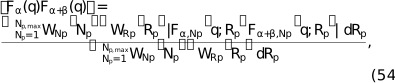

Fig. 10 shows the  profiles numerically calculated using Rp = 105 ± 25 Å and Ak,Np and Bk,Np (Table 4). A profile with Np = 1 indicates the form factor of a single sphere. The profile is flat at low q but follows q−4 at high q. The low-q scattering intensity increases with Np, whereas the high-q region of q−4 does not change. The shape of the shoulder at approximately q = 0.02 Å−1 gradually changes from convex to concave.
![[Figure 10]](ge5181fig10thm.gif) | Figure 10 Numerically calculated profiles of silica aggregates formed by Np particles [ ] with a particle radius of Rp = 105 ± 25 Å (up to Np = 10). The particle configuration of the silica aggregates was determined according to the criteria described in this article. |
By considering Np polydispersity, we calculate , as indicated by the blue dotted-line curves in Fig. 6. The numerical calculations account for the smear effect of BL15 beam collimation (Takata et al., 2015). This effect is only slight at low q. Consequently, the numerically calculated profiles excellently reproduce the experimentally obtained SSS(q) [= n〈K(q)〉] despite the slight deviation at low q (q < 0.01 Å−1), which is probably due to 〈K(q)〉. The distribution functions WRp(Rp) and WNp(Np), which are used across all samples, are shown in Figs. 11(a) and 11(b), respectively. In a previous study (Nakanishi et al., 2024), a silane coupling agent improved the dispersion of silica particles. However, such dispersion improvement was not observed in our samples.
![[Figure 11]](ge5181fig11thm.gif) | Figure 11 Distribution functions used for numerical calculation: WRp(Rp) (a) and WNp(Np) (b). |
We evaluate WRp(Rp) and WNp(Np) by analyzing SSS(q). Next, we set tL to calculate  and 〈Fα(q)Fα+β(q)〉 (Fig. 12). The adopted tL values [50 and 120 Å in Figs. 12(a) and 12(b), respectively] are optimized parameters for fitting the experimental results, as shown later in this section. In Fig. 12, is always higher than . The q−4 slope of continues to lower q (q ∼ 0.01 Å−1) compared with that of . Fig. 12 also shows 〈Fα(q)Fα+β(q)〉. At low q, 〈Fα(q)Fα+β(q)〉 is between and . As q increases, 〈Fα(q)Fα+β(q)〉 decreases to a negative value more rapidly than and then oscillates while decreasing in magnitude.
![[Figure 12]](ge5181fig12thm.gif) | Figure 12 Numerically calculated  , and 〈Fα(q)Fα+β(q)〉 for tL = 50 Å (a) and tL = 120 Å (b). For both panels, Rp = 105 ± 25 Å and the WRp(Rp) and WNp(Np) shown in Fig. 11 are used. , and 〈Fα(q)Fα+β(q)〉 for tL = 50 Å (a) and tL = 120 Å (b). For both panels, Rp = 105 ± 25 Å and the WRp(Rp) and WNp(Np) shown in Fig. 11 are used. |
We determine φL and φM, which are necessary for calculating SPP(q) and STT(q) by equations (22) and (23), as follows. φL and φM are


where φhomo is given by (1 − fsilica)/(Qswell − fsilica). fsilica is the silica before swelling (= 0.05 in this study). fα, fβ and fγ, which are the volume fractions of regions α, β and γ, respectively, are



where 〈Vα〉 and 〈Vβ〉 are the expected volumes of regions α and β, respectively, and can be calculated by the determined structure model. Therefore, only two parameters (tL and Δφ) are adjustable in calculating SPP(q) and STT(q). The SPP(q) and STT(q) profiles with optimized parameters are drawn using green and orange dotted-line curves, respectively, in Fig. 6. At low q, the numerically calculated profiles deviate downwards similarly to SSS(q). This is because the numerical calculation does not consider the structure factor 〈K(q)〉 due to the higher-order structure. In Fig. 8, the numerically calculated ratio −SSP(q)/SSS(q) is indicated by the gray curves. With our use of this ratio, the effect of K(q) and SG(q) can be eliminated, enabling least-squares fitting in a wider q range to determine tL and Δφ.
The parameters determined by this fitting process are listed in Table 7. A schematic diagram of the microstructure around the silica particle surface of RCA is shown in Fig. 13. As Qswell increases, Δφ increases while tL decreases. The volume of the silane coupling agent in one silica aggregate is 0.26 × 10⁷ Å3, as determined by the composition of the rubber ingredient, assuming that all silane coupling agents react with silica surfaces. This value is used across all RCA samples. Moreover, the volume of polymer chains in the polymer adsorption layer is calculated as 〈Vβ〉/φL. A comparison of these values suggests that the polymer adsorption layer contains not only the silane coupling agent but also polymer chains confined by the silane coupling agent. For RCA1, RCA2 and RCA3, the computed volume of polymer chains in the polymer adsorption layer is 43, 23 and 6.8 times larger than that of the silane coupling agent, respectively. The confinement degree is expected to decrease with distance from the silica aggregate surface. It was suggested that in the fully swollen state only tightly confined polymer chains are included in the polymer adsorption layer. By contrast, in a less swollen state, the polymer adsorption layer additionally contains moderately confined polymer chains. NMR relaxation times have shown that an intermediate region forms outside the confined polymer around filler particles (O'Brien et al., 1976). The correlation between the results of these two approaches will further elucidate the structure of the polymer adsorption layer.
| |||||||||||||||||||||||||||||||||||||||||||||||||||||||||||||||||||||||||||||||||||||||||||||||||||||||||||||||||||||||||||||||||||||||||||||||||||||||||||||||||||||||||||||||||||||||||||||||||||||||||||||||||||||||||||||||||||
 (10
(10 (10
(10 ![[Figure 13]](ge5181fig13thm.gif) | Figure 13 Schematic diagram of the polymer adsorption layer on the silica aggregate surface for RCA1 (a), RCA2 (b) and RCA3 (c). In each panel, the black dashed-line curve indicates the boundary between the polymer-dense layer and the surrounding matrix. The polymer chains are omitted for simplicity. Outside the silica, the background color indicates the polymer volume fraction. |
For RN, a slight indication of the formation of a polymer adsorption layer emerges in the less swollen state (RN2). In the fully swollen state (RN3), little indication of formation is found. Even for the sample without a silane coupling agent, a polymer adsorption layer, reflecting loose confinement around the silica aggregate, is observed. However, polymer adsorption layers reflecting tight confinement around silica aggregates are not observed naturally in samples without silane coupling agents.
3.5. Separation of scattering contribution due to polymer in d-toluene
SG(q), observed in swollen rubber samples, provides insights into polymer networks and cross-links (Karino et al., 2007; Ikeda et al., 2009; Suzuki et al., 2010). For silica-filled swollen rubber, the OZ contribution at high q can be analyzed easily, as the scattering contributions of filler particles are insignificant in the high-q region. By contrast, the DB contribution at low q is difficult to analyze because the scattering contribution of filler particles is prominent in the low-q region. The contrast-variation approach provides a way to separate SG(q).
By substituting equations (21), (22) and (24) into equation (17), we obtain
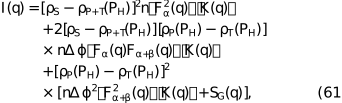
where ρP+T is the SLD of the matrix domain, assuming the matrix is homogeneous: ρP+T = φhomoρP + (1 − φhomo)ρT. I(q) consists of three terms with different PH dependence. Both nΔφ2〈K(q)〉 and SG(q) are included in the final term. A set of three independent PSFs can be determined through contrast variation. From these PSFs, another set of three independent functions [n〈K(q)〉, nΔφ〈Fα+β(q) × Fα+β(q)〉〈K(q)〉 and nΔφ2〈K(q)〉 + SG(q)] can be obtained. However, contrast variation itself cannot determine nΔφ2〈K(q)〉 and SG(q) separately. In cases with an insignificant Δφ (e.g. less swollen or homogeneously swollen states), nΔφ2〈K(q)〉 can be neglected to determine SG(q) easily. However, in cases with a significant Δφ (e.g. RCA3), SG(q) is difficult to determine. In this case, SG(q) should be evaluated using the following equation, which is derived from equations (21), (22) and (24):

We determine nΔφ2〈K(q)〉 through the structure model analysis in Section 3.4. The evaluated SG(q) profiles are shown by the unfilled gray circles in Fig. 14. Each panel shows a clear DB contribution at low q. However, the shape of the OZ contribution at high q is not completely covered, because of the limited q range of our setup. This is compensated for by overlaying the SANS profile obtained in the unpolarized state (PH = 0.1%), as shown by the blue squares in Fig. 14. The low-q side of these unpolarized-state profiles is omitted, and the intensity shifts. These unpolarized-state profiles cover higher q values, as they involve full-range neutron wavelengths (1.0 < λ < 7.6 Å).
![[Figure 14]](ge5181fig14thm.gif) | Figure 14 SG(q) profiles due to polymer chains in solvent. The top and bottom rows present the results for the rubber samples without and with the silane coupling agent, respectively. In each panel, the experimentally obtained SG(q) is shown by the unfilled gray circles. The SG(q) profiles numerically calculated using equations (30) and (63) are shown by the black solid-line and purple dotted-line curves, respectively. In panels (b), (d), (e) and (f), the experimentally obtained nΔφ2 〈K(q)〉 contribution is shown by the gray dashed-line curve. The experimentally obtained profiles in the unpolarized state for compensation in the high-q region are shown by the blue squares. The SG,approx(q) numerically calculated using equation (65) is shown by the red crosses. In these numerical calculations, the smear effect is considered. |
The profiles are fitted using equation (30), as indicated by the black solid-line curves. In addition, we numerically calculate profiles using the following equation, where the DB function is replaced with the power-law function (q−4) derived from Porod's law:

Here APorod = ADB/ . SG,Porod(q) is shown in Fig. 14 by the purple dotted-line curves. The experimentally obtained SG(q) is lower than SG,Porod(q) at low q. This indicates the validity of profile fitting using the DB function, although the observed q range does not cover the full shape of the DB function. The evaluated ADB, LDB and APorod parameters are listed in Table 7.
For cases with polymer adsorption layer formation, we subtract the nΔφ2〈K(q)〉 term to assess SG(q) using equation (62). Here, we use the nΔφ2〈K(q)〉 value determined via structure model analysis. Fig. 14 shows nΔφ2〈K(q)〉 as the gray dotted-line curves. For RN2, RCA1 and RCA2, the nΔφ2〈K(q)〉 contribution is much smaller than that of SG(q). For RCA3, which has a significant polymer adsorption layer, the calculated SG(q) is comparable to the nΔφ2〈K(q)〉 contribution at low q. As mentioned above, SG(q) cannot be determined directly in this case. SG(q) can only be accurately evaluated when nΔφ2〈K(q)〉 is obtained through structure model analysis.
Fig. 15 shows the determined parameters (LDB, ADB, APorod, LOZ and AOZ) as functions of the local Qswell in the matrix (= 1/φM). Concerning the low-q DB function, which is due to the inhomogeneous distribution of polymer chains, RN exhibits almost constant LDB and ADB values, regardless of the swelling ratio. By contrast, RCA shows significant increases in LDB and ADB with an increase in the swelling ratio. This result is ascribed to the spatial distribution shown in Fig. 16. For RN, the polymer-dense domains are distributed sparsely. For RCA, the polymer-dense domains are distributed mostly near silica aggregates. With an increase in solvent fraction, polymer-dense domains enlarge. By increasing Qswell from 1.66 to 4.76, we find that LDB increases by a factor of 2.1 (= 350/170) and ADB increases by a factor of 62 (= 51/0.82). This finding is explained quantitatively as follows. ADB is proportional to nPDΔ , where nPD is the number of polymer-dense regions per volume, ΔφPD is the difference in polymer between a polymer-dense region and the surrounding matrix, and VPD is the volume of a polymer-dense domain. Because of the 2.1-times increase in LDB, VPD should increase by a factor of 8.7 [= (350/170)3]. Approximately nine polymer-dense domains in less swollen states merge to create larger domains in the fully swollen state. Furthermore, nPD should decrease by a factor of 1/25.5 {= 1/[(350/170)3 × (1.69/4.96)]}, considering the swelling-induced volume increase. Δ
 should increase by a factor of 21 (= 62 × 25.5/8.72) to reproduce the obtained ADB. The polymer volume fraction in the matrix can be roughly estimated via (Qswell − fsilica)/(1 − fsilica) to be 0.59 and 0.20 at Qswell = 1.66 and Qswell = 4.76, respectively. Assuming that the of the polymer-dense layer is 0.7 and is not significantly affected by the swelling ratio, Δ should increase by a factor of 21 to reproduce the observed results. Although the of the polymer-dense layer may be affected by the swelling ratio, this microscopic picture roughly reproduces the silica-filled rubber sample containing the silane coupling agent.
![[Figure 15]](ge5181fig15thm.gif) | Figure 15 Parameters LDB (a), ADB (b), APorod (c), LOZ (d) and AOZ (e) as functions of local Qswell in the matrix (= 1/φM). In each panel, the black circles and gray squares indicate the results for RCA and RN, respectively. The dotted lines are guides for the reader. |
![[Figure 16]](ge5181fig16thm.gif) | Figure 16 Schematic diagram of polymer-dense domain distribution for RN (a) and RCA (b). In each panel, the dark gray circles at the bottom-left corner indicate the silica aggregates, and the light gray circles indicate the polymer-dense domains. The polymer chains are omitted for simplicity. |
The obtained microscopic picture [Fig. 16(b)] may be a result of the presumed chemical process during the vulcanization of RCA as follows. Silane coupling agents have silanol groups for binding silica particle surfaces, and polysulfide bonds for creating cross-links with surrounding polymers. Therefore, for RCA, polysulfide bonds generate sulfur radicals concentrated around the silica aggregates, creating nearby cross-links. This can explain the formation of polymer-dense regions [Fig. 16(b)].
Two OZ functions are used for both RCA3 and RN3 at high q. Two sets of AOZ and LOZ are determined and they both increase with Qswell. It is natural that the polymer mesh size increases with increasing amount of solvent in the polymer. In the fully swollen state, RCA exhibits larger AOZ and LOZ than RN. Therefore, RCA has a sparser cross-link distribution in the matrix than RN. For RCA, the merging of polymer-dense domains at the fully swollen state, as discussed in the DB function results, could lead to higher dilution in the matrix.
Nakanishi et al. (2024) significantly increased ADB by introducing an excessive amount of a silane coupling agent during sample preparation. They attributed the large observed ADB to the cross-link inhomogeneity formed by the excess silane coupling agent separate from the silica aggregates. By contrast, we used a much smaller amount of silane coupling agent.
3.6. Further discussion on the model-free approach based on the Guinier approximation
As stated in Section 3.3, we use the Guinier approximation [equations (35)–(38)]. The −SSP(q)/SSS(q) value numerically calculated using equation (38) is shown by the black dashed-line curve in Fig. 8. It is close to the results calculated through structure model analysis, as shown by the gray solid-line curve in Fig. 8, although a slight deviation is found in the fully swollen case (RCA3). The approximate equation is useful for rough estimation. Here, we extend this approach further to SG(q) estimation.
From equations (35)–(37), we obtain the approximate equation

By applying this to equations (21), (22), (24) and (62), we develop another approach to approximating SG(q):

However, this equation is only satisfied at low q. Nonetheless, a benefit of this approach is that it eliminates the need to evaluate the nΔφ2〈K(q)〉 contribution separately. As shown by the red crosses in Fig. 14, the calculated SG,approx(q) values for all samples coincide well with the SG(q) values obtained in the previous section. The SG,approx(q) value computed using equation (65) is useful for DB-term parameter evaluation. This approach can avoid the need for numerical calculation based on the sphere collection model. As mentioned earlier, the DB term is difficult to assess accurately because significant scattering due to filler particles overlaps at low q.
The difference between SG,approx(q) and SG(q) is

Hence, if equation (64) is satisfied, then SG,approx(q) becomes equal to SG(q). The difference is proportional to Δφ2. Hence, SG,approx(q) and SG(q) should coincide well for less swollen or homogeneously swollen states (Δφ << 1).
On the basis of this approximation, an equation that yields nΔφ2〈K(q)〉 directly from PSFs can be derived as

The nΔφ2〈K(q)〉 contribution obtained from this approximate equation is indicated by the unfilled black circles in Fig. 17. The nΔφ2〈K(q)〉 contribution numerically calculated from the sphere collection model is indicated by gray dashed-line curves. The curves coincide well at low q. However, the profile obtained by the approximate equation deviates downwards as q increases, as the Guinier approximation is only valid at low q.
![[Figure 17]](ge5181fig17thm.gif) | Figure 17 nΔφ2 〈K(q)〉 profiles. In each panel, the gray dashed-line curves indicate the nΔφ2〈K(q)〉 profiles obtained through numerical calculation based on the sphere collection model. The unfilled black circles indicate the nΔφ2〈K(q)〉 contribution obtained using the approximate equation (67). The profiles obtained by the two approaches coincide well at low q but deviate at high q. |
4. Conclusion
Spin-contrast-variation SANS was applied to silica-filled rubber with and without a silane coupling agent in partially and fully swollen states. SANS profiles were obtained at various PH using a DNP cryostat (1.2 K and 3.35 T). Each sample was regarded as a system composed of silica, polymer and d-toluene components, and the PSF of each component was evaluated. Analytically, −SSP(q)/SSS(q) is proposed as a useful indicator, providing the polymer volume fraction (φL) as a flat region at high q and as a depression at low q in the presence of a polymer adsorption layer. Furthermore, we built a sphere collection model for silica aggregates and the surrounding polymer adsorption layer. Although this model includes simplifications for reduced calculation effort, the obtained profiles excellently reproduced the experimental results. Consequently, the radius distribution of the primary silica particles and the particle number distribution in a silica aggregate were determined. Furthermore, on the basis of this structure model, tL and Δφ at various Qswell were calculated. For RCA, tL decreased and Δφ increased as Qswell increased. Based on the structural parameters, the computed ratios of the polymer volume in the polymer adsorption layer to the volume of the silane coupling agent were 43, 23 and 6.8 for RCA at Qswell values of 1.7, 1.8 and 4.8, respectively. In the fully swollen state, the polymer adsorption layer contained only tightly confined polymer chains. In a less swollen state, it additionally contained moderately confined polymer chains. Furthermore, the SG(q) contribution was accurately evaluated. The obtained SG(q) profiles indicated a clear difference between RN and RCA. RCA formed polymer-dense domains distributed mostly around the silica aggregates. As Qswell increased, the polymer-dense domains merged to create larger domains. By contrast, RN formed sparsely distributed polymer-dense domains. In addition, on the basis of the Guinier approximation (satisfied only at low q), we derived several approximate equations. With these approximate equations, rough estimates could be obtained without requiring structure-model-based analysis. The validity of the approximate equations was investigated using the present study results. Finally, we found reasonable alignment between these approaches. The developed analytical approaches can be used not only in spin-contrast-variation SANS studies but also in conventional contrast-variation ones.
APPENDIX A
Decomposition of the partial scattering function
Contrast-variation experiments were conducted to obtain SANS profiles with different PH,i (i = 1,…, Nprof). From equation (17), the obtained profiles at various PH constitute a system of linear equations, as described by the matrix
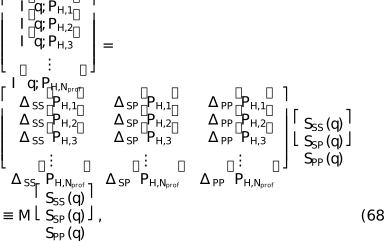
where the Nprof × 3 matrix in the second line is denoted by M. The matrix elements are contrast factors:



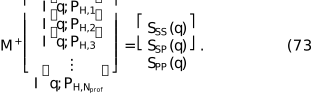
In our experiments, where the number of obtained profiles (Nprof) is larger than 3, M is obtained as a nonsquare matrix (Nprof × 3). Therefore, instead of a simple inverse matrix, a Moore–Penrose pseudo-inverse matrix M+ is needed,

where MT is the transposed matrix of M. M+ is known to give the shortest-length least-squares solution for equation (68):
APPENDIX B
Effect of the higher-order structure formed by aggregates
Considering the effect of the higher-order structure formed by aggregates, the spatial distribution functions  and
and  for regions α and α+β are calculated as


where ci,agg is the aggregate center position, i is the labeling number of aggregates, and Nagg is the total number of aggregates in a sample. φα(r) and φα+β(r) are the spatial distributions of regions α and α+β considering the aggregates and the polymer adsorption layer and without considering a further higher-order structure. Hence, the form factors [ and
and  ] and the cross term [
 ] considering this higher-order structure are calculated as



Here, we define the structure factor 〈K(q)〉 as

The form factors considering this higher-order structure are calculated using 〈K(q)〉 as



Here, we assume that the aggregate spatial distribution is not affected by polydispersity in the aggregate structure. In this way, 〈K(q)〉 in equations (21)–(26) is derived.
Supporting information
Table S1 List of the symbols used in this study. DOI: https://doi.org/10.1107/S1600576726000361/ge5181sup1.pdf
Acknowledgements
The neutron scattering experiment at MLF in J-PARC was performed under the user program (Proposal Nos. 2014B0166, 2015A0269). We appreciate the support of the MLF instrument safety team, sample environment team and low-temperature center.
Funding information
This study was financially supported by a Grant-in-Aid for Young Scientists (A) (grant No. 25706033) of the Japan Society for the Promotion of Science.
References
 Abragam, A. & Goldman, M. (1978). Rep. Prog. Phys. 41, 395–467. CrossRef CAS Web of Science Google Scholar
Baeza, G. P., Genix, A. C., Degrandcourt, C., Gummel, J., Couty, M. & Oberdisse, J. (2014). Soft Matter 10, 6686–6695. CrossRef CAS PubMed Google Scholar
Baeza, G. P., Genix, A. C., Paupy-Peyronnet, N., Degrandcourt, C., Couty, M. & Oberdisse, J. (2016). Faraday Discuss. 186, 295–309. CrossRef CAS PubMed Google Scholar
Beaucage, G. (1995). J. Appl. Cryst. 28, 717–728. CrossRef CAS Web of Science IUCr Journals Google Scholar
Beaucage, G. (1996). J. Appl. Cryst. 29, 134–146. CrossRef CAS Web of Science IUCr Journals Google Scholar
Beaucage, G. (2004). Phys. Rev. E 70, 031401. CrossRef Google Scholar
Beaucage, G. & Schaefer, D. W. (1994). J. Non-Cryst. Solids 172–174, 797–805. CrossRef CAS Google Scholar
Botti, A., Pyckhout-Hintzen, W., Richter, D., Urban, V. & Straube, E. (2006). J. Chem. Phys. 124, 174908. CrossRef PubMed Google Scholar
Bunyatova, E. I. (2004). Nucl. Instrum. Methods Phys. Res. A 526, 22–27. CrossRef CAS Google Scholar
Chassé, W., Schlögl, S., Riess, G. & Saalwächter, K. (2013). Soft Matter 9, 6943–6954. Google Scholar
de Boer, W., Borghini, M., Morimoto, K., Niinikoski, T. O. & Udo, F. (1974). J. Low Temp. Phys. 15, 249–267. CrossRef CAS Google Scholar
Debye, P. & Bueche, A. M. (1949). J. Appl. Phys. 20, 518–525. CrossRef CAS Web of Science Google Scholar
Endo, H. (2006). Physica B 385–386, 682–684. Web of Science CrossRef CAS Google Scholar
Endo, H., Miyazaki, S., Haraguchi, K. & Shibayama, M. (2008). Macromolecules 41, 5406–5411. Web of Science CrossRef CAS Google Scholar
Genix, A. & Oberdisse, J. (2015). Curr. Opin. Colloid Interface Sci. 20, 293–303. Web of Science CrossRef CAS Google Scholar
Genix, A. C., Bocharova, V., Carroll, B., Lehmann, M., Saito, T., Krueger, S., He, L., Dieudonné-George, P., Sokolov, A. P. & Oberdisse, J. (2019). Appl. Mater. Interfaces 11, 17863–17872. CrossRef CAS Google Scholar
Hori, K., Yamada, N. L., Fujii, Y., Masui, T., Kishimoto, H. & Seto, H. (2017). Langmuir 33, 8883–8890. CrossRef CAS PubMed Google Scholar
Huang, L., Shui, Y., Chen, W., Li, Z., Song, H., Sun, G., Xu, J., Zhong, G. & Liu, D. (2021). Chin. J. Polym. Sci. 39, 365–376. CrossRef CAS Google Scholar
Ikeda, Y., Higashitani, N., Hijikata, K., Kokubo, Y., Morita, Y., Shibayama, M., Osaka, N., Suzuki, T., Endo, H. & Kohjiya, S. (2009). Macromolecules 42, 2741–2748. CrossRef CAS Google Scholar
Ito, M., Liu, H., Kumagai, A., Liang, X., Nakajima, K. & Jinnai, H. (2022). Langmuir 38, 777–785. CrossRef CAS PubMed Google Scholar
Iwasaki, K., Chino, K., Noda, Y. & Koizumi, S. (2025). Macromolecules 58, 10752–10762. Web of Science CrossRef CAS Google Scholar
Jiang, N., Endoh, M. K., Koga, T., Masui, T., Kishimoto, H., Nagao, M., Satija, S. K. & Taniguchi, T. (2015). ACS Macro Lett. 4, 838–842. CrossRef CAS PubMed Google Scholar
Jimenez, A. M., Zhao, D., Misquitta, K., Jestin, J. & Kumar, S. K. (2019). ACS Macro Lett. 8, 166–171. CrossRef CAS PubMed Google Scholar
Jouault, N., Dalmas, F., Said, S., Di Cola, E., Schweins, R., Jestin, J. & Boué, F. (2010). Macromolecules 43, 9881–9891. CrossRef CAS Google Scholar
Karino, T., Ikeda, Y., Yasuda, Y., Kohjiya, S. & Shibayama, M. (2007). Biomacromolecules 8, 693–699. CrossRef PubMed CAS Google Scholar
Kishimoto, M., Takenaka, M. & Iwabuki, H. (2023). Macromolecules 56, 207–214. CrossRef CAS Google Scholar
Koga, T., Barkley, D., Nagao, M., Taniguchi, T., Carrillo, J. Y., Sumpter, B. G., Masui, T., Kishimoto, H., Koga, M., Rudick, J. G. & Endoh, M. K. (2018). Macromolecules 51, 9462–9470. CrossRef CAS Google Scholar
Kumada, T., Iwahara, D., Nishitsuji, S., Akutsu-Suyama, K., Miura, D., Motokawa, R., Sugita, T., Torikai, N., Amino, N., Oku, T. & Takenaka, M. (2024). J. Phys. Chem. C 128, 8797–8802. CrossRef CAS Google Scholar
Kumada, T., Noda, Y., Hashimoto, T. & Koizumi, S. (2009). Physica B 404, 2637–2639. Web of Science CrossRef CAS Google Scholar
Liu, D., Chen, J., Song, L., Lu, A., Wang, Y. & Sun, G. (2017). Polymer 120, 155–163. CrossRef CAS Google Scholar
Mashita, R., Kishimoto, H., Inoue, R. & Kanaya, T. (2013). Polym. J. 45, 57–63. CrossRef CAS Google Scholar
Mashita, R., Kishimoto, H., Inoue, R. & Kanaya, T. (2016). Polym. J. 48, 239–245. CrossRef CAS Google Scholar
Miyazaki, S., Endo, H., Karino, T., Haraguchi, K. & Shibayama, M. (2007). Macromolecules 40, 4287–4295. CrossRef CAS Google Scholar
Morfin, I., Ehrburger-Dolle, F., Grillo, I., Livet, F. & Bley, F. (2006). J. Synchrotron Rad. 13, 445–452. Web of Science CrossRef CAS IUCr Journals Google Scholar
Morozov, I. A., Lauke, B. & Heinrich, G. (2012). Rubber Chem. Technol. 85, 244–263. CrossRef CAS Google Scholar
Mujtaba, A., Keller, M., Ilisch, S., Radusch, H. J., Beiner, M., Thurn-Albrecht, T. & Saalwachter, K. (2014). ACS Macro Lett. 3, 481–485. CrossRef CAS PubMed Google Scholar
Nakanishi, Y., Mita, K., Yamamoto, K., Ichino, K. & Takenaka, M. (2021). Polymer 218, 123486. CrossRef Google Scholar
Nakanishi, Y., Shibata, M., Sawada, S., Kondo, H., Motokawa, R., Kumada, T., Yamamoto, K., Mita, K., Miyazaki, T. & Takenaka, M. (2024). Polymer 306, 127209. CrossRef Google Scholar
Noda, Y., Koizumi, S., Masui, T., Mashita, R., Kishimoto, H., Yamaguchi, D., Kumada, T., Takata, S., Ohishi, K. & Suzuki, J. (2016). J. Appl. Cryst. 49, 2036–2045. Web of Science CrossRef CAS IUCr Journals Google Scholar
Noda, Y., Maeda, T., Oku, T., Koizumi, S., Masui, T. & Kishimoto, H. (2020). QuBS 4, 33. CrossRef Google Scholar
Noda, Y., Yamaguchi, D., Hashimoto, T., Shamoto, S., Koizumi, S., Yuasa, T., Tominaga, T. & Sone, T. (2013). Phys. Procedia 42, 52–57. CrossRef CAS Google Scholar
O'Brien, J., Cashell, E., Wardell, G. E. & McBrierty, V. J. (1976). Macromolecules 9, 653–660. CAS Google Scholar
Ornstein, L. S. & Zernike, F. (1914). Proc. Acad. Sci. Amsterdam 17, 793–806. Google Scholar
Presto, D., Meyerhofer, J., Kippenbrock, G., Narayanan, S., Ilavsky, J., Moctezuma, S., Sutton, M. & Foster, M. D. (2020). Appl. Mater. Interfaces 12, 47891–47901. CrossRef CAS Google Scholar
Salatto, D., Carrillo, J. Y., Endoh, M. K., Taniguchi, T., Yavitt, B. M., Masui, T., Kishimoto, H., Tyagi, M., Ribbe, A. E., Garcia Sakai, V., Kruteva, M., Sumpter, B. G., Farago, B., Richter, D., Nagao, M. & Koga, T. (2021). Macromolecules 54, 11032–11046. CrossRef CAS Google Scholar
Sears, V. F. (1992). Neutron News 3(3), 26–37. CrossRef Google Scholar
Shibayama, M., Nagao, M., Okabe, S. & Karino, T. (2005). J. Phys. Soc. Jpn 74, 2728–2736. Web of Science CrossRef CAS Google Scholar
Shimokita, K., Yamamoto, K., Miyata, N., Shibata, M., Nakanishi, Y., Arakawa, M., Takenaka, M., Kida, T., Tokumitsu, K., Tanaka, R., Shiono, T., Yamada, M., Seto, H., Yamada, N. L., Aoki, H. & Miyazaki, T. (2024). Langmuir 40, 15758–15766. CAS Google Scholar
Shimomura, S., Inutsuka, M., Yamada, N. L. & Tanaka, K. (2016). Polymer 105, 526–531. CrossRef CAS Google Scholar
Shinohara, T., Suzuki, J., Oku, T., Takata, S., Kira, H., Suzuya, K., Aizawa, K., Arai, M., Otomo, T. & Sugiyama, M. (2009). Physica B 404, 2640–2642. CrossRef CAS Google Scholar
Shinohara, T., Takata, S., Suzuki, J., Oku, T., Suzuya, K., Aizawa, K., Arai, M., Otomo, T. & Sugiyama, M. (2009). Nucl. Instrum. Methods Phys. Res. A 600, 111–113. CrossRef CAS Google Scholar
Shui, Y., Huang, L., Wei, C., Chen, J., Song, L., Sun, G., Lu, A. & Liu, D. (2021a). Compos. Commun. 23, 100547. CrossRef Google Scholar
Shui, Y., Huang, L., Wei, C., Sun, G., Chen, J., Lu, A., Sun, L. & Liu, D. (2021b). Compos. Sci. Technol. 215, 109024. CrossRef Google Scholar
Staropoli, M., Gerstner, D., Radulescu, A., Sztucki, M., Duez, B., Westermann, S., Lenoble, D. & Pyckhout-Hintzen, W. (2020). Polymers 12, 502. CrossRef PubMed Google Scholar
Staropoli, M., Gerstner, D., Sztucki, M., Vehres, G., Duez, B., Westermann, S., Lenoble, D. & Pyckhout-Hintzen, W. (2019). Macromolecules 52, 9735–9745. CrossRef CAS Google Scholar
Stuhrmann, H. B., Schärpf, O., Krumpolc, M., Niinikoski, T. O., Rieubland, M. & Rijllart, A. (1986). Eur. Biophys. J. 14, 1–6. CrossRef CAS PubMed Web of Science Google Scholar
Suzuki, T., Osaka, N., Endo, H., Shibayama, M., Ikeda, Y., Asai, H., Higashitani, N., Kokubo, Y. & Kohjiya, S. (2010). Macromolecules 43, 1556–1563. CrossRef CAS Google Scholar
Takata, S., Suzuki, J., Shinohara, T., Oku, T., Tominaga, T., Ohishi, K., Iwase, H., Nakatani, T., Inamura, Y., Ito, T., Suzuya, K., Aizawa, K., Arai, M., Otomo, T. & Sugiyama, M. (2015). JPS Conf. Proc. 8, 036020. Google Scholar
Takenaka, M., Nishitsuji, S., Amino, N., Ishikawa, Y., Yamaguchi, D. & Koizumi, S. (2009). Macromolecules 42, 308–311. Web of Science CrossRef CAS Google Scholar
Takenaka, M., Nishitsuji, S., Amino, N., Ishikawa, Y., Yamaguchi, D. & Koizumi, S. (2012). Rubber Chem. Technol. 85, 157–164. Web of Science CrossRef CAS Google Scholar
Ueda, E., Liang, X., Ito, M. & Nakajima, K. (2019). Macromolecules 52, 311–319. CrossRef CAS Google Scholar
Valentín, J. L., Mora-Barrantes, I., Carretero-González, J., López-Manchado, M. A., Sotta, P., Long, D. R. & Saalwächter, K. (2010). Macromolecules 43, 334–346. Google Scholar
Watanabe, Y., Nishitsuji, S. & Takenaka, M. (2023). J. Appl. Cryst. 56, 461–467. Web of Science CrossRef CAS IUCr Journals Google Scholar
Yamaguchi, D., Yuasa, T., Sone, T., Tominaga, T., Noda, Y., Koizumi, S. & Hashimoto, T. (2017). Macromolecules 50, 7739–7759. CrossRef CAS Google Scholar
This is an open-access article distributed under the terms of the Creative Commons Attribution (CC-BY) Licence, which permits unrestricted use, distribution, and reproduction in any medium, provided the original authors and source are cited.
| JOURNAL OF APPLIED CRYSTALLOGRAPHY |


