

 menu


issue contents
December 2026 issue
Early view articles

research papers


Open  access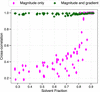
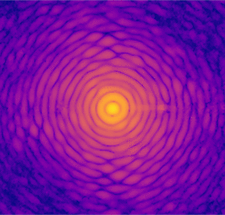
Incorporating molecular intensity gradients into an iterative projection algorithm enables model-free electron-density reconstruction even for low-solvent macromolecular crystals.
Open access
access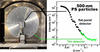
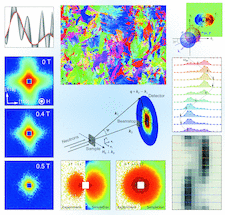
Replacing conventional position-sensitive photomultiplier tube detector systems with a square array of four flat-panel-type photomultiplier tube detectors enables simultaneous very small angle and small-angle neutron scattering measurements, while improving the effective neutron detection area, spatial resolution, sensitivity and signal-to-background ratio.
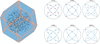
Three-dimensional modeling of exsolution textures using MATLAB and the MTEX toolbox is described, alongside a theoretical analysis of crystallographic orientation relationships.
Open access
access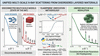
A unified multi-scale framework is proposed for the consistent analysis of small-angle X-ray scattering (SAXS) and X-ray diffraction (XRD) in disordered clay minerals, combining morphology, stacking and turbostratic contributions within a single formalism. The approach resolves long-standing inconsistencies in the SAXS–XRD junction and provides a physically interpretable method for extracting structural parameters across multiple length scales.
Open access
access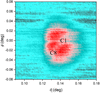
The first experimental observation of grazing-incidence X-ray back-diffraction validates both the dynamical description and a simple geometrical interpretation of its exceptionally large angular dispersion.
Open access
access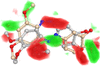
TorchRef is an open-source PyTorch-based crystallographic refinement framework that exposes all refinable parameters to automatic differentiation, accelerates structure factor evaluation by about two orders of magnitude on a GPU and enables novel workflows such as direct refinement against amplitude differences in time-resolved crystallography.
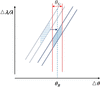
This study introduces a physically deterministic method for the high-precision characterization of light source size via dynamical crystal diffraction, providing a robust tool for advancements in accelerator physics and metrology.

Download citation


Download citation
Open access
access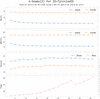
Dynamical diffraction effects in electron diffraction can now be modelled directly within Olex2–AutoChem using data processed with CrysAlisPro, enabled by a new N-Beam refinement method based on the Bloch-wave formalism. This workflow allows dynamical refinement of integrated rotation electron diffraction intensities, improving structural models and enabling determination of absolute structure in a streamlined, accessible environment.
CCDC reference: 2584530
short communications
Open access
access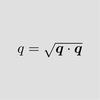
Under grazing incidence, form and structure factors must be evaluated for complex scattering vectors, which can be done by analytic continuation.
computer programs

NeuXtalViz is a Python-based visualization and analysis platform that integrates Mantid, PyVista, Matplotlib and Qt to support key single-crystal neutron diffraction workflows. By embedding interactive three-dimensional tools directly into the experimental workflow, the software improves the planning, execution and analysis of single-crystal neutron diffraction experiments while providing a flexible framework for future instrument and user-driven development.